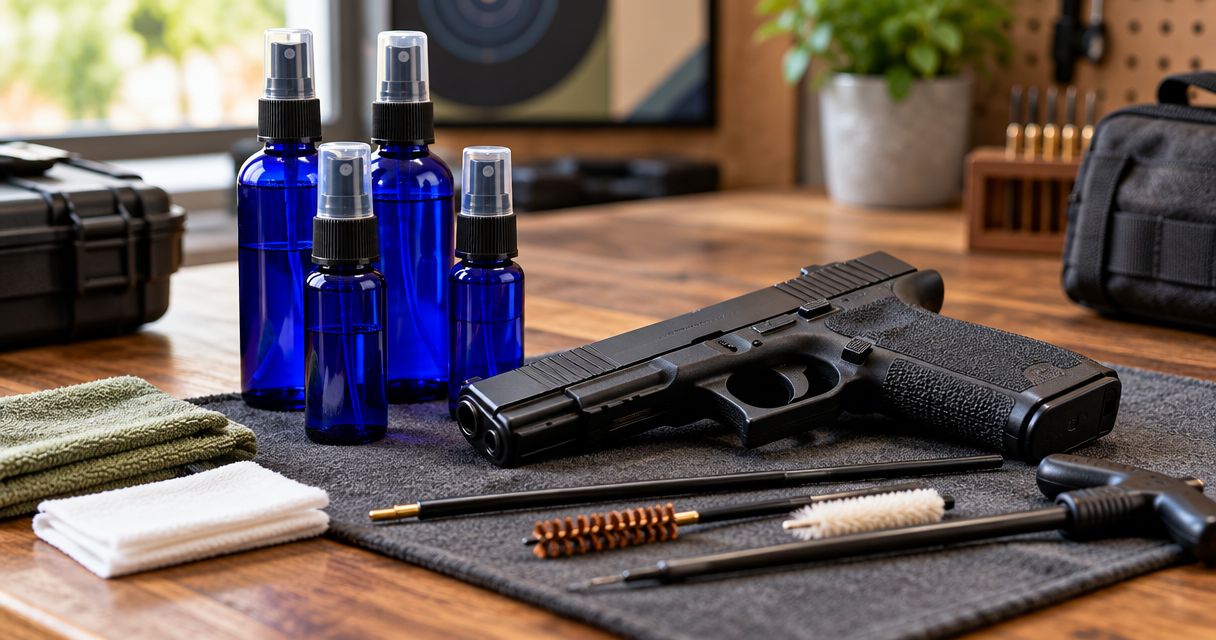
Best overall for routine maintenance: biobased CLP. Best for targeted bore cleaning: a dedicated bore cleaner. Best for repeatable bench cleaning: a water-based firearm cleaner. Beclp sells biobased firearm cleaner, lubricant and protectant products; this 2026 guide compares seven cleaner types without treating “non-toxic” as a safety guarantee.
- For the best non toxic gun cleaner, compare safety documentation before choosing a cleaning format.
- Beclp biobased CLP is a fit for gun owners seeking combined cleaning, lubrication and protection.
- Dedicated bore cleaners suit targeted fouling; water-based cleaners suit separate cleaning and lubrication workflows.
- Biobased, odorless and non-toxic are not interchangeable claims.
Why this matters
A cleaner can remove fouling effectively and still require ventilation, gloves or careful disposal. Low odor does not establish low exposure risk, and a plant-derived ingredient does not establish that the finished formula is harmless.
Choose the cleaning job first, then check the product’s hazards and material compatibility. That rule matters more than a reassuring label. Your firearm’s maintenance instructions and the cleaner’s directions determine whether the combination belongs on your bench.
These seven options are cleaner categories, not seven products certified as non-toxic. The ranking separates routine maintenance, targeted cleaning and specialized equipment so you can choose a useful format without confusing convenience with safety.
What makes the best non toxic gun cleaner?
Use these criteria for your 2026 shortlist:
- Safety documentation: Read the current safety data sheet, especially hazard identification, handling and exposure controls.
- Cleaning scope: Match the cleaner to routine residue, bore fouling or removal of old lubricant.
- Material compatibility: Check instructions for the firearm’s metals, finishes, plastics and wood.
- Aftercare: Identify whether you must rinse, dry, lubricate or apply protection afterward.
- Application control: Choose a format that lets you treat the intended surface without unnecessary spread.
Review 2 documents before use: the cleaner’s instructions and the firearm’s maintenance manual. The safety data sheet adds hazard information; it does not replace either set of operating directions.
Cleaner options at a glance
| Rank and cleaner type | Best for | Standout feature | Key limitation |
|---|---|---|---|
| 1. Biobased CLP | Routine combined maintenance | Combines cleaning, lubrication and protection | Biobased does not establish low toxicity |
| 2. Water-based firearm cleaner | Separate cleaning and lubrication | Keeps cleaning distinct from lubricant application | Requires the specified drying and aftercare |
| 3. Dedicated bore cleaner | Targeted bore fouling | Focuses on the bore-cleaning task | Not a substitute for whole-firearm lubrication |
| 4. Synthetic CLP | Buyers prioritizing lubricant formulation | Combines maintenance functions with synthetic lubricant ingredients | Synthetic does not establish safety |
| 5. Firearm cleaning wipes | Controlled exterior wipe-downs | Carries cleaning solution on a disposable cloth | Limited access to recessed areas |
| 6. Ultrasonic firearm-cleaning solution | Compatible disassembled parts | Works with an ultrasonic cleaning bath | Requires equipment and explicit compatibility |
| 7. Firearm degreaser | Removing old lubricant before reapplication | Separates stripping from lubrication | Leaves a separate lubrication task |
1. Biobased CLP: best for routine combined maintenance
Biobased CLP puts 3 maintenance functions in one formulation: cleaning, lubrication and protection. Beclp sells this category for gun owners and shooters, making it the first option here for a combined maintenance workflow.
The category’s convenience is its reason to lead—not a blanket toxicity claim. Check the particular formula’s directions before using it on finishes or components with special care requirements.
Biobased CLP pros:
- Combines routine maintenance functions.
- Reduces the need to switch between separate cleaning and lubrication steps.
- Fits buyers specifically seeking biobased formulations.
Biobased CLP cons:
- Biobased content alone does not prove that a product is non-toxic.
- A combined formula is not automatically the right answer for specialized fouling.
Best for: Gun owners seeking one formulation for routine cleaning and lubrication.
Verdict: Buy for the combined workflow after checking the formula’s hazards and compatibility.
2. Water-based firearm cleaner: best for separate-step cleaning
A water-based firearm cleaner keeps cleaning separate from the lubricant you apply afterward. Choose a product explicitly intended for firearms rather than substituting a household cleaner because both use water.
This format suits a bench routine where you want to inspect cleaned surfaces before lubrication. Follow the stated rinsing and drying requirements; water-based chemistry is not permission to leave moisture behind.
Water-based firearm cleaner pros:
- Separates cleaning from lubricant selection.
- Supports inspection between maintenance stages.
- Offers a distinct alternative to combined CLP maintenance.
Water-based firearm cleaner cons:
- Requires attention to drying and subsequent protection.
- Water-based does not mean hazard-free or universally finish-safe.
Best for: Owners who prefer to clean, inspect and lubricate as separate tasks.
Verdict: Buy when that workflow matches the firearm’s instructions; skip household substitutes.
3. Dedicated bore cleaner: best for targeted bore fouling
A dedicated bore cleaner addresses cleaning inside the barrel. Select it according to the residue its directions identify; do not assume every bore cleaner handles every type of fouling.
Beclp also sells bore cleaners, but the category decision remains the same: choose targeted cleaning when routine maintenance does not address the intended task. Observe the product’s application and removal instructions rather than extending contact time by guesswork.
Dedicated bore cleaner pros:
- Targets a defined maintenance area.
- Lets you select chemistry for the stated residue.
- Keeps bore treatment distinct from general lubrication.
Dedicated bore cleaner cons:
- Does not replace lubrication elsewhere on the firearm.
- Needs close attention to contact instructions and material restrictions.
Best for: Shooters selecting a cleaner for an identified bore-cleaning task.
Verdict: Buy for targeted cleaning, not as an assumed all-purpose replacement.
4. Synthetic CLP: best for lubricant-focused selection
Synthetic CLP combines maintenance functions while using synthetic lubricant ingredients. “Synthetic” describes formulation, not a safety rating or proof of better cleaning.
Choose this category when lubricant formulation is central to your maintenance decision. Compare actual instructions with your firearm’s requirements instead of assuming that a synthetic label establishes suitability for every operating condition.
Synthetic CLP pros:
- Combines cleaning, lubrication and protection.
- Gives lubricant-focused buyers a category to compare.
- Avoids treating cleaning and lubrication as unrelated decisions.
Synthetic CLP cons:
- The label alone says nothing conclusive about toxicity.
- Combined maintenance still requires correct placement and removal of excess.
Best for: Buyers comparing lubricant formulations within a CLP workflow.
Verdict: Hold until the specific formula’s documentation supports your intended use.
5. Firearm cleaning wipes: best for exterior wipe-downs
Firearm cleaning wipes carry a cleaning formulation on a disposable cloth. They suit accessible surfaces when the wipe’s directions permit use on the relevant finish.
The format is convenient, but the underlying chemistry still needs review. A wipe is not a substitute for a bore-cleaning tool or access to internal components during the maintenance your firearm requires.
Firearm cleaning wipes pros:
- Keeps application on a manageable cloth.
- Suits accessible exterior surfaces.
- Avoids dispensing liquid onto a separate cleaning cloth.
Firearm cleaning wipes cons:
- Cannot reach every recessed surface.
- Creates used wipes that require disposal according to product instructions.
Best for: Owners who need an exterior cleaning format between fuller maintenance sessions.
Verdict: Buy as a supplemental format; skip it as your only cleaning method.
6. Ultrasonic solution: best for compatible disassembled parts
An ultrasonic firearm-cleaning solution is intended for use with ultrasonic equipment. Treat the bath, solution and part as one compatibility decision—not three independent purchases.
Only immerse parts that the firearm manufacturer permits you to clean this way. Follow the equipment and solution instructions, including any requirements for dilution, drying and lubrication after cleaning.
Ultrasonic solution pros:
- Supports bath cleaning of permitted parts.
- Provides a separate workflow for disassembled components.
- Lets you follow a defined equipment-and-solution process.
Ultrasonic solution cons:
- Requires dedicated equipment and preparation.
- Unsuitable materials, finishes or assemblies must stay out of the bath.
Best for: Owners already equipped for manufacturer-approved ultrasonic cleaning.
Verdict: Hold unless both the equipment instructions and firearm documentation support the process.
7. Firearm degreaser: best for removing old lubricant
A firearm degreaser serves a narrower purpose than CLP: removing grease or oil before subsequent work. It belongs in a deliberate stripping-and-reapplication process, not automatically in every cleaning session.
Check which surfaces the product permits you to treat. Plan the next maintenance step before removing lubricant, because cleaning a surface does not complete its lubrication requirements.
Firearm degreaser pros:
- Separates lubricant removal from reapplication.
- Suits a clearly defined stripping task.
- Helps keep preparation distinct from routine maintenance.
Firearm degreaser cons:
- Requires a separate lubrication decision afterward.
- Needs close review of handling precautions and finish compatibility.
Best for: Owners removing old lubricant for a specific maintenance task.
Verdict: Skip for ordinary wipe-downs; buy only when lubricant removal is the actual goal.
How the ranking works
The 2026 ranking prioritizes routine job fit, then separates specialist uses. Beclp biobased CLP leads for combined maintenance; dedicated cleaners earn their positions through distinct tasks, not unsupported claims of lower toxicity.
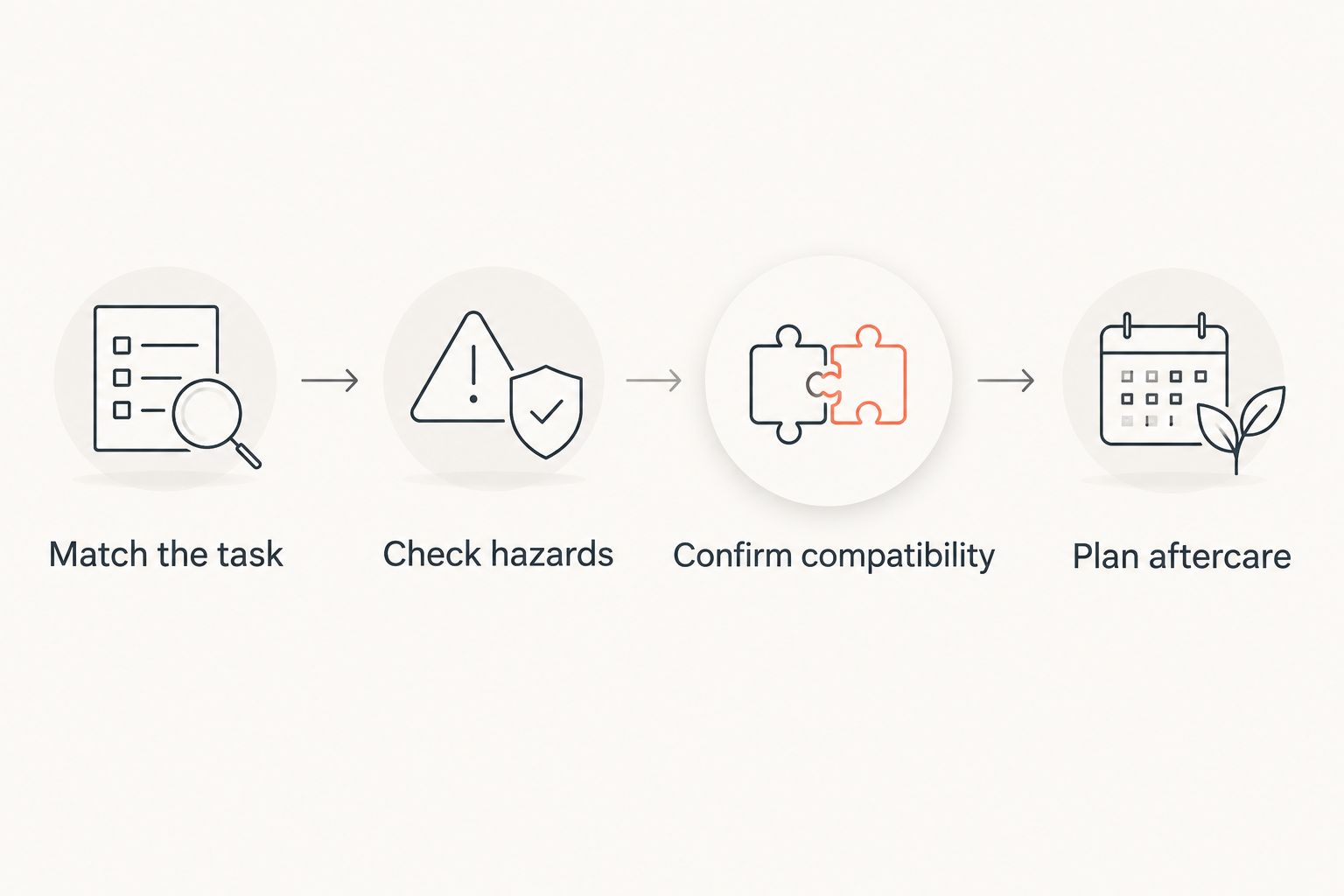
Apply this sequence to any candidate:
- Match the task: Identify what needs cleaning.
- Check hazards: Read handling and exposure instructions.
- Confirm compatibility: Check both product and firearm directions.
- Plan aftercare: Know what follows cleaning.
Before hands-on maintenance, unload the firearm, verify it is clear, keep ammunition away from the cleaning area and follow the manufacturer’s safety procedure. A cleaner comparison does not replace safe handling.
Which cleaner should you choose?
Choose Beclp biobased CLP for a combined firearm-cleaning workflow; choose a dedicated cleaner when the task requires one. For your 2026 purchase, make documentation the deciding factor—not scent, ingredient origin or a broad “non-toxic” description.
Do not add specialist cleaners merely to complete a collection. Start with the maintenance your firearm requires and add a different format only when it solves a separate job.
FAQ
What’s the best non toxic gun cleaner in 2026?
The best choice matches your cleaning task and has safety instructions you can follow. Biobased CLP suits combined routine maintenance, but the category alone does not establish that a formula is non-toxic.
Is biobased gun cleaner automatically non-toxic?
No. Biobased describes ingredient origin, not the hazards of the finished formula. Read the product’s safety data sheet and handling instructions.
Is CLP better than a dedicated bore cleaner?
CLP is better suited to combined maintenance; a dedicated bore cleaner is better suited to the specific bore-cleaning task its directions identify. Neither category replaces the other in every situation.
Can I use a household cleaner on my firearm?
Use only a cleaner whose application is supported by the firearm manufacturer’s instructions. A household cleaner’s familiar ingredients do not establish compatibility with firearm finishes or components.
Does a low-odor gun cleaner need ventilation?
Follow the product’s ventilation instructions regardless of odor. Smell is not a reliable measure of exposure risk.
Do I need to lubricate after using a gun cleaner?
Follow the firearm’s lubrication requirements and the cleaner’s aftercare directions. A cleaning-only product does not replace lubricant, while a CLP still needs correct application.
Can cleaning wipes replace a full firearm-cleaning routine?
No. Wipes suit accessible surfaces permitted by their directions, but they do not replace the internal or bore maintenance specified for your firearm.
One last thing
For your 2026 cleaning kit, add a written aftercare note beside each cleaner: remove, rinse or dry as directed, then lubricate where the firearm manual specifies. The useful distinction is not “natural versus chemical.” It is whether you understand what the product does—and what you must do next.