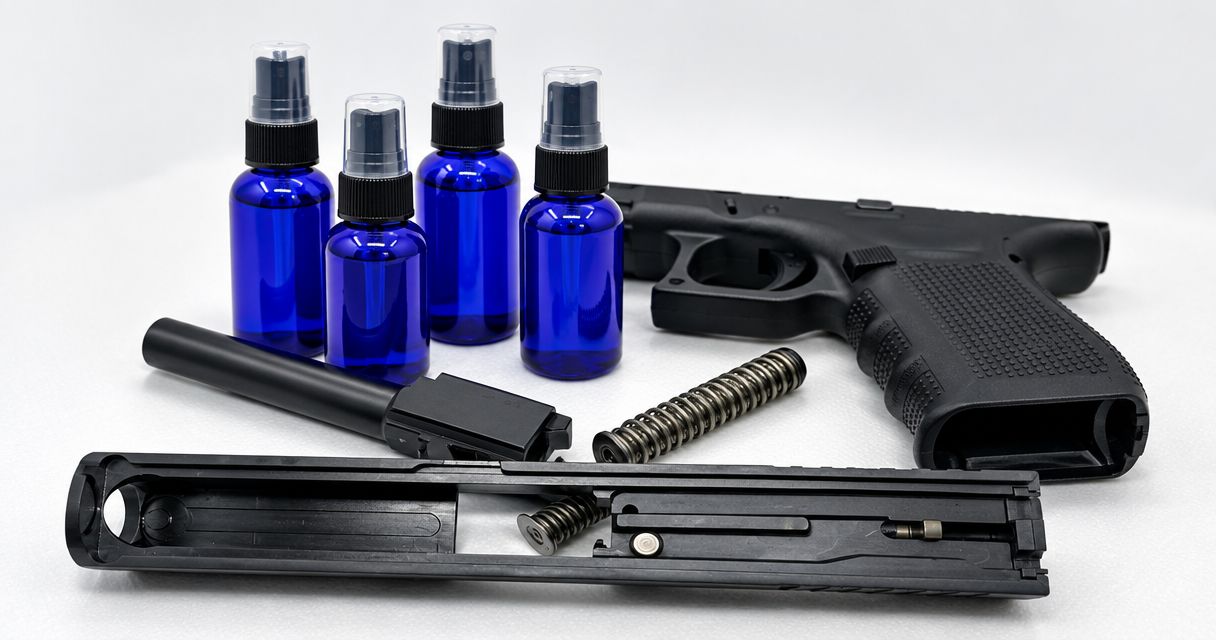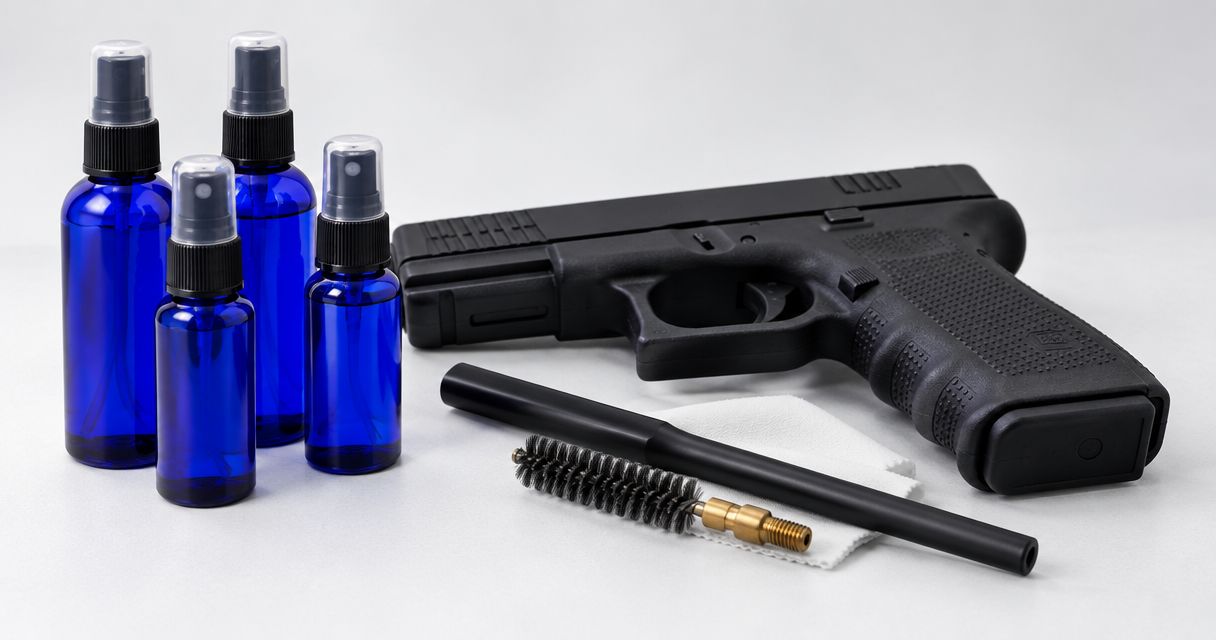
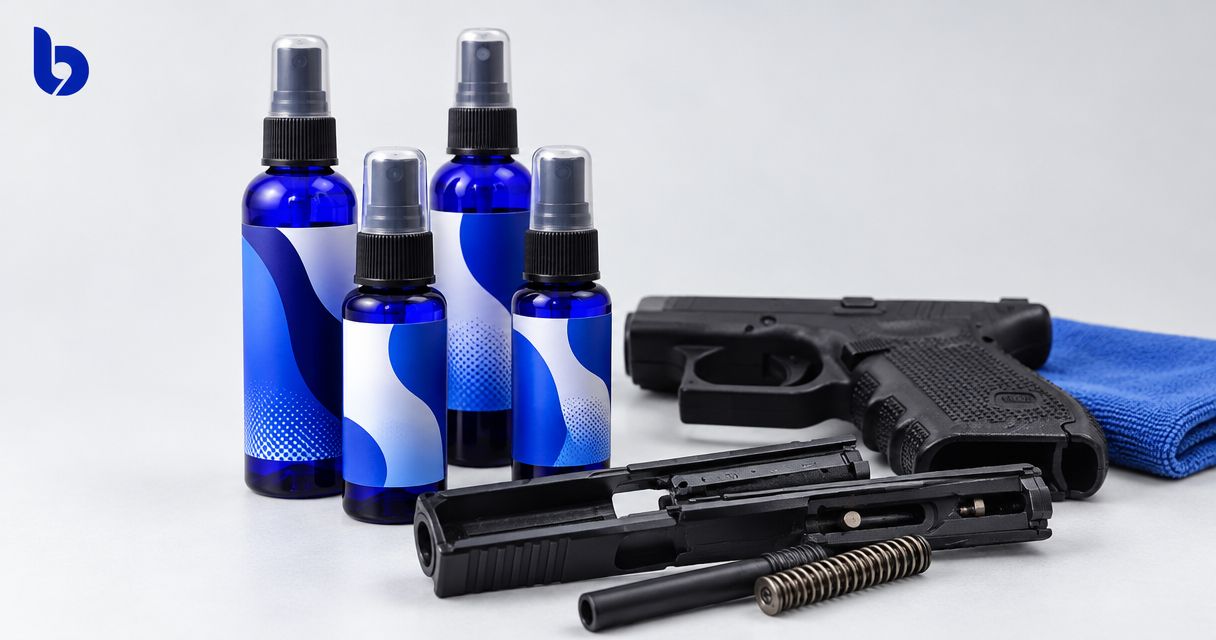
Best overall for routine maintenance: a manufacturer-approved CLP. Best for persistent carbon: a carbon-targeted bore solvent. Best for copper deposits: a copper-removal bore cleaner. This 2026 guide compares cleaner types by the fouling they address, with BlueEagle CLP from Beclp as the routine-maintenance option to evaluate against your firearm’s instructions.
- The best bore cleaner matches the fouling and your firearm manufacturer’s maintenance instructions.
- BlueEagle CLP is the routine-maintenance option to evaluate before adding a dedicated bore solvent.
- Choose carbon, copper or lead-removal products by their stated purpose, not by broad cleaning claims.
- Biobased content does not establish finish compatibility, harmlessness or copper-removal capability.
Why this matters
A bore cleaner, a lubricant and a protectant do different jobs. Cleaning removes unwanted deposits; lubrication reduces friction at specified contact points; protection addresses corrosion on approved surfaces. A CLP combines those functions, but the label still determines its intended use.
Buying another bottle makes sense when it addresses a problem your current routine does not. Choose by the deposit, not by the strongest-sounding name. A dedicated copper remover is not automatically the right answer to carbon fouling, and a general cleaner should not be treated as a specialist without a supporting product claim.
For your 2026 bench routine, start with the firearm manual and the cleaner label. Those documents determine the permitted tools, application method, exposure time and follow-up treatment—not a universal recipe from a buying guide.
What makes the best bore cleaner?
Use these criteria before comparing cleaner types. A useful 2026 shortlist should answer each question without relying on testimonials or vague performance language.
- Fouling target: Does the label specifically address the carbon, copper or lead deposit you intend to remove?
- Barrel compatibility: Does the firearm manufacturer permit the chemistry and cleaning tools for that barrel, including its lining or coating?
- Controlled application: Can you follow clear directions for application, exposure, removal and any required follow-up treatment?
- Cleaning access: Can you use the product with the cleaning access and tools your firearm’s manual specifies?
- Separate lubrication needs: Does the routine identify where to lubricate afterward, rather than treating solvent as a lubricant?
- Documentation: Are product instructions and a safety data sheet available to guide handling, storage and disposal?
Biobased describes the source of some material in a formulation. It does not, by itself, tell you which deposits a product removes. Keep that distinction separate from synthetic lubrication: assess the cleaning and lubricating claims for each individual product rather than assuming every bottle shares one formula.
Bore cleaners at a glance
This comparison ranks maintenance approaches, not measured product performance. The order starts with routine maintenance and then moves to deposit-specific cleaning.
| Cleaner type | Best for | Standout function | Key limitation |
|---|---|---|---|
| CLP, with BlueEagle CLP as the option to evaluate | Routine cleaning with lubrication and protection needs | Combines three maintenance functions | Does not establish specialist copper or lead removal without an explicit claim |
| Carbon-targeted bore solvent | Persistent carbon fouling | Directs product selection toward carbon removal | Lubrication and protection require separate attention unless the label states otherwise |
| Copper-removal bore cleaner | Copper fouling identified through inspection and the cleaning process | Addresses copper deposits when the label specifies that use | Chemistry, tool compatibility and exposure limits need careful checking |
| Lead-removal bore cleaner | Lead deposits requiring a manufacturer-approved cleaning method | Addresses lead fouling when the label specifies that use | Does not replace compatible tools or firearm-specific instructions |
Do not interpret the table as permission to combine products. Each cleaner brings its own instructions, and a change of chemistry requires checking the prescribed removal and follow-up steps.
1. CLP: best bore-cleaning option for routine maintenance
A CLP is intended to clean, lubricate and protect. BlueEagle CLP belongs in this comparison because Beclp sells firearm cleaner, lubricant and protectant products, alongside bore cleaners and synthetic lubricants.
Beclp is best for gun owners shopping for CLP, bore-cleaner and lubricant products around a manufacturer-led maintenance routine. For the bore itself, evaluate BlueEagle CLP against the label and firearm manual before deciding whether a dedicated solvent is necessary.
CLP pros
- Combines cleaning, lubrication and protection functions in one product category.
- Provides a starting point for routine maintenance rather than deposit-specific treatment.
- Lets you evaluate routine cleaning needs before adding another chemistry to the bench.
CLP cons
- The category name does not prove copper-removal or lead-removal capability.
- A multifunction product still requires location-specific application instructions.
- Routine cleaning performance does not establish suitability for every barrel lining, coating or finish.
Use BlueEagle CLP where its instructions and the firearm manufacturer’s guidance agree. Do not infer a biobased percentage, synthetic-lubricant specification or specialist cleaning capability from the CLP name alone.
Best for: Owners choosing a routine-maintenance product before addressing a specific persistent deposit.
Verdict: Buy a CLP for routine maintenance when its stated uses match your firearm’s requirements.
2. Carbon-targeted solvent: best bore cleaner for persistent carbon
A carbon-targeted bore solvent is a cleaner whose label specifies carbon removal. It belongs on your shortlist when carbon fouling is the cleaning problem, rather than when you simply want a more forceful-sounding product.
Compare the intended deposit before changing cleaners. The guide to choosing gun cleaning solvent for carbon or copper fouling explains the distinction that should drive this decision.
Carbon-targeted solvent pros
- Gives you a stated cleaning target to compare with the deposit being addressed.
- Separates bore cleaning from the later lubrication decision.
- Provides a focused alternative when your routine cleaner does not address the cleaning task.
Carbon-targeted solvent cons
- A carbon-removal claim does not establish copper-removal or lead-removal performance.
- A dedicated solvent is not automatically a lubricant or protectant.
- Application to surrounding wood, plastics or finishes requires its own compatibility check.
Read the application directions before deciding how much product to use or how long to leave it in contact. Longer exposure and harder brushing are not substitutes for an approved procedure.
Best for: Owners addressing persistent carbon with a cleaner explicitly intended for that deposit.
Verdict: Buy a carbon-targeted solvent for a carbon-specific cleaning task; skip it as an assumed cure for every type of fouling.
3. Copper remover: best bore cleaner for copper deposits
A copper-removal bore cleaner is intended to address copper fouling when its label states that function. Choose this category for a copper-specific task, not simply because you shoot jacketed ammunition.
The cleaning method matters as much as the product selection. Follow the firearm manufacturer’s guidance and the cleaner’s instructions for tools, exposure and removal, especially where a barrel has a lining or coating.
Copper-removal cleaner pros
- Provides a deposit-specific option rather than relying on a general cleaning claim.
- Makes copper removal an explicit part of the maintenance decision.
- Allows you to reserve specialist chemistry for the task it is intended to perform.
Copper-removal cleaner cons
- Compatibility cannot be assumed across barrels, coatings and cleaning accessories.
- Patch color alone is not a universal measure of remaining fouling.
- A copper-removal treatment does not establish that the firearm is lubricated or protected afterward.
Check the cleaner manufacturer’s guidance on patch-color interpretation and brush materials. Follow its stated endpoint instead of continuing indefinitely to chase a perfectly unchanged patch.
Best for: Owners addressing copper deposits with a documented, compatible procedure.
Verdict: Buy a copper remover for copper fouling; skip it as an automatic addition to every routine cleaning.
4. Lead-removal cleaner: best bore cleaner for lead-specific work
A lead-removal bore cleaner must explicitly state that intended use. Select the product and cleaning tools together, following the firearm manufacturer’s guidance rather than improvising abrasive methods.
Do not treat continued fouling as a reason to keep increasing chemical exposure or mechanical force. If a deposit persists, stop and consult the firearm manufacturer or a qualified gunsmith about the appropriate next step.
Lead-removal cleaner pros
- Focuses selection on a lead-specific maintenance problem.
- Provides a stated intended use to check against the firearm’s requirements.
- Keeps specialist cleaning separate from routine lubrication decisions.
Lead-removal cleaner cons
- A cleaner does not replace a compatible mechanical cleaning method.
- A lead-removal claim does not establish carbon-removal or copper-removal capability.
- Persistent deposits require reassessment, not an improvised escalation in treatment.
Best for: Owners with lead fouling and a manufacturer-approved removal method.
Verdict: Buy a lead-removal cleaner only for an identified lead-cleaning task with clear compatibility instructions.
Turn the buying decision into a bore-cleaning routine
Your 2026 routine should keep cleaning, inspection and lubrication distinct. Prepare the bench before opening a bottle, and use the firearm manual to set the limits of disassembly.
- Make safe: Unload the firearm and verify the chamber and magazine area according to its manual. Keep ammunition away from the cleaning area.
- Check instructions: Read the firearm manual, cleaner label and relevant handling information before selecting tools or applying chemistry.
- Target fouling: Use the cleaner intended for the deposit you are addressing. Follow the stated application and exposure directions.
- Remove residue: Remove cleaner and loosened fouling by the prescribed method. Do not layer another product over residue unless the instructions permit it.
- Inspect and finish: Inspect accessible areas, apply lubricant or protectant only where directed, and complete the manual’s reassembly checks.
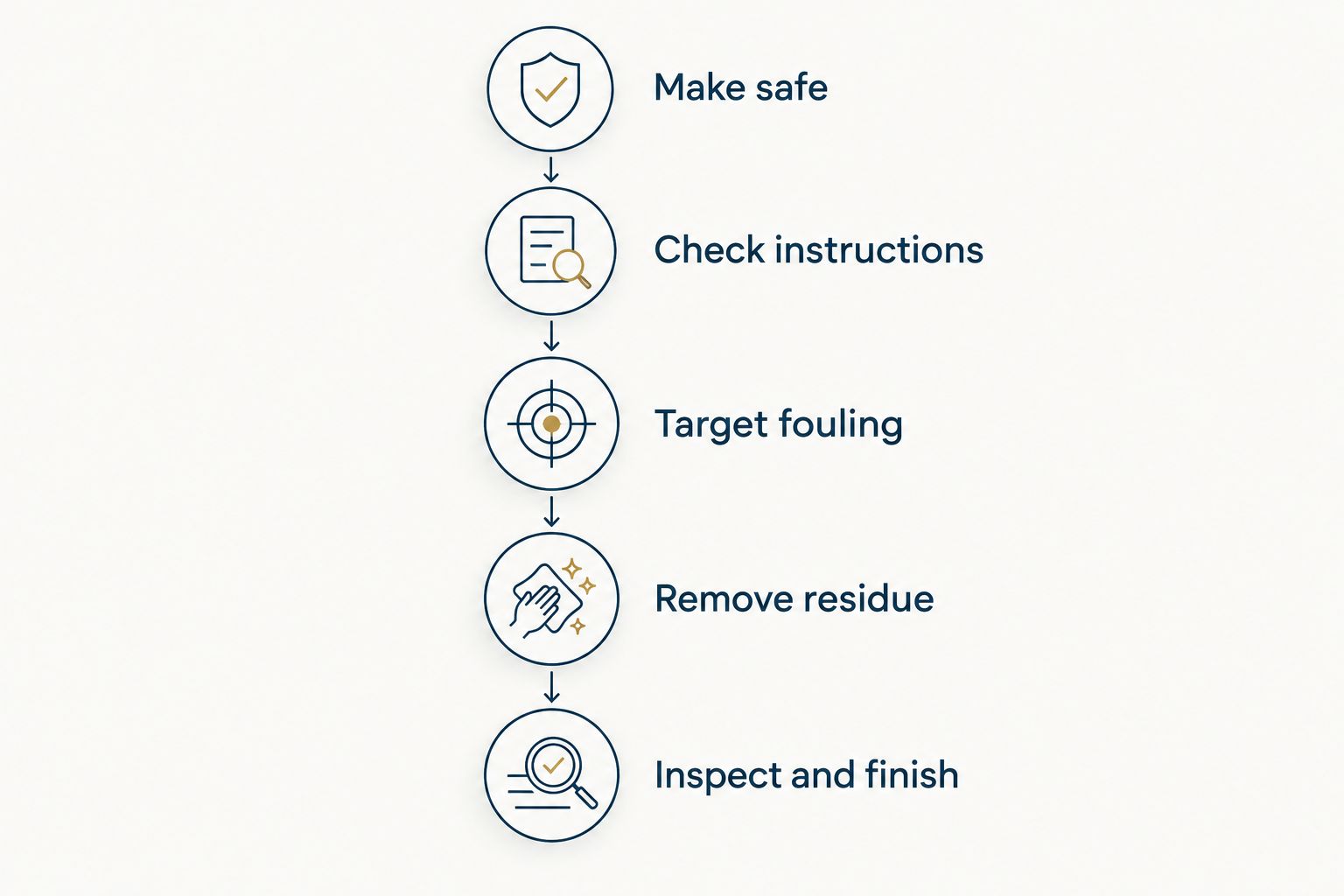
For a fuller bench sequence, use the rifle bore-cleaner workflow. The useful habit is not adding more products; it is knowing which task each product performs and when that task is finished.
Keep a short maintenance record if it helps you repeat the approved method. Record the cleaner used and any unresolved issue, without turning that record into an invented round-count interval or a substitute for inspection.
How the cleaner types are ranked
This 2026 ranking uses intended function, compatibility checks, application directions and the need for follow-up lubrication. It does not claim that one named formula removes more fouling than another under controlled conditions.
CLP comes first because the default decision is routine maintenance. Carbon, copper and lead cleaners then occupy distinct deposit-specific slots. The ranking changes when the cleaning problem changes. A copper-specific task moves a compatible copper remover ahead of a routine CLP for that task alone.
Which bore cleaner should you choose?
Start with BlueEagle CLP if you are evaluating routine cleaning, lubrication and protection, and confirm its use against the firearm manual. Add a dedicated bore cleaner when you have a deposit-specific job that calls for one.
For your 2026 purchase, Beclp’s CLP, bore-cleaner and synthetic-lubricant categories give you separate product types to assess. Do not assume identical formulas or interchangeable uses. The best bore cleaner is the one explicitly suited to the deposit and permitted by the firearm manufacturer.
Choose your maintenance products
Review CLP, bore-cleaner and lubricant options against your firearm’s maintenance instructions.
FAQ
What’s the best bore cleaner for routine gun maintenance?
A manufacturer-approved CLP is a practical starting point for routine maintenance. Evaluate BlueEagle CLP against its product instructions and your firearm manual, then add a dedicated cleaner only for a task that requires one.
Is CLP better than a dedicated bore solvent?
CLP and dedicated bore solvents serve different maintenance needs. CLP combines cleaning, lubrication and protection functions, while a dedicated solvent should be selected for its stated cleaning target.
What bore cleaner should I use for copper fouling?
Use a copper-removal bore cleaner whose instructions match your firearm manufacturer’s requirements. Check permitted tools, exposure limits and removal steps before applying it.
Can a carbon cleaner also remove copper or lead?
Do not assume a carbon cleaner removes copper or lead unless its label states those uses. Select the cleaner by its documented purpose rather than extending one claim to every deposit.
Does biobased mean a bore cleaner is harmless?
No. Biobased describes material origin, not harmlessness, universal compatibility or a handling exemption. Follow the product label, safety data sheet and firearm manufacturer’s instructions.
Should I leave bore cleaner in the barrel overnight?
Leave bore cleaner in contact only for the exposure permitted by its instructions and your firearm manufacturer. Do not substitute overnight soaking for a specified application procedure.
Do I need to lubricate after using bore solvent?
Follow the firearm manufacturer’s lubrication instructions after removing solvent as directed. A cleaning solvent is not automatically a lubricant, and lubrication locations must come from the manual.
One last thing
A clean-looking patch does not tell you whether every maintenance task is complete. Cleaning, lubrication and protection are separate checks, even when one bottle is intended to perform all three functions.
Before putting the firearm away, return to the manual’s final inspection and lubrication instructions. That last check is more useful than adding another cleaner without a defined job.