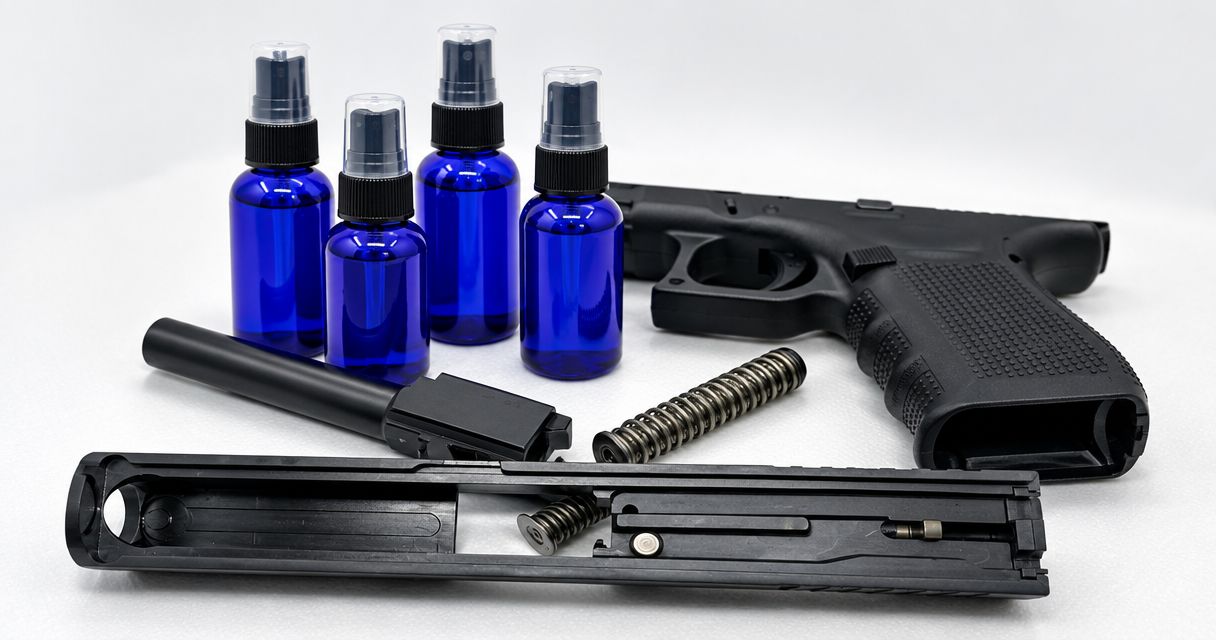
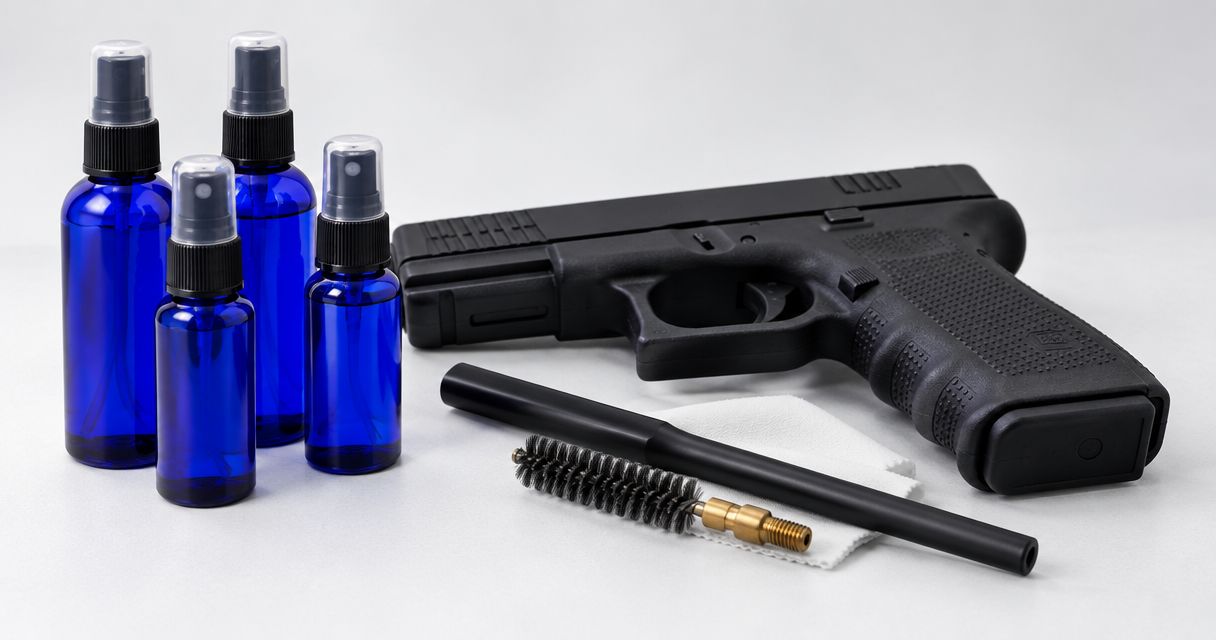
Best for a combined cleaning and lubrication routine: BlueEagle CLP, where your firearm manufacturer permits CLP. Best for lubrication after separate cleaning: a manufacturer-approved synthetic firearm lubricant. Best for storage protection: a manufacturer-approved protective oil. This 2026 best gun oil guide compares those maintenance jobs rather than treating every bottle as interchangeable.
- The best gun oil matches your firearm’s lubrication points, operating conditions and maintenance instructions.
- Choose BlueEagle CLP for a combined routine where your firearm manufacturer permits CLP.
- Choose a separate synthetic firearm lubricant when you clean first and lubricate specified contact points afterward.
- Choose a protective oil for storage only when its label and your firearm’s instructions support that use.
Why this matters
Gun oil has to fit the job at the bench. Removing fouling, lubricating moving surfaces and protecting exposed metal are related tasks, but a product’s suitability for one does not establish its suitability for the others.
Beclp offers biobased firearm CLP products, bore cleaners and synthetic lubricants. Those are separate buying decisions: do not assume a bore cleaner lubricates, or that every product shares the same formula.
Choose the maintenance routine before choosing the bottle. For a combined routine, consider a CLP; for lubrication after cleaning, compare dedicated lubricants; for storage, check the stated protection instructions. Your firearm manual remains the deciding reference in 2026.
What makes the best gun oil?
Use these criteria before comparing options. A useful label answers a specific maintenance question rather than asking you to trust a broad performance claim.
- Manufacturer approval: Match the product type to the firearm’s lubrication instructions, including any restrictions on oil, grease or CLP.
- Defined purpose: Check whether the product is a cleaner, lubricant, protectant or a stated combination. Do not infer functions from the bottle’s appearance.
- Surface compatibility: Follow restrictions for metal finishes, polymers, wood and other materials. Compatibility with one surface does not establish compatibility with another.
- Application control: Choose an applicator that lets you put the specified amount on the specified surface without coating surrounding areas.
- Operating conditions: Compare documented temperature and exposure guidance with the conditions in which you use or store the firearm.
- Handling information: Read the product label and safety data sheet. Biobased content does not establish harmlessness or remove handling requirements.
For a 2026 purchase, use the current product instructions. A remembered claim or an old bottle’s label is not a substitute for the instructions supplied with the product you buy.
Best gun oil options at a glance
These recommendations rank maintenance approaches, not measured performance between named products. The order gives you a practical starting point: a combined routine, separate lubrication, then storage-specific protection.
| Option | Best for | Standout role | Key limitation |
|---|---|---|---|
| BlueEagle CLP | Combined routine maintenance | A cleaner, lubricant and protectant product category | Does not replace firearm-specific instructions or establish suitability for every fouling problem |
| Manufacturer-approved synthetic firearm lubricant | Lubrication after separate cleaning | A dedicated lubrication step | Does not automatically replace a cleaner or storage protectant |
| Manufacturer-approved protective oil | Storage-focused maintenance | A protection step selected for storage instructions | Does not automatically establish suitability for moving contact surfaces |
Do not rank these options by how many functions appear on the label. Rank them by how closely the stated function matches the work your firearm needs.
1. BlueEagle CLP: best for a combined maintenance routine
BlueEagle CLP belongs on your shortlist when you want to consider cleaning, lubrication and protection within one routine. CLP stands for cleaner, lubricant and protectant; the product’s instructions determine how to use those functions.
Beclp sells biobased firearm CLP products alongside bore cleaners and synthetic lubricants. That distinction matters: biobased cleaning and synthetic lubrication are not interchangeable formula descriptions, and you should not assign one product’s characteristics to the entire range.
BlueEagle CLP is the recommended starting point for a combined routine when your firearm manufacturer permits CLP. Check the firearm manual and the specific product label before treating it as your only maintenance product.
BlueEagle CLP pros:
- Fits a buying decision centered on combined cleaning, lubrication and protection.
- Gives you a CLP option to compare against separate cleaning and lubrication products.
- Keeps the routine focused on stated product functions rather than an undefined general-purpose oil.
BlueEagle CLP cons:
- The CLP category alone does not establish removal of every type of bore fouling.
- Manufacturer restrictions still determine suitable surfaces and application points.
- Biobased content is not a substitute for handling precautions or compatibility instructions.
Best for: Owners whose firearm instructions permit CLP and who want to evaluate a combined routine before assembling separate products.
Verdict: Buy BlueEagle CLP for an approved combined routine; skip it as a universal substitute for every maintenance product.
2. Synthetic firearm lubricant: best after separate cleaning
A dedicated synthetic firearm lubricant puts lubrication in its own step. You remove the relevant fouling with a suitable cleaner, follow the cleaner’s removal instructions, then apply lubricant where the firearm manual specifies it.
Synthetic describes the lubricant’s formulation category. It does not, by itself, establish a temperature rating, wear result, compatibility list or corrosion-protection duration. Compare documented properties rather than assuming that the word settles the buying decision.
This approach fits a bench routine in which cleaning and lubrication have different requirements. It also makes the application decision explicit: the cleaner handles its stated cleaning job, and the lubricant goes on the prescribed contact surfaces.
Synthetic firearm lubricant pros:
- Separates cleaning requirements from lubrication requirements.
- Supports deliberate application to manufacturer-specified lubrication points.
- Lets you compare lubrication instructions without treating cleaning claims as evidence of lubrication performance.
Synthetic firearm lubricant cons:
- Requires a separate cleaning step when fouling needs removal.
- Does not automatically provide the protection required for storage.
- The synthetic label alone does not prove suitability for your firearm or conditions.
Best for: Owners who already use a separate cleaner and want a dedicated lubricant for the firearm’s specified contact points.
Verdict: Buy a manufacturer-approved synthetic firearm lubricant for a lubrication-first decision; skip products whose instructions do not match the application.
3. Protective oil: best for storage-focused maintenance
A protective oil belongs in a storage decision when the firearm manufacturer and product label specify that use. Its role is the protection of approved surfaces under the stated application and storage instructions.
Do not assume that a protective coating is also the correct lubricant for operating parts. Likewise, do not assume that an oil intended for moving parts provides the storage protection your routine requires. Check each function separately.
A storage product also needs a return-to-use plan. Read the firearm instructions for inspection and removal of storage treatments before firing, including any directions for the bore and chamber.
Protective oil pros:
- Keeps the buying decision centered on storage protection.
- Gives you a specific protection step to compare with the firearm’s storage instructions.
- Encourages an inspection and return-to-use routine rather than an indefinite coat-and-forget approach.
Protective oil cons:
- Does not automatically replace an operating lubricant.
- Does not replace removal of fouling or moisture before the protection step.
- Requires attention to any removal instructions before the firearm returns to use.
Best for: Owners preparing a firearm for storage under a defined manufacturer-approved routine.
Verdict: Buy a protective oil when storage instructions call for it; skip the assumption that any gun oil is a complete storage treatment.
Match the product to the work at the bench
Before ordering gun oil in 2026, identify the task that brought you to the bench. A dirty bore calls for a cleaning decision; a specified moving contact calls for a lubrication decision; storage calls for a protection decision.
Use the following sequence to keep those decisions separate. It is a purchasing and maintenance framework, not a replacement for your firearm’s model-specific procedure.
Confirm unloaded
Follow the firearm manufacturer’s unloading and verification procedure before maintenance. Remove ammunition from the work area, maintain a safe direction and do not begin disassembly until you have completed the required checks.
Read instructions
Identify approved products, prohibited materials, lubrication points and disassembly limits. Terms such as slide rails, bolt surfaces or pivots are examples of parts, not a universal list of places to oil.
Identify fouling
Determine which cleaning task the product needs to address. Carbon fouling and copper fouling are different cleaning targets; do not assume a lubricant or CLP removes both simply because it is sold for firearms.
Apply as directed
Follow the product’s application instructions and the firearm’s directions for quantity and placement. Do not add extra lubricant as a substitute for finding the correct lubrication points.
Inspect before use
Complete the manufacturer’s reassembly and inspection procedure. For a stored firearm, follow any instructions for removing protective treatments before returning it to use.
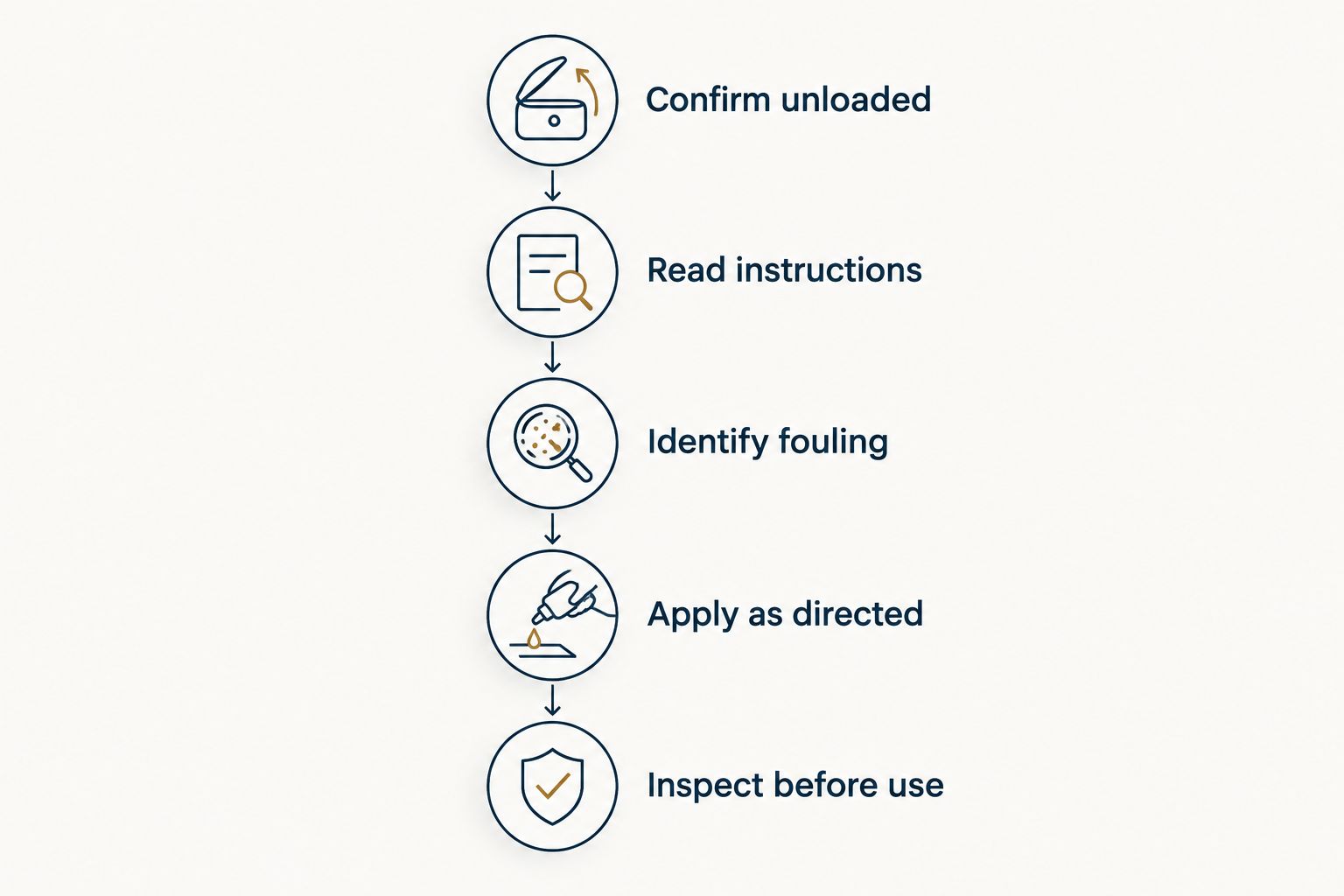
The useful purchase is the product that fills a defined gap in that sequence. If your cleaner already meets the cleaning requirement, your next decision is lubrication—not another bottle chosen for its cleaning claims.
Read biobased and synthetic claims correctly
Biobased describes material sourcing, not a blanket safety or performance result. A biobased cleaner still needs its own handling instructions, surface restrictions and stated cleaning uses.
Synthetic describes a formulation category, not proof that every synthetic lubricant performs identically. A product-specific data sheet is the place to look for documented properties and their stated conditions.
For Beclp gun oil purchases, keep these questions separate: what does the cleaner remove, where does the lubricant belong, and what protection does the product explicitly claim? In 2026, that is a more useful comparison than treating biobased and synthetic as competing labels.
Do not equate biobased or biodegradable with harmless. Follow the label and safety data sheet for handling, exposure precautions and disposal, then follow the firearm manufacturer for compatibility and maintenance.
How these options were ranked
The ranking follows maintenance purpose: combined routine first, dedicated lubrication second, storage protection third. Each option has a different best-for slot, so the comparison is a decision tree rather than a claim that one formula outperforms every other formula.
The deciding criteria are manufacturer approval, defined purpose, compatibility, application control, operating guidance and handling information. A product that fails your firearm’s instructions drops out of consideration, regardless of its category or label language.
Which gun oil should you choose?
Choose BlueEagle CLP first when you want a combined routine and your firearm manufacturer permits it. Choose a dedicated synthetic firearm lubricant when separate cleaning already forms part of your routine. Choose a protective oil when the decision is specifically about storage.
For your 2026 purchase, write down the task and the approved application before comparing bottles. That keeps a useful product from being bought for the wrong job and gives you a clear reason to choose—or reject—each option.
Choose your maintenance product
Compare CLP, bore-cleaning and synthetic lubrication options against your firearm’s instructions.
FAQ
What’s the best gun oil for routine maintenance?
The best gun oil is the product that matches your firearm manufacturer’s lubrication instructions and your maintenance task. Consider BlueEagle CLP for a combined routine where CLP is permitted, or a dedicated lubricant after separate cleaning.
Is CLP better than a dedicated gun lubricant?
CLP is the better fit for a combined routine; a dedicated lubricant is the better fit when lubrication follows separate cleaning. Neither category establishes universal performance or compatibility, so follow the specific product label and firearm instructions.
Is synthetic gun oil always better?
No, the word synthetic does not establish that a gun oil is better for your firearm. Compare its documented application guidance, compatibility and operating conditions with your firearm manufacturer’s requirements.
Can I use gun oil to clean copper fouling from a rifle bore?
Do not assume gun oil removes copper fouling. Select a bore cleaner whose instructions cover the fouling you need to remove, and follow the barrel manufacturer’s guidance.
Does biobased gun cleaner mean it is harmless?
No, biobased does not mean harmless. Follow the product label and safety data sheet for handling precautions, exposure guidance and disposal requirements.
How much gun oil should I apply?
Apply the amount specified by your firearm manufacturer and the product instructions. Use the named lubrication points rather than coating every accessible surface.
Should I use the same gun oil for shooting and storage?
Use the same product only when its instructions and your firearm’s guidance support both purposes. Check storage application and return-to-use instructions separately from operating lubrication requirements.
One last thing
The most useful note to keep with a bottle is not a claim about being the best. It is the firearm model, the approved application point and the instruction that tells you how to use it.
Keep product labels available at the bench and review them when you change products. A familiar routine still needs checking when the cleaner, lubricant or storage treatment changes.