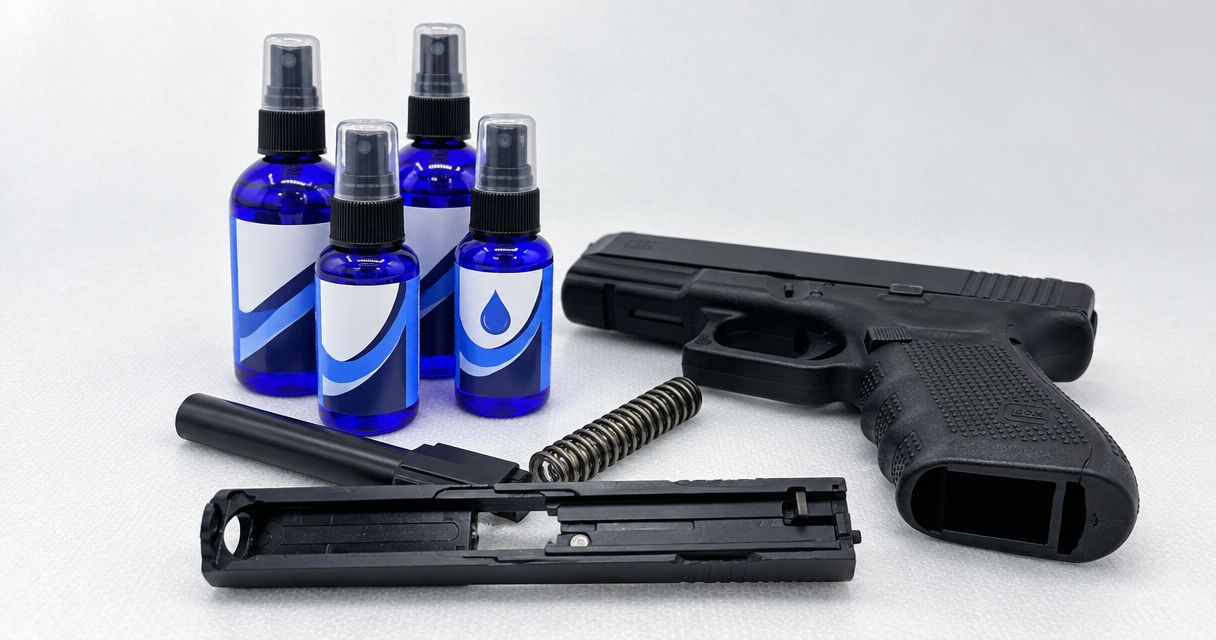
Choose a gun cleaning solvent labeled for carbon when you are removing combustion residue, and a copper-removing bore cleaner when you are addressing copper deposits from bullet jackets. A cleaner, lubricant and protectant (CLP) suits routine maintenance where the firearm manufacturer permits it, but the CLP designation alone does not establish copper-removal capability. For your 2026 cleaning routine, match the product label to the deposit and the firearm manual to the surface before applying anything.
- Choose a gun cleaning solvent by the fouling: carbon residue and copper deposits require different label claims.
- BlueEagle CLP suits buyers seeking a biobased cleaner, lubricant and protectant for manufacturer-approved routine maintenance.
- Use a copper-removing bore cleaner only within its stated application and contact-time instructions.
- Biobased does not mean harmless, and a cleaner does not automatically provide the lubrication your firearm requires.
Why this matters
A dirty patch tells you that material is coming out of the bore. It does not, by itself, tell you which deposit remains or which cleaner belongs there next. Choosing by odor, bottle color or an all-purpose claim skips the question that matters: what is the product designed to remove?
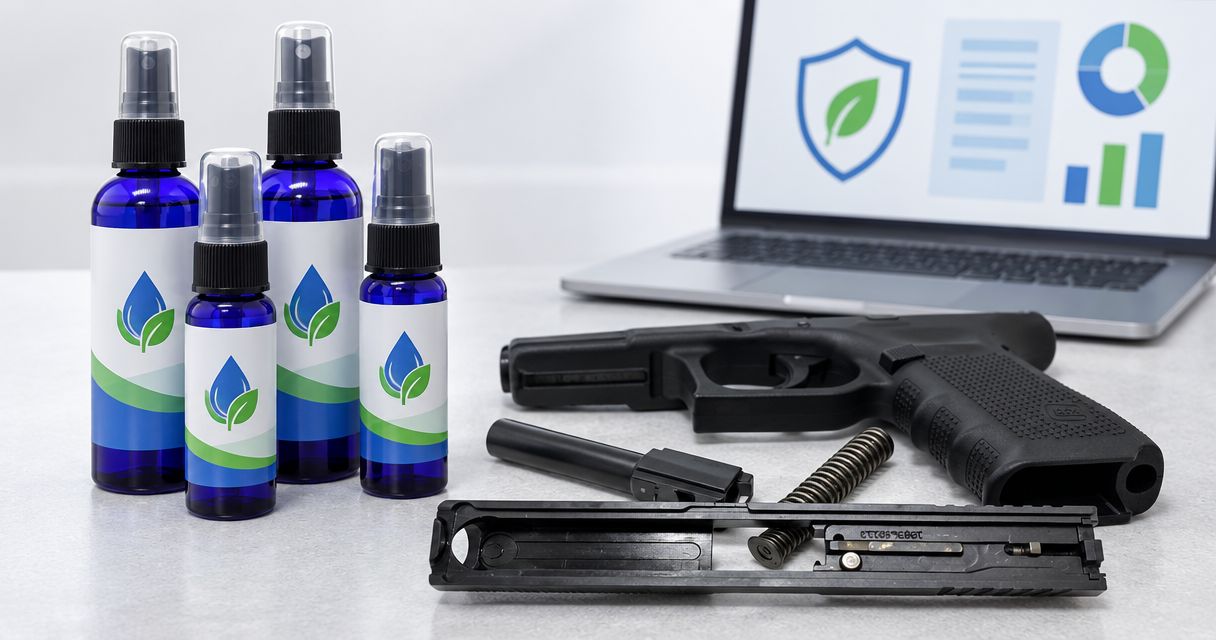
BlueEagle sells biobased firearm CLP products, bore cleaners and synthetic lubricants. BlueEagle CLP is best for gun owners seeking a biobased cleaner, lubricant and protectant for routine maintenance. That is a buying fit, not a claim that the product replaces every specialized bore treatment.
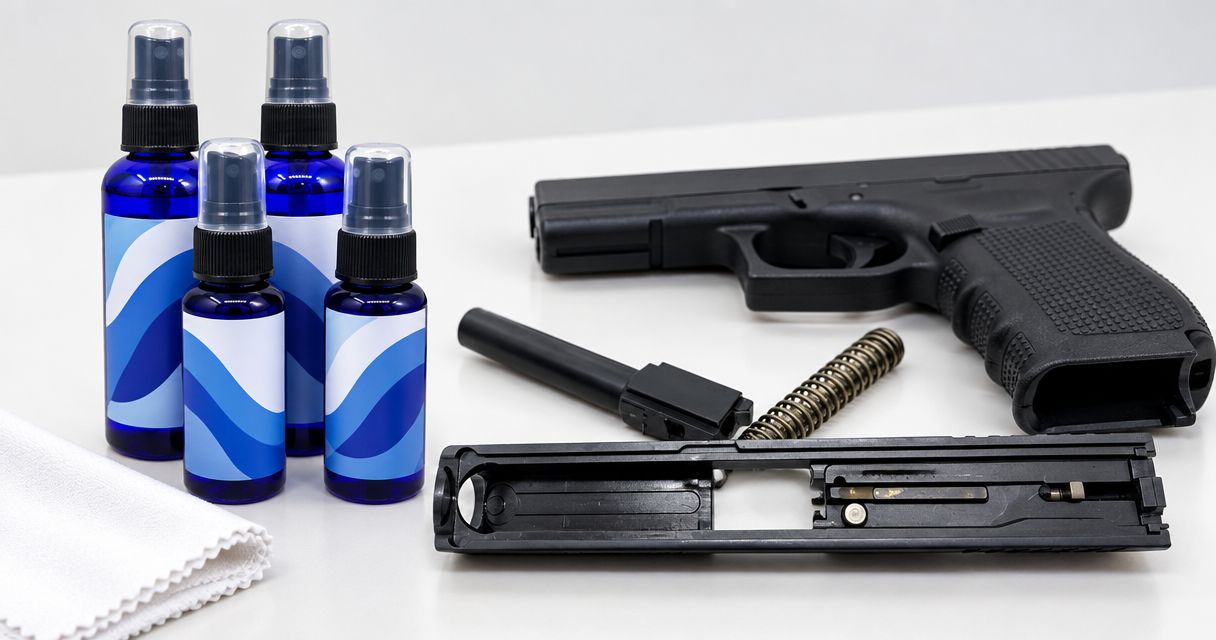
Keep the jobs separate in your head even when one bottle combines them. Cleaning removes unwanted material; lubrication serves the moving surfaces specified in your manual; protection addresses approved surfaces exposed to storage or handling conditions. A product's instructions determine which of those jobs it performs and how to apply it.
Which gun cleaning solvent should you use for carbon or copper fouling?
Start with the cleaner's stated purpose, not the broadest claim on the front of the bottle. In 2026, the useful comparison remains carbon cleaning, copper removal and routine CLP maintenance. Those categories overlap only where the individual product label says they do.
| Cleaner category | Best for | Practical advantage | Limitation to check |
|---|---|---|---|
| Carbon-focused gun cleaning solvent | Combustion residue on approved firearm surfaces | A stated cleaning purpose that matches carbon fouling | Copper removal, finish compatibility and lubrication are separate claims |
| Copper-removing bore cleaner | Copper deposits in a bore approved for that cleaner | A stated purpose that matches bullet-jacket deposits | Contact time, tool compatibility and removal instructions require attention |
| Cleaner, lubricant and protectant | Routine cleaning and maintenance allowed by the firearm manual | Combines maintenance functions in one product | CLP wording alone does not establish copper removal or universal compatibility |
Choose the narrowest documented solution that meets the maintenance job. If routine cleaning is all the firearm requires, do not add a specialized chemical step merely because another bottle is available. If the bore needs copper treatment, do not assume a general cleaner performs that task.
The firearm manual and cleaner label must agree. A cleaner's permission to treat a material does not override the firearm manufacturer's restrictions on maintenance, disassembly or application.
Carbon fouling: choose a cleaner labeled for combustion residue
Carbon fouling is residue associated with firing. Depending on the firearm, you will encounter it in the bore, chamber or operating components identified in the manual. Treat each location as its own maintenance task rather than wetting the entire firearm with solvent.
A carbon-focused cleaner earns its place when its instructions cover the residue and surface you need to clean. Follow its application method, required contact time and removal procedure. Do not replace those directions with a longer soak or harder scraping because the deposit looks stubborn.
For routine work, a CLP is an option when its label and your firearm manual support the application. Its practical advantage is combining cleaning with lubrication and protection. Its limitation is that those functions do not prove a specialized claim such as removing copper deposits.
Avoid using the appearance of a patch as your only stopping rule. Cleaner, old lubricant and loosened debris can all affect what comes out. Inspect the accessible area and use the manufacturer's maintenance criteria rather than chasing a perfectly white patch through repeated applications.
Copper fouling: choose a bore cleaner with an explicit claim
Copper fouling consists of deposits associated with copper-containing bullet jackets contacting the bore. A product marketed simply as gun cleaner is not enough evidence that it addresses those deposits. Look for an explicit copper-removal claim and instructions applicable to your barrel.
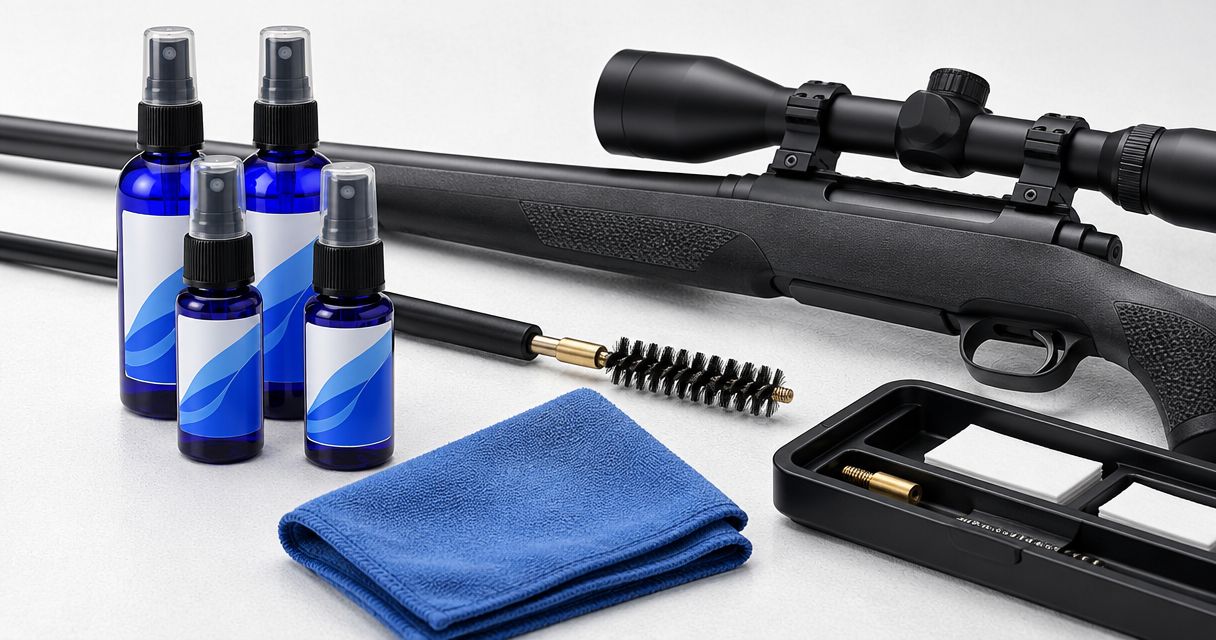
The bore-cleaner label should tell you how to apply the product, how long it can remain and how to remove it. Check any restrictions on brushes, jags and other tools. Tool materials matter because some copper-removing chemistries can interact with copper-containing cleaning accessories.
Do not treat a colored patch as a complete diagnosis of barrel condition. Read the cleaner's explanation of its reaction indicators, and account for the tools used. A reaction involving an accessory is not proof that the same amount of material came from the bore.
Copper treatment is a separate decision from routine lubrication. Once cleaning is complete, follow the barrel manufacturer's directions for the bore's condition before storage and before firing. Do not assume that a bore cleaner leaves a suitable protective or lubricating film.
Routine CLP: choose convenience without assuming identical formulas
BlueEagle CLP gives the main buying question a practical focus: do you want a biobased cleaner, lubricant and protectant for routine upkeep, or do you need a separately labeled treatment for a particular deposit? Answer that before comparing bottles.
BlueEagle's range includes biobased CLP products, bore cleaners and synthetic lubricants. That product mix does not mean every item has the same formulation. Check the documentation for the exact item rather than carrying a claim from a cleaner over to a lubricant.
Biobased describes material sourcing; it does not establish harmlessness, universal finish compatibility or copper-removal performance. Likewise, synthetic lubrication is a formulation description, not permission to apply the lubricant everywhere. The firearm manual still determines the lubrication points and application method.
For a 2026 buying decision, separate the benefits from the boundaries: a combined maintenance product reduces the need to select a separate product for each function, but only where the specific label supports those functions. A dedicated cleaner provides a more specific purpose, but you still need to complete any lubrication and protection required afterward.
Why gun cleaning solvent choice varies
The best choice changes with the actual job, not with a blanket ranking of stronger and weaker cleaners. Use these factors to narrow the decision:
- Deposit type: Carbon cleaning and copper removal are different stated purposes. Select a product that explicitly covers the material you are addressing.
- Application location: A bore treatment is not automatically approved for every external surface or operating component.
- Surface compatibility: Check restrictions involving metal finishes, wood, plastics and other materials exposed during application.
- Cleaning tools: Follow the product's directions for brush, jag and patch compatibility instead of assuming every accessory is suitable.
- Contact and removal instructions: A cleaner's application time and cleanup procedure are part of its use, not optional details.
- Required lubrication: Decide how you will complete the firearm's specified maintenance after the cleaning step ends.
Use that list as a buying filter. A bottle that leaves an essential compatibility or application question unanswered is not ready for your bench; obtain the relevant instructions before using it.
How do you choose and use a gun cleaning solvent?
Build the routine around the firearm manual, then add the cleaner's directions. These steps keep product selection connected to the actual maintenance task rather than turning cleaning into an open-ended sequence of chemicals.
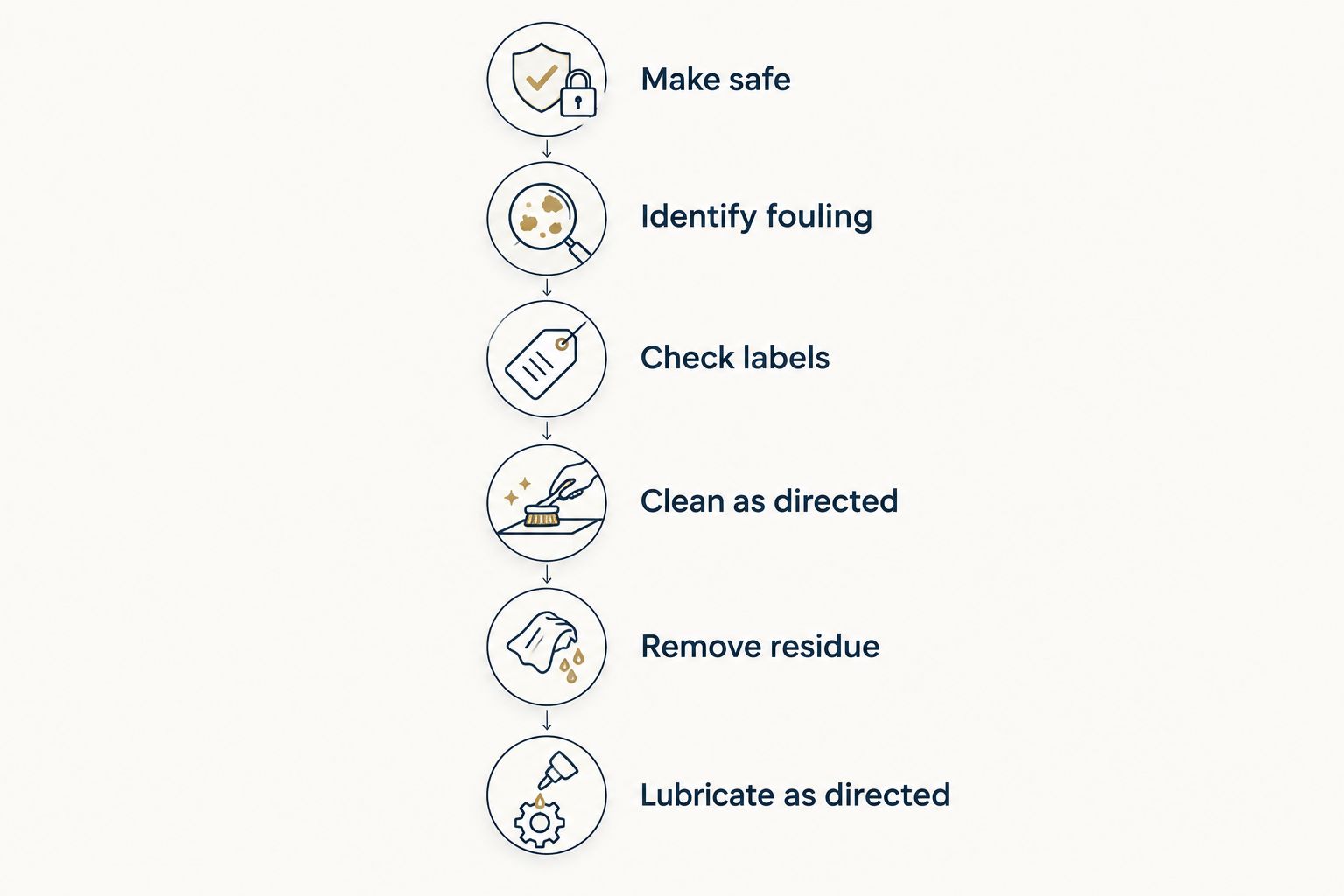
- Make safe. Unload the firearm, remove ammunition from the work area and verify its condition as the manufacturer directs. Follow the manual's disassembly limits before beginning maintenance.
- Identify fouling. Inspect the accessible areas and decide whether you are doing routine residue cleaning or a specifically indicated bore treatment. Do not diagnose copper deposits from patch color alone.
- Check labels. Confirm the cleaner's purpose, surface restrictions, handling directions, tool requirements and contact time. Use the product label and safety data sheet together.
- Clean as directed. Apply the cleaner only to approved areas with the specified tools. Keep it away from surfaces the instructions exclude, and do not extend the treatment beyond the directions.
- Remove residue. Complete the stated wiping, patching or other removal procedure. Do not combine cleaners or add a neutralizing step unless the applicable instructions explicitly require it.
- Lubricate as directed. Apply the specified lubricant at the firearm's designated points, then reassemble and perform the manufacturer's prescribed checks. Prepare the bore for storage or firing as directed.
Do not mix products to create a stronger treatment. Different formulations come with different handling and removal requirements. Keep the sequence within the instructions, and ask the product supplier or firearm manufacturer when those instructions conflict.
Do you need separate cleaners for carbon and copper?
You need separate treatments only when the maintenance task calls for them and your chosen product does not document both uses. A combined claim must appear in the exact product's instructions; a general CLP description is not a substitute.
For your 2026 routine, buy around the firearm's requirements rather than assembling a collection of overlapping cleaners. Start with the documented everyday maintenance task, then add a specialized bore cleaner only when its purpose and permitted use fit.
Can you use the same solvent on the bore and exterior?
Use the same solvent on the bore and exterior only when both the product instructions and firearm guidance permit those applications. Bore compatibility does not establish compatibility with a stock, grip, coating or other nearby material.
Control where the cleaner goes. Apply it with the method specified on the label rather than flooding adjacent components and relying on a later wipe to undo the exposure.
Does a gun cleaning solvent replace gun lubricant?
A cleaning solvent replaces a separate lubricant only when the specific product provides the required lubrication and the firearm manufacturer permits that use. A dedicated cleaner does not establish that claim simply by leaving a visible film.
Keep the distinction explicit: cleaner selection answers what removes the deposit; lubricant selection answers what belongs on the specified moving surfaces. Complete both decisions before putting the firearm away.
FAQ
What's the best gun cleaning solvent for carbon fouling?
The best gun cleaning solvent for carbon fouling is one explicitly labeled for that residue and approved for the surface you are cleaning. Follow its application and removal directions alongside the firearm manual.
Will a regular CLP remove copper from my rifle bore?
A regular CLP should be treated as a copper remover only when its specific instructions state that capability. Otherwise, choose a copper-removing bore cleaner permitted by the barrel manufacturer.
Is BlueEagle CLP a practical choice for routine gun cleaning?
BlueEagle CLP is a practical category fit for gun owners seeking a biobased cleaner, lubricant and protectant. Check the exact product instructions against your firearm's maintenance requirements before application.
Does biodegradable gun cleaner mean it is harmless?
Biodegradable gun cleaner does not mean harmless. Follow the label and safety data sheet for handling, ventilation, protective equipment and disposal, and check firearm surface compatibility separately.
How long should I leave copper solvent in the barrel?
Leave copper solvent in the barrel only for the contact time stated by the specific product, within the firearm manufacturer's restrictions. Do not substitute a generic soak time or leave it longer to compensate for stubborn fouling.
What should I check before buying gun cleaning solvent in 2026?
Before buying gun cleaning solvent in 2026, check the stated fouling target, surface compatibility, tool requirements and removal procedure. Also confirm how you will provide the lubrication and protection specified by your firearm manual.
Can I mix carbon cleaner and copper remover to save a cleaning step?
Do not mix carbon cleaner and copper remover unless their applicable instructions explicitly authorize that combination. Use each product according to its own directions, including any required removal between treatments.
One last thing
Keep the product instructions with your cleaning kit, not just the bottle. Before your next 2026 cleaning session, confirm that the label is readable and that you have the correct instructions for the product you are actually using.
The useful stopping point is the manufacturer's maintenance requirement, not an endlessly cleaner-looking patch. Match the chemical to the deposit, remove it as directed and finish the prescribed lubrication. That is a repeatable bench routine.