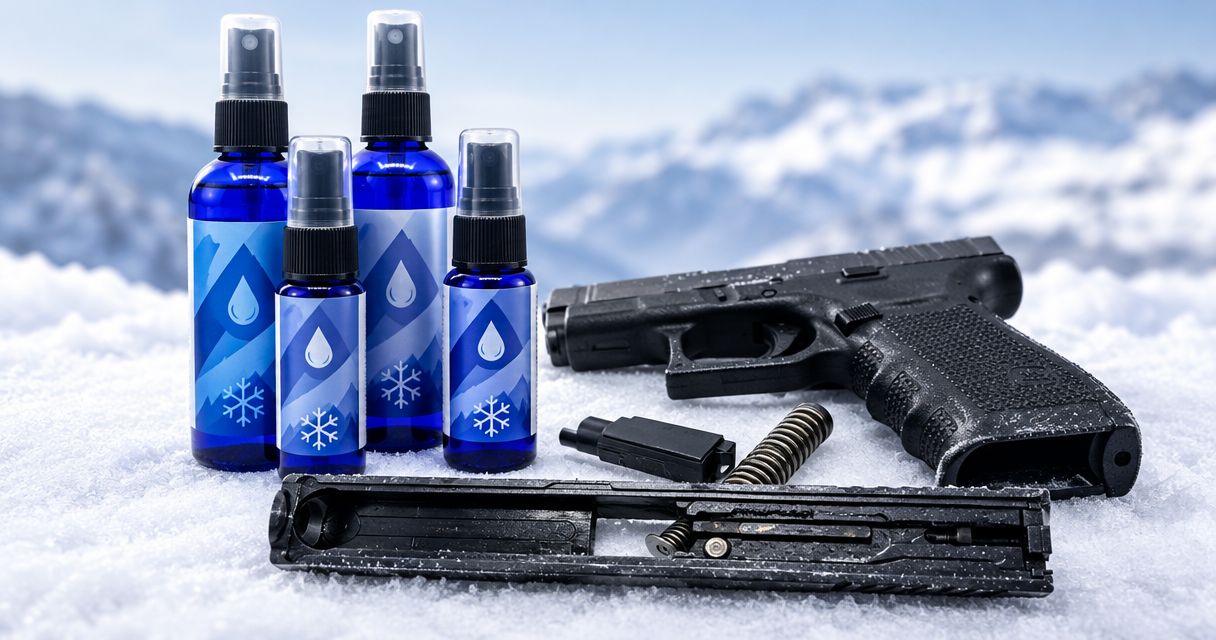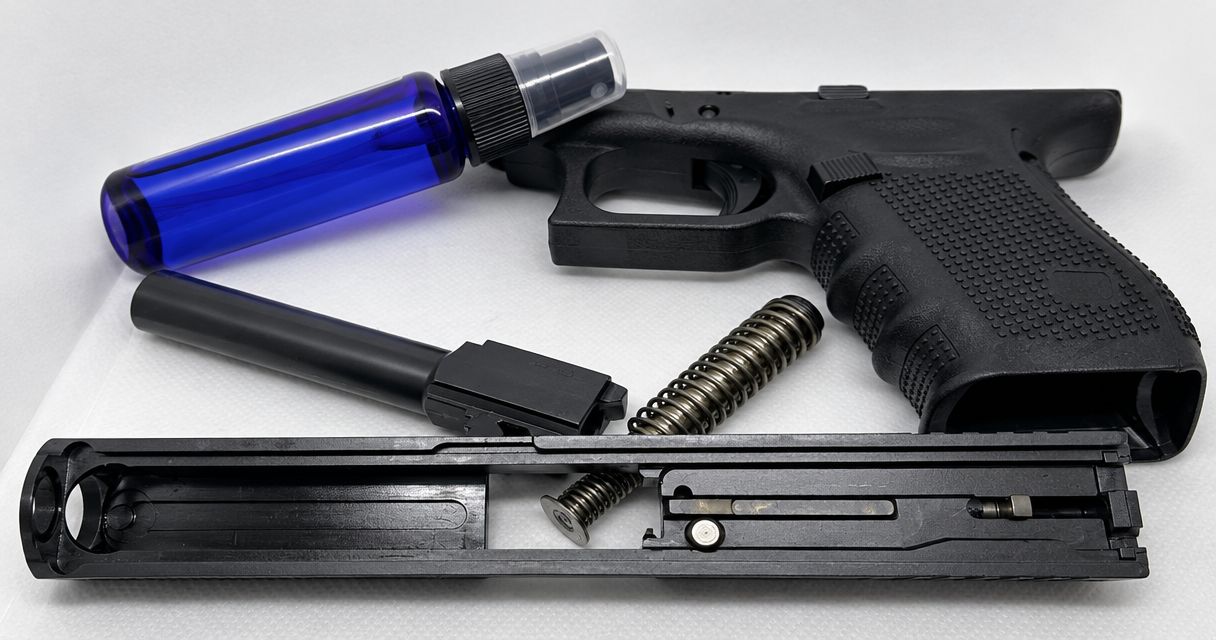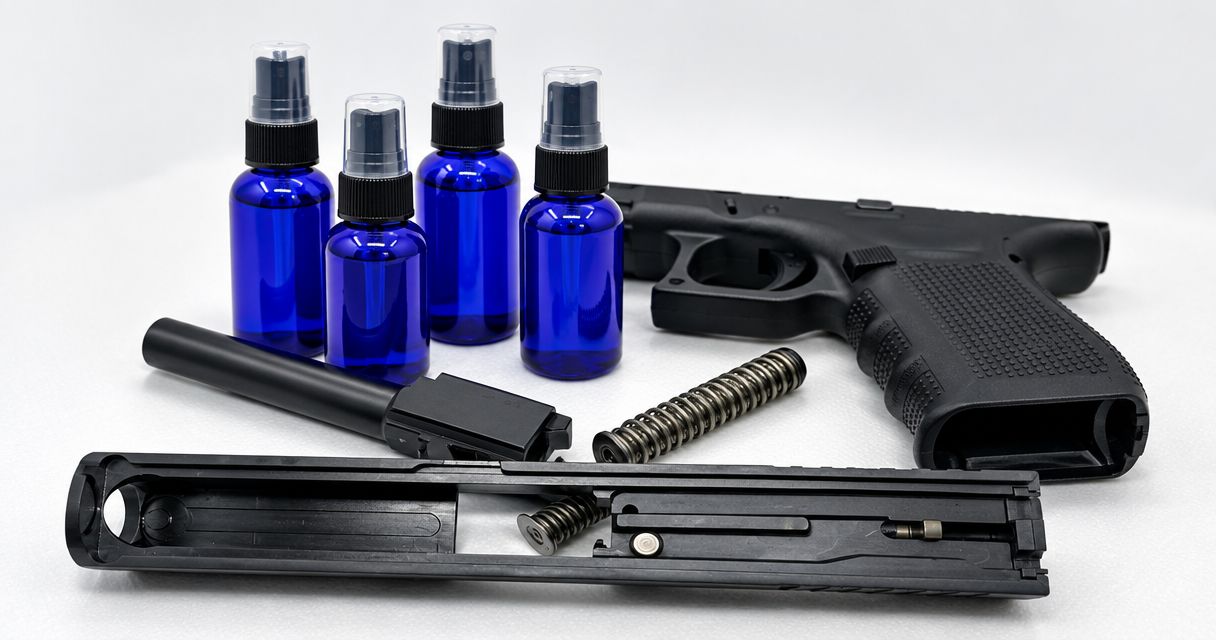
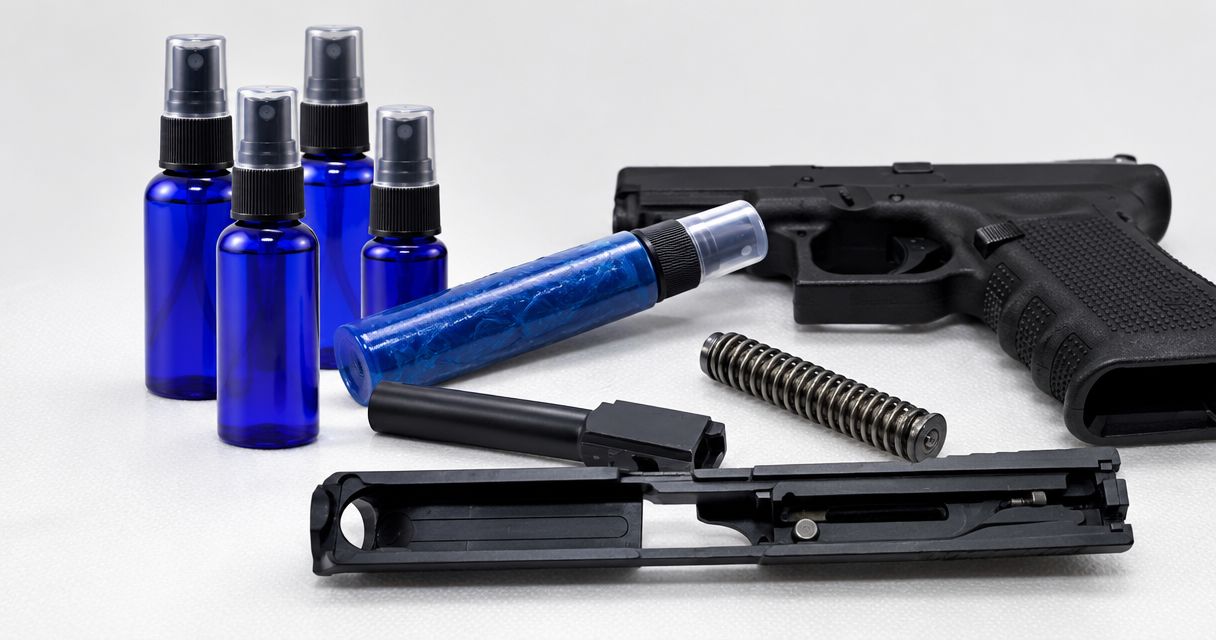
The best gun lubricant is the oil or grease your firearm manufacturer specifies for each lubrication point, not one formula for every surface. Choose oil where the manual calls for oil and grease where it calls for grease; neither replaces removing fouling before lubrication. For your 2026 maintenance routine, match the product, application point and amount to the manual rather than choosing by thickness alone.
- The best gun lubricant matches your firearm manual: oil and grease are not interchangeable at every lubrication point.
- Gun oil flows; grease resists flow. Placement and the specified amount matter more than a blanket preference.
- Beclp fits gun owners seeking CLP, bore cleaners and synthetic lubricants for their maintenance routine.
- Clean fouling before lubricating, and check product labels for finish compatibility and application instructions.
Why this matters
A lubricant belongs at the contact points your firearm manufacturer identifies. Covering every visible surface does not make the firearm better lubricated, and a heavy coating does not correct a missed application point. Correct placement comes before choosing a thicker product.
Beclp offers firearm cleaner, lubricant and protectant products, bore cleaners and synthetic lubricants. Keep those jobs distinct when buying supplies: cleaning removes unwanted material, lubrication reduces friction between moving surfaces, and protection addresses exposed surfaces according to the product instructions.
For a 2026 bench setup, start with the firearm manual and the maintenance task. A label that says synthetic, biobased or CLP does not by itself tell you which surfaces to treat or how much product to apply.
Best gun lubricant: should you choose oil or grease?
Choose by the lubrication point, not by a universal oil-versus-grease ranking. Oil flows more readily than grease. Grease is generally lubricating oil held in a thickener, which gives it a consistency that resists flow; that physical difference does not establish compatibility with your firearm.
The useful comparison is what each category does and what you need to verify before applying it. These are category characteristics, not claims about a particular formula.
| Category | Best for | Practical advantage | Limitation | What to check |
|---|---|---|---|---|
| Gun oil | Points where the firearm manual specifies oil | Flows readily and can be applied to designated contact points | Can migrate from where you applied it; excess needs attention | Oil specification, application points and amount |
| Gun grease | Points where the firearm manual specifies grease | Resists flow compared with oil | Does not automatically suit passages or surfaces intended for oil | Grease specification, application method and removal instructions |
| CLP | Routine cleaning, lubrication and protection where the firearm and product instructions permit it | Combines those maintenance functions in one product category | Its combined functions do not establish suitability for every fouling type or lubrication point | Label directions, material compatibility and the firearm manual |
Do not read the table as permission to substitute grease wherever oil seems to disappear. First check whether the surface needs lubrication, whether the application was correct and whether the manual specifies a particular lubricant.
Likewise, the presence of rails, hinges or sliding parts does not settle the choice. Different firearm designs have different instructions. The manual for the actual model outranks a general recommendation for a firearm category.
Gun oil: best for points that specify oil
Gun oil is the straightforward choice when the manufacturer calls for oil. Apply it to the named points using the method in the manual, then address excess as directed. Do not turn a targeted application into a general soaking.
Its flow is useful, but flow also explains why you should inspect where the oil ends up. Oil on an intended contact surface and oil migrating onto an adjacent surface are not the same maintenance result.
For your 2026 buying decision, read the lubricant label alongside the firearm instructions. Confirm that the product is intended for the task and that its directions do not conflict with the materials or surfaces you will treat.
A synthetic gun oil guide helps separate a dedicated lubricant purchase from a cleaner purchase. Synthetic describes the base-fluid category; it does not establish a product's temperature limits, finish compatibility or service interval.
Choose gun oil when the manual specifies oil. Its practical limitation is that you still need to control placement and quantity; the word synthetic does not remove that requirement.
Gun grease: best for points that specify grease
Gun grease is appropriate when the firearm manufacturer specifies it. Its resistance to flow distinguishes it from oil, but that property is not a reason to spread it across every moving part.
Use the grease specification and application method the manual gives. If an instruction calls for a film, follow that instruction rather than packing the area with grease. More visible material is not proof of better coverage at the working contact surface.
Grease also creates a separate cleaning consideration: you need to remove old lubricant and contamination using an approved method before renewing the application. Adding fresh grease over dirty material is not a substitute for inspection and cleaning.
Choose gun grease for designated grease points, not as a blanket upgrade over oil. If the manual does not identify a grease application, ask the firearm manufacturer before changing the routine.
CLP: best for an approved combined maintenance routine
CLP means cleaner, lubricant and protectant. That combined purpose makes the category relevant when you want a routine product, but the label still needs to support the specific work you intend to do.
Beclp's BlueEagle CLP belongs in that buying decision alongside its bore-cleaner and synthetic-lubricant options. Choose among those functions by the task: routine cleaning and lubrication, bore fouling removal, or a dedicated lubrication step. Do not assume the products share identical formulas.
The practical advantage of CLP is its combined purpose. The limitation is that a combined-purpose label does not establish effectiveness against every deposit, compatibility with every finish, or suitability wherever a manual specifies a separate lubricant.
Biobased and synthetic also answer different questions. Biobased concerns the origin of material in a formulation; synthetic concerns how a base fluid is made. Neither term, standing alone, proves that a product is harmless or approved for a particular firearm.
Why the best gun lubricant varies
Your 2026 choice should turn on the firearm and the job, not a general claim that oil or grease always wins. Check these factors before buying:
- Manufacturer specification: An explicit instruction for oil, grease or a particular specification is the starting point.
- Lubrication point: Treat the named contact surfaces, not every surface exposed during disassembly.
- Application amount: Follow the manual's wording and method rather than judging by how wet a part looks.
- Operating conditions: Check published product guidance against the conditions in which you use and store the firearm.
- Materials and finishes: Confirm compatibility with the surfaces the product will contact, including nearby wood or coatings.
- Maintenance task: Distinguish fouling removal, lubrication and surface protection before selecting a product.
If two products both satisfy the required specification, compare their directions and supporting technical information. A product with clear application guidance gives you something usable at the bench; an unsupported superlative does not.
How do you apply oil or grease correctly?
Start with the firearm manufacturer's safety and disassembly instructions. Unload the firearm, verify its unloaded condition and keep ammunition away from the cleaning area before maintenance. Follow product-label precautions for handling, ventilation and protective equipment.
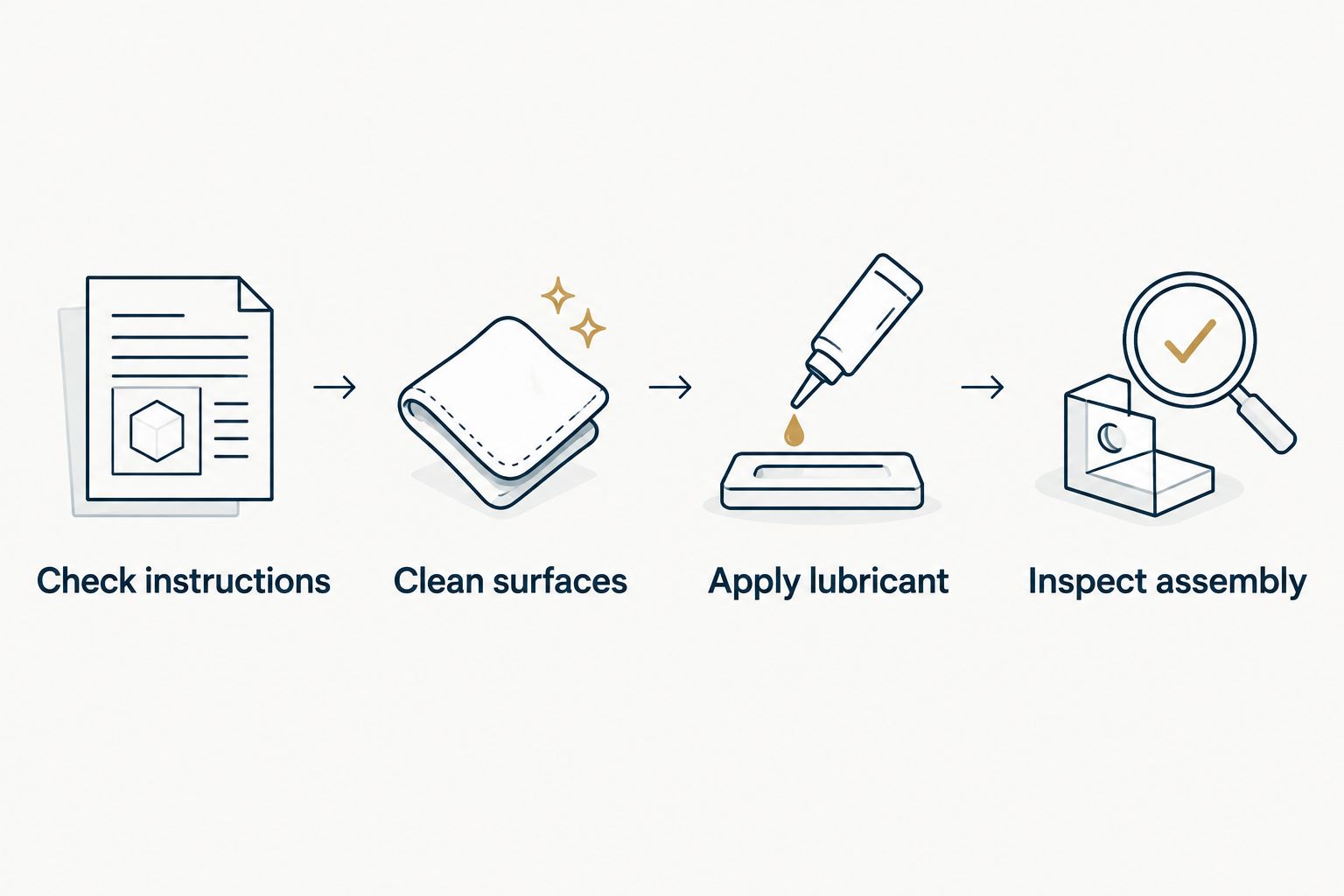
Use this sequence to keep the choice tied to the actual job:
- Check instructions. Identify the lubricant type, approved application points and specified method in the firearm manual. Read the product label before opening the container.
- Clean surfaces. Remove fouling and old lubricant using the firearm manufacturer's approved process. Follow any instructions for removing cleaner residue or drying before lubrication.
- Apply lubricant. Treat only the designated points with the specified type and amount. Keep the applicator under control rather than allowing product to run into adjacent areas.
- Inspect assembly. Address excess as directed, reassemble according to the manual and perform the manufacturer's prescribed checks before use.
The sequence matters because a clean-looking outer surface does not confirm that the working contact points are clean. Inspect the areas the manual identifies instead of using appearance alone to decide whether the job is finished.
Leave chamber, bore and other surface treatment to the firearm manufacturer's instructions, including preparation before firing. A lubrication instruction for one component is not permission to coat another.
Can you replace gun oil with grease?
Replace gun oil with grease only when the firearm manufacturer permits that substitution. A thicker consistency changes how the lubricant flows and remains on a surface. It does not establish that the replacement will suit the mechanism.
If the manual names oil and you want to use grease, ask the manufacturer about that exact model and application point. Describe the intended product and surface rather than asking whether grease is generally better.
The same rule applies in reverse. Oil is not automatically a suitable replacement for a grease application simply because both products lubricate.
Does synthetic gun oil replace a bore cleaner?
Synthetic gun oil does not establish a bore-cleaning capability merely because it is synthetic. A dedicated lubricant and a bore cleaner have different intended jobs. Read the label for the actual function rather than treating either category as interchangeable.
Use the firearm manufacturer's bore-cleaning method and select a cleaner intended for the fouling you are addressing. Then follow the separate instructions for lubrication and storage protection, including any required preparation before firing.
Should you mix gun oil and grease?
Do not mix gun oil and grease without compatibility guidance for the products and firearm. Their shared lubrication purpose does not establish that their formulations are compatible or that the mixture meets the original specification.
When changing products in your 2026 routine, follow the approved cleaning process first. Start with a defined application rather than adding a new formula over an unidentified old coating.
FAQ
What's the best gun lubricant for everyday maintenance?
The best gun lubricant is the product that meets your firearm manufacturer's instructions for the specific lubrication point. Choose oil, grease or CLP by that instruction, then follow the product label for application and compatibility.
Is gun grease better than gun oil?
Gun grease is not universally better than gun oil. Grease resists flow, while oil flows more readily; the firearm manufacturer's specification determines which property belongs at each point.
Can I use CLP instead of separate gun oil?
You can use CLP for lubrication where the firearm instructions and the CLP label permit it. A combined cleaner, lubricant and protectant does not automatically replace a separately specified oil or grease.
Does synthetic gun oil work on every firearm finish?
A synthetic label does not establish compatibility with every firearm finish. Check the product's compatibility information and the firearm manufacturer's guidance before application.
How much gun lubricant should I apply?
Apply the amount and method specified in your firearm manual and the product directions. Do not use a universal drop count or judge the result only by visible wetness.
Should I clean the gun before adding lubricant?
Clean the designated surfaces according to the firearm manufacturer's maintenance procedure before renewing lubrication. Adding lubricant over fouling is not a replacement for cleaning and inspection.
Does biobased gun cleaner mean harmless?
Biobased does not mean harmless. Follow the product label and safety data sheet for handling precautions, and check the firearm manufacturer's instructions for material compatibility.
One last thing
Mark the lubrication points in your manual before changing products. Write down which points specify oil, which specify grease and which require another treatment. Keep those notes with your bench supplies so the next cleaning follows the same instructions.
When choosing Beclp firearm maintenance products, match each purchase to that list. In a 2026 routine, a clearly assigned job is more useful than another bottle with no defined application.