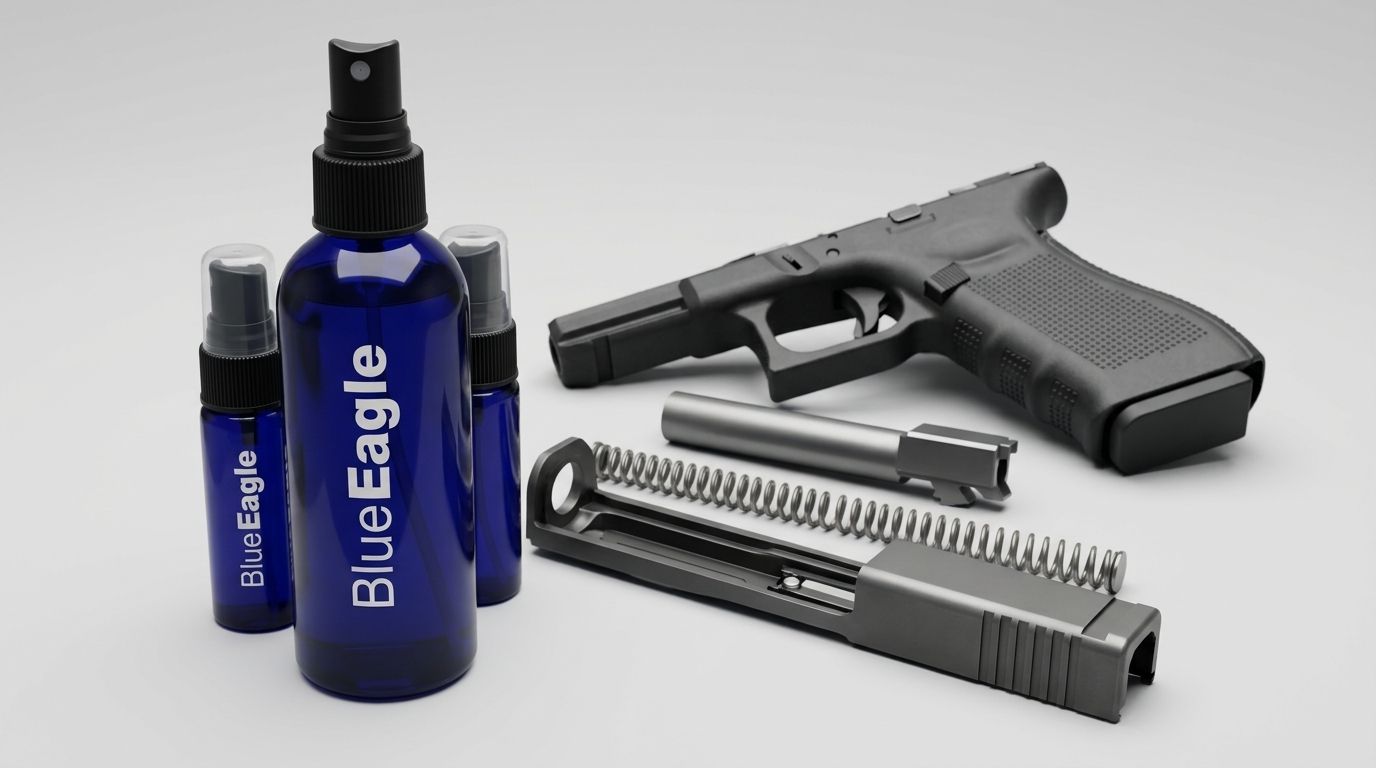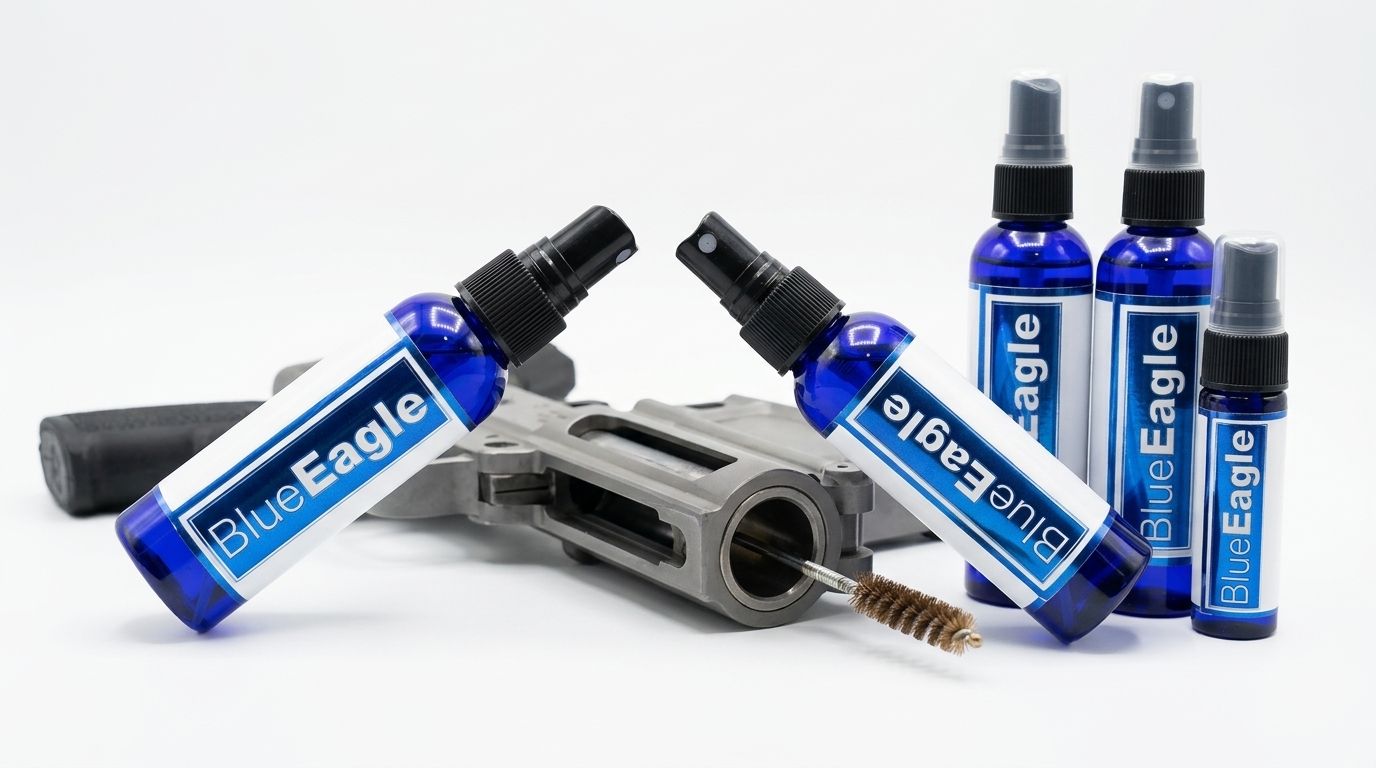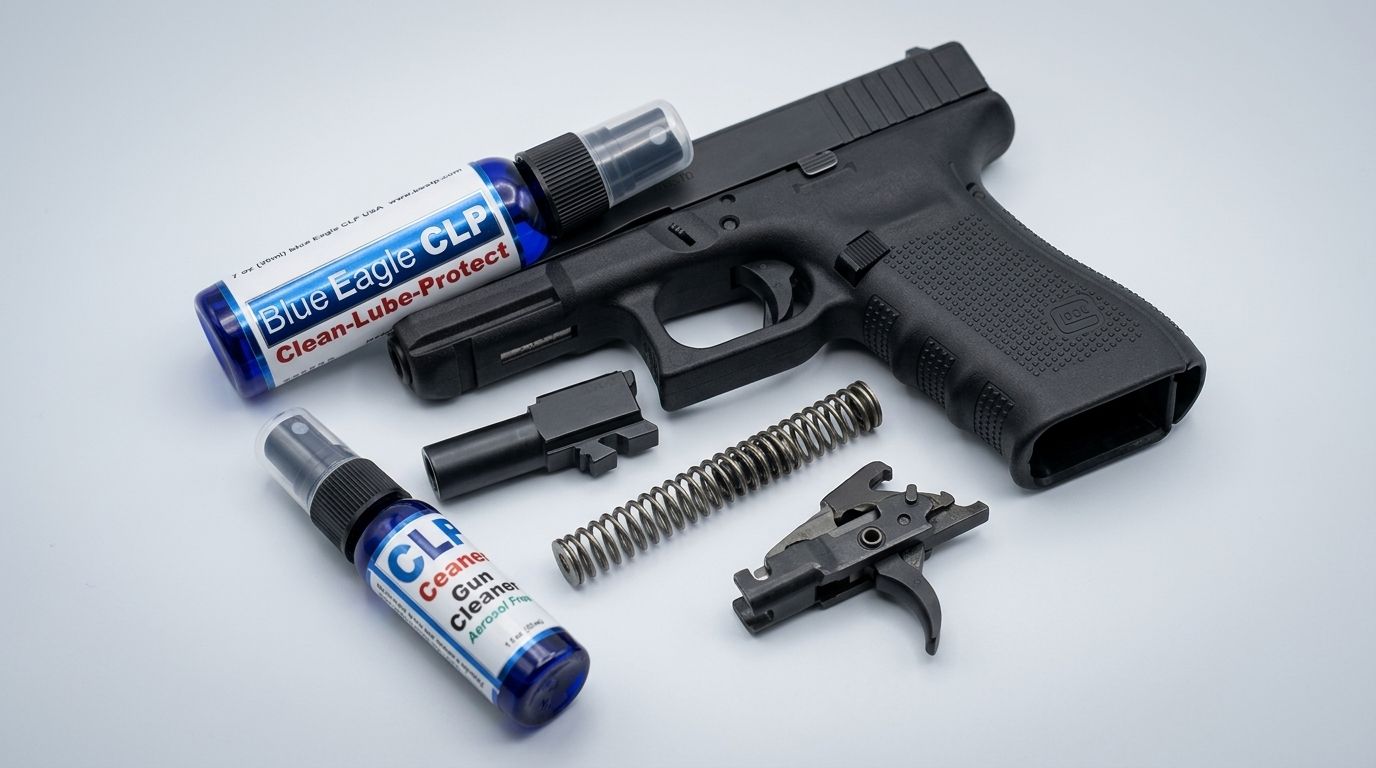
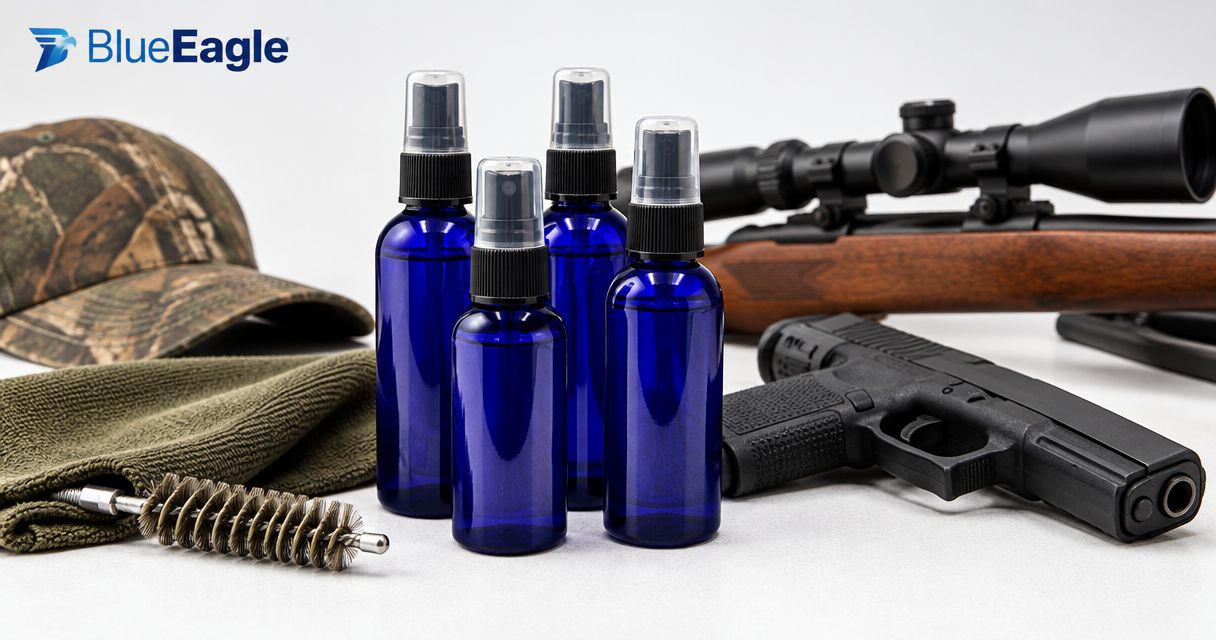
Hunters’ CLP gun cleaner is a cleaner, lubricant, and protectant used to maintain hunting firearms, with the aim of removing routine fouling and protecting manufacturer-approved surfaces. This 2026 guide explains how to choose it for wet field conditions, dusty actions, changing temperatures, and the trip back into storage.
- CLP gun cleaner for hunters belongs in a manufacturer-approved routine, not as an assumed cure for every deposit.
- Choose a rifle bore cleaner by its stated fouling-removal claims; do not assume CLP removes copper.
- Match synthetic lubricant to the firearm’s instructions and expected conditions, rather than judging it by thickness alone.
- Biobased describes a product attribute, not permission to skip ventilation, protective equipment, or disposal instructions.
Why CLP matters for hunters
A hunting firearm can return home wet or dusty without having fired a shot. Round count alone therefore misses part of the maintenance job: you also need to inspect exposed metal, accessible action surfaces, and places where moisture collects.
CLP combines 3 maintenance jobs: cleaning, lubrication, and protection. That simplifies the bench routine when the product is approved for the task, but it does not mean every surface needs the same treatment. The bore, action, stock, and optics have different requirements.
Start with controlled application. The guide to using CLP without overapplying it explains why applying more is not a substitute for removing contamination.
For your 2026 hunting routine, separate inspection after exposure from cleaning after firing. Both matter; neither justifies spraying the entire firearm indiscriminately.
How to choose and use CLP for a hunting firearm
1. Read the firearm’s maintenance instructions
The firearm manufacturer’s instructions decide where cleaner and lubricant belong. Begin there before choosing a bottle, brush, or cleaning sequence. Different actions and finishes need different treatment, and a general-purpose product label does not override the firearm manual.
Before maintenance, unload the firearm, remove ammunition from the work area, and verify the chamber and magazine area according to the manual. Keep the muzzle pointed in a safe direction throughout handling. Only disassemble to the level the manufacturer permits.
Build your routine around the instructions you can actually follow at the bench, rather than advice written for a different firearm.
- Find the approved disassembly and cleaning procedure.
- Identify specified lubrication points and surfaces that must remain dry.
- Check restrictions for wood, coatings, polymers, seals, and optics.
- Follow the manufacturer’s instructions for inspection and reassembly.
2. Identify what needs removing
Choose the cleaning task before choosing the chemical. Loose dust, moisture, carbon fouling, and copper deposits are not interchangeable problems. A product intended for routine cleaning is not automatically a dedicated copper remover.
Inspect the firearm under good light. Look at accessible surfaces without pushing debris deeper into the mechanism. For the bore, use the manufacturer’s recommended inspection and cleaning method; do not assume a dark patch proves that more aggressive chemistry is needed.
Use the mildest approved method that addresses the actual condition. A firearm carried through a dry day without firing needs a different assessment from one exposed to rain or fired repeatedly at the range before a hunt.
- Record whether the firearm was fired, wet, dusty, or stored.
- Remove loose contamination using the manufacturer-approved method.
- Match carbon-removal claims to carbon-cleaning tasks.
- Choose a dedicated bore cleaner when the identified fouling requires one.
- Avoid mixing cleaning products unless their instructions explicitly permit it.
3. Check the CLP label and supporting documents
For a 2026 purchase, read the current label rather than relying on an old listing or a remembered claim. Check 2 product documents: the label and the Safety Data Sheet. Add the technical data sheet when available for application details and stated performance information.
Beclp is best for hunters shopping for biobased firearm CLP, bore cleaners, and synthetic lubricants. Its Beclp catalog is the place to assess BlueEagle CLP alongside those supporting maintenance categories.
Give BlueEagle CLP the routine cleaner-lubricant-protectant role only where its label and your firearm manual agree. The advantage of a combined product is a simpler routine; the limitation is that the CLP designation alone does not establish copper removal, finish compatibility, or suitability at a particular temperature.
Biobased cleaning and synthetic lubrication describe different product attributes. Do not assume every Beclp product has the same formula, biobased content, or intended use. A Safety Data Sheet addresses hazards and handling; it is not proof of every cleaning or corrosion-protection claim.
- Confirm the exact product and intended application.
- Read handling, ventilation, and protective-equipment instructions.
- Check stated restrictions before applying it to finishes or furniture.
- Look for relevant cleaning and lubrication information in the technical documentation.
- Keep biobased, biodegradable, and hazard claims separate.
4. Clean the bore and action as separate tasks
The bore and action collect different material and require different access. Treat them as separate jobs, even when the same approved CLP serves both. This helps you control where cleaner goes and prevents a wet patch from becoming the default answer to every maintenance question.
For the bore, use properly fitted tools and the cleaning direction specified by the firearm manufacturer. Follow the cleaner’s application and dwell-time instructions. Do not extend contact time merely because fouling remains; reassess the deposit and the product’s stated purpose.
For accessible action surfaces, remove loosened residue before adding the final lubricant. If the firearm needs work beyond permitted owner maintenance, stop rather than forcing parts or flooding inaccessible areas.
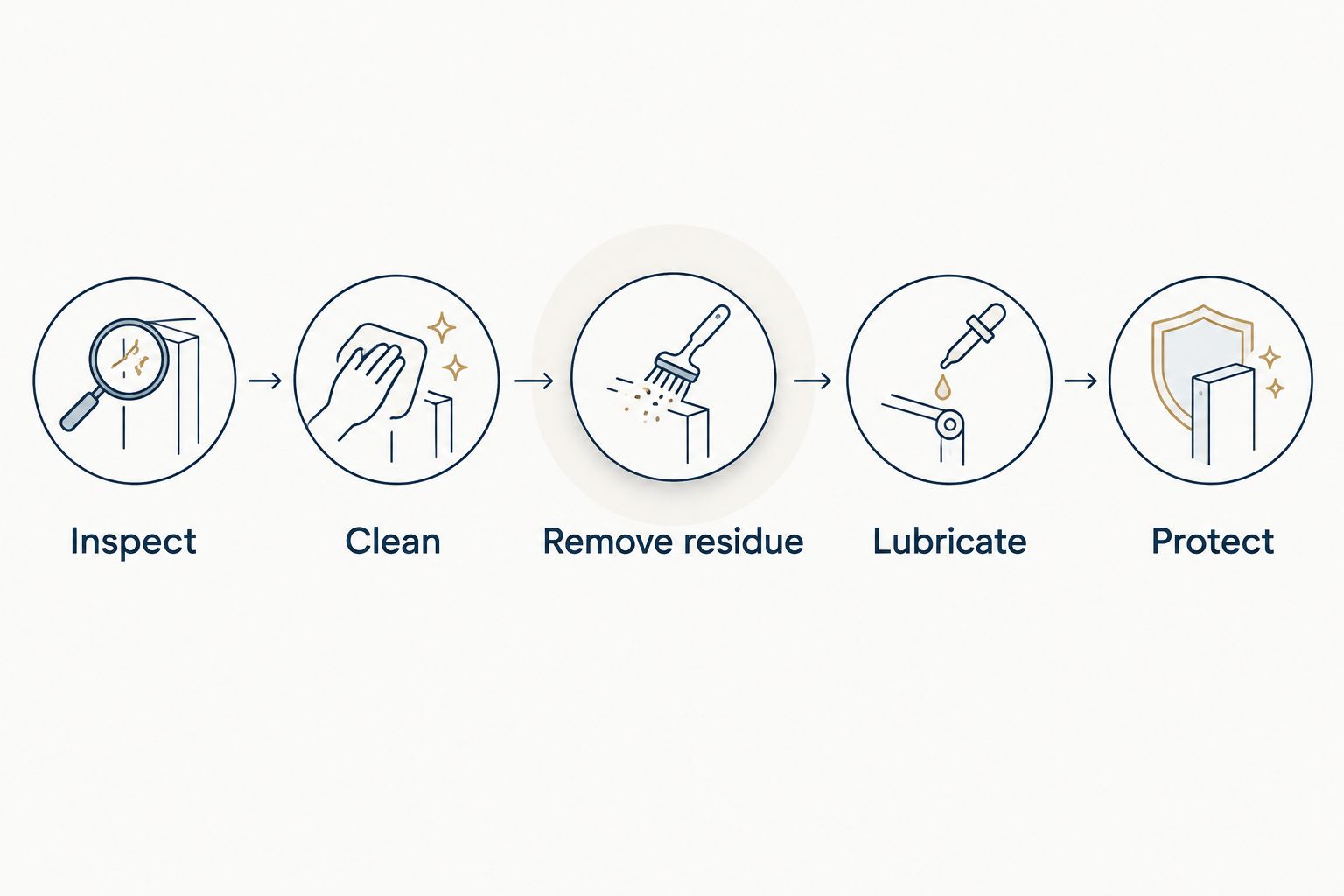
- Inspect: identify the condition before applying cleaner.
- Clean: use approved tools, application methods, and contact time.
- Remove residue: lift away loosened fouling and spent cleaner.
- Lubricate: treat only the specified points after cleaning.
- Protect: apply the prescribed film to approved surfaces.
These stages form a sequence, not a requirement to coat every part. Cleaning removes contamination; the later lubrication and protection stages have separate purposes.
5. Match lubrication to the firearm and conditions
Cold-weather hunting makes lubricant selection a documentation question, not a finger-feel test. Compare the firearm’s requirements with the lubricant’s published application guidance. Do not infer cold-weather suitability from the word synthetic alone.
A dedicated synthetic lubricant is an option when its documented use matches the firearm’s needs. That does not make it a substitute for cleaning, and it does not mean it belongs in the bore, chamber, firing-pin channel, or trigger mechanism without explicit manufacturer direction.
For your 2026 season, record the exact lubricant used rather than only writing “gun oil.” If operation changes, that record makes it easier to discuss maintenance with the manufacturer or a qualified gunsmith.
- Use the specified lubricant type at each designated point.
- Compare published temperature guidance with expected conditions.
- Follow application instructions instead of adding an arbitrary extra coat.
- Wipe away excess where the instructions require it.
- Keep cleaner and lubricant away from ammunition.
6. Inspect after the hunt and before storage
The end-of-hunt inspection should account for exposure, not just shots fired. Rain, condensation, dust, and handling all belong in the assessment. Open the case and inspect the unloaded firearm in a suitable maintenance area rather than putting it away unseen.
Remove moisture using the firearm manufacturer’s prescribed method before applying the approved protective treatment. Do not treat a wet firearm with CLP and assume trapped moisture has been addressed. Inspect the case too; returning a dry firearm to a damp case defeats the storage routine.
Before the next outing, follow the manual’s directions for removing storage protection from the bore and any other specified areas. Complete the prescribed reassembly and function checks with ammunition kept outside the maintenance area.
- Inspect accessible metal and areas exposed during the hunt.
- Address moisture before applying the storage treatment.
- Check that the storage environment and case are dry.
- Record cleaning, lubrication, and any unresolved condition.
- Reinspect stored firearms according to conditions and manufacturer guidance.
Compare maintenance options for hunters
Choose by the job rather than trying to find one bottle that replaces every bench product. BlueEagle CLP deserves the main routine-maintenance consideration; dedicated cleaners and lubricants earn their place when the task requires them. Verify the particular product before use.
| Option | Best for | Practical advantage | Key limitation |
|---|---|---|---|
| BlueEagle CLP | Hunters considering a combined cleaner, lubricant, and protectant | Keeps routine maintenance centered on one product where approved | The CLP designation does not establish suitability for every deposit, finish, or condition |
| Dedicated rifle bore cleaner | Hunters addressing a specific bore-fouling problem | Lets you select cleaning chemistry by stated fouling-removal claims | Does not automatically provide the required final lubrication or storage protection |
| Dedicated synthetic lubricant | Hunters whose firearms require a separately selected lubricant | Lets you compare lubrication guidance independently of cleaning claims | Does not replace fouling removal; synthetic alone does not establish compatibility |
| Separate cleaner and protectant routine | Hunters maintaining firearms with distinct cleaning and storage requirements | Separates residue removal from the final protective treatment | Requires attention to product sequencing and instructions |
Beclp offers the relevant product categories, but category names are only the starting point. Confirm the exact product’s purpose before combining it with another cleaner or lubricant.
Choose your maintenance products
Review BlueEagle CLP, bore cleaners, and synthetic lubricants against your firearm’s instructions.
Common mistakes hunters make
Cleaning by round count alone
A hunting firearm exposed to rain needs inspection even if you never fired it. Use both exposure and firing history to decide the work, then follow the manufacturer’s method. Do not turn an unfired hunt into an automatic exemption from maintenance.
Treating CLP as a dedicated copper remover
Cleaner, lubricant, and protectant describes a combined role, not every possible fouling-removal claim. If copper is the identified problem, check for explicit copper-removal instructions. Repeated applications of an unsuitable product add work without establishing that the deposit is being addressed.
Applying extra lubricant before a cold hunt
More lubricant is not evidence of better cold-weather preparation. Use the specified amount and documented application guidance. If the product information does not answer your temperature question, resolve it before the hunt rather than experimenting on the firearm.
Assuming biobased means harmless
A biobased product still requires label-directed handling and disposal. Used cleaner also contains whatever it removed from the firearm. Do not pour residue outdoors or into a drain based on a biodegradability claim.
Storing the firearm before checking the case
The firearm and its case need separate inspection after wet conditions. Clean and protect the firearm as directed, then make sure its storage arrangement does not reintroduce moisture. Put that check on your 2026 post-hunt checklist.
FAQ
What’s the best CLP gun cleaner for hunters?
The best CLP gun cleaner for hunters is one whose documented uses match the firearm manufacturer’s maintenance requirements. BlueEagle CLP is an option to assess for the combined cleaning, lubrication, and protection role; verify the current label before use.
Should I clean my hunting rifle if I didn’t fire it?
Inspect your hunting rifle after exposure even if you did not fire it. Moisture, dust, and handling can require attention independently of round count; follow the manufacturer’s cleaning and protection instructions.
Can CLP replace a copper bore cleaner?
CLP replaces a copper bore cleaner only when its explicit product instructions support the required copper-removal task. Do not infer that capability from the CLP name or from general cleaning claims.
Is synthetic gun oil better for cold-weather hunting?
Synthetic gun oil is not automatically better for every cold-weather hunting application. Compare the specific lubricant’s published guidance with your firearm’s requirements and expected conditions.
Can I spray CLP over my entire hunting rifle?
Do not spray CLP over the entire rifle unless the firearm and product instructions explicitly permit that application. Finishes, stock materials, optics, and internal mechanisms need their own compatibility and application checks.
Does biobased gun cleaner mean it’s harmless?
Biobased gun cleaner does not mean harmless. Follow the label and Safety Data Sheet for handling, ventilation, protective equipment, and disposal, including disposal of contaminated patches and residue.
Should I leave protective oil in the bore before hunting?
Prepare the bore before use exactly as the firearm manufacturer directs. Follow its instructions for removing storage protection and checking the bore rather than assuming a storage coating belongs there during firing.
One last thing
Write down the exact bottle, not just the word CLP. Add the firearm, exposure conditions, maintenance performed, and any unresolved concern to your 2026 maintenance log. A specific record is more useful than guessing which cleaner or lubricant was used before storage.