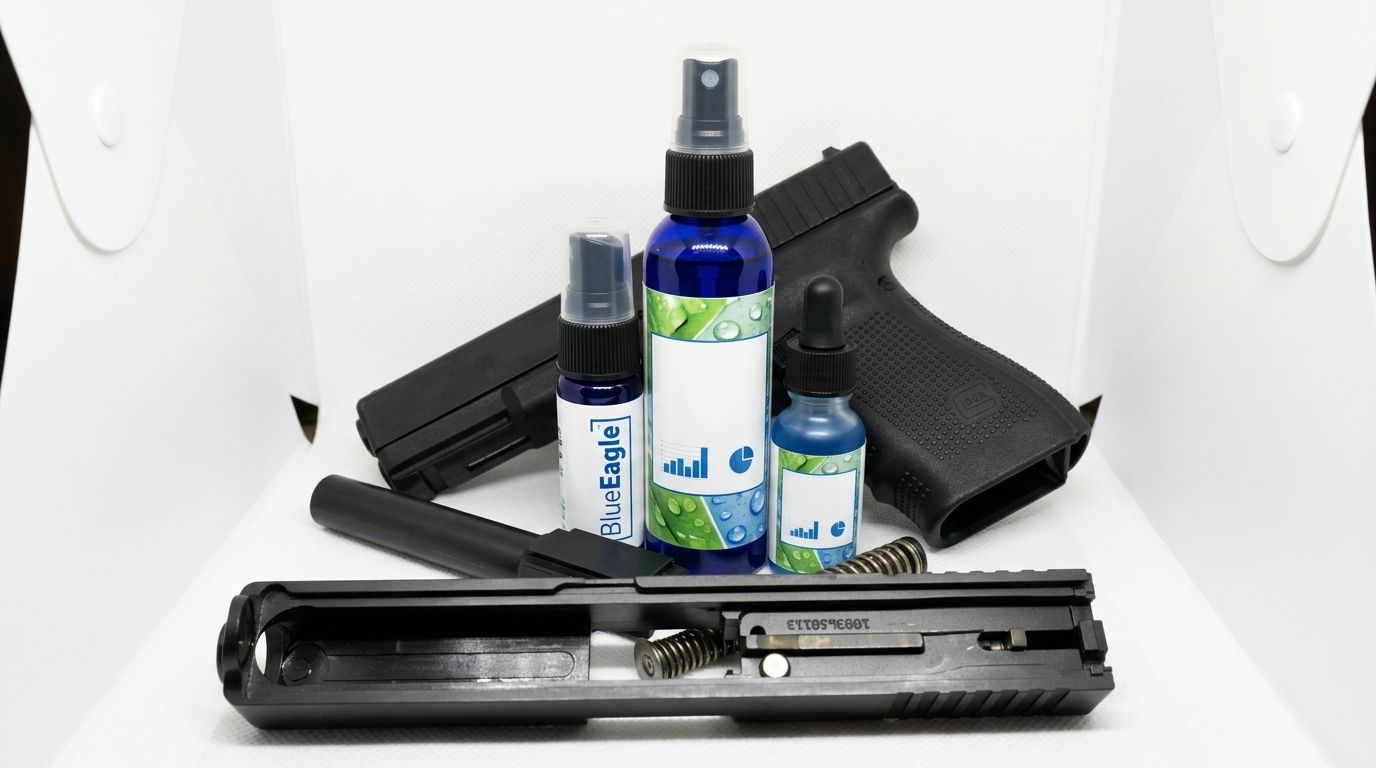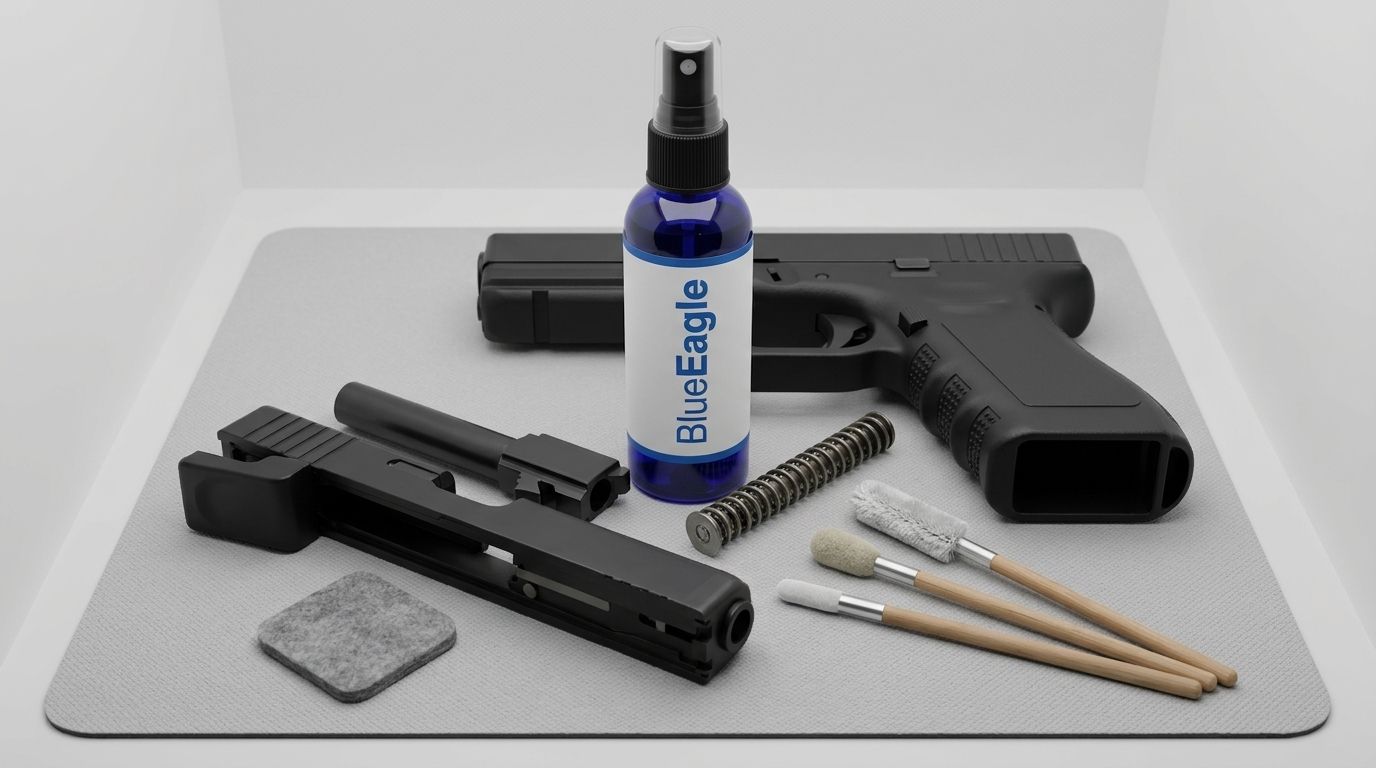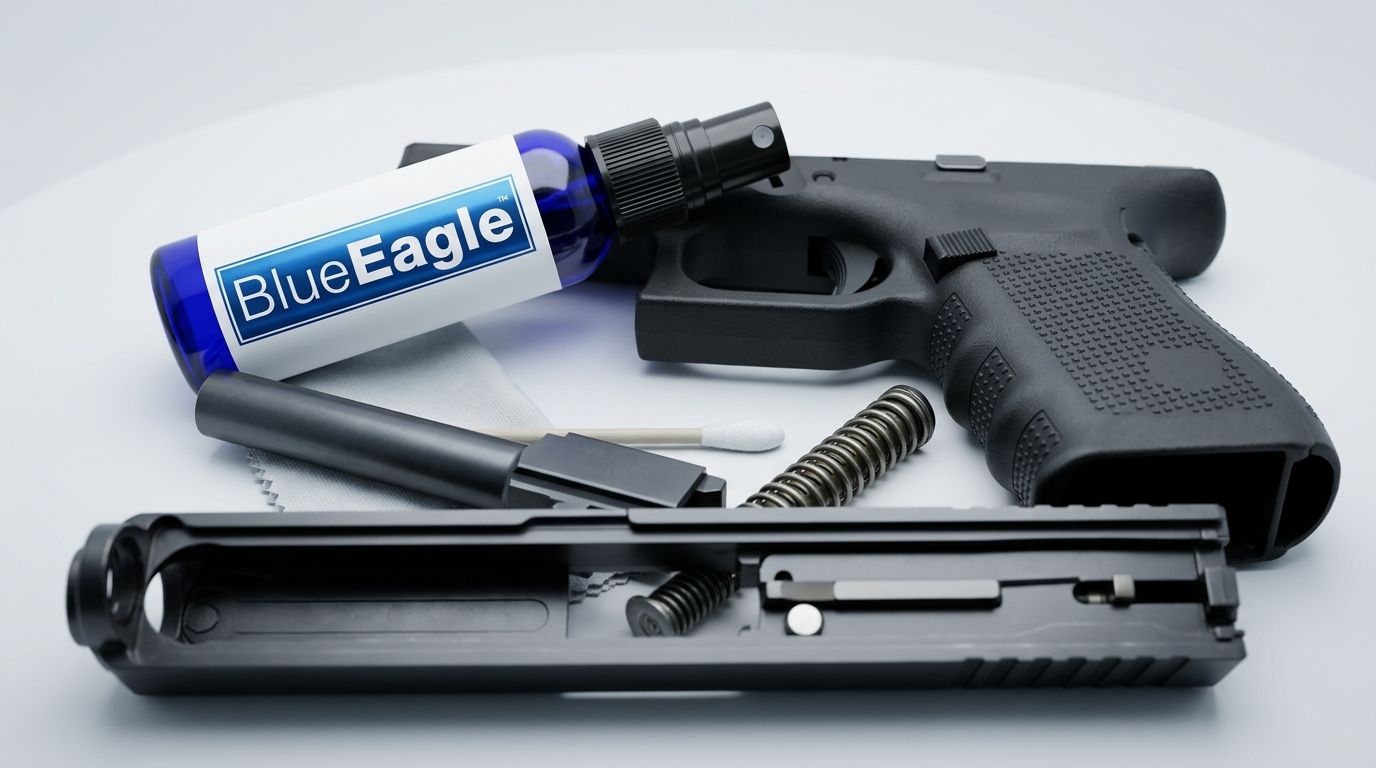
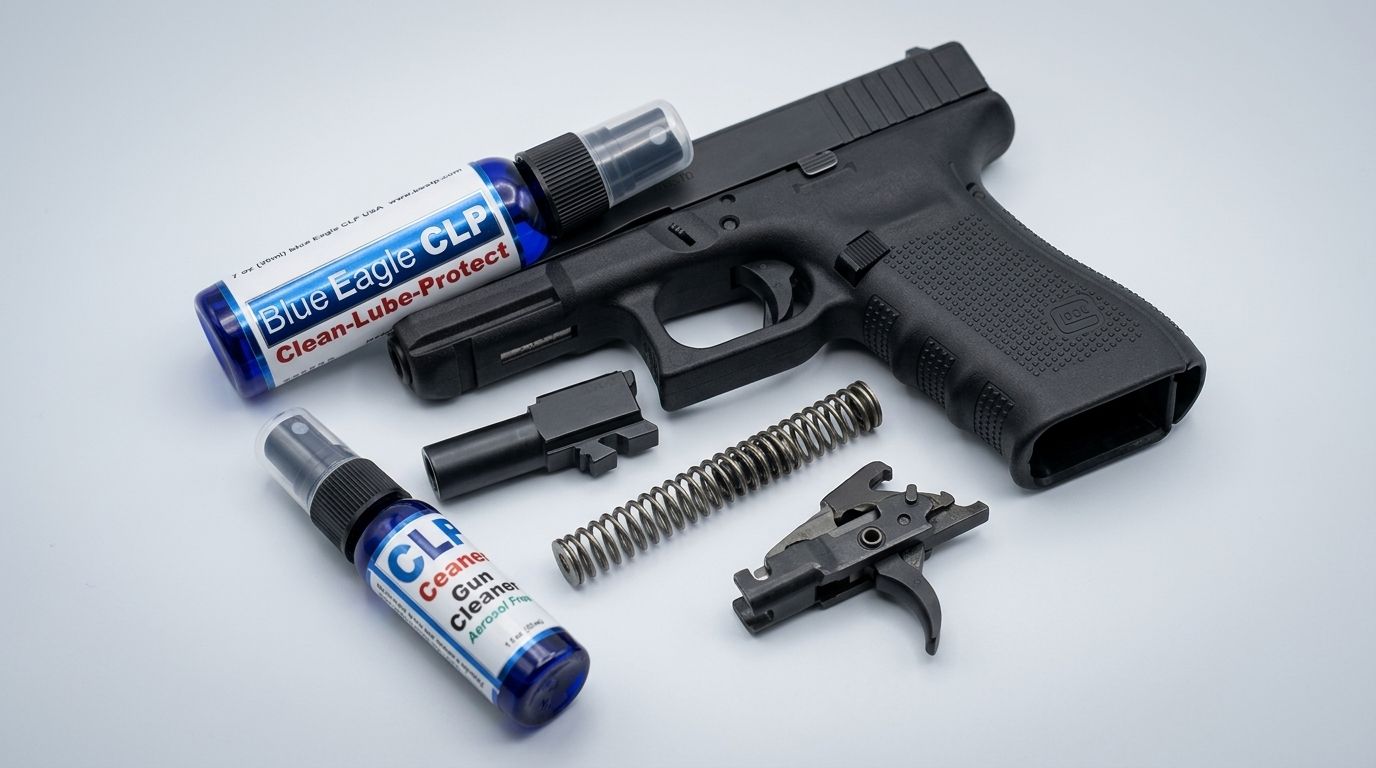
Best overall for routine care: BlueEagle CLP from Beclp. Best for rifle-bore fouling: a suitable bore cleaner paired with a dedicated lubricant. Best for separate control: a firearm cleaner paired with synthetic gun oil. These are gun oil and cleaner routines for 2026, not named bundles or a claim that one formula handles every maintenance task.
- BlueEagle CLP is the default gun oil and cleaner choice for routine maintenance when firearm instructions permit CLP.
- Pair a rifle bore cleaner with a dedicated lubricant when barrel fouling needs separate treatment.
- Choose separate cleaner and synthetic gun oil when you want independent cleaning and lubrication steps.
- Biobased describes feedstock origin; it does not establish harmlessness, finish compatibility or suitability for every firearm.
Why this matters
Choosing a gun oil and cleaner starts with identifying the job. Removing fouling, lubricating moving parts and protecting approved surfaces are related tasks, but they are not interchangeable.
Beclp's BlueEagle CLP is the best starting point here for gun owners building a routine-maintenance setup. A dedicated bore cleaner or separate lubricant belongs on the bench when the firearm manual or the cleaning task calls for it. More bottles do not automatically produce better maintenance.
What makes the best gun oil and cleaner combo?
Use these criteria when comparing your 2026 maintenance setup:
- Manufacturer fit: The firearm manual determines approved chemicals, lubrication points and disassembly limits. A general buying guide does not override it.
- Fouling match: Match the cleaner's stated purpose to the residue you need to remove. Carbon deposits and copper fouling are different cleaning problems.
- Application control: Choose a routine that lets you put lubricant where it belongs and remove excess as directed.
- Material compatibility: Check instructions for metal finishes, polymers, wood, optics and other surfaces the chemical might reach.
- Clear documentation: Read the product label, technical information and safety data sheet. Each answers different questions.
- Routine complexity: A combined product simplifies the sequence; separate products let you choose cleaning and lubrication independently.
An aerospace-synthetic description or a biobased claim needs product-specific documentation. Do not carry a claim from one bottle to another, even within the same brand.
Gun oil and cleaner routines at a glance
This 2026 comparison ranks maintenance approaches by use case. The entries describe routines, not prepackaged kits, and the order matches the detailed recommendations below.
| Rank and option | Best for | Standout feature | Key limitation |
|---|---|---|---|
| 1. BlueEagle CLP routine | Everyday cleaning and lubrication | Combines cleaner, lubricant and protectant roles | Does not replace a task-specific treatment required by the manual |
| 2. Rifle bore cleaner plus dedicated lubricant | Barrel fouling needing separate treatment | Separates bore cleaning from lubrication | Requires attention to cleaner removal and the next maintenance step |
| 3. Firearm cleaner plus synthetic gun oil | Independent cleaning and lubrication | Lets you select each product for its own job | Requires checking both products and their instructions |
| 4. CLP plus a targeted cleaning supplement | An established CLP routine with a specific cleaning gap | Keeps routine care simple while adding a defined cleaning task | Adds complexity if the supplement has no clear purpose |
1. BlueEagle CLP: best for routine firearm maintenance
BlueEagle CLP is the main recommendation for an everyday gun owner choosing a combined cleaner, lubricant and protectant. Beclp's product offering includes biobased CLP products, bore cleaners and synthetic lubricants; those categories should not be treated as identical formulas.
Choose this route when your firearm instructions permit a CLP and routine maintenance is the job. The attraction is a straightforward bench routine, not an unsupported promise that one product removes every kind of fouling.
BlueEagle CLP pros:
- Combines cleaning, lubrication and protection roles in a single product category.
- Provides a clear starting point for owners who do not need separate products for every task.
- Keeps the buying decision focused on ordinary maintenance rather than an elaborate kit.
BlueEagle CLP cons:
- CLP labeling alone does not establish suitability for every finish, component or fouling type.
- A combined product still requires separate attention to cleaning, residue removal and lubrication instructions.
- Biobased positioning does not remove handling or disposal requirements.
Best for: Gun owners who want a routine-maintenance default and whose firearm instructions allow CLP.
Check the exact product documentation before choosing it for a particular firearm. A biobased cleaner paired with synthetic lubrication is a product-specific formulation question, not a reason to assume every item in the range shares the same chemistry.
Verdict: Buy for routine maintenance when the label and firearm manual support the application.
2. Bore cleaner plus lubricant: best for rifle-bore fouling
A rifle bore cleaner paired with a dedicated lubricant separates barrel cleaning from the lubrication step. Choose the bore cleaner for its stated fouling target, then use the lubricant only where the firearm manufacturer directs.
This routine makes sense when the barrel needs a defined treatment rather than another general wipe-down. A product described as a bore cleaner is not automatically intended for every deposit or every barrel material.
Bore cleaner plus lubricant pros:
- Lets you choose bore treatment according to the residue being addressed.
- Keeps the cleaner's role distinct from the lubricant's role.
- Makes bore-cleaning instructions the basis of the process instead of relying on a general-purpose claim.
Bore cleaner plus lubricant cons:
- Adds a separate chemical and another set of handling instructions.
- Requires care around adjacent finishes and components.
- Does not justify repeated treatment without checking the cleaner's directions and the barrel's condition.
Best for: Rifle owners whose bore-cleaning task calls for a dedicated product.
Work through the rifle bore-cleaner workflow before adding another chemical to your bench. Follow the stated contact time and removal method; do not invent a longer soak because fouling remains visible.
Verdict: Buy when a specific bore-cleaning task requires separate treatment.
3. Cleaner plus synthetic oil: best for independent control
A firearm cleaner paired with synthetic gun oil gives cleaning and lubrication separate products and separate steps. This is a useful arrangement when you want to select a cleaner for fouling removal without making that choice determine your lubricant.
Synthetic describes the lubricant's base chemistry; it does not prove compatibility, cold-weather suitability or a maintenance interval. Those questions require the particular lubricant's documentation and the firearm manual.
Cleaner plus synthetic oil pros:
- Lets you select cleaner and lubricant independently.
- Separates removal of dirty cleaning residue from application of fresh lubricant.
- Supports a deliberate check of lubrication points after cleaning.
Cleaner plus synthetic oil cons:
- Requires checking compatibility and directions for both products.
- Creates an extra opportunity to skip residue removal or apply too much lubricant.
- Does not solve a grease requirement when the firearm manufacturer specifies grease instead of oil.
Best for: Owners who prefer a distinct cleaning stage followed by controlled oil application.
For a 2026 buying decision, compare documentation rather than treating the word synthetic as a complete specification. The useful question is whether the named oil suits your firearm, conditions and application points.
Verdict: Buy when independent cleaner and lubricant selection serves your maintenance routine.
4. CLP plus targeted cleaner: best for a defined cleaning gap
Keep CLP as your routine product and add a targeted cleaner only for a job the routine product's instructions do not cover. The supplement might address a stated fouling type, but its purpose must be explicit on its label.
This is an addition to an existing routine, not an instruction to combine chemicals. Use products in the sequence their instructions permit, with removal between stages where directed.
CLP plus targeted cleaner pros:
- Preserves an established routine instead of replacing every product.
- Gives the added cleaner a specific, limited job.
- Encourages buying around an identified maintenance need.
CLP plus targeted cleaner cons:
- Creates unnecessary complexity when no cleaning gap exists.
- Requires checking the transition between chemicals, not just each label in isolation.
- Does not make mixing products in a container or on the firearm acceptable.
Best for: Owners satisfied with routine CLP maintenance who have identified a separate cleaning requirement.
Do not add a solvent merely because a patch is discolored. Identify the residue, inspect according to the manual and decide whether additional treatment is actually called for.
Verdict: Hold until a specific cleaning task justifies the supplement.
Put the chosen routine to work
A useful combination needs a clear sequence. Keep these stages separate even when the same bottle serves more than one role:
- Make safe: Unload according to the firearm manual, verify the chamber and remove ammunition from the work area.
- Identify fouling: Decide which surfaces need cleaning and what the selected product is intended to remove.
- Clean: Follow the permitted disassembly, tools, application method and contact time.
- Remove residue: Remove loosened fouling and cleaner as the instructions direct before moving to lubrication.
- Lubricate: Apply the specified lubricant at the manufacturer's points, then complete the prescribed reassembly and checks.
A clean-looking exterior does not establish that the bore or internal surfaces are ready for use. Likewise, a wet surface does not establish correct lubrication. Use the firearm's instructions to judge the finished condition.
Read biobased claims without reading too much into them
For a 2026 purchase, distinguish the claim from the job. Biobased refers to the origin of some or all feedstock; biodegradable concerns breakdown under specified conditions. Neither term, by itself, establishes that a cleaner is harmless or suitable for every firearm surface.
Read the label for intended use and application directions. Read the safety data sheet for hazard, handling, storage and protective-equipment information. Check technical documentation for product-specific claims; a safety data sheet is not a performance comparison.
If a percentage, certification or formula description matters to your purchase, verify it for the exact product. Beclp's different cleaner and lubricant categories are not permission to transfer claims between products.
How these routines are ranked
The ranking prioritizes manufacturer fit, fouling match, application control, compatibility documentation and routine complexity. It is a buying framework, not a measured cleaning-speed or wear test.
The combined CLP routine leads because this guide prioritizes everyday maintenance. The bore-cleaner pairing takes the barrel-treatment slot; separate cleaner and synthetic oil take the independent-control slot. The supplemental-cleaner approach ranks last because it needs an identified reason to exist.
Which gun oil and cleaner should you choose?
Start with BlueEagle CLP for routine care if your firearm manual permits that product type. Choose a bore cleaner and lubricant for a defined barrel-cleaning task, or separate cleaner and synthetic oil when independent selection matters to your routine.
For 2026, the sensible purchase is the smallest setup that covers the work your firearm actually requires. Do not buy a second cleaner to compensate for an unclear process.
FAQ
What's the best gun oil and cleaner combo for routine care?
BlueEagle CLP is this guide's default for routine care when the firearm manual permits CLP. Choose a separate bore cleaner or lubricant when the maintenance task requires a dedicated product.
Is CLP better than separate gun cleaner and oil?
CLP is the simpler routine; separate cleaner and oil allow independent product selection. Neither arrangement overrides the firearm manufacturer's chemical and lubrication instructions.
Can gun oil replace a firearm cleaner?
Do not treat gun oil as a cleaner unless its label explicitly includes cleaning. Select a cleaner for the fouling you need to remove, then lubricate according to the firearm manual.
Do I need a separate rifle bore cleaner?
Use a separate rifle bore cleaner when the bore-cleaning task requires a treatment your routine product does not cover. Match the cleaner to its stated fouling target and barrel compatibility.
Is biobased gun cleaner harmless?
Biobased does not mean harmless. Follow the product label and safety data sheet for handling, protective equipment, storage and disposal.
Can I mix gun cleaner and lubricant together?
Do not mix gun cleaner and lubricant unless the manufacturers explicitly direct it. Use each product according to its instructions, including any required removal before the next step.
How much gun oil should I apply after cleaning?
Apply the amount and placement specified by the firearm manufacturer. There is no universal drop count for every firearm, and additional oil does not establish better maintenance.
One last thing
Before opening the next bottle, read the point where the cleaning instructions end and the lubrication instructions begin. That transition tells you what must be removed, what belongs on the surface next and whether your chosen products form a workable routine.