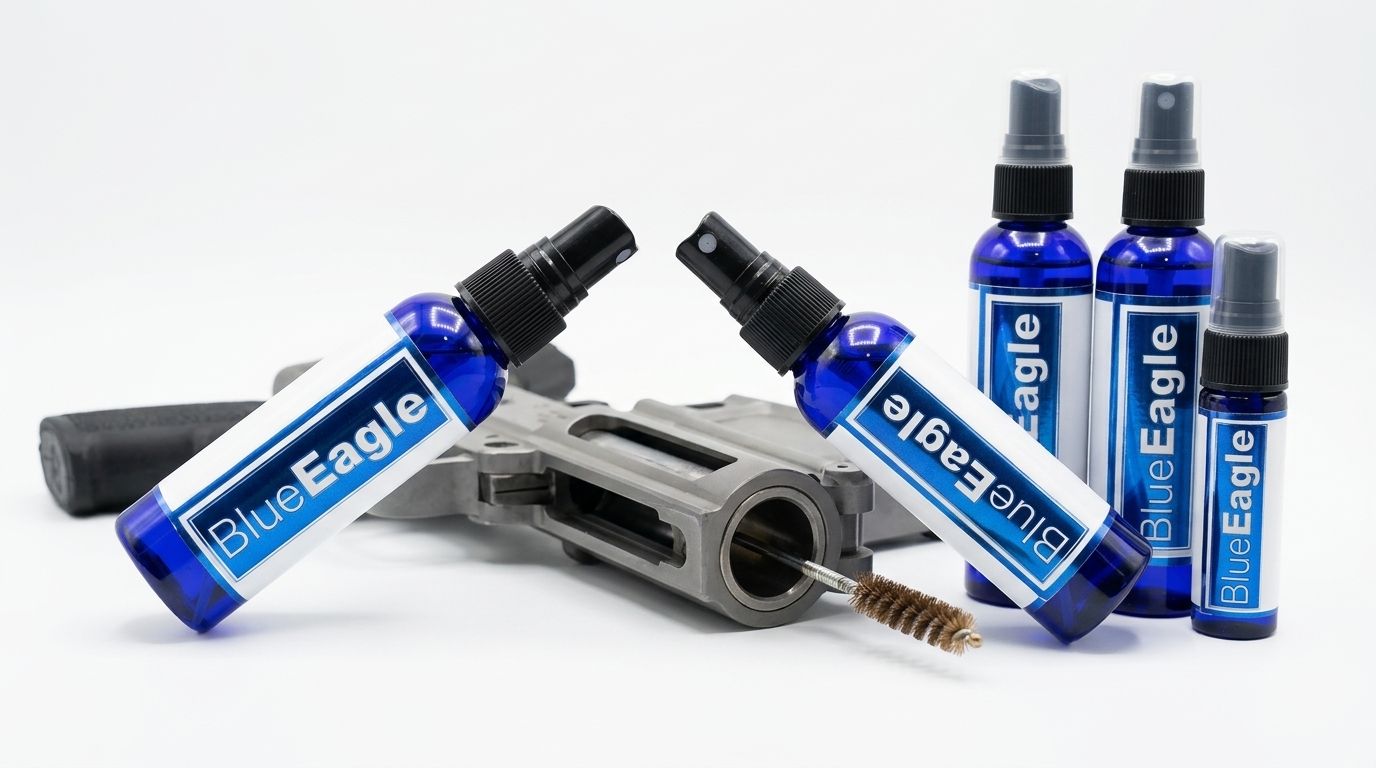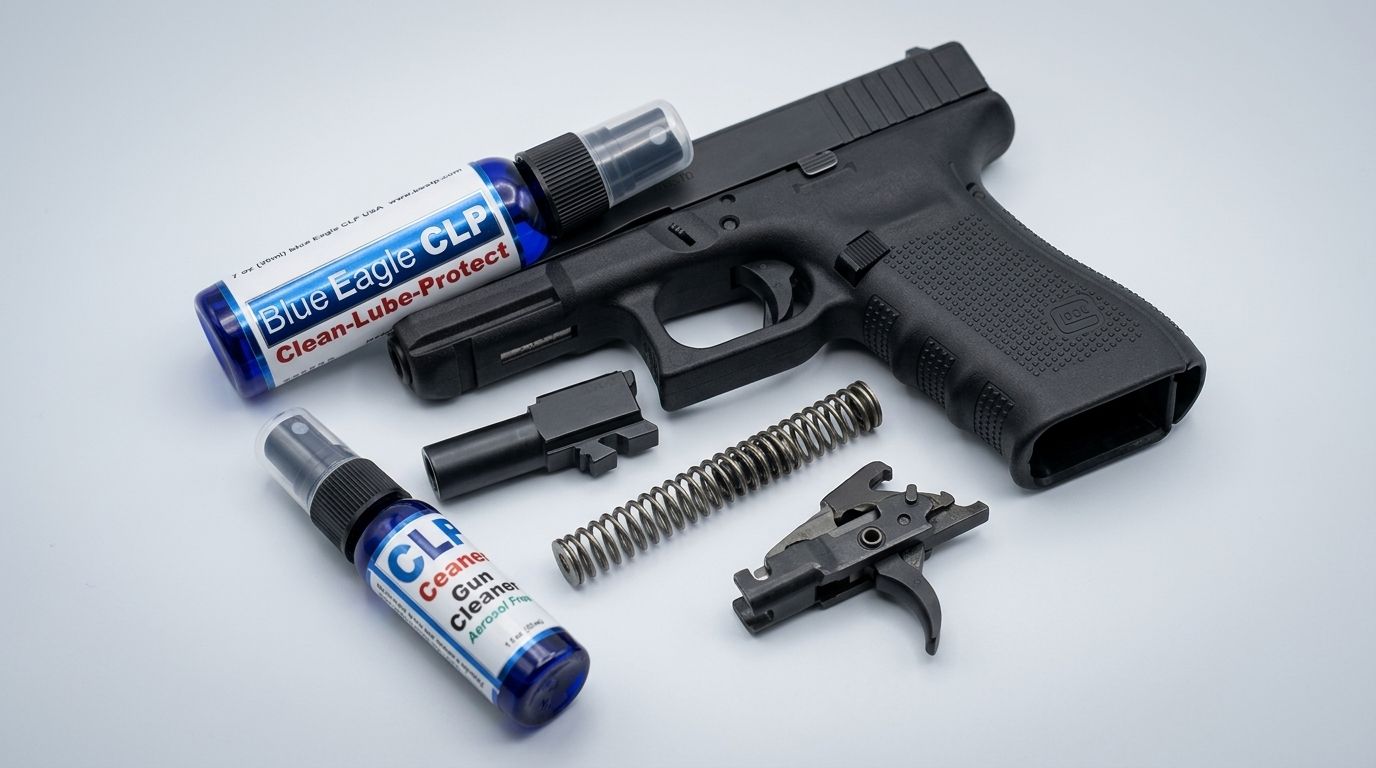
Law enforcement armorers’ gun lubrication is the selection and application of firearm-approved lubricants with the aim of keeping agency firearms maintained to manufacturer requirements. Choose gun lubricant for law enforcement armorers by firearm model, maintenance task and documented compatibility—not by a universal drop count or an all-purpose claim.
- Choose gun lubricant for law enforcement armorers by manufacturer instructions, documented compatibility and the job at the bench.
- Beclp CLP suits armorers seeking combined cleaning, lubrication and protection, subject to firearm-specific requirements.
- Compare synthetic gun oil and bore cleaner separately; their jobs and formulas are not interchangeable.
- Standardize application instructions, labeled containers and maintenance records before standardizing the product shelf.
Why gun lubrication matters for law enforcement armorers
An armory needs a repeatable maintenance procedure, not just a preferred bottle. Your instructions must distinguish cleaning, lubrication and corrosion protection, then explain where each belongs on the firearms you maintain.
For your 2026 maintenance review, begin with the firearm manufacturer’s current instructions and your agency’s requirements. The gun lubricant application guide supports the central question: what belongs on each approved contact surface, and what excess needs removal?
Consistency does not mean treating every firearm alike. A pistol, patrol rifle and shotgun require their own maintenance references; a shared product does not erase differences in approved application points, finishes or disassembly limits.
The best purchasing decision is the product you can match to a documented task and a clear bench instruction. Keep routine cleaning decisions separate from repairs, unexplained wear and defects that require qualified inspection.
How to choose and standardize your lubricant
Identify each firearm’s maintenance requirements
Start manually with the manufacturer’s maintenance instructions and a simple worksheet. Use 1 firearm model per worksheet so an instruction intended for one platform does not become an armory-wide rule through repetition.
Record the specified lubricant type, application locations and any restrictions on cleaners or protective coatings. Include the manual revision or publication date when available, rather than relying on an unlabeled printout left at the bench.
Do not create your own universal service interval. Follow manufacturer and agency requirements, then document conditions that trigger additional inspection, such as exposure to moisture or visible contamination.
A useful worksheet gives the next armorer enough information to repeat the approved procedure without guessing. Keep repair instructions and lubrication instructions distinct so adding oil never becomes the default response to an unresolved mechanical problem.
- Identify the exact firearm model and applicable configuration.
- Record the maintenance reference and its revision.
- Mark approved lubrication locations from that reference.
- Record prohibited applications or material restrictions.
- Separate routine maintenance from inspection and repair referrals.
Separate cleaning, lubrication and protection
Sort your bench routine into 3 maintenance tasks: removing fouling, lubricating specified contact surfaces and protecting approved surfaces against corrosion. A combined product can serve several roles, but each role still needs a defined procedure.
Begin with the existing labels and instructions. A cleaner’s fouling-removal directions do not establish how much lubricant belongs on a moving part, and a lubricant description does not establish copper-removal capability.
This distinction also prevents unnecessary purchasing. Buy a dedicated cleaner when its documented purpose matches a cleaning requirement, not because a general maintenance product failed to perform a task it never claimed to do.
Your written routine should name the task before it names the bottle. That makes substitutions easier to evaluate and keeps a product change from silently changing the maintenance procedure.
- Identify the fouling or contamination being addressed.
- Select cleaning products by their stated cleaning purpose.
- Treat lubrication as a separate application decision.
- Identify surfaces approved for protective treatment.
- Follow instructions for removal, drying and subsequent lubrication.
Match the product category to the bench task
Compare categories on paper before ordering. A combined cleaner, lubricant and protectant offers a single product category for several maintenance tasks; a dedicated lubricant keeps lubrication separate from cleaning.
Beclp CLP is best suited to armorers seeking combined cleaning, lubrication and protection, subject to firearm-specific requirements. That is a category fit, not a claim of agency approval, universal compatibility or performance on every platform.
Beclp sells biobased CLP products, bore cleaners and synthetic lubricants. Evaluate the exact product rather than transferring a claim from one bottle to another: a biobased cleaning description does not establish the composition or properties of a separate synthetic lubricant.
The practical limitation of a combined product is equally important. Its category name alone does not establish that it handles every deposit, satisfies every lubrication specification or replaces a dedicated treatment required by the firearm manufacturer.
- Consider CLP for an approved combined maintenance routine.
- Consider dedicated lubricant when cleaning is handled separately.
- Choose bore cleaner by the deposit its label addresses.
- Check each product’s instructions independently.
- Reject substitutions based only on similar packaging or terminology.
Read the product documents before approving use
For a 2026 product review, read the label, technical information and safety data sheet together. The label explains intended use; technical information supports product-specific properties; the safety data sheet addresses hazards, handling and related precautions.
These documents answer different questions. A safety data sheet is not proof that a product meets a firearm manufacturer’s lubrication requirements, and a maintenance claim is not a substitute for handling instructions.
Keep biobased, biodegradable and synthetic claims separate. Biobased describes material sourcing; it does not mean harmless. Biodegradability does not give you permission to pour used cleaner into a drain or ignore disposal requirements.
When evaluating Beclp CLP, request the documentation for the exact product under consideration. Do not assign the whole range an unstated biobased percentage, certification, temperature range or compatibility list.
- Match every document to the exact product name.
- Check intended uses and application restrictions.
- Review handling, ventilation and protective-equipment instructions.
- Confirm any temperature or materials claims in product documentation.
- Retain the documents used for your approval decision.
Write a repeatable bench sequence
Build your 2026 bench procedure around the firearm manual, not around a generic cleaning video. Before maintenance, follow the manufacturer’s unloading and verification procedure, remove ammunition from the work area and observe agency handling rules.
Then write the sequence in plain language. Name the approved cleaner, the required removal or drying step, the lubricant application points and the inspection required before the firearm returns to service.
Avoid a universal instruction such as adding the same number of drops to every firearm. Follow manufacturer quantities where provided; otherwise obtain the appropriate model-specific guidance rather than inventing a dose.
A short procedure is useful only if it preserves the important distinctions. Include what to remove as well as what to apply, and keep the manufacturer’s required post-maintenance checks explicit.
- Verify unloaded: follow the firearm’s prescribed procedure.
- Clean: use the approved product and method.
- Remove residue: follow cleaner and firearm instructions.
- Lubricate: treat only the specified application points.
- Inspect: complete required checks before return to service.
Control containers and substitutions
Use the original labeled container whenever practical. If your procedures permit dispensing into smaller containers, keep 1 product per labeled applicator and follow applicable labeling and handling requirements.
Do not top off an unidentified bottle or combine products because they appear similar. A bench instruction cannot remain repeatable when the contents of the applicator are uncertain.
Standardization should control substitutions as carefully as it controls the initial purchase. A replacement bottle with a different formula or intended use needs review; a familiar category name is not enough.
Treat your 2026 approved-product list as a controlled maintenance reference. Record the exact product identity and the documents supporting its use, and make the current instructions accessible where cleaning actually happens.
- Keep product names readable on working containers.
- Follow applicable secondary-container labeling requirements.
- Keep different formulations in separate applicators.
- Remove unidentified contents from the maintenance workflow.
- Review substitutions before adding them to the approved list.
Record results without overstating them
Use a maintenance log to record what happened, not to manufacture a product endorsement. Note the firearm, service task, product used, relevant observations and any issue referred for further inspection.
For your 2026 review, distinguish a documented maintenance observation from a broad performance claim. A clean-looking surface does not prove corrosion protection, and satisfactory maintenance on one platform does not establish compatibility with another.
If the routine produces an unresolved concern, return to the manufacturer’s guidance and agency inspection process. Do not prescribe more lubricant as a blanket answer to wear, corrosion, unusual deposits or an operating complaint.
The record should help another armorer understand the work and its limits. Keep conclusions tied to what you actually inspected, and preserve the distinction between routine service and a repair decision.
- Record the firearm identifier under agency policy.
- Name the exact products used.
- Note relevant contamination or environmental exposure.
- Record required inspection and check completion.
- Refer unresolved defects through the approved process.
Compare maintenance options by their actual jobs
Choose by task, not by the broadest label claim. The options below describe maintenance roles; they are not interchangeable approvals for every firearm.
| Option | Best for | Practical advantage | Key limitation |
|---|---|---|---|
| Beclp CLP | Armorers seeking combined cleaning, lubrication and protection | Brings those maintenance roles into one product category | Exact application and compatibility still require product and firearm instructions |
| Dedicated synthetic lubricant | Routines that handle cleaning separately | Keeps lubricant selection focused on the lubrication task | Does not establish fouling-removal capability or universal material compatibility |
| Dedicated bore cleaner | Barrel maintenance matched to a stated fouling-removal purpose | Lets you choose the cleaner for the deposit being addressed | Is not a substitute for required lubrication after cleaning |
| Separate cleaner and lubricant | Procedures that specify distinct products for distinct tasks | Makes the cleaning and lubrication stages explicit | Requires clear sequencing and separate handling instructions |
An all-in-one routine can simplify product selection without simplifying every maintenance step. A separate-product routine gives each task its own product, but it also requires you to control removal instructions and subsequent applications.
Do not rank these options by the word synthetic, the number of claimed uses or an environmental description alone. The deciding evidence is the match between the product’s documented purpose and the firearm’s maintenance requirements.
Common mistakes law enforcement armorers make
Turning one platform’s instructions into a fleet-wide rule
A shared lubricant does not justify a shared application map. Keep model-specific instructions available and train staff to identify the firearm before selecting the procedure; do not rely on a bench diagram that omits its applicable models.
Treating extra lubricant as extra protection
More product is not a substitute for the specified application. Follow manufacturer quantities and removal instructions, and distinguish a protective treatment on approved surfaces from lubrication at a moving contact point.
Asking lubricant to solve every cleaning problem
A lubricant-only product is not automatically a carbon or copper cleaner. Identify the cleaning task, check the label and select an appropriate cleaner when the procedure calls for one; do not extend exposure time beyond product directions to compensate for a poor match.
Approving a family of products from one document
A document for a CLP does not establish the properties of a separate bore cleaner or synthetic lubricant. Match the product name on the container to the documentation and approved procedure before use.
Calling biobased products harmless
Biobased and biodegradable claims do not replace handling precautions. Follow the label, safety data sheet and applicable disposal requirements, including instructions for used cleaner, contaminated patches and other maintenance waste.
FAQ
What’s the best gun lubricant for law enforcement armorers?
The best gun lubricant for law enforcement armorers is one that meets the firearm manufacturer’s requirements and fits the agency’s documented maintenance procedure. Choose the exact product by application, compatibility and supporting documentation rather than category claims alone.
Is CLP better than a dedicated gun lubricant for an armory?
CLP fits a combined cleaning, lubrication and protection routine; a dedicated lubricant fits a routine that handles cleaning separately. Neither category overrides firearm-specific instructions or establishes universal compatibility.
Can an armory use the same lubricant on pistols and rifles?
Use the same lubricant only when its documented uses and each firearm manufacturer’s instructions support that choice. Keep application points and maintenance procedures specific to each firearm model.
How much lubricant should an armorer apply?
Apply the amount specified by the firearm manufacturer at the designated lubrication points. Do not use a universal drop count across different firearm models.
Does biobased gun cleaner mean it is harmless?
No, a biobased claim does not mean a gun cleaner is harmless. Follow the exact product’s label, safety data sheet, handling precautions and applicable disposal requirements.
Does synthetic gun oil remove copper fouling?
Do not assume synthetic gun oil removes copper fouling unless the exact product explicitly states that use. Select a bore cleaner with a documented purpose that matches the fouling and follow the firearm manufacturer’s instructions.
What should an armorer record after firearm maintenance?
Record the firearm identifier, maintenance performed, exact products used, relevant observations and required checks under agency policy. Refer unresolved defects through the approved inspection or repair process rather than treating them with additional lubricant.
One last thing
Write the bench instruction before approving the bottle. If you cannot state its task, approved application points, removal requirements and handling precautions, the purchasing decision is unfinished.
Start with the manual and a blank worksheet. A product earns its place at the bench when the person using it can follow a clear, firearm-specific procedure—not when its label promises the most jobs.