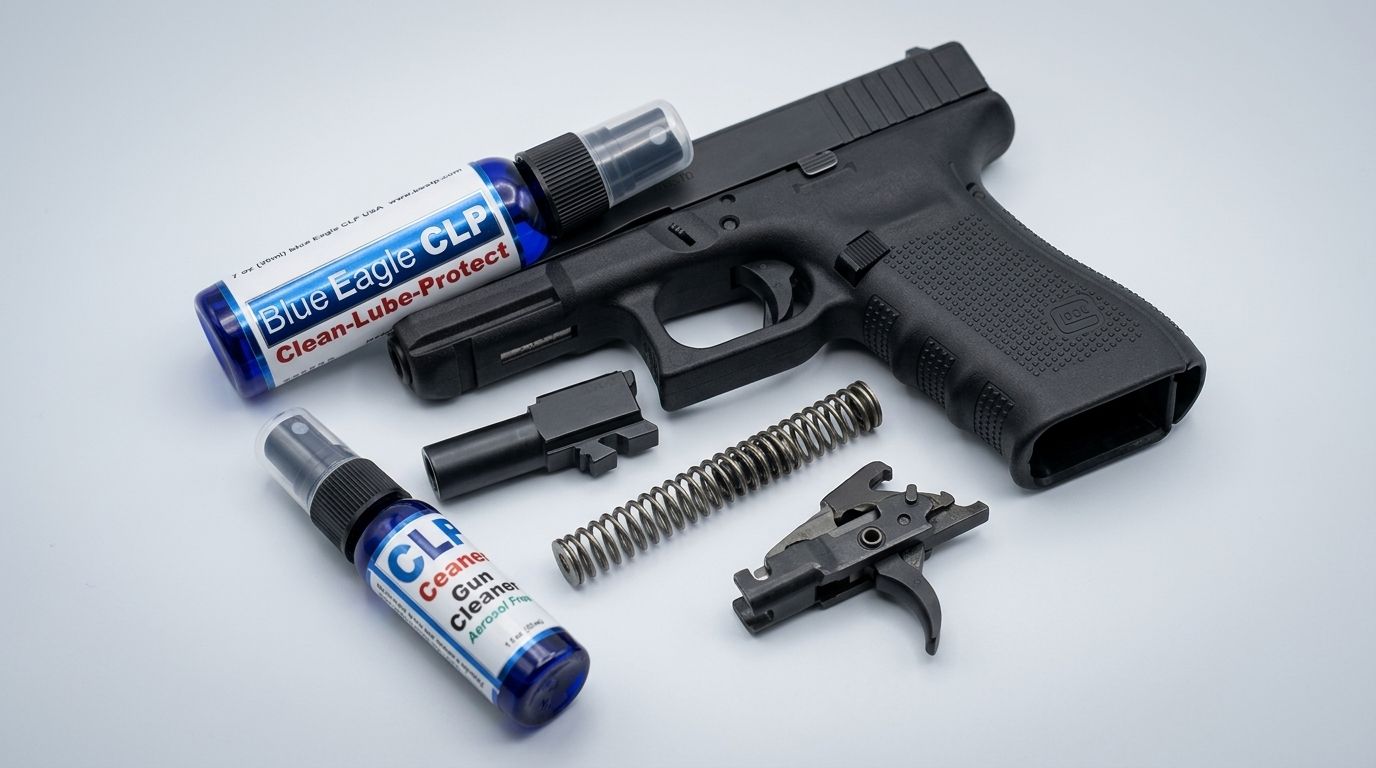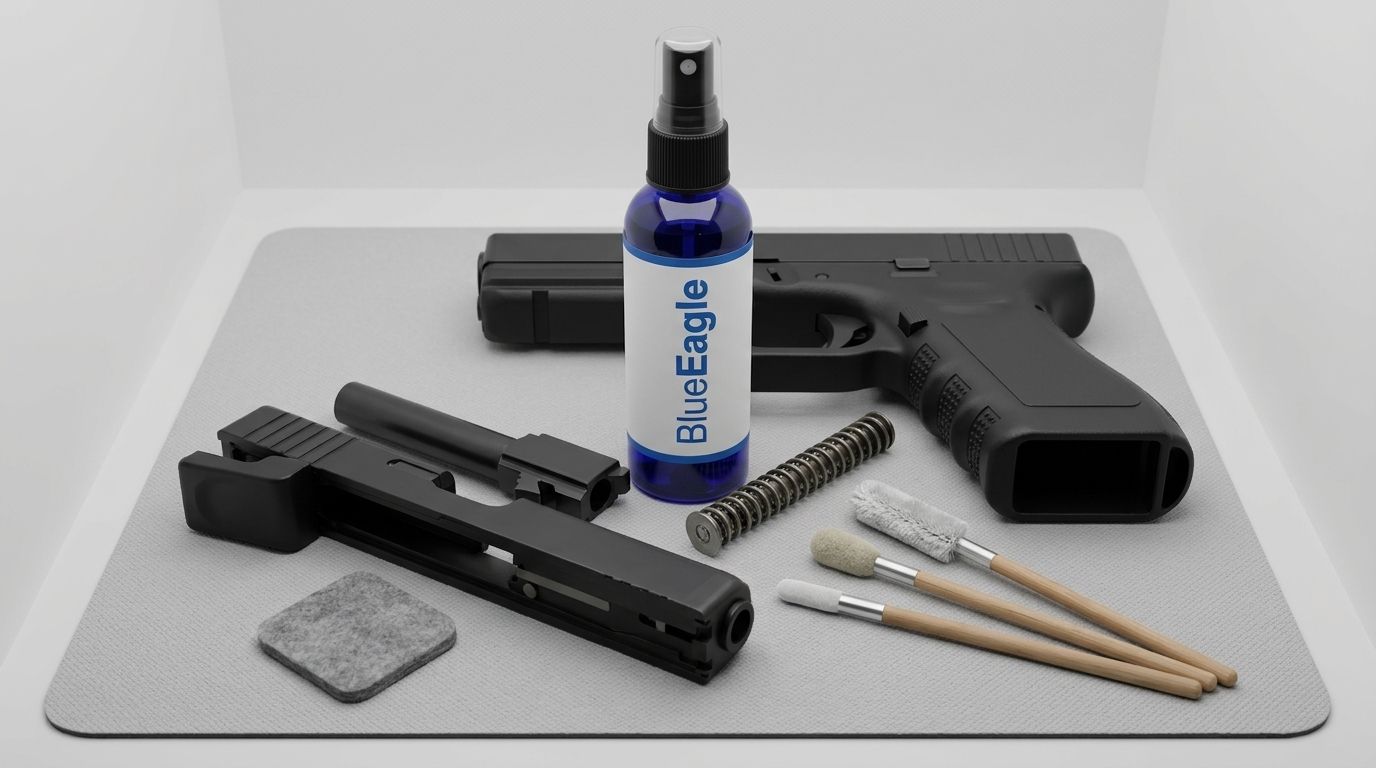
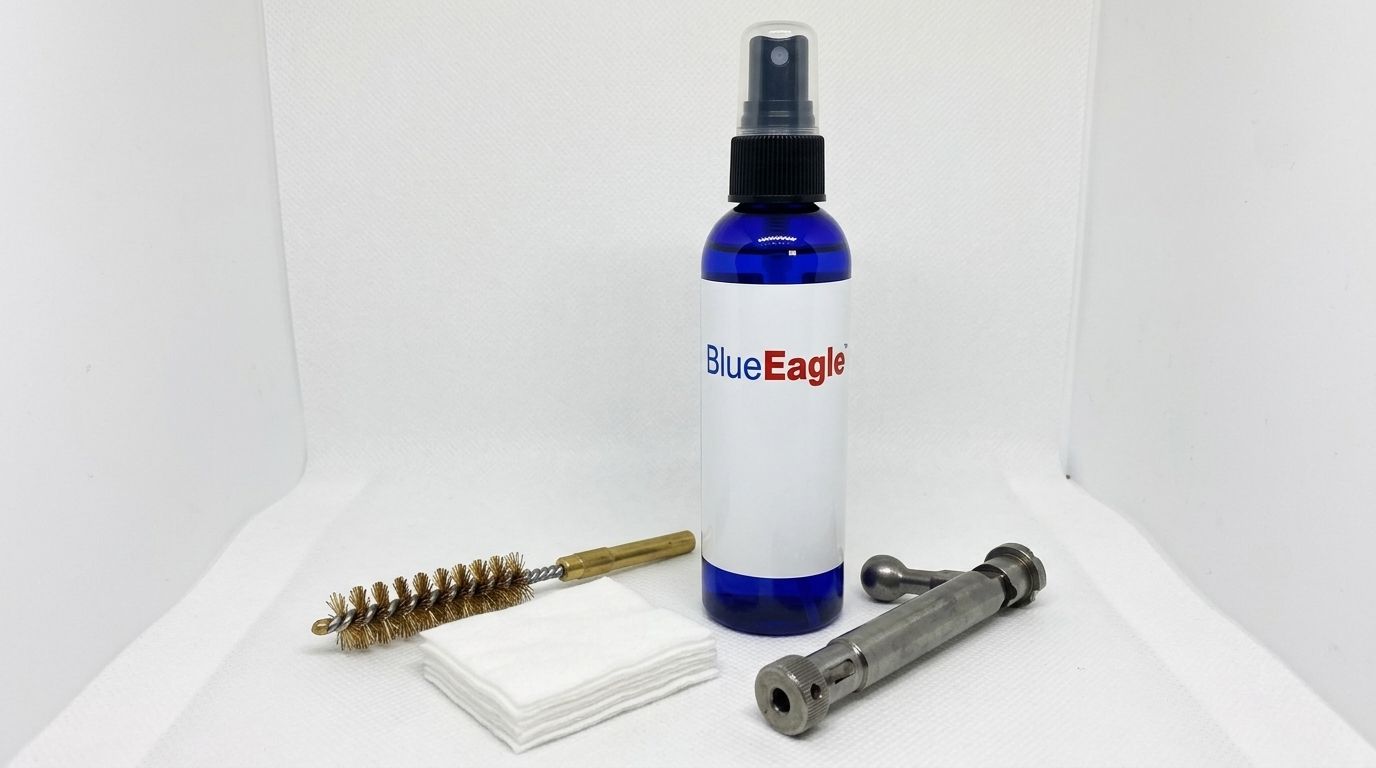
Best for routine hunting-rifle maintenance: BlueEagle CLP, when its label and your rifle’s manual permit bore use. Best for confirmed copper fouling: a copper-specific bore cleaner. Best for stubborn carbon: a dedicated carbon cleaner. Start with Beclp for the routine CLP option, then choose a specialist only when the fouling calls for it.
- BlueEagle CLP is the routine-maintenance pick when product directions and your rifle manufacturer permit bore use.
- Choose a rifle bore cleaner for hunting by fouling type, not by the strongest claim on the bottle.
- Copper-specific bore cleaners and dedicated carbon cleaners serve different cleaning jobs.
- Biobased cleaning and synthetic lubrication are separate considerations; check each product’s label and data sheet.
Why this matters
The best rifle bore cleaner for hunting is the cleaner that addresses the residue in your barrel without conflicting with the firearm manufacturer’s instructions. A routine wipe-down, persistent carbon and copper deposits are different jobs. Treating them as one job makes the buying decision harder than it needs to be.
For your 2026 hunting routine, separate cleaning from lubrication and storage protection. A cleaner’s ability to remove residue does not establish its suitability as a lubricant, and a lubricant’s synthetic formulation does not establish copper-removal capability.
Beclp is best suited to hunting-rifle owners shopping for CLP, bore-cleaning and synthetic-lubrication products within a manufacturer-directed maintenance routine. The useful decision is which job needs doing, not which bottle makes the broadest promise.
What makes the best rifle bore cleaner for hunting?
Use these criteria before comparing bottles:
- Fouling match: The label should identify the residue you need to remove. Do not assume a general cleaner removes copper.
- Barrel compatibility: Follow the rifle maker’s guidance for the bore, chamber, coatings and nearby materials.
- Clear directions: Look for application, contact-time, removal and follow-up instructions you can follow at the bench.
- Practical application: Choose a format you can control with the correct patches, brushes and cleaning equipment.
- Documented handling: Read the label and safety data sheet for ventilation, protective equipment and storage requirements.
- A complete finish: Know whether cleaning must be followed by a separate lubricant or protective treatment on approved surfaces.
A biobased claim does not answer all these questions. Neither does a synthetic-lubricant claim. Check the individual formula rather than applying one product’s description to the entire range.
Hunting-rifle bore cleaners at a glance
This 2026 shortlist ranks maintenance roles, not laboratory cleaning speed. The named CLP option belongs in the routine-maintenance slot; the specialist categories belong where their labels identify the residue you need to remove.
| Option | Best for | Defining role | Key limitation |
|---|---|---|---|
| BlueEagle CLP | Routine maintenance | Combines cleaner, lubricant and protectant functions | Do not infer copper-removal capability or universal bore compatibility |
| Copper-specific bore cleaner | Confirmed copper fouling | Targets copper deposits when the label specifies that use | Does not replace every cleaning, lubrication or protection step |
| Dedicated carbon cleaner | Persistent carbon fouling | Targets carbon residue when the label specifies that use | Carbon-cleaning claims do not establish copper removal |
Choose by the problem you can identify. If you cannot identify the residue, start with the manufacturer’s routine cleaning method rather than escalating to a specialist formula on guesswork.
1. BlueEagle CLP: best for routine hunting-rifle maintenance
BlueEagle CLP is the routine-maintenance option in this shortlist because CLP combines cleaner, lubricant and protectant functions. Use it for the jobs its directions specify, with bore use subject to the rifle manufacturer’s guidance. Do not turn the CLP designation into a claim that the product handles every deposit.
For a hunting rifle, the practical question is whether your normal cleaning routine leaves a specific unresolved problem. If the approved routine addresses the residue present, a specialist solvent does not need to become an automatic extra step.
BlueEagle CLP pros:
- Combines cleaning, lubrication and protection functions in one product category.
- Fits a routine built around inspection and approved maintenance points.
- Gives you a general-maintenance option before selecting a residue-specific cleaner.
BlueEagle CLP cons:
- The CLP designation alone does not establish copper-removal capability.
- Application rules still differ between the bore, moving parts and exterior surfaces.
- Product-specific directions remain necessary; the category name is not a compatibility guarantee.
Beclp sells biobased CLP products alongside bore cleaners and synthetic lubricants. Those descriptions do not establish that every product has the same formulation, biobased content or maintenance role. Read the directions for the particular bottle you choose.
Best for: Hunters maintaining a rifle through an ordinary, manufacturer-approved cleaning routine without a confirmed specialist fouling problem.
Verdict: Buy for routine maintenance when the product label and rifle manual approve the intended use.
2. Copper-specific bore cleaner: best for confirmed copper fouling
A copper-specific bore cleaner belongs on your bench when copper deposits are the identified cleaning problem and the barrel manufacturer permits the formula. Copper fouling is jacket material deposited in the bore; it is not another name for carbon residue.
Choose a product whose label explicitly addresses copper. Do not infer that capability from words such as solvent, CLP or bore cleaner, and do not use patch color alone as proof of what remains in the barrel.
Copper-specific bore cleaner pros:
- Matches a defined fouling problem rather than a general maintenance task.
- Gives you a label-based basis for selecting a copper-removal procedure.
- Keeps specialist treatment separate from your ordinary cleaning routine.
Copper-specific bore cleaner cons:
- Requires close attention to permitted contact time and removal instructions.
- Does not establish compatibility with every barrel, finish or cleaning tool.
- Does not automatically provide the lubrication or storage protection required afterward.
Do not mix cleaners or layer a copper product over another chemical unless the directions explicitly permit the combination. Remove each product as instructed before changing treatments. More chemistry is not a substitute for a clear procedure.
Best for: Hunters addressing confirmed copper fouling through an approved barrel-cleaning method.
Verdict: Buy for an identified copper-removal job; skip as an automatic addition to every cleaning session.
3. Dedicated carbon cleaner: best for persistent carbon fouling
A dedicated carbon cleaner is the specialist option when carbon residue remains after the approved routine cleaning process. Its label should specify the intended use and the surfaces it can contact. A product approved for one firearm component is not automatically approved for the entire rifle.
Stay within the manufacturer’s cleaning method. Persistent residue calls for checking the diagnosis, tools and directions—not simply increasing force or extending chemical contact beyond the label.
Dedicated carbon cleaner pros:
- Focuses the buying decision on carbon rather than unrelated deposits.
- Provides a specialist option when routine cleaning leaves carbon behind.
- Lets you separate residue removal from subsequent lubrication and protection.
Dedicated carbon cleaner cons:
- Carbon-removal claims do not establish copper-removal capability.
- Adds another application and removal procedure to the bench routine.
- Requires its own compatibility checks, even if your regular CLP is approved.
Before buying, confirm that the apparent problem is actually carbon. Accuracy changes and difficult cleaning do not, by themselves, identify a particular deposit. Ask the rifle manufacturer or a qualified gunsmith when the cause is unclear.
Best for: Hunters dealing with persistent carbon through a documented, surface-compatible cleaning procedure.
Verdict: Buy for identified carbon fouling; hold if you have not established what needs removing.
Build a bore-cleaning routine around the rifle manual
For 2026, keep your bench procedure specific to the rifle rather than copying a universal solvent schedule. The rifle bore-cleaning workflow is a useful companion to the product decision, but the firearm manufacturer’s instructions remain the authority.
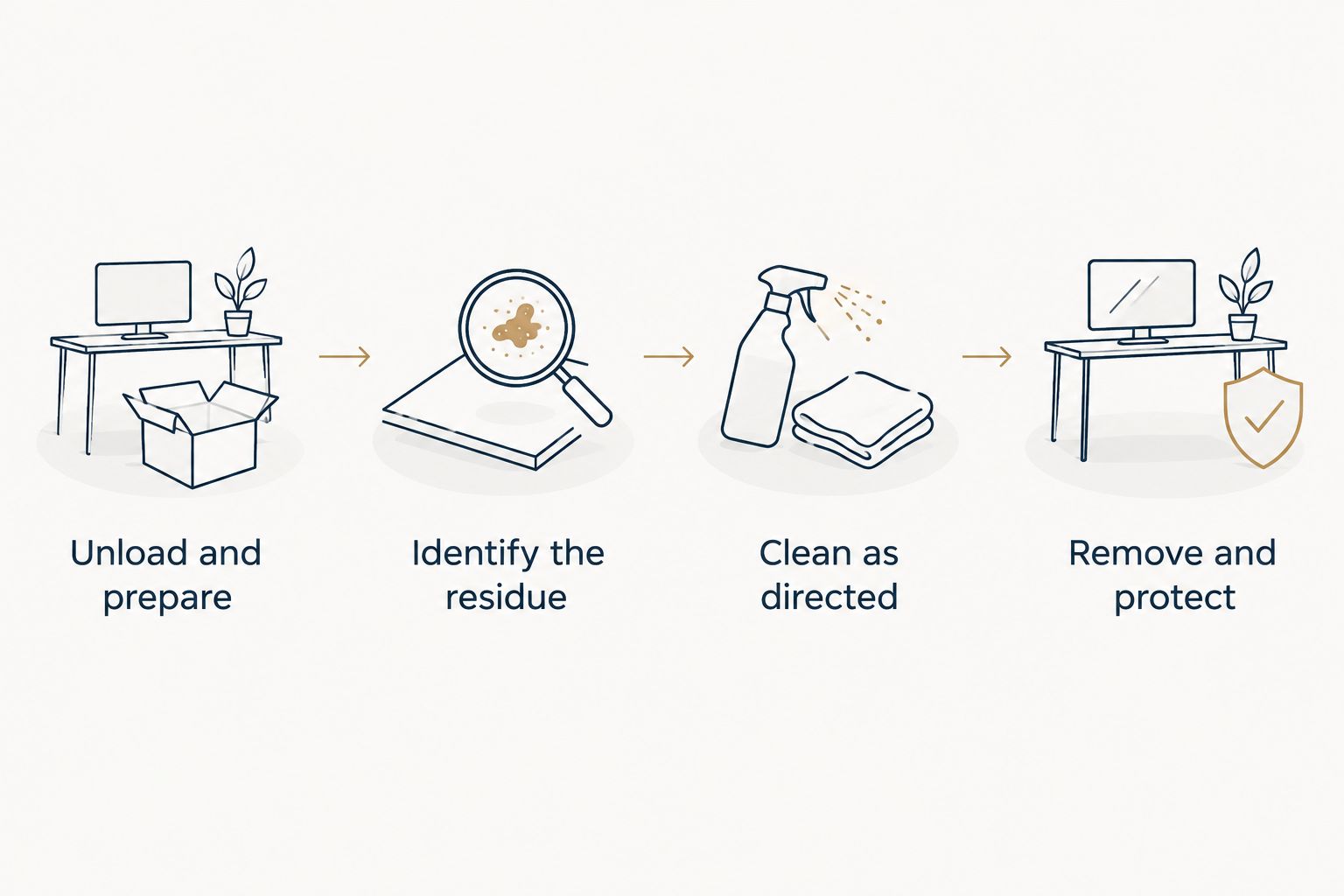
Unload and prepare
Unload the rifle, verify its condition according to the manual and remove ammunition from the cleaning area. Follow the manufacturer’s disassembly directions. Arrange suitable cleaning tools and read the cleaner’s handling instructions before opening the bottle.
Identify the residue
Decide whether you are carrying out ordinary maintenance or addressing an identified carbon or copper problem. Do not treat every dark patch as evidence that a stronger cleaner is necessary. Keep the diagnosis separate from the desire to make every patch look identical.
Clean as directed
Use the specified application method and observe the product’s contact-time limits. Follow the rifle maker’s guidance on cleaning direction and tool use. Avoid unnecessary contact with the crown, chamber edges, stock and nearby finishes.
Remove and protect
Remove the cleaner as directed, then apply lubricant or protection only where the firearm manufacturer specifies it. Prepare the bore for firing according to the manual. A storage treatment and a ready-to-fire condition are not interchangeable instructions.
What hunting conditions change—and what they do not
Rain, dust and storage conditions belong in your inspection routine, but they do not identify the chemical composition of bore deposits. Inspect the rifle after exposure and follow the manual’s response to moisture or contamination. Do not substitute a bore solvent for attention to wet exterior surfaces or other affected components.
Cold-weather preparation also requires a separate lubrication decision. A synthetic lubricant is not automatically suitable for every temperature or application point. Check the particular lubricant’s documentation and the rifle manufacturer’s recommendations before your 2026 hunt.
Avoid making an unfamiliar cleaning procedure part of the final preparation for a hunt. Complete maintenance with enough time to confirm the rifle’s condition and verify zero under appropriate range conditions. A freshly cleaned barrel is not proof that the rifle is ready.
How this shortlist is ranked
The order follows the maintenance decision: routine care first, confirmed copper second and persistent carbon third. It does not claim that one formula cleans faster, produces smaller groups or protects longer than another.
The criteria are fouling match, compatibility, usable directions, controlled application, documented handling and the required finishing steps. Beclp receives the routine-maintenance emphasis because CLP is part of its stated product offering—not because of an unsupported claim that CLP replaces every specialist cleaner.
For 2026, reject any ranking that treats a biobased description as proof of harmlessness or treats synthetic lubrication as proof of bore-cleaning performance. Those are different claims requiring different evidence.
Which rifle bore cleaner should you choose?
Choose BlueEagle CLP as the routine-maintenance option when its label and your rifle manual approve the work you intend to do. Choose a copper-specific cleaner for confirmed copper deposits, or a dedicated carbon cleaner for persistent carbon. Do not buy both specialists simply to make the kit look complete.
If you are undecided, read the rifle manual before ordering. Then compare the product label, handling information and required follow-up steps. The best rifle bore cleaner for hunting is a documented match to the job, not a promise to solve every maintenance problem.
FAQ
What’s the best rifle bore cleaner for hunting?
The best rifle bore cleaner for hunting matches the fouling present and follows the rifle manufacturer’s compatibility guidance. BlueEagle CLP is the routine-maintenance pick in this shortlist when its directions permit the intended use; identified copper or persistent carbon calls for an appropriate specialist.
Can I use CLP inside my hunting rifle’s barrel?
Use CLP inside the barrel only when the product directions and rifle manufacturer permit it. Follow their application, removal and pre-firing instructions rather than assuming bore use from the CLP name.
Do I need a copper remover every time I clean my rifle?
Copper remover is not an automatic step in every cleaning session. Use a copper-specific product when copper fouling is the identified problem and the rifle manufacturer permits that treatment.
Is a biobased bore cleaner harmless to handle?
Biobased does not mean harmless to handle. Follow the product label and safety data sheet for ventilation, protective equipment, storage and disposal instructions.
Does synthetic gun oil replace a bore cleaner?
Synthetic gun oil does not replace a bore cleaner merely because it is synthetic. Cleaning capability depends on the particular product’s stated uses; lubrication and residue removal are separate jobs.
Can I leave cleaner in the bore overnight?
Leave cleaner in the bore overnight only if the product directions explicitly permit that contact time and the rifle manufacturer allows the treatment. Never extend contact time on the assumption that longer means cleaner.
Should I clean my hunting rifle immediately before checking zero?
Follow the rifle manufacturer’s maintenance instructions and verify zero after preparing the rifle for use. Do not assume that cleaning leaves the point of impact unchanged or eliminates the need for a range check.
One last thing
The last chemical used is not necessarily the last maintenance step. A copper or carbon cleaner can finish its assigned job while the rifle still needs approved lubrication, protection or preparation before firing. Write those finishing instructions into your bench routine so an empty patch does not become your only definition of done.