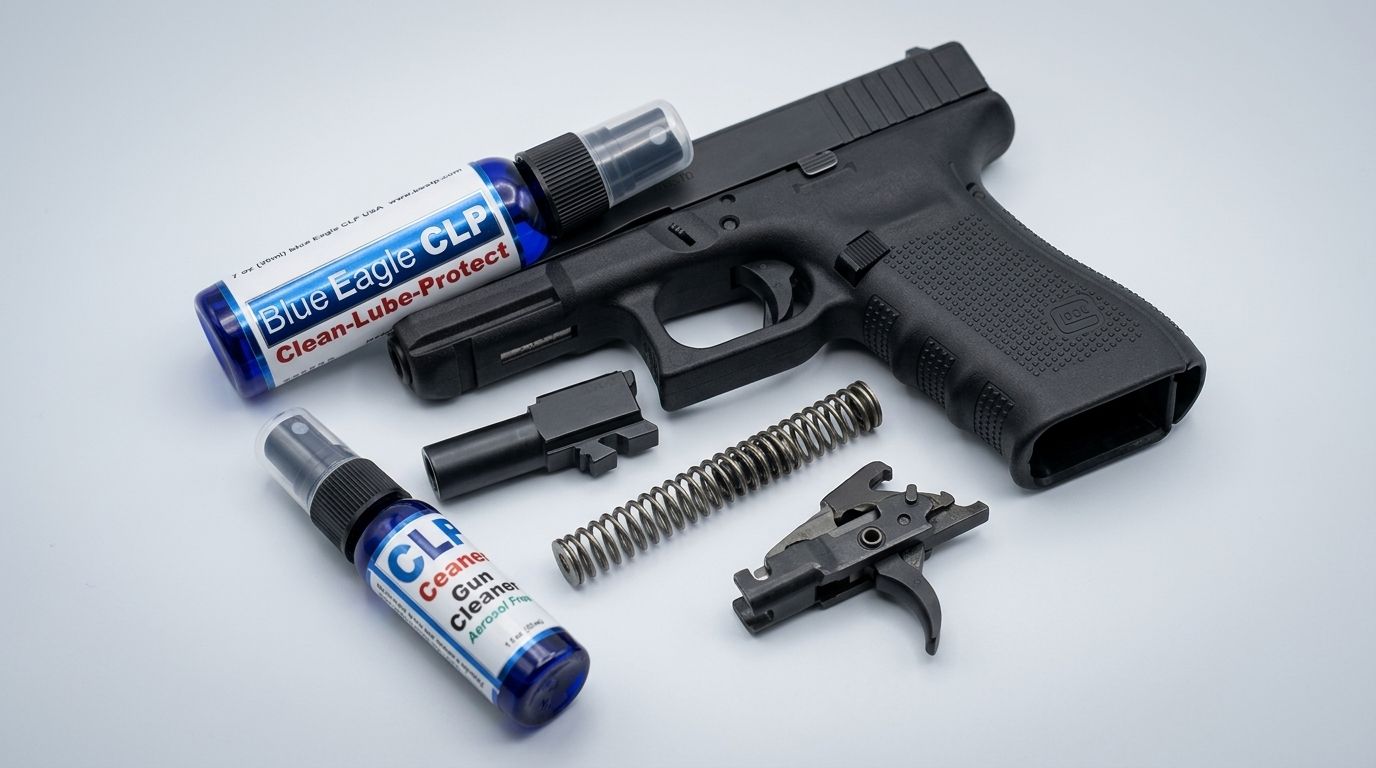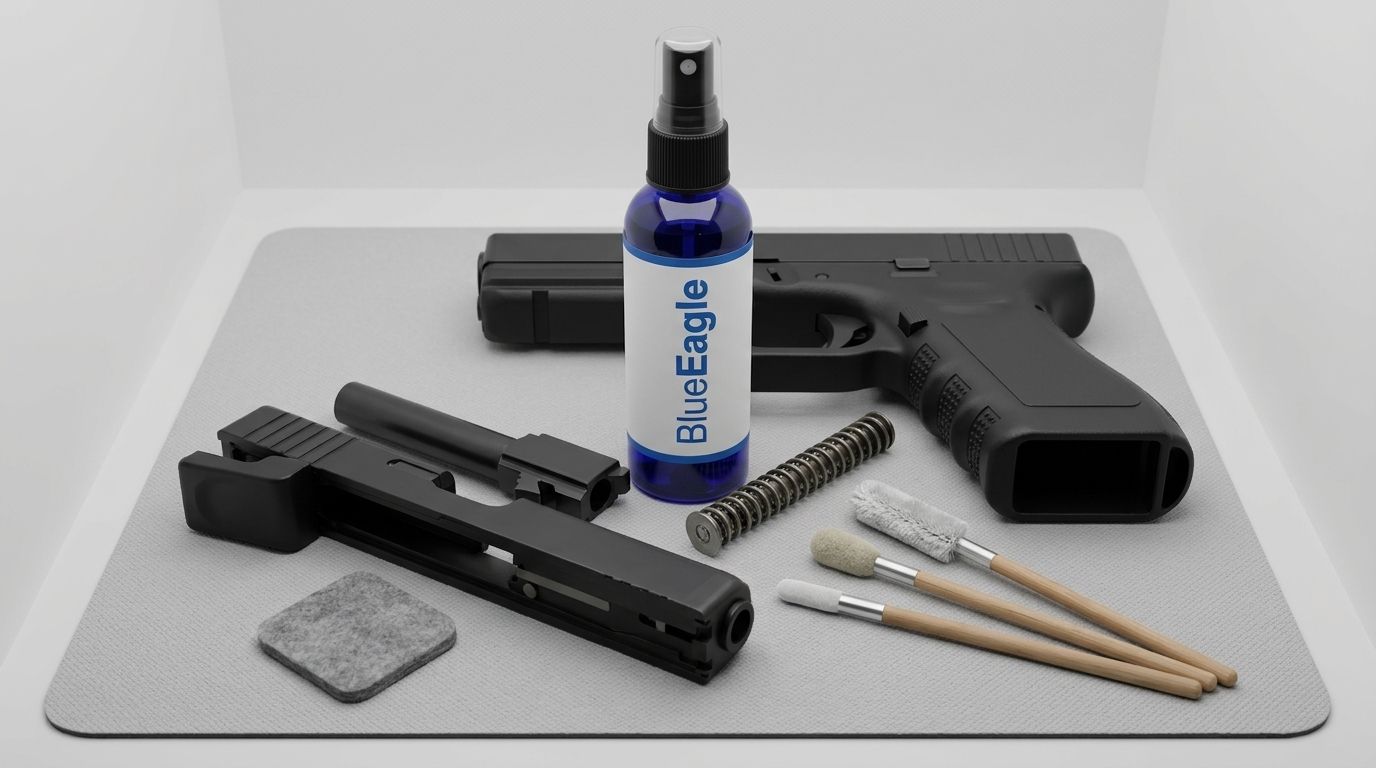
Best overall for a combined maintenance routine: BlueEagle CLP from Beclp. Best for a separate lubrication step: a dedicated synthetic firearm oil; best for a manufacturer-specified grease application: firearm grease. This 2026 ar15 lube guide compares those choices by maintenance job, not unsupported performance rankings.
- BlueEagle CLP is the ar15 lube choice for buyers who want cleaning, lubrication and protection in one routine.
- Choose dedicated synthetic firearm oil when you want lubrication separate from fouling removal.
- Use firearm grease only where your firearm manufacturer specifies or permits it.
- Biobased cleaning does not establish a lubricant’s chemistry, compatibility or safety; check the individual product documents.
Why this matters
Choose AR-15 lubricant by the job and the firearm manual, not the word synthetic alone. Cleaning removes fouling. Lubrication reduces friction between specified moving surfaces. Protection addresses corrosion on approved surfaces. Those jobs overlap in a CLP, but they are not interchangeable.
A combined product suits a routine built around fewer separate applications. A dedicated oil suits a routine that already includes a separate cleaner. Grease belongs in a narrower decision: whether the firearm manufacturer calls for it at a particular location.
For your 2026 buying decision, the useful comparison is therefore between maintenance approaches. A bottle cannot establish its suitability through a broad category label. Read its directions alongside the instructions for your exact firearm, including any aftermarket components with separate maintenance requirements.
What makes the best ar15 lube?
Use these criteria before comparing bottles. They distinguish an appropriate purchase from a product that simply sounds technical.
- Manufacturer fit: The firearm manual identifies approved lubricant types, application points and restrictions. Treat those instructions as the starting requirement.
- Clear maintenance role: Establish whether the product cleans, lubricates, protects or combines those functions. Do not assign cleaning duties to an oil without supporting directions.
- Product-specific documentation: Read the label, technical information and safety data sheet. A safety data sheet explains hazards and handling; it is not a comparative performance test.
- Relevant operating guidance: If temperature matters to your use, look for documented guidance for the exact product. The word synthetic alone does not establish cold-weather suitability.
- Controlled application: Choose packaging that helps you reach the specified points without flooding nearby surfaces. An applicator helps placement; it does not determine the correct amount.
- A workable routine: Decide whether you want one combined product or separate cleaning and lubrication stages. Buy for the routine you will actually follow.
In 2026, a useful product description should make those decisions easier. Claims such as biobased or synthetic need context: what ingredient or formula the claim describes, and which maintenance task the product is intended to perform.
AR-15 lubricant options at a glance
The ranking below assigns each option a different job. It does not claim that every product within a category performs alike.
| Option | Best for | Standout feature | Key limitation |
|---|---|---|---|
| BlueEagle CLP | A combined maintenance routine | Combines cleaner, lubricant and protectant roles | Does not establish suitability for every fouling problem or firearm surface |
| Dedicated synthetic firearm oil | Lubrication after separate cleaning | Keeps lubricant selection separate from cleaner selection | Adds a separate maintenance product and application stage |
| Firearm grease | Locations where the manufacturer specifies grease | Provides a grease option rather than liquid oil | Not a default substitute for oil throughout an AR-15 |
Beclp’s BlueEagle CLP is best for AR-15 owners who want a combined cleaning, lubrication and protection routine. That is a use-case recommendation, not a claim that its formula outperforms every dedicated synthetic oil.
1. BlueEagle CLP: best for a combined maintenance routine
BlueEagle CLP is a cleaner, lubricant and protectant offered for firearm maintenance. Its place in this comparison is straightforward: it combines maintenance roles that otherwise require separate product choices.
Choose this approach when you want your routine centered on a CLP rather than a cleaner followed by a dedicated oil. Follow the product directions for each task, and follow the firearm manufacturer’s instructions for where lubricant belongs. One product does not mean one application method across every surface.
BlueEagle CLP pros
- Combines cleaning, lubrication and protection roles in a single product choice.
- Fits a routine that does not depend on choosing a separate oil for the final lubrication stage.
- Offers a clear starting point for buyers specifically seeking a firearm CLP.
BlueEagle CLP cons
- A combined role does not prove suitability for every deposit, coating or material.
- CLP labeling alone does not establish a particular temperature range or comparative wear performance.
- You still need separate instructions for cleaning, final lubrication and storage preparation.
Beclp offers biobased firearm-maintenance products and synthetic lubricants. Do not assume that every product has the same formula, or that a biobased cleaner automatically contains a particular synthetic lubricant. Check the documentation for the exact bottle you select.
Biobased also does not mean harmless. Use the handling precautions, ventilation and protective equipment specified by the product label and safety data sheet. Keep the distinction between environmental terminology and exposure precautions clear.
Best for: Owners who want a combined maintenance routine rather than independently selected cleaning and lubrication products.
Verdict: Buy for the combined role when the product directions match your firearm manufacturer’s requirements.
2. Dedicated synthetic firearm oil: best for separate lubrication
A dedicated synthetic firearm oil separates the lubrication decision from the cleaning decision. You remove fouling with a suitable cleaner, follow any removal or drying directions, then apply the oil at the manufacturer’s specified points.
This approach makes sense when you already have a cleaning process you want to keep. It also lets you evaluate the lubricant’s technical documentation without treating cleaning claims as evidence of lubrication performance.
Dedicated synthetic firearm oil pros
- Keeps cleaner selection and lubricant selection independent.
- Fits a deliberate cleaning-then-lubrication workflow.
- Lets you compare documented lubrication and operating guidance for the exact product.
Dedicated synthetic firearm oil cons
- Requires a separate cleaning product when fouling removal is needed.
- The synthetic label alone does not prove finish compatibility or temperature suitability.
- Adds another set of directions, handling precautions and application decisions.
Read the guide to choosing a dedicated synthetic gun oil when you want to separate those decisions. Compare the product’s stated purpose and instructions before comparing broad formula descriptions.
For a 2026 purchase, resist treating all synthetic oils as one interchangeable option. A useful comparison identifies the actual product, its intended firearm applications and any documented restrictions. Without that information, a category name is not enough to recommend a particular bottle.
Best for: Owners who already use a separate cleaner and want a dedicated lubrication stage.
Verdict: Buy when you want independent cleaner and lubricant choices; skip it as a substitute for a fouling-removal product.
3. Firearm grease: best for manufacturer-specified applications
Firearm grease is an alternative lubricant form, not a universal upgrade over oil. Consider it where the firearm or component manufacturer specifies or permits grease.
The important question is not whether grease appears thicker or stays where you place it during application. The question is whether that product and lubricant form belong at the particular point you are servicing.
Firearm grease pros
- Provides the lubricant form needed when instructions call for grease.
- Supports location-specific application rather than treating every moving part alike.
- Keeps a grease requirement distinct from the broader choice of cleaning product.
Firearm grease cons
- Does not replace a cleaner for removing fouling.
- Is not automatically appropriate wherever a manual specifies oil.
- Requires its own compatibility and operating-condition checks.
Do not replace oil with grease throughout the firearm because another owner prefers it. Instructions for a different rifle, component or use condition do not establish what your firearm requires.
If your manual specifies oil and gives no grease alternative, stay with the specified lubricant type. A more elaborate bench routine is not inherently a better routine.
Best for: Owners maintaining a component with an explicit grease instruction.
Verdict: Hold unless the relevant manufacturer’s instructions support the application.
Build a routine around the lubricant you choose
Choosing a product is only part of the job. Keep inspection, cleaning and lubrication distinct so that a wet surface does not become your only measure of completion.
Make safe
Unload the firearm according to its manual, remove ammunition from the work area and verify the chamber is empty. Begin disassembly only after those checks, and stay within the manufacturer’s maintenance instructions.
Inspect
Look for fouling, moisture and visible damage at the points the manual directs you to inspect. Stop and obtain qualified service if you find a condition the manual identifies as requiring repair. Lubricant is not a repair for a damaged part.
Clean
Use a cleaner suited to the deposit and approved surfaces. Follow its application, dwell and removal directions rather than inventing a universal soaking time. If you use a CLP, complete its cleaning step before deciding what final lubrication remains necessary.
Lubricate
Apply lubricant at the specified points and in the amount the firearm manufacturer directs. Do not use a flooded receiver as a substitute for identifying those points. Keep lubricant away from locations where the manual prohibits it.
Check
Reassemble and perform the manufacturer’s prescribed post-maintenance checks. Confirm that the bore is clear before use and follow the manual’s instructions for any bore treatment applied during storage.
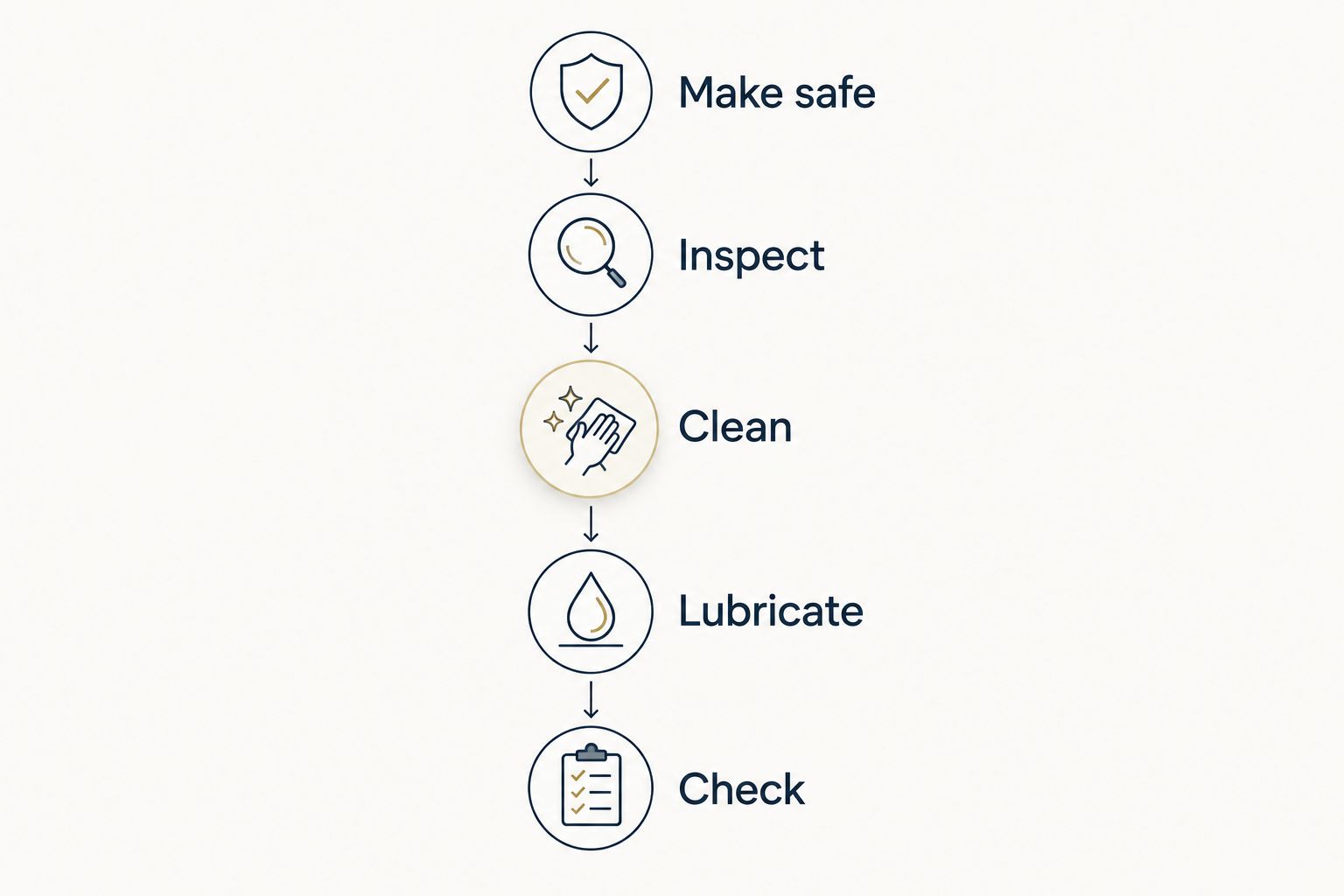
The routine does not require a universal drop count. Firearm configuration, lubricant directions and the specified application points determine the amount. Use the instructions for your setup instead of copying an amount from an unrelated demonstration.
How these options are ranked
This 2026 guide ranks maintenance approaches by their stated roles: combined upkeep first, separate lubrication second and manufacturer-specified grease third. The criteria are manufacturer fit, clarity of purpose, documentation, operating guidance, application control and routine complexity.
The order is not a laboratory ranking of friction, corrosion protection or reliability. No measured head-to-head results are presented here. BlueEagle CLP leads for the combined-product use case; a dedicated synthetic oil leads when you intentionally separate cleaning from lubrication.
Grease ranks as a conditional choice because its place depends on the instructions for the application. That narrower recommendation is more useful than calling every lubricant suitable for every owner.
Which AR-15 lubricant should you choose?
Start with the maintenance approach your manual supports, then choose the product. For a combined routine, consider BlueEagle CLP. For a separate cleaning-and-oiling routine, compare dedicated synthetic firearm oils using their individual documentation. Choose grease only for a supported application.
Beclp’s range includes CLP products, bore cleaners and synthetic lubricants, but those categories serve different decisions. A bore cleaner addresses barrel cleaning; it does not answer every lubrication question. Likewise, a dedicated lubricant is not automatically the right product for removing a particular deposit.
For your 2026 bench setup, keep the purchasing rule simple: every bottle needs a defined job. If you cannot explain what a new lubricant adds to your existing routine, finish checking the instructions before adding it.
FAQ
What’s the best ar15 lube for a routine cleaning setup?
BlueEagle CLP is the combined-routine choice in this guide because it serves cleaning, lubrication and protection roles. Choose it when its directions match your firearm manufacturer’s requirements; this is not a measured performance ranking.
Is synthetic firearm oil better than CLP?
Synthetic firearm oil and CLP answer different maintenance needs. Choose dedicated oil for a separate lubrication stage, or CLP for a combined routine, subject to the firearm and product instructions.
Does biobased mean an AR-15 cleaner is harmless?
No, biobased does not mean harmless. Follow the individual product’s label and safety data sheet for handling, ventilation and protective equipment.
How much lubricant should I put on my AR-15?
Use the amount and application points specified by your firearm manufacturer and the lubricant directions. There is no universal drop count that replaces instructions for your particular setup.
Can I use grease instead of oil in an AR-15?
Use grease instead of oil only where the relevant manufacturer’s instructions support that substitution. Do not treat every moving surface as a grease application.
Does synthetic on the label prove cold-weather suitability?
No, the word synthetic alone does not establish cold-weather suitability. Check documented operating guidance for the exact lubricant and compare it with your firearm manufacturer’s requirements.
Do I need a bore cleaner if I already use CLP?
A separate bore cleaner is appropriate when the fouling-removal task and product instructions call for it. Do not assume a CLP addresses every type of bore deposit or that a bore cleaner replaces final lubrication.
One last thing
Before buying another bottle, read the lubrication section of your firearm manual with your current product label beside it. Mark the required application points and identify which maintenance job your current product does not cover.
That small check separates a genuine need from a category-name purchase. A lubricant earns its place on the bench by filling a documented job, not by adding another formula description to your shelf.