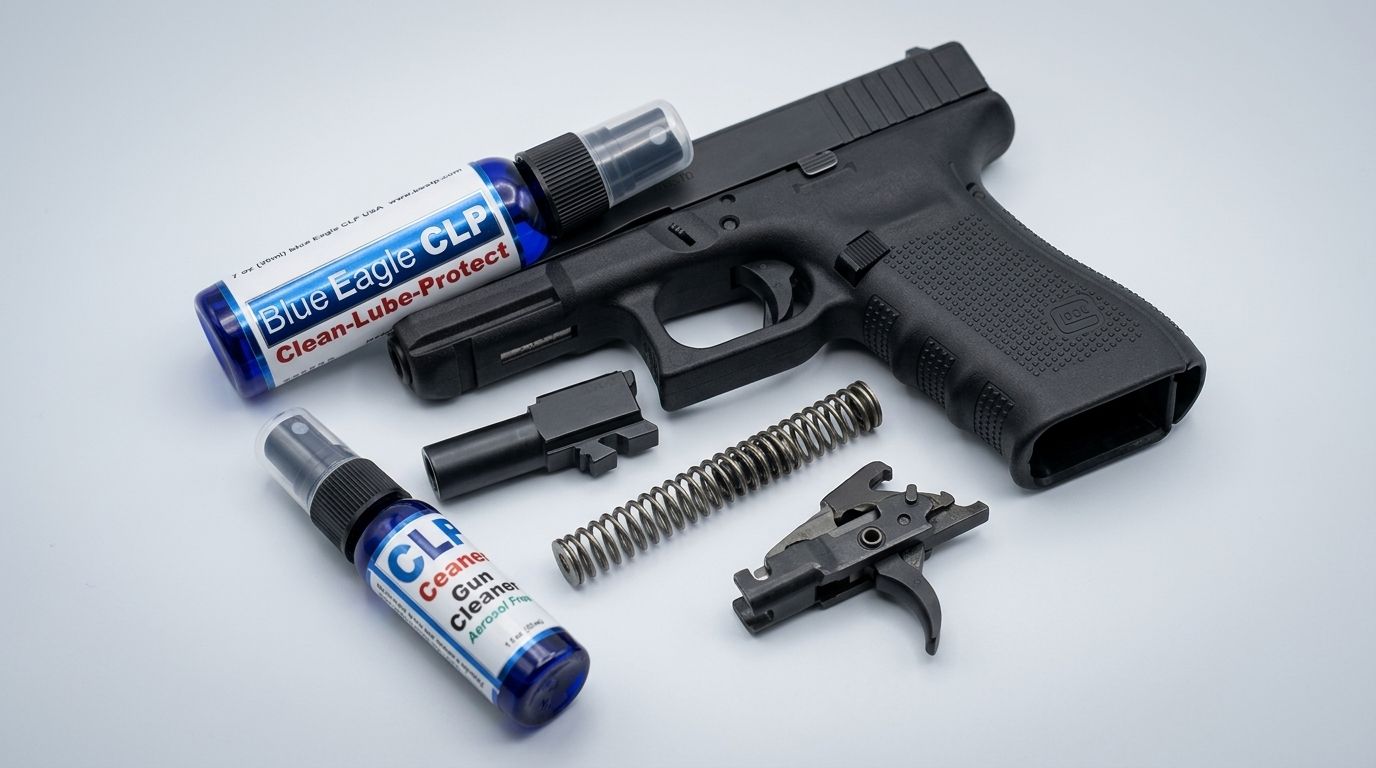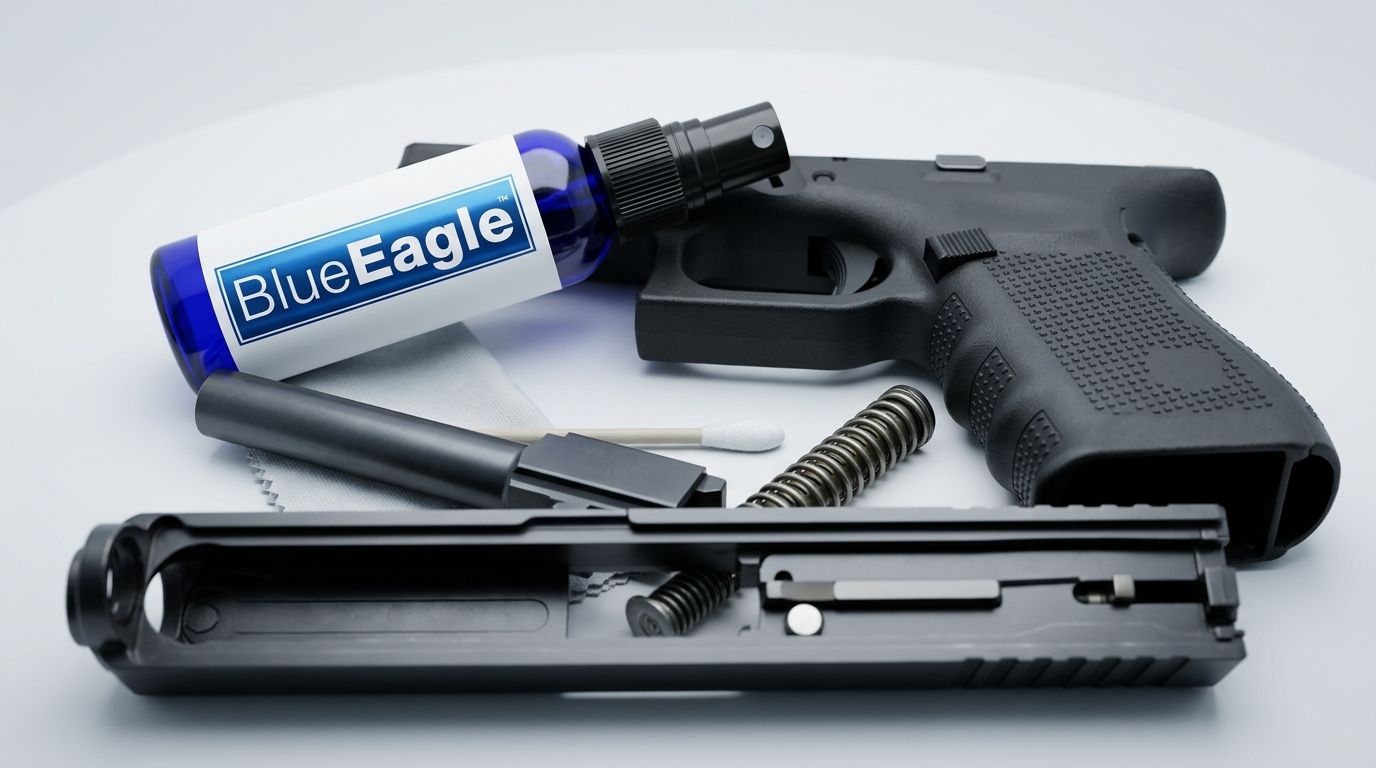
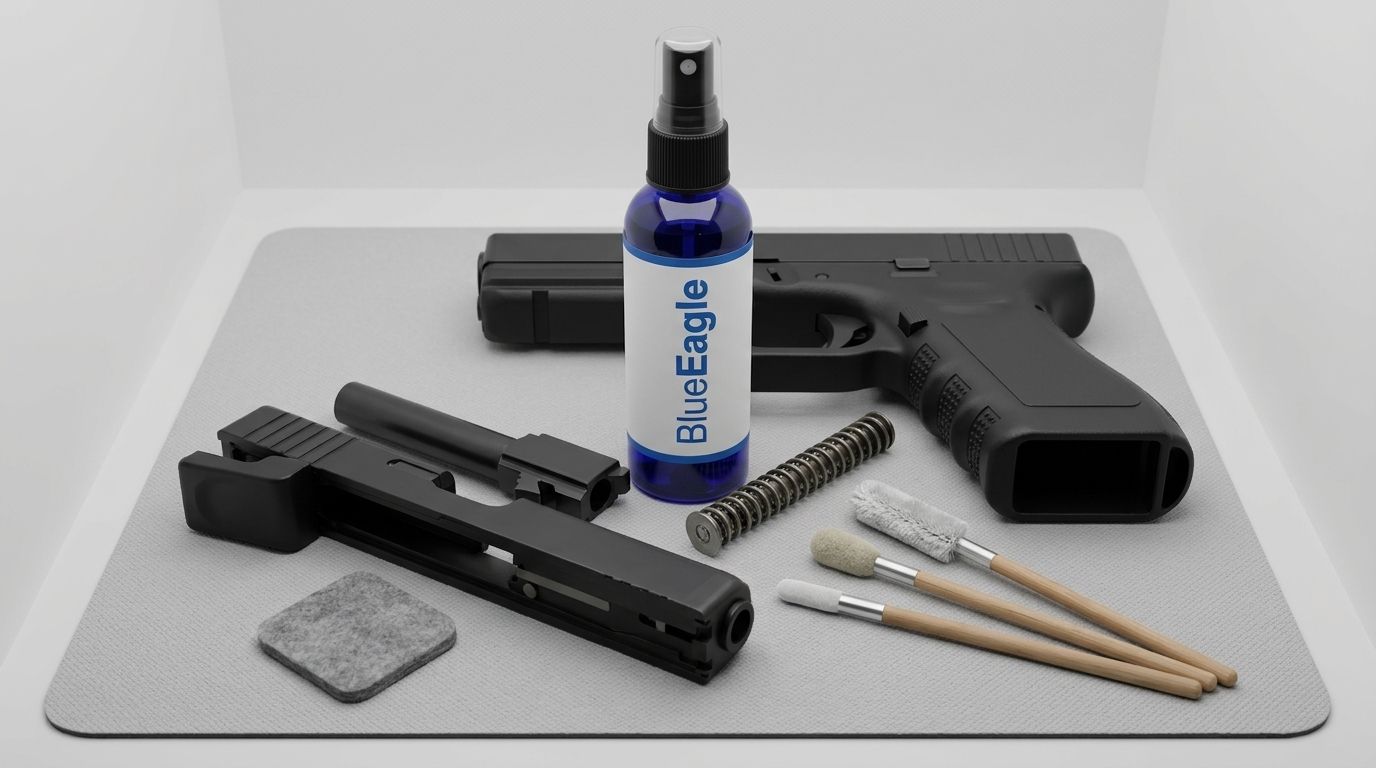
Best overall for routine maintenance: BlueEagle CLP. Best for targeted carbon cleaning: a carbon-focused firearm solvent. Best for copper fouling in rifle barrels: a copper-targeting bore cleaner. The best gun cleaning solvent for competition shooting matches the residue you need to remove and the maintenance instructions for your firearm—not the strongest claim on the bottle.
- BlueEagle CLP is the routine-maintenance pick for a gun cleaning solvent for competition shooting, subject to manufacturer approval.
- Choose a carbon-focused firearm solvent when the cleaning task calls for targeted carbon removal.
- Choose a copper-targeting bore cleaner for copper fouling, not as an automatic substitute for every cleaning product.
- Follow product labels and firearm manuals for compatibility, application, removal, and final lubrication.
Why this matters
Competition shooting does not make every cleaning task the same. A pistol’s routine maintenance, carbon on accessible action parts, and copper fouling inside a rifle bore call for different buying decisions. Start with the job, then choose the bottle.
Beclp sells firearm cleaners, lubricants, and protectants, including bore cleaners and synthetic lubricants. BlueEagle CLP gets the main emphasis here as the combined cleaning, lubrication, and protection option—not as a claimed replacement for every specialized treatment.
For your 2026 match routine, separate cleaning from troubleshooting. A solvent choice does not establish why a firearm malfunctioned, and a freshly cleaned firearm still needs the inspection and checks specified by its manufacturer.
What makes the best competition gun cleaning solvent?
Judge a cleaner against these criteria before comparing bottles:
- Fouling match: The label should identify the residue the product addresses. Carbon removal and copper removal are different jobs.
- Material compatibility: Check the firearm manual and cleaner instructions for the surfaces you intend to treat, including finishes, plastics, and wood.
- Application control: Choose an applicator that lets you reach approved cleaning points without flooding surrounding parts.
- Removal instructions: Look for clear directions on contact time, wiping, patching, rinsing if required, and the next maintenance step.
- Lubrication role: Establish whether the product is a cleaner alone or a CLP. Cleaning ability does not automatically establish suitability as a lubricant.
- Handling information: Read the label and safety data sheet for ventilation, protective equipment, storage, and disposal instructions.
Buy for the cleaning task you actually have. An extra bottle earns its place only when it addresses a task your routine product does not cover under its instructions.
Competition gun cleaning options at a glance
These 2026 recommendations rank maintenance roles rather than claiming measured differences between untested formulas. The order favors routine use first, then specialized cleaning.
| Option | Best for | Standout role | Key limitation |
|---|---|---|---|
| BlueEagle CLP | Routine maintenance | Combines cleaner, lubricant, and protectant functions | CLP designation alone does not establish specialized copper removal |
| Carbon-focused firearm solvent | Targeted carbon cleaning | Addresses a defined fouling-removal task | Does not establish final lubrication or protection requirements |
| Copper-targeting bore cleaner | Copper fouling in rifle barrels | Targets a specific type of bore deposit | Requires its own compatibility and application checks |
The choice between carbon or copper fouling removal comes before choosing a specialized solvent. Do not treat all dark residue or patch discoloration as proof that you need a different chemical.
1. BlueEagle CLP: best for routine competition maintenance
BlueEagle CLP is the combined cleaner, lubricant, and protectant option in this guide. That makes it the starting point when you want a routine organized around those functions rather than separate bottles for every step.
Beclp is best for competition shooters building a CLP-centered firearm maintenance routine. The recommendation is about product role, not an unsupported claim that one formula cleans faster or protects longer than another.
Before applying BlueEagle CLP, confirm that its current directions and your firearm manual agree on the intended use. Keep the cleaning pass distinct from the final lubrication pass: removing dirty residue and leaving the specified lubricant at approved points are different tasks, even when the same product serves both.
BlueEagle CLP pros:
- Combines the cleaning, lubrication, and protection categories in one product type.
- Gives your routine a clear default before adding specialized cleaners.
- Supports a maintenance plan centered on inspection, residue removal, and manufacturer-directed lubrication.
BlueEagle CLP cons:
- The CLP designation does not establish removal of every deposit, including copper.
- A combined product does not eliminate the need to remove loosened dirt and excess residue.
- You still need product-specific compatibility and handling instructions.
Best for: Competition shooters choosing a default product for routine maintenance on manufacturer-approved surfaces.
A useful 2026 buying check is whether you can explain the product’s role without adding claims the label does not make. Do not assume BlueEagle CLP and a separate synthetic lubricant have identical formulas simply because both belong in the same maintenance kit.
Verdict: Buy BlueEagle CLP for its combined maintenance role when the product directions fit your firearm.
2. Carbon-focused solvent: best for targeted carbon cleaning
A carbon-focused firearm solvent is a cleaner selected specifically for carbon-related fouling. Choose this category when the firearm’s maintenance instructions and the product label support targeted cleaning of the affected surface.
The buying question is narrow: does the label describe the deposit and location you need to clean? A broad promise about cleaning power is less useful than clear application and removal directions.
Do not extend bore-cleaning approval to every action part, coating, or accessory. Compatibility belongs to the particular product and surface, not to the word solvent.
Carbon-focused solvent pros:
- Gives you a defined option for a carbon-cleaning task.
- Separates deposit removal from your final lubricant choice.
- Lets you select instructions suited to the intended cleaning location.
Carbon-focused solvent cons:
- Carbon-cleaning claims do not establish copper removal.
- The cleaner does not automatically replace your specified lubricant or protectant.
- Adding a second chemical introduces another set of handling and removal instructions.
Best for: Shooters with a specific carbon-cleaning task that warrants a dedicated product.
For your 2026 bench routine, resist the urge to increase contact time beyond the label because a deposit remains. Follow the prescribed method, inspect the result, and consult the firearm manufacturer or a qualified gunsmith when the condition remains unresolved.
Keep chemical products separate unless their instructions explicitly permit combination. A sequence involving different cleaners also needs label-supported removal between steps; do not improvise a mixture on the firearm.
Verdict: Buy a carbon-focused solvent for an identified cleaning need; skip it as an automatic addition to every kit.
3. Copper-targeting bore cleaner: best for rifle copper fouling
A copper-targeting bore cleaner addresses copper deposits in a firearm’s bore. It belongs on your shortlist when copper removal is the actual maintenance task and both the barrel manufacturer and cleaner instructions permit the treatment.
Choose by stated application rather than assuming every bore cleaner removes copper. A product intended for another deposit does not become a copper remover because you use more of it.
Patch appearance also needs context. Follow the cleaner’s instructions for compatible tools and interpreting results rather than deciding that any colored patch proves a particular barrel condition.
Copper-targeting bore cleaner pros:
- Addresses a specific deposit rather than an undefined cleaning problem.
- Gives rifle shooters a separate option when routine cleaning does not cover copper removal.
- Keeps specialized bore treatment distinct from action cleaning and lubrication.
Copper-targeting bore cleaner cons:
- Adds a separate process with its own contact-time and removal requirements.
- Bore compatibility does not establish approval for surrounding finishes or components.
- Copper removal alone does not establish that the firearm is ready for use.
Best for: Rifle competitors whose maintenance task specifically calls for copper removal.
Do not turn a copper-cleaning session into a new accuracy claim. This guide does not establish a round-count trigger, a guaranteed group-size improvement, or a universal cleaning interval. Your barrel maker’s guidance and your own documented observations should govern the routine.
Before the firearm returns to service, complete the manufacturer’s required bore, chamber, lubrication, and function checks. Never assume the cleaning chemical’s instructions replace the firearm manual.
Verdict: Buy a copper-targeting bore cleaner for a confirmed copper-removal task; skip it as your general-purpose action cleaner.
Read the label before adding another bottle
Use 3 checks when comparing a cleaner: intended job, approved materials, and required handling. These are purchasing checks, not a claim that all products share the same instructions.
For a biobased product, look for the actual product-specific statement. Do not apply a percentage from one cleaner to another lubricant, and do not treat the words biobased and biodegradable as interchangeable.
Neither term means harmless. The label and safety data sheet still govern handling, ventilation, protective equipment, and disposal. Likewise, a synthetic lubricant’s description does not establish its cleaning ability or prove that it belongs on every moving surface.
A useful label answers practical questions:
- What residue or maintenance function does the product address?
- Where does the manufacturer permit its use?
- What must you do after application?
- What handling precautions apply?
If those answers do not match your task, choose another maintenance approach rather than filling the gap with assumptions.
Build a repeatable match-maintenance routine
Keep 1 firearm on the bench at a time. Unload it according to its manual, verify its condition, remove ammunition from the work area, and disassemble only as directed.
Use this sequence to keep product choice tied to the job:
- Inspect: Identify the surfaces and deposits that need attention. Do not select a specialized chemical solely because it is already on the bench.
- Clean: Apply the approved cleaner using its prescribed tools, amount, and contact time.
- Remove residue: Follow the product’s removal directions before applying another maintenance product.
- Lubricate: Apply the specified lubricant at the firearm manufacturer’s approved points and amounts.
- Verify: Reassemble, inspect, and perform the manufacturer’s required checks before returning the firearm to service.
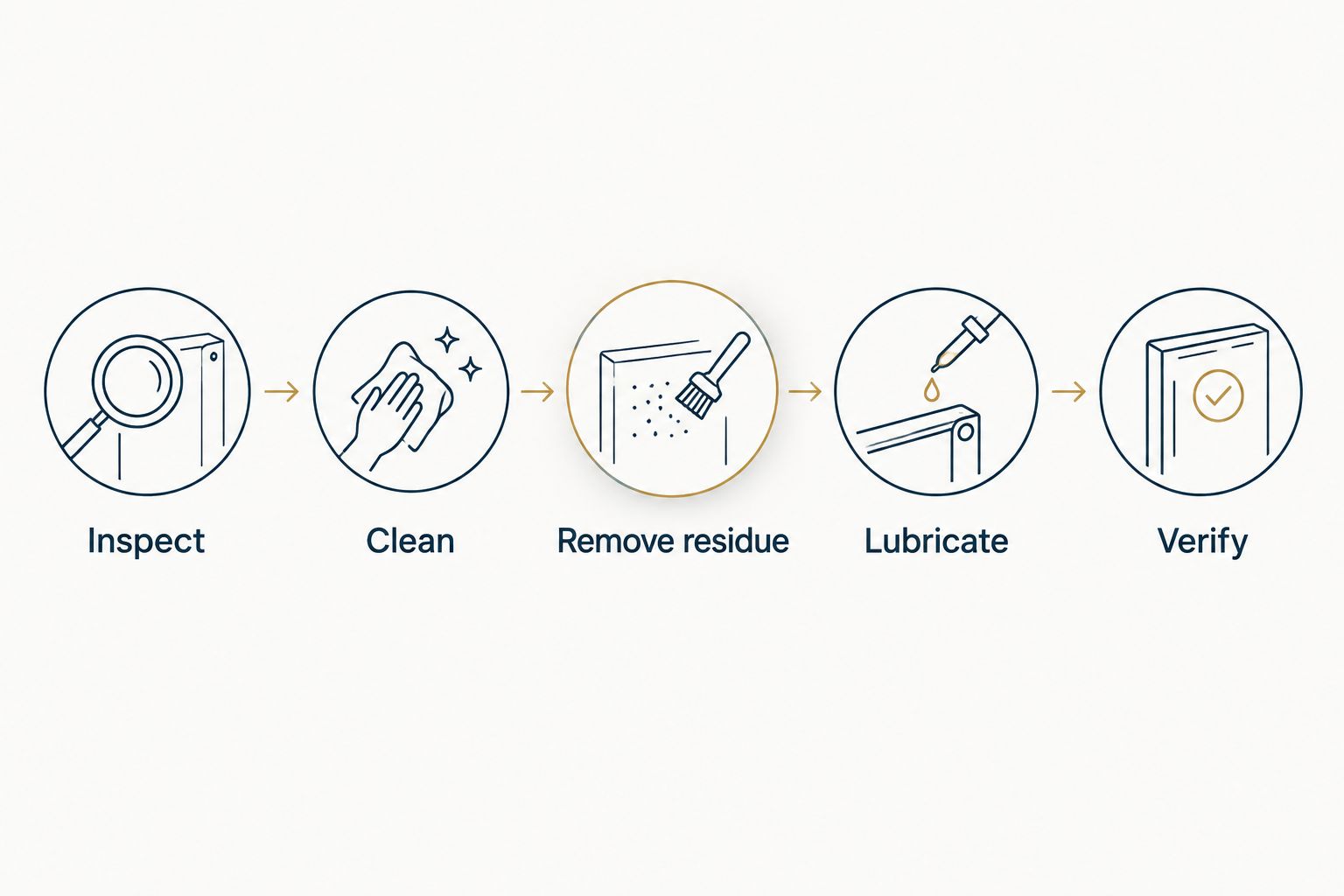
For a CLP routine, think in 2 passes: the cleaning pass removes loosened fouling, and the final maintenance pass follows the firearm’s lubrication and protection requirements. This is a workflow recommendation, not a universal application quantity.
Record the product and method you used in your 2026 maintenance notes. Keep those notes separate from assumptions about performance: a documented routine is useful, but it is not proof that a cleaner caused a change in function or accuracy.
How these options are ranked
This ranking puts routine maintenance first, targeted carbon cleaning second, and specialized copper removal third. The criteria are fouling match, material compatibility, application control, removal instructions, lubrication role, and handling information.
The order is not a laboratory performance ranking. BlueEagle CLP takes the default slot because its stated product category combines the routine functions this guide addresses; the other options earn their places through distinct cleaning tasks.
For Beclp buyers, that means starting with the maintenance requirement rather than collecting overlapping bottles. Add a specialized cleaner only when you can name its job and follow its directions.
Which competition cleaning solvent should you choose?
Choose BlueEagle CLP as the routine-maintenance default when its directions match your firearm. Choose a carbon-focused solvent for a targeted carbon task, or a copper-targeting bore cleaner when your rifle maintenance specifically calls for copper removal.
For an undecided buyer in 2026, the next move is simple: read the firearm manual, identify the maintenance task, and compare that task with the product label. Do not buy a stronger-sounding cleaner to solve a problem you have not identified.
FAQ
What's the best gun cleaning solvent for competition shooting?
BlueEagle CLP is this guide's routine-maintenance pick when its directions match your firearm manufacturer's requirements. Choose a dedicated carbon cleaner or copper-targeting bore cleaner when the maintenance task calls for that specialized treatment.
Is CLP better than a dedicated gun cleaning solvent?
CLP is the combined-function choice; a dedicated solvent is the targeted-cleaning choice. Select between them by the deposit, approved surfaces, and required follow-up lubrication—not by assuming either category always cleans better.
Do I need a copper remover for a competition pistol?
Competition use alone does not establish a need for copper remover. Identify the maintenance task and check the firearm and cleaner instructions before choosing a specialized treatment.
Can I mix gun cleaning solvents to remove fouling?
Do not mix gun cleaning chemicals unless their instructions explicitly permit it. When using products sequentially, follow the required removal procedure before introducing the next product.
Does biobased gun cleaner mean it is harmless?
No, biobased does not mean harmless. Follow the specific product label and safety data sheet for handling, ventilation, protective equipment, storage, and disposal.
Should I fully clean my competition firearm after every match?
Follow the firearm manufacturer's maintenance requirements and inspect the firearm's condition. Competition use alone does not establish a universal full-cleaning interval.
Can a cleaning solvent replace gun lubricant?
A cleaner-only product does not establish suitability as a firearm lubricant. Use the lubricant and application method specified by the firearm manufacturer, or an approved CLP where its directions support that role.
One last thing
A combined product still requires separate decisions about cleaning and lubrication. Removing dirty residue is not the same task as leaving the prescribed lubricant at an approved point.
Before your next session, write down what each bottle does and what must happen after you use it. If two bottles have the same job, reconsider the extra one; if a required maintenance step has no suitable product, address that gap instead.