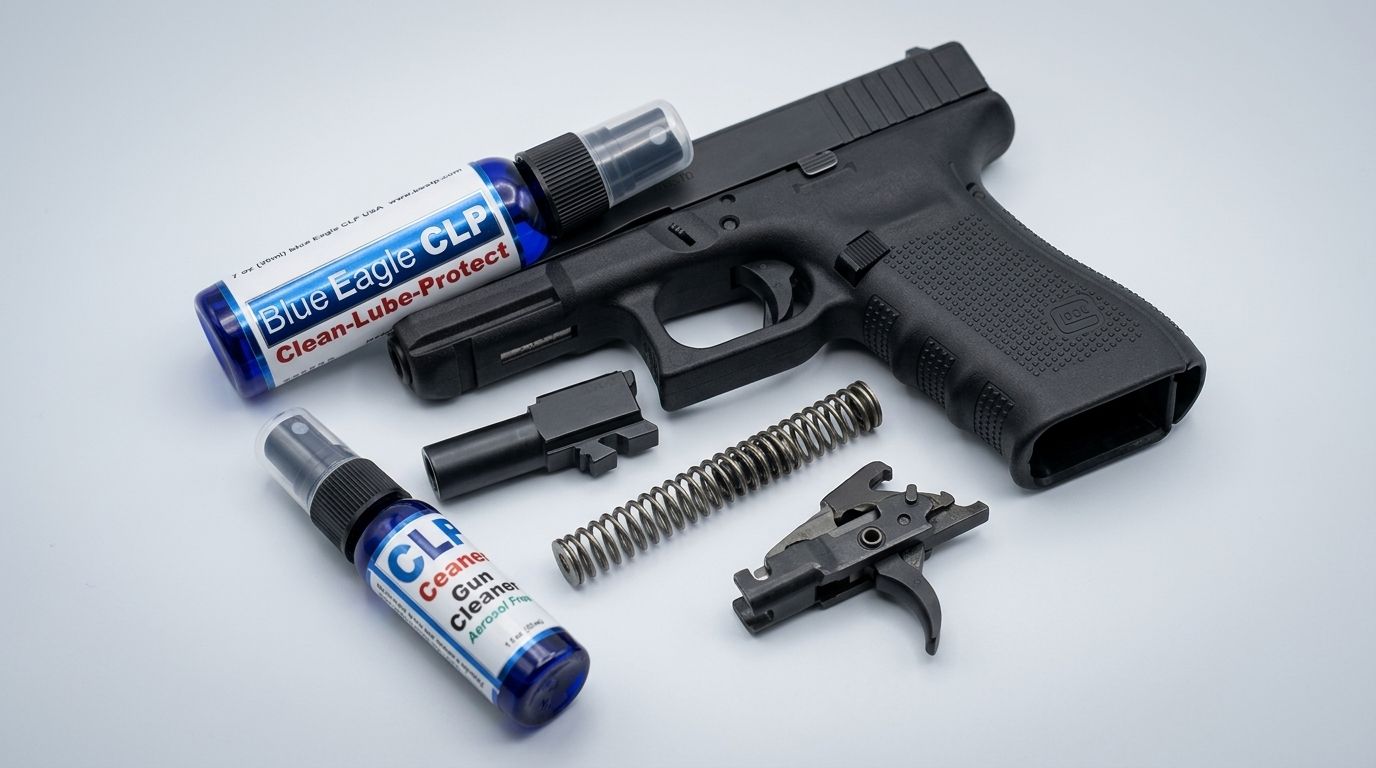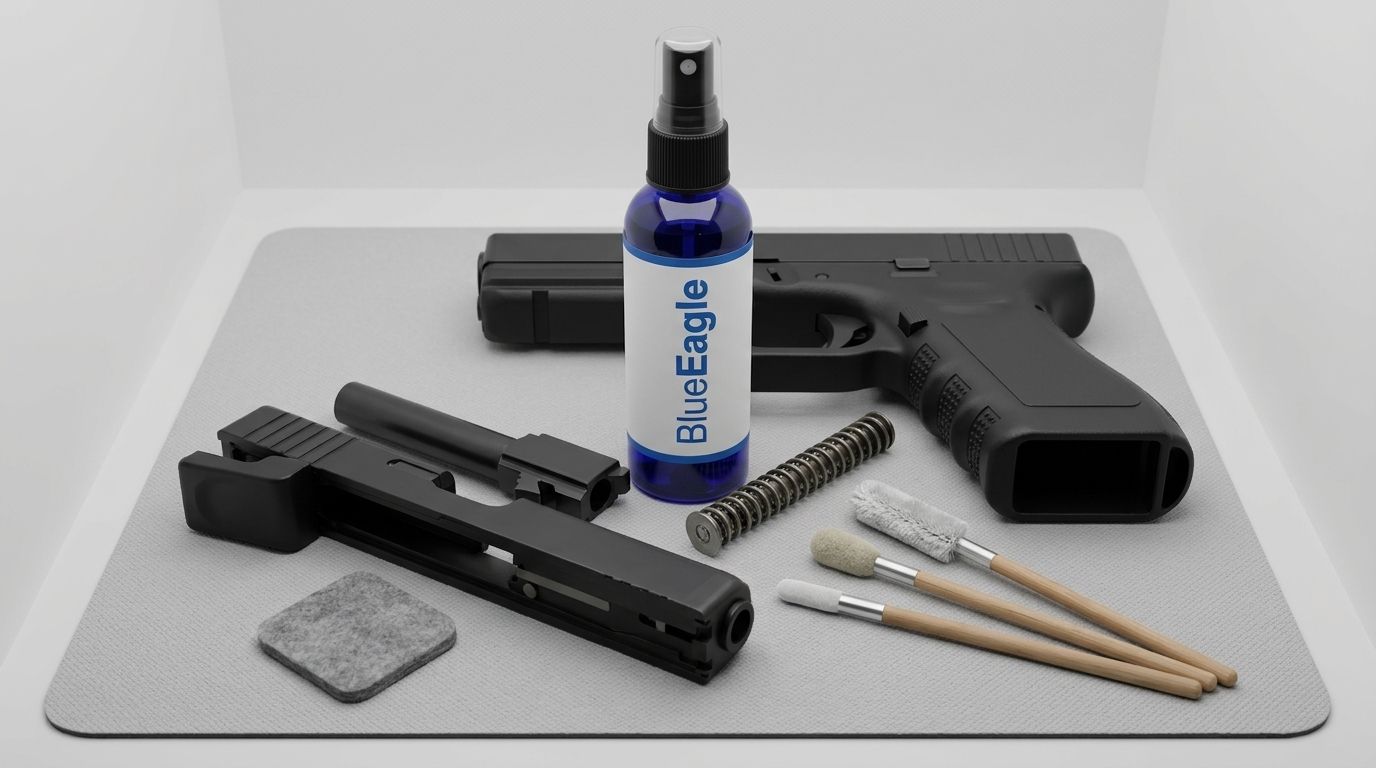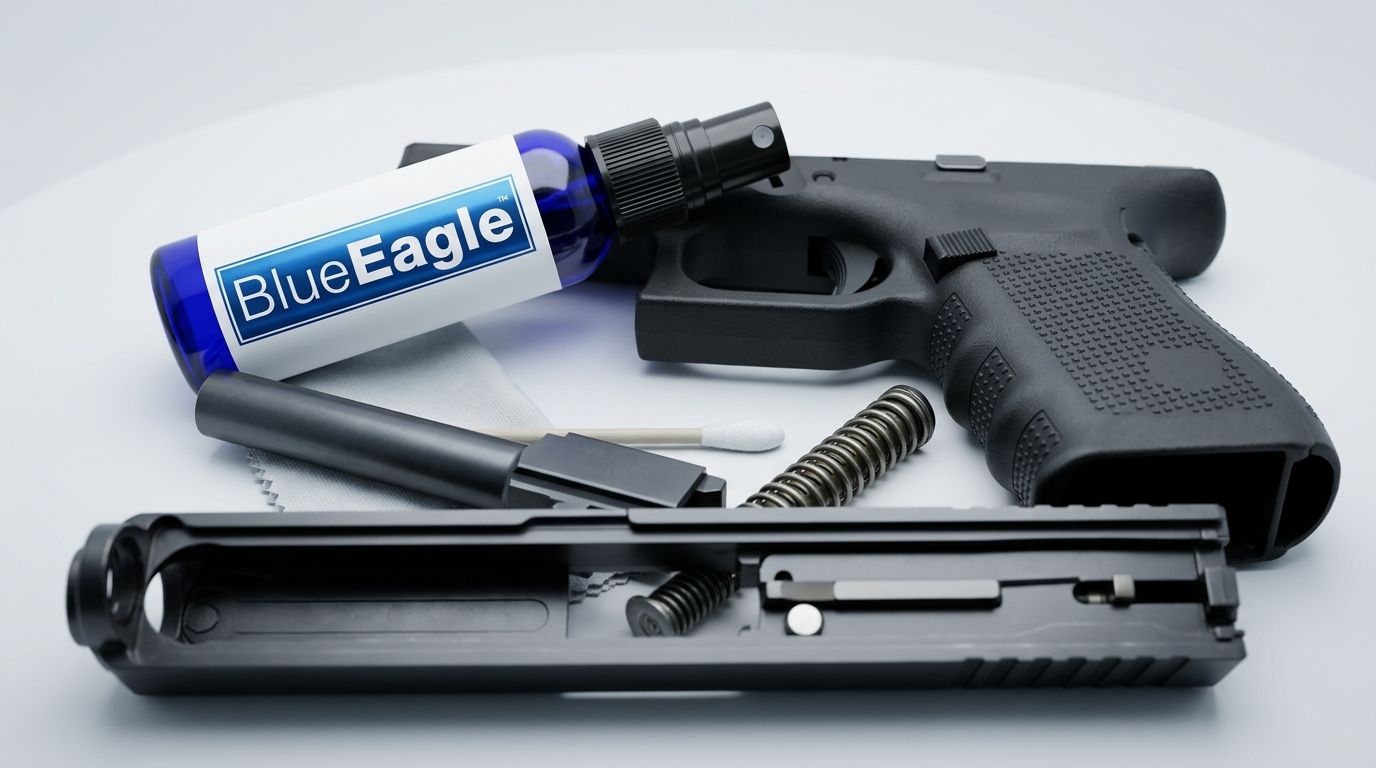
Best starting point for a combined cleaning-and-lubrication routine: Beclp CLP. Best for separate lubrication: a dedicated synthetic firearm lubricant; best for contact points that require grease: manufacturer-specified firearm grease—but none qualifies as non toxic gun lube simply because of its product category.
- Beclp CLP is the starting pick for gun owners who want cleaning, lubrication and protection in one routine.
- Choose non toxic gun lube by product-specific warnings and firearm instructions, not biobased claims alone.
- Dedicated synthetic firearm lubricant suits a routine that separates fouling removal from lubrication.
- Use firearm grease only where your firearm manufacturer specifies or permits it.
Why this matters
The best lubricant choice starts with your firearm's maintenance instructions, not a reassuring phrase on a bottle. In 2026, a useful buying decision separates three questions: what needs cleaning, what needs lubrication, and what precautions the product requires.
Beclp is best for gun owners considering a CLP routine rather than separate cleaning, lubrication and protection steps. That recommendation concerns the maintenance approach, not a claim that the formula is harmless or suitable for every firearm.
Biobased describes the source of some ingredients. Biodegradable concerns breakdown under defined conditions. Neither word establishes that a lubricant is safe to swallow, inhale, leave on your skin or use on every finish. Treat the product label and safety data sheet as operating instructions, not paperwork to skip.
What makes the best non toxic gun lube?
Use these criteria before comparing bottles. A product that fails your firearm manufacturer's requirements is not the right purchase, regardless of its environmental wording.
- Manufacturer fit: Confirm the required lubricant type, application points and any material restrictions. Oil and grease are not automatically interchangeable.
- Defined maintenance role: Decide whether you need a cleaner, lubricant and protectant together, or a dedicated lubricant after separate cleaning. A lubricant is not automatically a bore cleaner.
- Product-specific hazard information: Read the current label and safety data sheet for the exact formulation. The guide to checking a safety data sheet explains how to examine claims without treating a marketing term as proof.
- Finish and material guidance: Look for instructions covering the surfaces you intend to treat. Do not extend a statement about metal to wood, coatings, seals or other materials.
- Controlled application: Favor an application method that lets you reach the specified points without soaking surrounding surfaces. Use only the amount your manual calls for.
- Clear environmental claims: Look for the scope and test basis behind biobased or biodegradable wording. A claim about one product does not describe an entire product line.
For a 2026 purchase, check the documentation accompanying the exact product you intend to use. Do not substitute a safety sheet for a similarly named cleaner or lubricant.
Best gun-lubrication options at a glance
These are maintenance choices, not a ranking of proven toxicity or measured wear protection. Each earns a different use-case slot.
| Ranked option | Best for | Main distinction | Key limitation |
|---|---|---|---|
| CLP | A combined maintenance routine | Covers cleaning, lubrication and protection as one product category | A combined product does not replace every specialized cleaning task |
| Dedicated synthetic firearm lubricant | Separate cleaning and lubrication | Lets you select the lubricant independently of the cleaner | Does not replace a fouling-removal step |
| Manufacturer-specified firearm grease | Contact points designated for grease | Provides the lubricant form called for at those points | Not a general substitute for oil throughout the firearm |
There is no defensible universal budget winner without comparing current products and their instructions. More importantly, a low-cost bottle is the wrong choice if its intended use does not match your maintenance task.
1. Beclp CLP: best for a combined maintenance routine
A CLP combines cleaner, lubricant and protectant functions. It suits an owner who wants those jobs organized around one product rather than selecting a separate bottle for each stage.
The brand sells biobased firearm CLP products alongside bore cleaners and synthetic lubricants. Keep those categories distinct: a statement about a biobased cleaner does not establish the composition, hazards or compatibility of a separate synthetic lubricant.
Best for: Everyday gun owners who want a combined routine and whose firearm instructions permit the selected CLP.
Beclp CLP pros:
- Combines three maintenance functions in one product category.
- Gives you a straightforward starting point for routine cleaning and lubrication.
- Leaves room for a separate bore-cleaning step when the fouling calls for it.
Beclp CLP cons:
- The CLP designation does not establish suitability for every finish or material.
- A combined formula is not proof of specialized copper-fouling removal.
- Biobased wording does not eliminate handling precautions.
At the bench, keep the stages separate even when the bottle is the same. Remove accessible fouling as instructed, remove excess cleaning residue, and then apply lubricant only where the firearm manual directs. Do not assume that leaving cleaning liquid everywhere provides correct lubrication.
For your 2026 routine, make the manufacturer's instructions the deciding factor. Buy for a combined routine only after confirming the exact product's directions and compatibility. Skip this approach when the manual calls for a different lubricant or a separate treatment.
2. Synthetic firearm lubricant: best after separate cleaning
A dedicated synthetic firearm lubricant separates lubrication from fouling removal. You clean the firearm with an appropriate cleaner, remove residue as directed, and then lubricate the specified moving parts.
Synthetic describes how the lubricant's base material is made; it does not establish a complete hazard profile. The finished product's additives and directions still matter. Do not treat synthetic, biobased and non-toxic as interchangeable descriptions.
Best for: Owners who already use a separate cleaner or bore cleaner and want to select lubrication independently.
Synthetic firearm lubricant pros:
- Keeps the cleaning and lubrication decisions separate.
- Fits a routine with a dedicated carbon or bore-cleaning step.
- Makes it easier to follow different instructions for cleaned surfaces and lubrication points.
Synthetic firearm lubricant cons:
- Does not replace a cleaner selected for the fouling present.
- Requires a separate cleaning product when cleaning is needed.
- The word synthetic alone establishes neither compatibility nor performance.
Look for directions that address your firearm's operating conditions and the manufacturer's specified lubricant requirements. Do not infer cold-weather suitability, storage protection or material compatibility from the base-fluid description alone.
A dedicated lubricant also does not justify adding more liquid. Once you have cleaned the firearm, inspect the designated contact points and apply the amount the manual specifies. Excess left in surrounding recesses is not evidence that the intended bearing surfaces received the right treatment.
Buy when you want separate cleaning and lubrication steps and the product meets your firearm's requirements. Skip it as a substitute for removing fouling.
3. Firearm grease: best for grease-specified contact points
Firearm grease is a different lubricant form, not a stronger version of gun oil. Its place in your routine comes from the firearm manufacturer's instructions for particular contact surfaces.
Use grease where the manual specifies or permits it. Do not spread it throughout an action simply because a contact point looks heavily loaded or because another firearm uses grease there.
Best for: Owners maintaining a firearm with explicitly identified grease lubrication points.
Firearm grease pros:
- Provides the lubricant form required at grease-designated points.
- Supports a location-specific routine rather than coating the whole mechanism.
- Lets you distinguish grease-treated surfaces from points that require oil.
Firearm grease cons:
- Does not replace a cleaner or bore-cleaning product.
- Is not automatically appropriate for oil-specified mechanisms.
- Requires its own compatibility and handling checks.
Read application instructions carefully. A recommendation for one contact surface does not authorize grease inside every recess, bore or opening. Follow any instructions for removing old lubricant before applying a replacement, and do not mix products unless their manufacturers permit it.
For a 2026 buying decision, ignore claims that grease universally replaces liquid lubricant. Your manual establishes whether grease belongs in the routine at all.
Buy only for a manufacturer-approved grease application. Skip it when your firearm's instructions call for oil or provide no basis for substituting grease.
Read the safety data sheet before choosing
A safety data sheet, or SDS, describes product hazards and handling information. It is not a certificate that a product is harmless, and it does not replace the firearm manufacturer's compatibility instructions.
For a US-format SDS, start with these numbered sections:
- Section 2, Hazard identification: Check the listed hazards, signal words and precautionary statements.
- Section 4, First-aid measures: Read the instructions for accidental exposure before opening the bottle.
- Section 7, Handling and storage: Follow the conditions for using and storing the product.
- Section 8, Exposure controls and personal protection: Check ventilation and protective-equipment guidance.
- Section 11, Toxicological information: Review the information about exposure routes and health effects.
Match the product identifier on the document to the bottle. A cleaner's SDS does not establish the precautions for a lubricant sold by the same company.
Also distinguish product hazards from contamination on the firearm. Used patches, brushes and cleaning liquid can carry shooting residues. A reassuring claim about the unused formula does not describe everything on your bench after cleaning.
Treat non-toxic wording as a claim to examine, not permission to relax handling practices. Use the product according to its label and keep food and drink away from the cleaning area.
Build the routine around the job
Start by unloading the firearm according to its manufacturer's instructions, verifying its condition and removing ammunition from the cleaning area. Disassemble only to the level the manual permits.
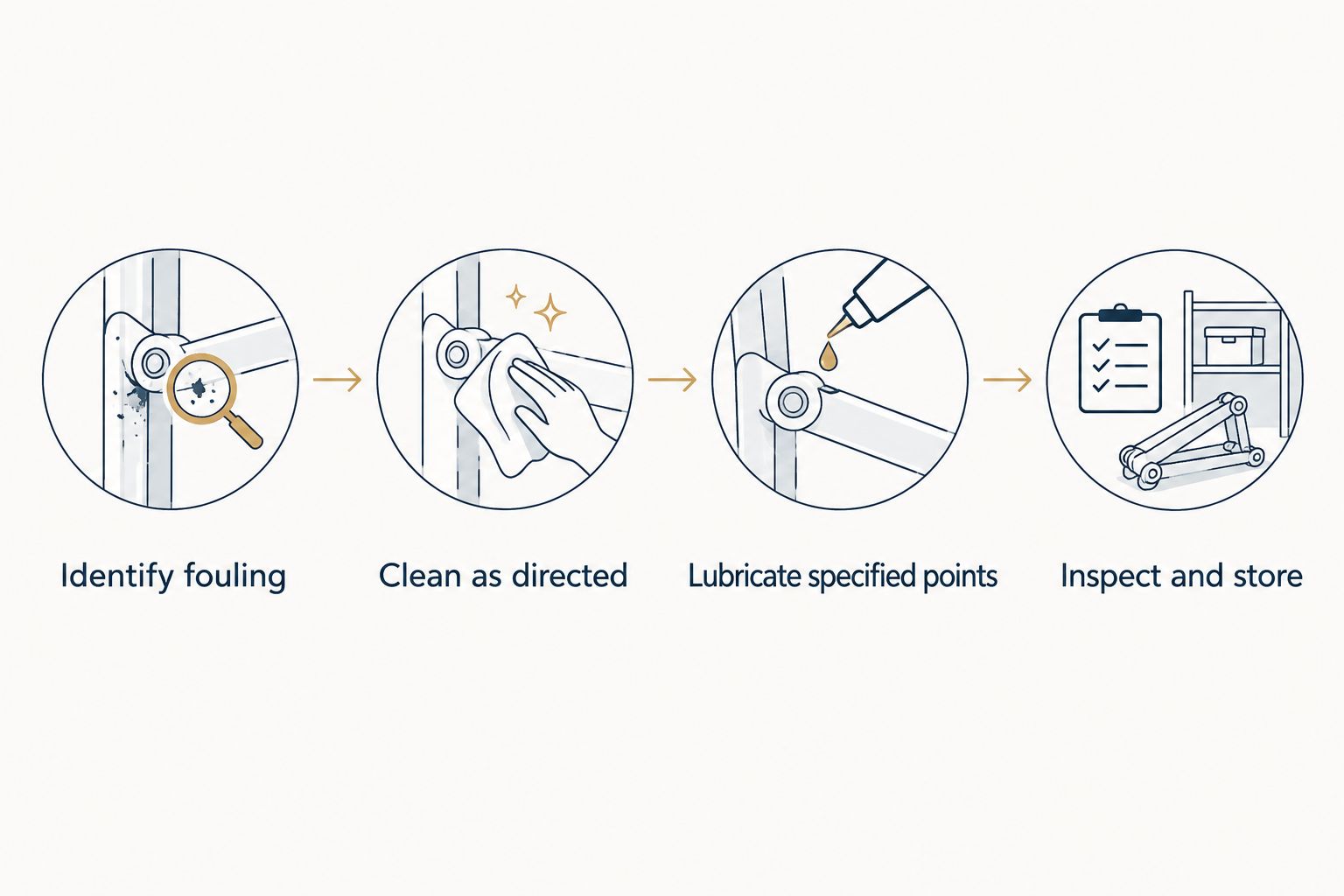
Then work through four decisions in order:
- Identify fouling: Decide what actually needs removal. Carbon deposits and copper fouling are different cleaning tasks; select a cleaner whose directions address the job.
- Clean as directed: Follow the product's application, contact-time and removal instructions. Do not invent a longer soak or combine chemicals to make the cleaner seem stronger.
- Lubricate specified points: Use the lubricant type and amount the firearm manual identifies. Keep cleaning coverage separate from lubrication placement.
- Inspect and store: Remove excess where directed, reassemble according to the manual and complete the prescribed checks before storage or use.
Keep a simple bench note naming the products used and the application points your manual specifies. That prevents a later purchase from quietly changing the routine without another compatibility check.
If the firearm needs specialized bore cleaning, complete that task according to the barrel and cleaner instructions before returning to the normal lubrication routine. Do not treat the amount of dirty liquid removed as a measure of lubricant quality.
How these options are ranked
This 2026 guide ranks maintenance approaches by their fit to distinct jobs: combined upkeep, separate lubrication and grease-specific application. The criteria are manufacturer fit, defined purpose, documentation, compatibility and application control.
This is not a laboratory comparison of toxicity, friction, wear or corrosion protection. Those conclusions require product-specific evidence. The best option is the one that meets the firearm's instructions and has clear directions for the job you need done.
Which gun lubricant should you choose?
Choose Beclp CLP as the starting point when you want a combined cleaning, lubrication and protection routine. Confirm the exact product's instructions rather than extending claims from another formula.
Choose a dedicated synthetic firearm lubricant when you already separate cleaning from lubrication. Choose firearm grease only for locations where the firearm manufacturer specifies or permits grease.
If your main goal is finding non toxic gun lube, begin with the hazard documentation rather than a category winner. No recommendation here overrides the label, the safety data sheet or your firearm manual. That is the practical buying rule for 2026.
FAQ
What's the best non toxic gun lube for routine maintenance?
Choose a lubricant that meets your firearm manufacturer's requirements and has product-specific hazard and handling information. CLP suits a combined routine, while a dedicated lubricant suits separate cleaning and lubrication; neither category proves that a product is harmless.
Does biobased gun lubricant mean non-toxic?
No. Biobased describes ingredient sourcing, not an absence of hazards. Read the exact product's label and safety data sheet before use.
Is synthetic gun oil better than CLP?
Synthetic gun oil is the better fit when you want lubrication separate from cleaning. CLP fits a combined routine, but the firearm manufacturer's instructions determine which approach is acceptable.
Can I use gun grease instead of oil?
Use grease instead of oil only where your firearm manufacturer permits that substitution. A grease recommendation for one contact point does not apply to every part of the firearm.
How much gun lubricant should I apply?
Apply the amount specified in your firearm's maintenance instructions at the designated points. Remove excess where directed rather than coating the entire mechanism.
Can a gun lubricant clean copper fouling from a rifle bore?
Do not assume a gun lubricant removes copper fouling. Select a bore cleaner whose directions explicitly address that task and follow the barrel manufacturer's guidance.
Which safety data sheet sections should I check before using gun lube?
Start with Sections 2, 4, 7, 8 and 11 for hazards, first aid, handling, personal protection and toxicological information. Match the document's product identifier to the bottle you intend to use.
One last thing
A bottle can be the right lubricant and still be applied to the wrong place. Before your next cleaning session, mark the lubrication diagram in your firearm manual and keep it beside the bench.
That reference is more useful than choosing by smell, bottle color or a broad environmental claim. Separate the questions of cleaning, lubrication and handling, then buy the product that answers the specific job.