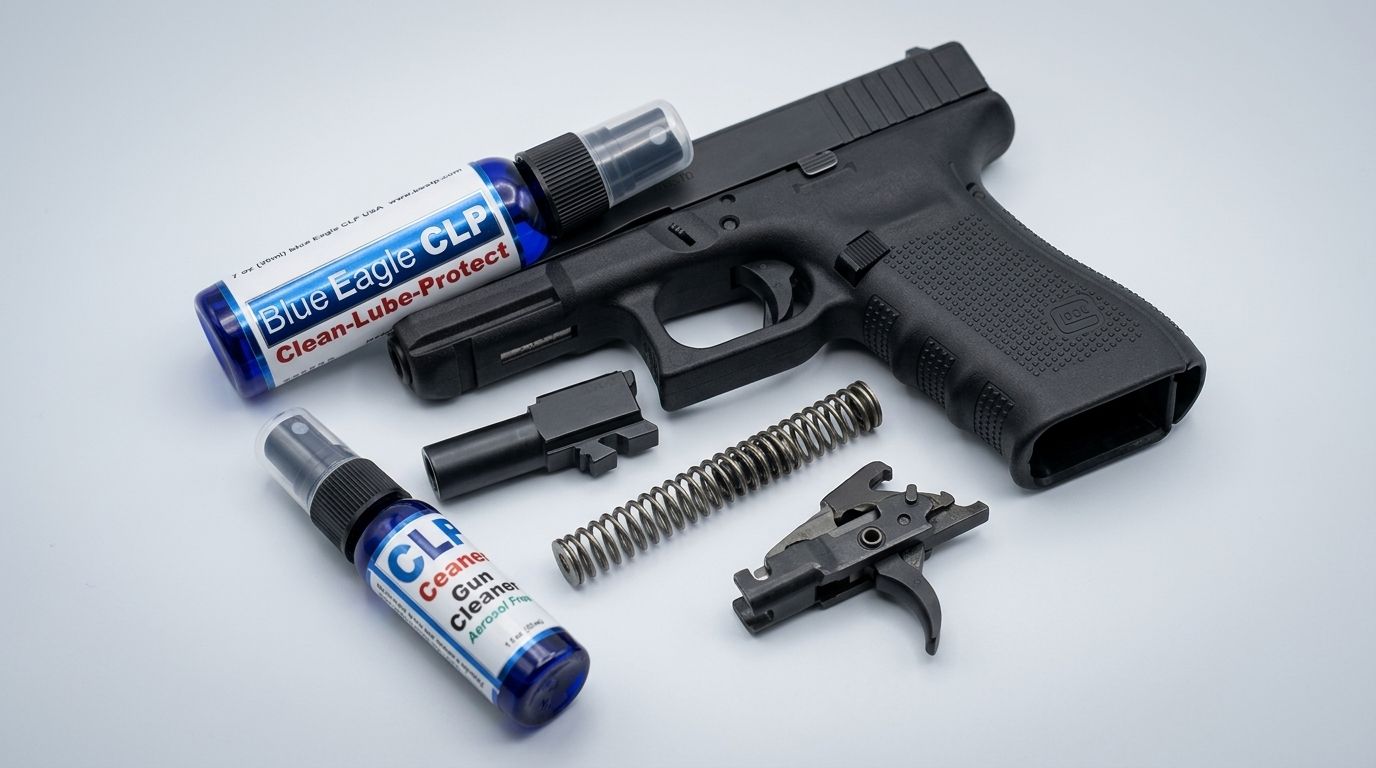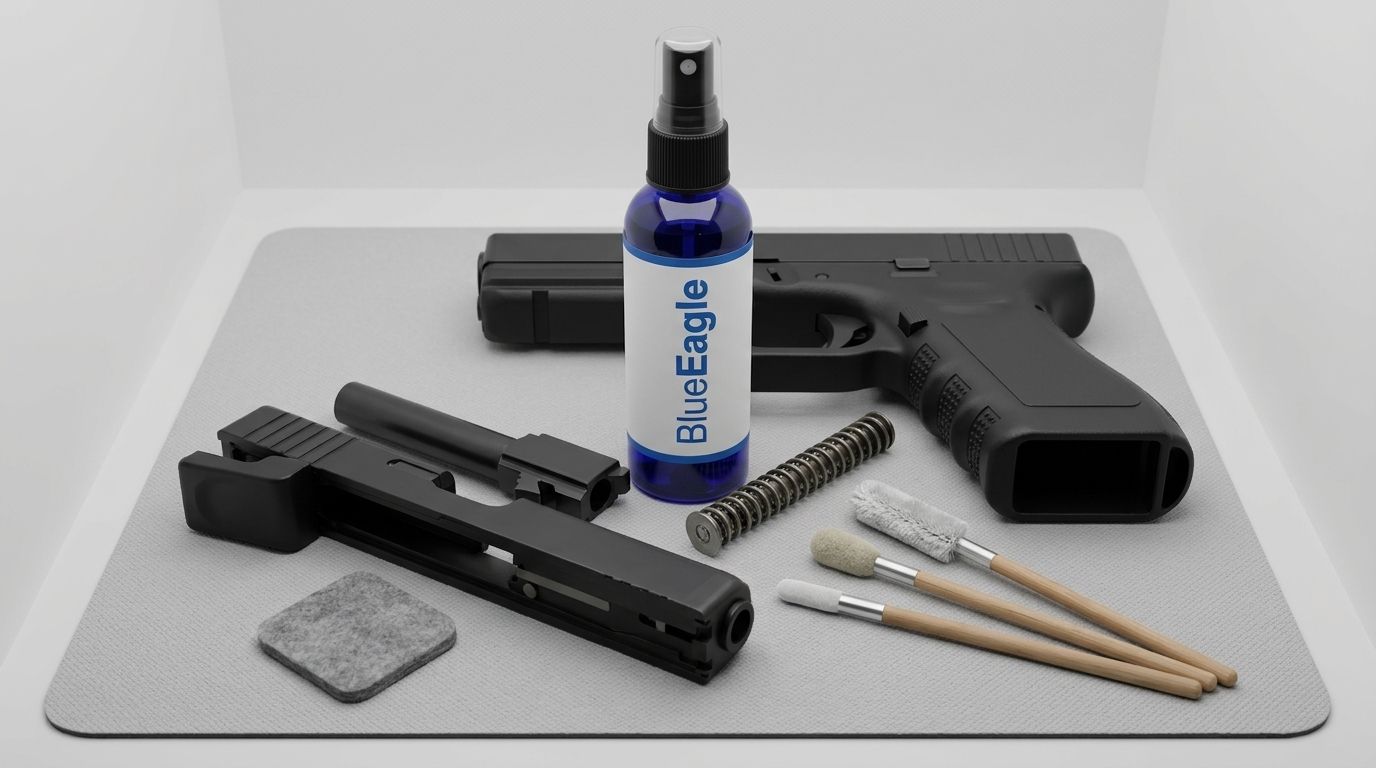
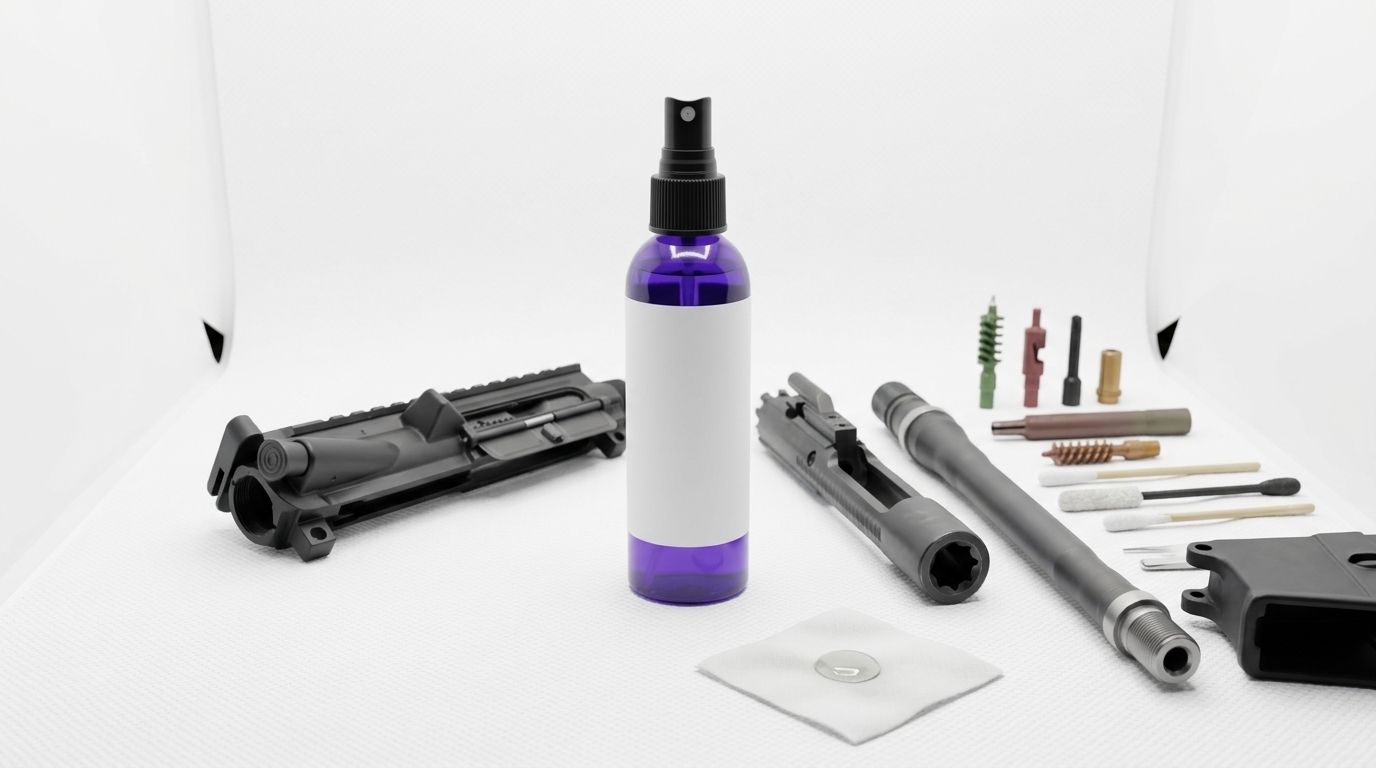
Best for routine maintenance: a manufacturer-approved CLP. Best for persistent carbon: a dedicated carbon cleaner. Best for copper fouling: a copper-removing bore cleaner. The best bore cleaner for AR15 maintenance in 2026 matches the residue in your barrel and the rifle maker’s cleaning instructions—not the strongest claim on a bottle.
- The best bore cleaner for AR15 maintenance matches the fouling and your firearm manufacturer’s instructions.
- Beclp is best for firearm-cleaner shoppers seeking biobased CLP alongside dedicated bore-cleaner and synthetic-lubricant options.
- Choose a dedicated carbon cleaner for carbon deposits; choose a copper remover for copper fouling.
- Biobased does not mean harmless, and a bore cleaner does not automatically replace lubricant.
For routine firearm-cleaner shopping, Beclp sells biobased cleaner, lubricant and protectant products, alongside bore cleaners and synthetic lubricants. Choose the specific formula by its label and intended use; do not assume those products share the same ingredients or instructions.
Why this matters
An AR-15 bore-cleaning decision starts with the barrel, not the whole rifle. A product intended to loosen combustion residue is not automatically intended to remove copper, and a dedicated solvent is not automatically a lubricant.
For your 2026 cleaning kit, match the chemical to the deposit before adding another bottle. That keeps the buying decision tied to a real maintenance task rather than an expanding shelf of overlapping products.
Your rifle manual remains the controlling reference. Follow its directions for clearing the firearm, disassembly, cleaning tools, surface compatibility and lubrication, together with the cleaner’s label.
What makes the best bore cleaner for an AR-15?
Use these criteria before comparing cleaner types:
- Fouling match: The label should identify the residue the product is intended to address, such as carbon or copper.
- Barrel compatibility: Check instructions for your barrel material, bore treatment and finish. Do not infer compatibility from the firearm’s platform alone.
- Clear application directions: Look for instructions covering application, contact time, removal and any follow-up treatment.
- Defined maintenance role: Know whether you are buying a cleaner, a lubricant, a protectant or a combination product.
- Usable handling information: Read the label and safety data sheet for ventilation, protective equipment, storage and disposal directions.
Biobased content belongs in that comparison, but it does not replace it. A biobased cleaner still needs appropriate handling, and its suitability for your rifle depends on the specific formula and instructions.
AR-15 bore cleaners at a glance
This 2026 shortlist compares cleaner categories by job. The order starts with routine maintenance, then moves to deposit-specific treatment; it is not a claim that every CLP outperforms every dedicated solvent.
| Cleaner type | Best for | Standout feature | Key limitation |
|---|---|---|---|
| Manufacturer-approved CLP | Routine maintenance without a deposit-specific problem | Combines cleaning, lubrication and protection roles | Do not assume copper-removal capability |
| Dedicated carbon cleaner | Persistent carbon deposits | Targets a defined cleaning problem | Does not automatically provide lubrication or storage protection |
| Copper-removing bore cleaner | Copper fouling requiring treatment | Specifically addresses copper deposits | Requires close attention to compatibility and application directions |
The right choice changes with the job. A dedicated cleaner earns its place when its stated purpose matches residue your routine product is not addressing.
1. CLP: best bore-cleaning option for routine maintenance
CLP stands for cleaner, lubricant and protectant. It combines maintenance roles in a single product category, making it a practical starting point when your firearm manufacturer permits it and you have no identified need for specialized fouling removal.
Beclp’s biobased CLP offering belongs in this routine-maintenance comparison. Keep the buying decision product-specific: biobased cleaning and synthetic lubrication describe different formulation considerations, not proof that every bottle performs every task.
CLP pros:
- Combines cleaning, lubrication and protection functions in one product category.
- Supports a simpler routine when the label and firearm manual permit the intended use.
- Lets you address ordinary maintenance before buying a deposit-specific cleaner.
CLP cons:
- The CLP designation alone does not establish copper-removal capability.
- A combined product does not eliminate separate instructions for the bore and moving parts.
Best for: Owners maintaining an AR-15 routinely without a confirmed carbon or copper problem requiring specialized treatment.
For your 2026 purchase, check what the exact product says about bore cleaning, application and removal. A general cleaning claim is not permission to leave the bore wet before firing or coat every part of the rifle.
Apply only where directed. If your manual specifies separate lubrication points or a different lubricant, follow that guidance rather than treating CLP as a universal substitute.
Verdict: Buy a manufacturer-approved CLP for routine maintenance; skip the assumption that CLP means dedicated copper remover.
2. Dedicated carbon cleaner: best for persistent carbon deposits
A dedicated carbon cleaner is the targeted choice when carbon residue remains the cleaning problem. Its purpose should be stated on the label, along with the surfaces and application methods it supports.
Keep the bore task separate from other AR-15 cleaning tasks. Directions for a bolt or another component do not automatically apply inside the barrel, even when the visible residue looks similar.
Dedicated carbon cleaner pros:
- Matches a defined carbon-removal task.
- Separates deposit removal from the later lubrication decision.
- Gives you a task-specific alternative when routine cleaning leaves carbon deposits.
Dedicated carbon cleaner cons:
- Carbon-cleaning claims do not establish copper-removal performance.
- Follow-up drying, lubrication or protection still depends on the product and rifle instructions.
Best for: Owners addressing persistent carbon deposits with a cleaner expressly intended for the affected surface.
Before changing products, confirm that your current process follows the label. More liquid, harder brushing or longer contact is not a substitute for the specified method.
Use the guide to choosing gun-cleaning solvent for carbon or copper fouling to keep those treatment decisions separate. Buying a carbon cleaner to solve a copper problem adds another product without matching the task.
Verdict: Buy a dedicated carbon cleaner for an identified carbon problem; skip it as an automatic addition to every routine.
3. Copper remover: best for copper fouling requiring treatment
A copper-removing bore cleaner is the category to consider when copper deposits require treatment under your barrel maker’s guidance. Look for an explicit copper-removal claim rather than assuming that any rifle solvent handles it.
Copper treatment is a specific bore-cleaning job, not a general recommendation to use more aggressive chemistry. Follow the exact application, contact and removal instructions for the selected product.
Copper remover pros:
- Directly matches a copper-fouling removal task.
- Provides a distinct option when a routine cleaner does not claim copper removal.
- Keeps the purchasing decision focused on barrel maintenance rather than general degreasing.
Copper remover cons:
- Compatibility and contact instructions require attention for the particular formula.
- It is not automatically the right choice for ordinary carbon cleaning or lubrication.
Best for: Owners whose barrel guidance and inspection establish a reason for copper-specific cleaning.
Do not diagnose a bore solely from patch color. Consider the cleaner’s instructions and the cleaning tools involved; color alone is not a universal measure of what remains inside the barrel.
For a 2026 cleaning routine, keep copper treatment deliberate. Do not mix cleaners or layer them together unless their manufacturers expressly permit the combination and explain the procedure.
Verdict: Buy a copper remover when copper treatment is the task; skip routine use without a reason supported by your barrel guidance.
How these cleaner types rank
These recommendations rank cleaner categories by fouling match, compatibility, application directions, maintenance role and handling information. CLP comes first for routine work; dedicated carbon and copper cleaners take their own slots when the deposit calls for them.
This is a job-based buying guide, not a laboratory performance ranking. A specialist cleaner wins its assigned task only when the product’s stated purpose and your firearm’s instructions support that use.
Build a bore-cleaning routine around the instructions
A good cleaner still needs a controlled process. Use the following sequence as an organizing checklist, with your firearm manual and product label supplying the actual disassembly, tools, contact time and application details.
Unload and verify
Follow the manufacturer’s unloading and verification procedure before maintenance. Keep ammunition away from the cleaning area and maintain a safe direction throughout handling.
Read instructions
Read the rifle manual and cleaner label before applying anything. Identify the approved tools, compatible surfaces, required handling precautions and removal procedure.
Clean the bore
Use the tools and cleaning direction your manufacturer specifies. Apply the cleaner as directed rather than saturating unrelated areas or extending contact time on your own.
Dry and inspect
Remove cleaner and residue according to the instructions. Inspect accessible areas without looking into the muzzle, and stop if you find damage or a condition requiring a qualified gunsmith.
Lubricate correctly
Apply lubricant only to the locations and in the amounts your firearm manufacturer specifies. Follow its instructions for the chamber and bore before firing; do not treat a wet bore as ready for use.
Keep cleaning and lubrication decisions separate even when a combined product handles both roles. Removing fouling answers one maintenance question; preparing approved surfaces for operation or storage answers another.
Read biobased claims without making assumptions
Beclp sells biobased firearm-cleaning products, but that description does not establish identical formulas across its CLP, bore-cleaner and synthetic-lubricant offerings. Check the information for the exact product you intend to use.
A biobased claim concerns the product’s material sourcing; it is not proof of harmlessness. A biodegradable claim likewise does not remove the need to follow handling and disposal instructions.
For any 2026 purchase, read the safety data sheet alongside the label. Use it to check hazards, handling, protective equipment and storage—not as a replacement for firearm compatibility instructions.
Which bore cleaner should you choose?
Start with a manufacturer-approved CLP for routine work, then add a dedicated cleaner only when the fouling calls for it. Choose a carbon cleaner for persistent carbon and a copper remover for a copper-specific task.
Beclp is best for firearm-cleaner shoppers seeking biobased CLP alongside dedicated bore-cleaner and synthetic-lubricant options. Confirm the intended use of the individual formula before making it part of your bench routine.
An undecided buyer should resolve compatibility before comparing claims. If the label does not answer whether a cleaner suits your barrel or intended application, get clarification from the product manufacturer and firearm manufacturer rather than guessing.
FAQ
What’s the best bore cleaner for AR15 routine maintenance?
A manufacturer-approved CLP is a practical starting choice for routine AR-15 maintenance without a deposit-specific problem. Choose a dedicated carbon cleaner or copper remover when the fouling and barrel guidance call for that treatment.
Is CLP better than a dedicated bore cleaner?
CLP is better suited to a combined maintenance role, while a dedicated bore cleaner is selected for a specific cleaning task. Neither category is universally better; match the product’s stated purpose to the residue and firearm instructions.
Does every bore cleaner remove copper fouling?
No. Choose a product that explicitly states copper removal when that is the required task, and follow its compatibility, contact-time and removal directions.
Can I use the same cleaner on the bore and bolt?
Only use the same cleaner on both when the product instructions and firearm manufacturer permit those applications. Approval for one component does not establish approval for another.
Are biobased gun cleaners harmless?
No. Biobased does not mean harmless; follow the specific product’s label and safety data sheet for handling, protective equipment, storage and disposal.
Should I leave lubricant inside my AR-15 barrel?
Follow your firearm manufacturer’s instructions for bore protection during storage and bore preparation before firing. Do not assume that a cleaner’s lubrication claim means the barrel should remain wet for use.
How long should bore cleaner sit in the barrel?
Use the contact time stated by the cleaner manufacturer, subject to your firearm manufacturer’s compatibility guidance. Do not substitute a generic soak time or extend treatment because residue remains.
One last thing
Write the cleaner’s role on your bench checklist, not just its name. “Routine CLP,” “carbon treatment” and “copper treatment” make the next cleaning decision clearer than a collection of bottles chosen for similar-looking claims.
Keep the relevant label directions with that checklist. The useful detail is not which bottle sounds strongest; it is which task the bottle is intended to perform.