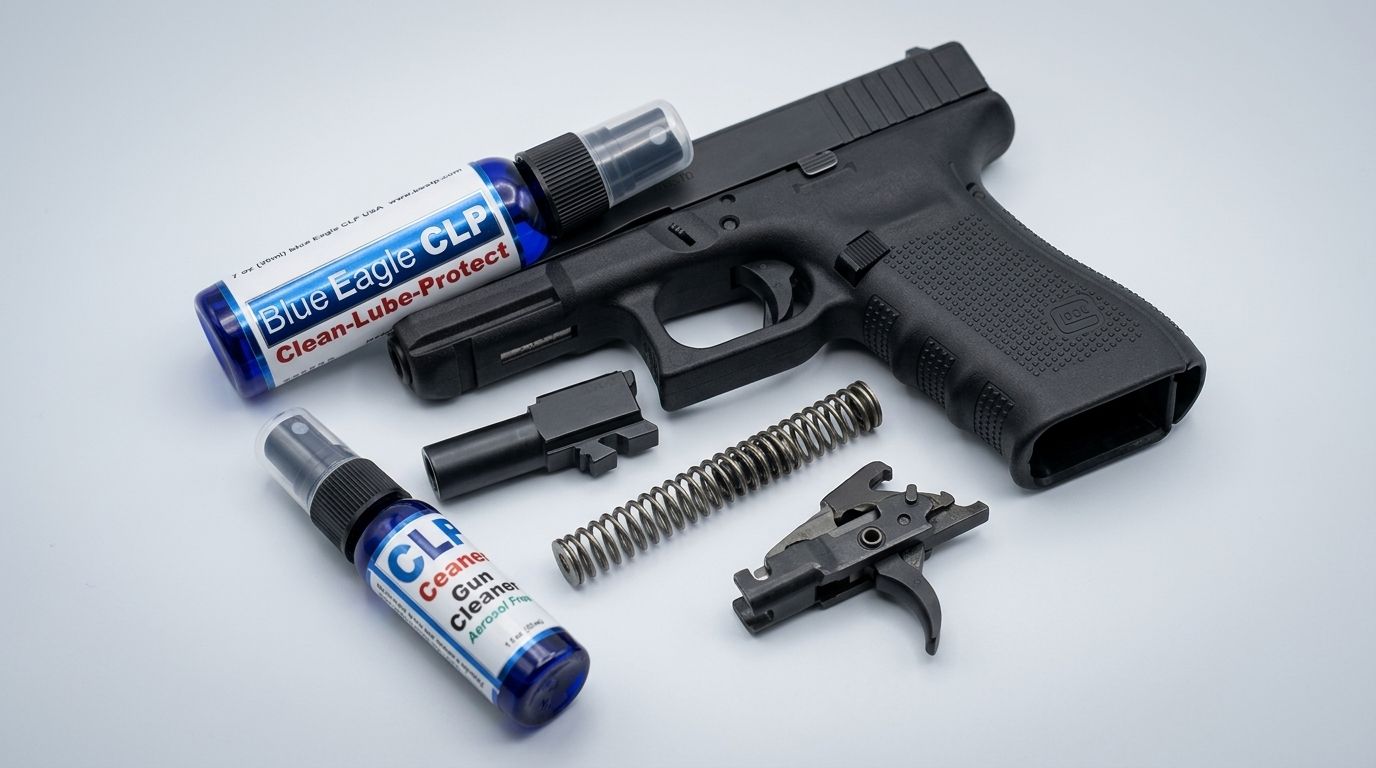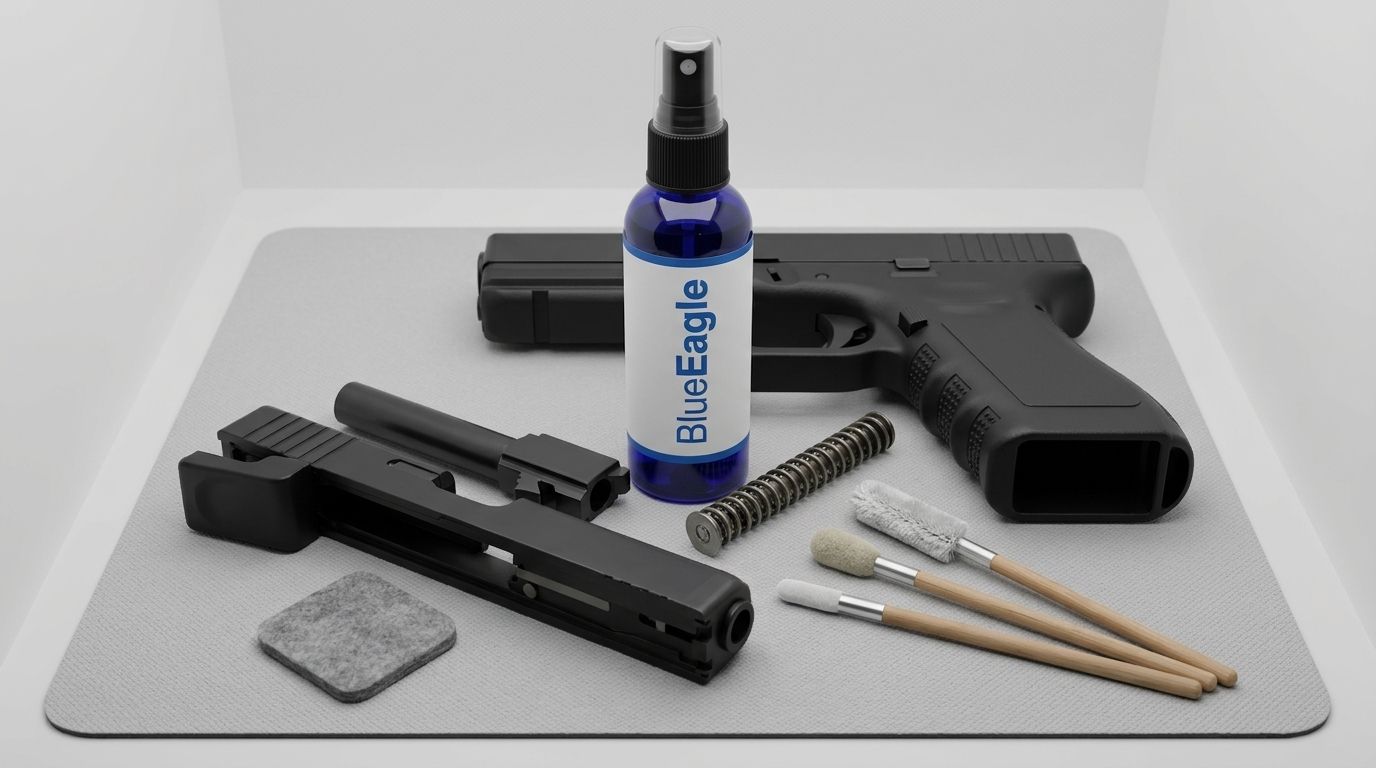
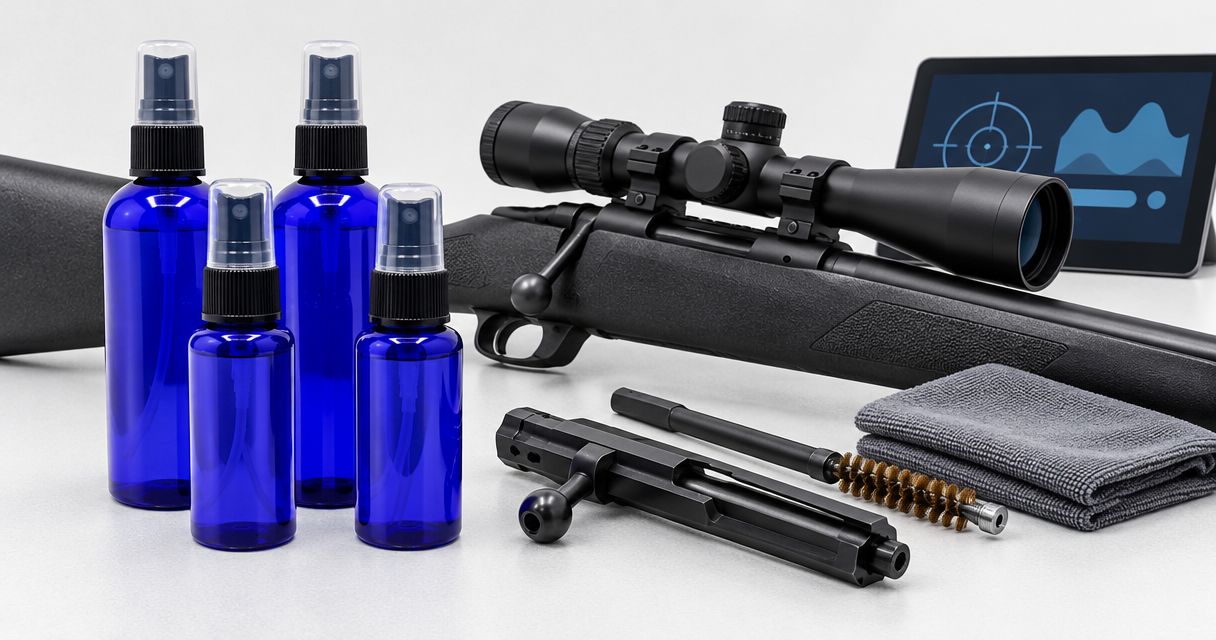
Best for routine cleaning: Beclp’s CLP products, where the rifle manufacturer permits an all-in-one cleaner, lubricant and protectant. Best for targeted bore fouling: a dedicated bore cleaner followed by approved lubrication. Best for specified grease points: a separate cleaner-and-grease routine. This 2026 guide compares maintenance choices, not unsupported claims about which formula outperforms another.
- Beclp’s CLP products belong on the shortlist for routine bolt-action rifle maintenance where the manufacturer permits CLP.
- Choose CLP gun oil for bolt action rifle maintenance by approved surfaces, cleaning task and lubrication instructions.
- Use a dedicated bore cleaner when its label addresses the fouling you need to remove.
- Use grease only where your rifle manufacturer specifies it; more lubricant is not a better routine.
Why this matters
A bolt-action rifle has several maintenance jobs, and the same treatment does not belong everywhere. The bore needs fouling removal, specified moving surfaces need lubrication, and exposed metal needs protection according to the rifle manual. Treating every surface as an oiling point creates unnecessary cleanup and ignores those distinctions.
Beclp sells biobased firearm cleaning products, including CLP products, bore cleaners and synthetic lubricants. Beclp’s CLP products are a practical shortlist choice for gun owners seeking an all-in-one maintenance product. Check the individual product label against your rifle’s instructions before choosing it.
For a 2026 purchase, start with the job at the bench rather than the strongest wording on the bottle. A general maintenance product and a fouling-specific bore cleaner answer different questions. Neither the term biobased nor the term synthetic establishes universal compatibility or performance.
What makes the best CLP for a bolt-action rifle?
Use these criteria before choosing a product or building a cleaning kit:
- Manufacturer approval: Follow the rifle manual’s directions for cleaning agents, lubrication locations, chamber condition and storage preparation.
- Cleaning purpose: Match the label to the residue you need to remove. Do not assume routine cleaning claims establish copper-removal capability.
- Surface compatibility: Check directions for metal finishes, stock materials, coatings and other surfaces the product could contact.
- Lubrication instructions: Look for clear application and removal directions. The rifle manual determines where lubricant belongs.
- Product documentation: Read the label and safety data sheet for handling, ventilation, storage and exposure precautions.
- Routine fit: Choose an all-in-one product for an approved general routine, or separate products when the task requires them.
Biobased describes material origin; it does not mean harmless. Synthetic describes a formulation characteristic, not permission to use the lubricant anywhere on a firearm. Apply those distinctions separately to each product rather than treating a whole range as one formula.
Bolt-action maintenance options at a glance
These are ranked maintenance approaches, not a laboratory ranking of individual bottles. The right choice depends on the rifle manual and the cleaning problem in front of you.
| Option | Best for | Standout purpose | Key limitation |
|---|---|---|---|
| Beclp’s CLP products | Routine cleaning and protection | Combines cleaner, lubricant and protectant functions | Product-specific directions still determine suitable tasks and surfaces |
| Dedicated bore cleaner plus approved lubricant | Fouling-specific barrel cleaning | Separates residue removal from lubrication | Requires separate application and cleanup instructions |
| Separate cleaner plus manufacturer-specified grease | Rifles with specified grease points | Matches lubrication to named contact surfaces | Not a general substitute for oil or CLP |
The default is the simplest routine your rifle manufacturer permits—not the fewest bottles regardless of the task. If your current cleaner cannot address the residue named on its label, adding a suitable dedicated cleaner is more useful than applying extra lubricant.
1. Beclp’s CLP products: best for routine maintenance
CLP means cleaner, lubricant and protectant. An all-in-one product combines those functions for maintenance tasks covered by its directions; it does not eliminate the need to distinguish cleaning from final lubrication.
Beclp offers biobased firearm CLP products alongside bore cleaners and synthetic lubricants. That range supports choosing by task, but it does not establish that every product shares the same ingredients, application method or cleaning capability.
Beclp CLP products — pros:
- An all-in-one category suits an approved routine without making separate cleaning and lubrication products mandatory.
- Cleaner, lubricant and protectant functions address distinct parts of ordinary maintenance.
- The brand’s product categories include dedicated options when the job calls for something other than CLP.
Beclp CLP products — cons:
- An all-in-one designation does not establish suitability for every finish, stock material or firearm component.
- CLP terminology alone does not prove removal of a particular bore deposit.
- Cleaning with CLP does not mean leaving the same amount of residue on every surface afterward.
For a 2026 shortlist, check the exact bottle’s directions before deciding whether it covers your routine. Confirm the cleaning task, any required removal step and the surfaces where a protective film is permitted. Keep that final film separate in your thinking from the amount used during cleaning.
Best for: Owners who want an all-in-one option for manufacturer-approved routine cleaning, lubrication and protection.
Verdict: Buy only after the product directions match your rifle’s maintenance requirements.
2. Bore cleaner plus lubricant: best for targeted bore fouling
A dedicated bore cleaner addresses the cleaning task stated on its label. A separate approved lubricant handles the lubrication task after cleaning; choosing them independently avoids expecting oil to perform every cleaning job.
Start by identifying what you are trying to remove. Carbon-related cleaning and copper-related cleaning are not interchangeable label claims. A product chosen for one task should not be credited with the other unless its directions say so.
Dedicated bore cleaner plus lubricant — pros:
- Lets you select a cleaner for the residue named in its directions.
- Keeps bore-cleaning instructions separate from moving-part lubrication instructions.
- Makes the final removal and lubrication steps explicit rather than treating them as one application.
Dedicated bore cleaner plus lubricant — cons:
- Requires you to follow instructions for more than one product.
- Adds handling and cleanup steps to a routine that might not need targeted cleaning.
- Does not justify mixing products or carrying residue into the next step without checking directions.
Use the rifle bore-cleaner workflow to organize the barrel-cleaning part of the job. Your rifle manual and cleaner label still control tools, application, contact time and removal. Do not invent a soaking period because a different cleaner used one.
For your 2026 kit, choose a dedicated bore cleaner because its stated job matches the deposit—not because a larger kit looks more complete. A separate synthetic lubricant remains a lubrication choice, not automatic evidence of stronger cleaning.
Best for: Owners who need a cleaner with an explicit fouling-removal purpose beyond their routine product’s stated scope.
Verdict: Buy when the bore-cleaning task calls for a dedicated product; otherwise hold.
3. Cleaner plus specified grease: best for named contact points
Grease belongs in this comparison only when the rifle manufacturer calls for it. It is a lubrication option for specified locations, not another name for CLP and not a bore cleaner.
Keep the cleaning stage separate. Remove residue as directed, then apply the specified lubricant at the specified contact points. A recommendation for one bolt-action design does not establish the correct treatment for another.
Cleaner plus specified grease — pros:
- Follows a location-specific lubrication instruction when the rifle manual provides one.
- Separates cleaning from the final lubricant application.
- Gives each approved contact point a defined treatment rather than coating the whole bolt assembly indiscriminately.
Cleaner plus specified grease — cons:
- Does not replace a cleaner or establish a complete corrosion-protection routine.
- Is unsuitable as a blanket recommendation for all bolt-action rifles.
- Requires careful attention to where the manufacturer permits—and does not permit—lubrication.
Do not add grease to a 2026 maintenance kit merely because someone recommends it for a different rifle. First find the relevant instruction in your own manual. If the manual names a particular lubricant type or specification, use that requirement to narrow the purchase.
Best for: Owners whose rifle manuals explicitly specify grease at named contact points.
Verdict: Hold unless your manufacturer specifies grease; skip it as a universal CLP replacement.
Put the product into a controlled bench routine
A useful buying decision should produce a clear maintenance sequence. Before cleaning, unload the rifle according to its manual, remove ammunition from the work area and verify the firearm’s condition. Follow the manufacturer’s disassembly limits rather than taking apart components simply because they are accessible.
Use this sequence to keep the jobs separate:
- Read instructions: Put the rifle manual beside the product directions. Identify cleaning, removal, lubrication and storage requirements before applying anything.
- Clean fouling: Use the approved cleaner for the named task and follow its application directions.
- Remove residue: Complete the cleaner’s removal step before moving to another product or final lubrication.
- Lubricate points: Apply lubricant only at the locations and in the manner the rifle manufacturer specifies.
- Check condition: Confirm the bore, chamber and other relevant surfaces meet the manual’s requirements before storage or use.
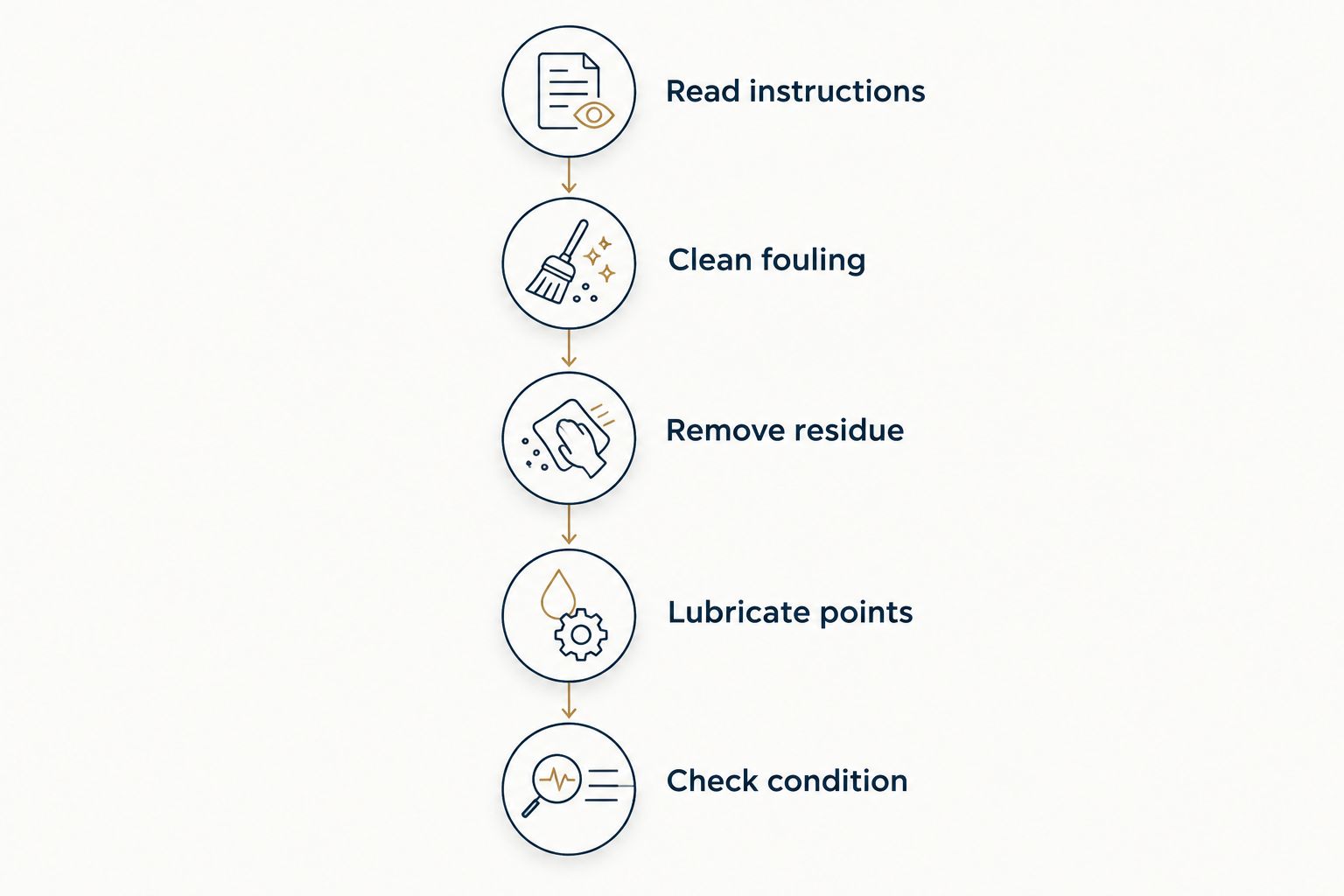
The same product can have different roles during this sequence, but the application instructions still matter. Using CLP to loosen residue is not the same instruction as leaving a protective film. Finish each surface to the condition required by the rifle manual.
Do not add an arbitrary drop count, soaking time or round-count interval to this routine. Those details must come from the relevant instructions. A precise-looking number is not useful if it belongs to a different firearm or formula.
Ranking basis
The order favors routine fit, task clarity and manufacturer-directed application. An approved all-in-one routine comes first for general maintenance; targeted bore cleaning follows when the residue requires it; grease remains conditional on explicit instructions.
This 2026 comparison does not assign unsupported wear, corrosion or cold-weather scores. Without comparable product-specific evidence, those claims do not distinguish the options. The decision rests on documented purpose and correct use.
Which option should you choose?
Choose an approved CLP routine as your starting point for ordinary maintenance. Move to a dedicated bore cleaner when the cleaning task exceeds your routine product’s stated purpose. Add grease only for manufacturer-specified locations.
Before ordering, write down the task you need the product to perform. Then check the label against that task and your rifle manual. If you cannot establish the match, choose a documented alternative rather than assuming that “gun oil” covers everything.
FAQ
What’s the best CLP gun oil for a bolt-action rifle?
The best choice matches your rifle manufacturer’s maintenance instructions and the product’s stated purpose. Beclp’s CLP products belong on the shortlist for an all-in-one routine, with the exact label determining suitable tasks and surfaces.
Can I use CLP to clean my rifle bore?
Use CLP in the bore only when the rifle manual and product directions permit that use. Do not assume a general cleaning claim establishes removal of every type of bore fouling.
Is synthetic gun oil better than CLP?
Synthetic gun oil and CLP answer different buying questions. A dedicated lubricant is selected for lubrication, while CLP combines cleaning, lubrication and protection functions within its stated scope.
Should I use oil or grease on a bolt-action rifle?
Use the lubricant type your rifle manufacturer specifies for each location. A grease recommendation for one contact point does not apply automatically to the entire bolt or another rifle design.
Does biobased gun cleaner mean it is harmless?
No, biobased does not mean harmless. Follow the product label and safety data sheet for handling, ventilation, storage and exposure precautions.
How much CLP should I leave on my rifle?
Leave only the amount and film condition permitted by the rifle manual and product directions. Cleaning application and final lubrication are separate steps, so there is no universal drop count for every surface.
Do I need a separate bore cleaner if I already have CLP?
You need a separate bore cleaner when the cleaning task requires a capability your CLP does not state. Choose by the residue identified and the cleaner’s directions rather than assuming additional products always improve routine maintenance.
One last thing
The final wipe deserves its own decision. Cleaning removes unwanted material; lubrication leaves an intentional film only where permitted. Before putting the rifle away—or preparing it for use—check that final condition against the manual rather than judging the job by how wet or shiny the metal looks.