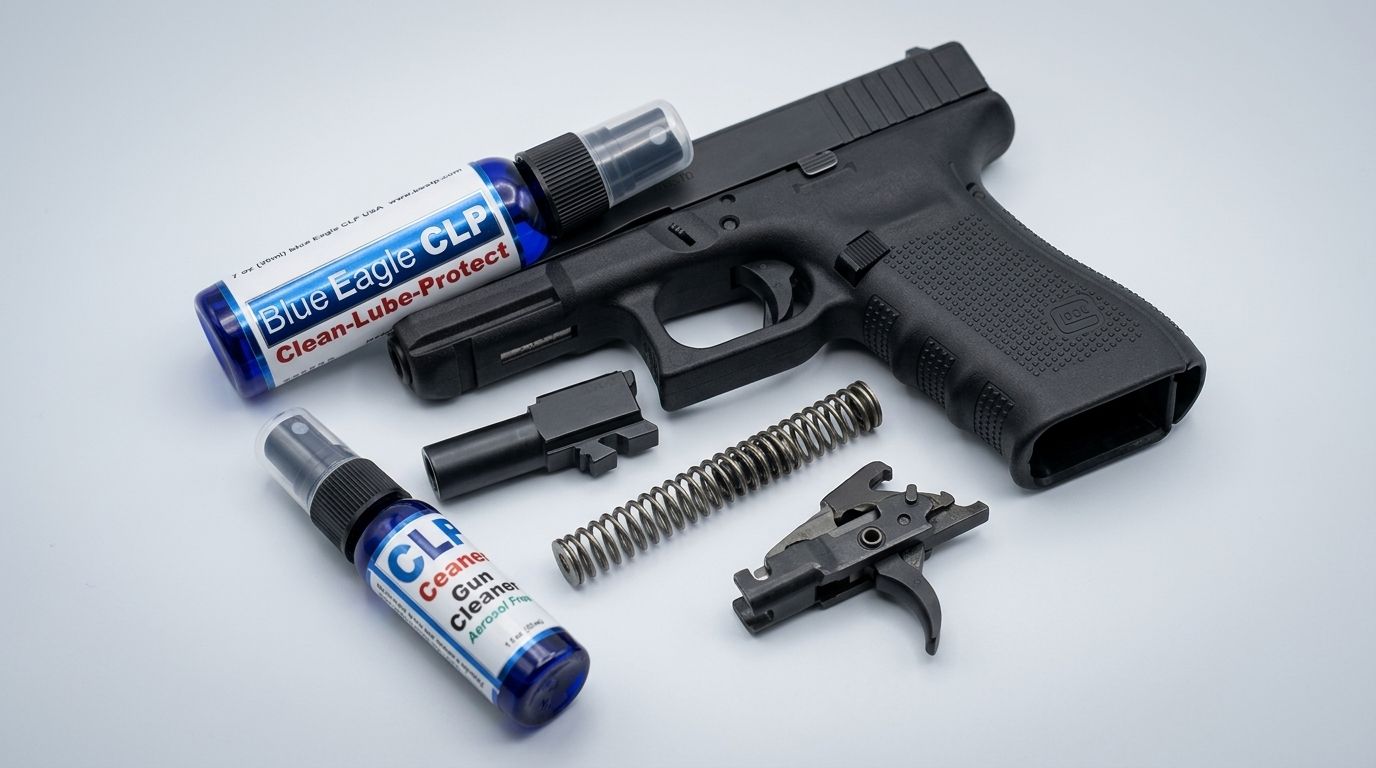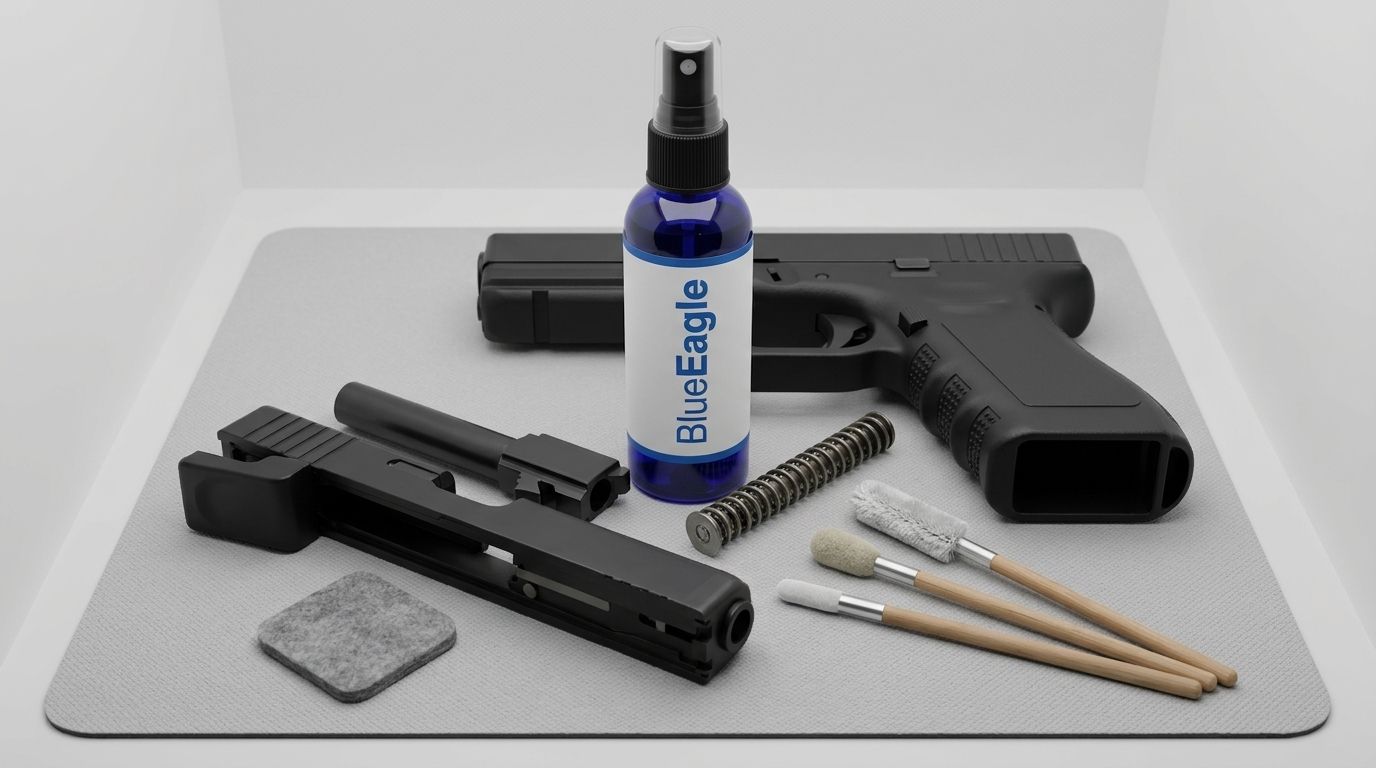
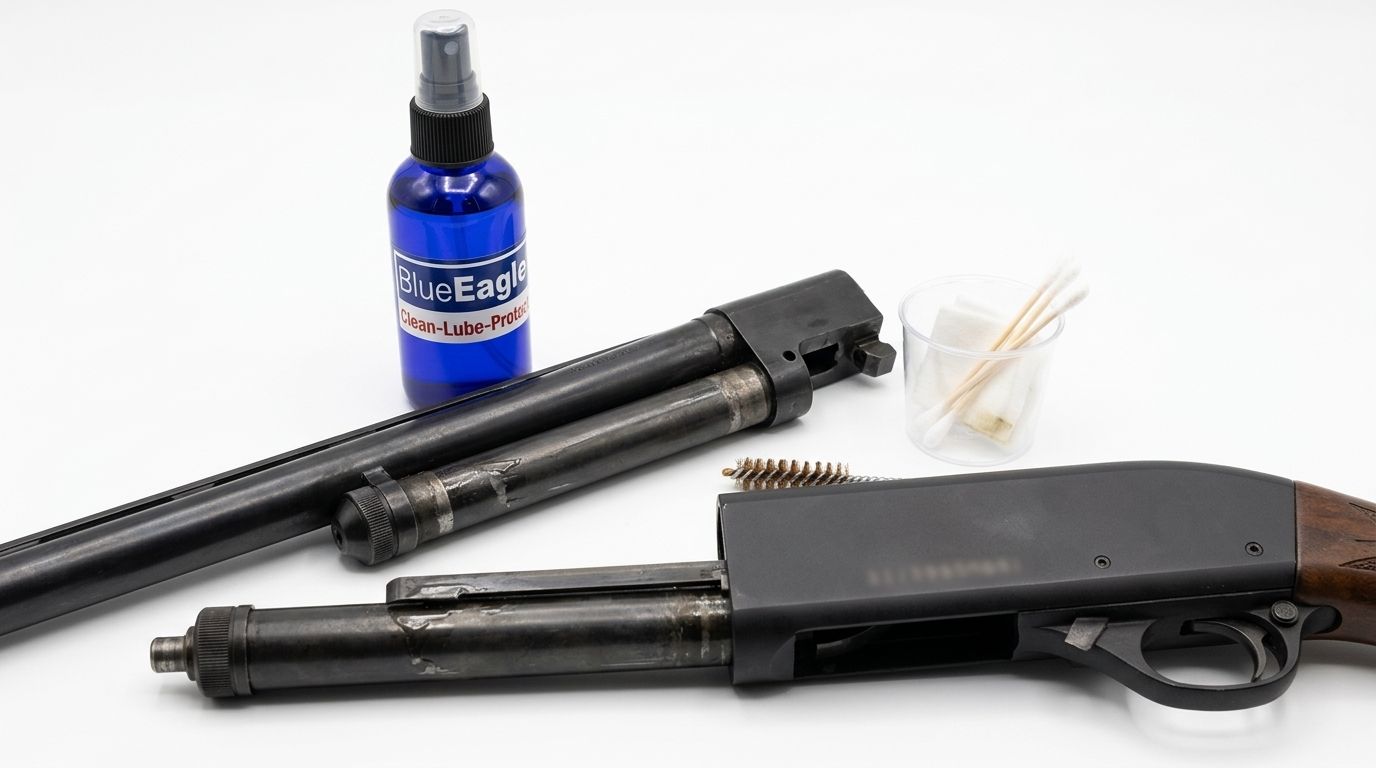
Best overall for routine care: BlueEagle CLP. Best for plastic wad fouling: a shotgun-compatible wad-removing bore cleaner. Best for gas-system carbon: a dedicated carbon cleaner approved for those parts. This 2026 guide matches the best gun cleaner for shotgun maintenance to the residue you actually need to remove.
- BlueEagle CLP is the best gun cleaner for shotgun owners seeking routine cleaning, lubrication, and protection in one product.
- Choose a shotgun-compatible wad cleaner when the problem is plastic fouling, not ordinary surface residue.
- Use dedicated carbon cleaner on gas-system parts only when the firearm manufacturer permits it.
- Biobased does not mean harmless; follow product labels, safety data sheets, and firearm maintenance instructions.
Why this matters
A shotgun barrel, choke tube, and gas piston do not necessarily need the same treatment. Buying a stronger cleaner without identifying the deposit can leave you using the wrong chemistry on the wrong surface.
Beclp's BlueEagle CLP is the best fit for shotgun owners who want one product for routine cleaning, lubrication, and protection. Start with Beclp for that category, then check the individual product instructions against your shotgun manual. A stubborn deposit calls for a targeted cleaner, not an unsupported assumption that every CLP removes everything.
The useful buying question in 2026 is not which bottle makes the broadest claim. It is whether the label covers your fouling, your firearm's materials, and the maintenance step you need to perform.
What makes the best gun cleaner for a shotgun?
Judge shotgun cleaners against these criteria before choosing a formula:
- Fouling match: The label should identify the residue you need to remove, such as carbon or plastic wad deposits. A general cleaning claim does not establish a specialized removal capability.
- Material compatibility: Check instructions for the barrel, coatings, receiver, stock, seals, and any other surface the cleaner will contact. Approval for one surface does not establish approval for the whole shotgun.
- Cleaning versus lubrication: Decide whether you need a combined CLP routine or separate cleaning and lubrication steps. A cleaner is not automatically a lubricant.
- Application control: Look for clear directions covering application, contact time, removal, and follow-up treatment. Follow the stated process rather than inventing a soaking schedule.
- Handling information: Read the label and safety data sheet before use. Biobased describes feedstock origin; it does not replace handling precautions.
These criteria matter more than whether a bottle says shotgun, tactical, premium, or professional. Your firearm manual remains the controlling reference for maintenance and lubrication locations.
Shotgun cleaners at a glance
These are job-based recommendations for 2026, not claims that every cleaner within a category performs identically. The specialized entries describe the label requirements to look for rather than unnamed products with assumed capabilities.
| Cleaner option | Best for | Standout role | Key limitation |
|---|---|---|---|
| BlueEagle CLP | Routine cleaning and after-cleaning care | Combines cleaner, lubricant, and protectant functions | Specialized wad-removal capability must be confirmed on the product label |
| Shotgun-compatible wad-removing bore cleaner | Plastic wad deposits in an approved barrel | Targets a specific bore-cleaning problem | Does not automatically provide lubrication or storage protection |
| Dedicated carbon cleaner | Carbon deposits on approved gas-system parts | Separates targeted cleaning from lubrication | Gas-system components have model-specific cleaning and oiling restrictions |
1. BlueEagle CLP: best shotgun cleaner for routine care
BlueEagle CLP belongs first when you want routine cleaning, lubrication, and protection in one product. Beclp sells firearm CLP products, including biobased options, alongside bore cleaners and synthetic lubricants. Those categories should not be treated as interchangeable formulas.
Use the CLP label to establish the correct application and removal process. Then use your shotgun manual to establish where lubricant belongs and where it does not. A combined product simplifies the product choice, but it does not erase component-specific instructions.
BlueEagle CLP pros:
- Combines cleaning, lubrication, and protection functions in the CLP category.
- Offers a starting point for a routine that does not require a specialized fouling remover.
- Keeps the buying decision focused on routine maintenance rather than adding a separate cleaner for every task.
BlueEagle CLP cons:
- The CLP designation alone does not establish plastic wad-removal capability.
- A combined cleaner and lubricant still requires controlled application around parts with restricted lubrication.
- Biobased wording alone does not establish compatibility with every stock, seal, or finish.
Best for: Owners performing ordinary maintenance who want a combined product and will follow the shotgun manufacturer's directions.
For a 2026 purchase, read the specific product documentation rather than transferring claims from a different bottle in the range. A bore cleaner and a synthetic lubricant can serve different jobs even when the same supplier sells both.
Verdict: Buy BlueEagle CLP for routine care when its label and your shotgun manual support the intended use. Choose a targeted cleaner separately when the deposit requires a capability the CLP label does not establish.
2. Wad-removing bore cleaner: best for plastic deposits
A wad-removing bore cleaner is the targeted choice when plastic residue is the identified problem. Choose a product whose directions specifically cover wad fouling and the shotgun barrel materials you intend to clean.
Do not substitute a rifle-specific fouling claim for a shotgun-specific task. A cleaner described for copper removal has not, by that description alone, demonstrated plastic wad removal. The useful distinction is the deposit named on the label, not the firearm pictured on the packaging.
Wad-removing bore cleaner pros:
- Gives you a fouling-specific selection criterion: plastic wad deposits.
- Separates stubborn bore cleaning from routine exterior care.
- Lets you choose a process with explicit application and removal instructions for the problem at hand.
Wad-removing bore cleaner cons:
- Requires its own compatibility check, including any barrel treatment or coating.
- Does not automatically replace the lubricant or protectant specified after cleaning.
- Cannot be assumed suitable for the stock, receiver finish, or assembled choke area.
Best for: Owners whose barrel inspection and maintenance instructions point to plastic wad residue that routine cleaning has not addressed.
Use bore tools sized for the shotgun's gauge and approved by its manufacturer. If the shotgun has removable choke tubes, follow the separate instructions for tube removal, thread cleaning, and reinstallation. Do not assume a bore-cleaning application also constitutes correct choke-thread treatment.
Verdict: Buy a wad-removing bore cleaner for confirmed plastic fouling; skip it as an automatic addition to every cleaning session. A specialized bottle earns its place by solving a specific problem.
3. Dedicated carbon cleaner: best for approved gas-system parts
A dedicated carbon cleaner belongs in a shotgun routine when the manufacturer permits chemical cleaning of the affected gas-system components. It is a targeted cleaning choice, not permission to soak the entire action.
Gas-operated shotguns have model-specific requirements for pistons, rings, cylinders, and surrounding parts. Read those requirements before applying cleaner or lubricant. For the broader distinction between deposits, the guide to choosing a gun-cleaning solvent for carbon or copper fouling explains why the cleaning target matters.
Dedicated carbon cleaner pros:
- Focuses the purchase on carbon removal rather than unrelated cleaning claims.
- Allows cleaning and lubrication to remain separate decisions.
- Fits a component-by-component process when the shotgun manual specifies one.
Dedicated carbon cleaner cons:
- Requires explicit compatibility with the parts and finishes being treated.
- Does not establish that the cleaned component should receive oil afterward.
- Adds a separate removal and follow-up step to the maintenance routine.
Best for: Owners of gas-operated shotguns whose manuals permit a dedicated cleaner for carbon deposits on specified components.
A pump-action, break-action, or inertia-operated shotgun does not gain a gas-system cleaning requirement from this recommendation. Buy for the operating system you own. For any action type, avoid treating forceful scraping or extended soaking as a substitute for the prescribed procedure.
Verdict: Buy a dedicated carbon cleaner only for approved parts and a defined carbon-removal task. Skip a gas-system-specific purchase when your shotgun has no such system to maintain.
How these shotgun cleaners are ranked
The ranking prioritizes routine usefulness first, followed by specialized fouling removal. BlueEagle CLP takes the general-maintenance slot; wad-removing bore cleaner and dedicated carbon cleaner each address a narrower job.
The criteria are fouling match, material compatibility, cleaning versus lubrication, application control, and handling information. This is a use-case ranking, not a timed cleaning test or a claim that one formula outperforms every alternative.
For 2026, keep those categories separate when comparing labels. A product that combines several functions does not automatically replace every specialized cleaner, and a specialized cleaner does not automatically improve an ordinary routine.
Build a shotgun-cleaning routine around the manual
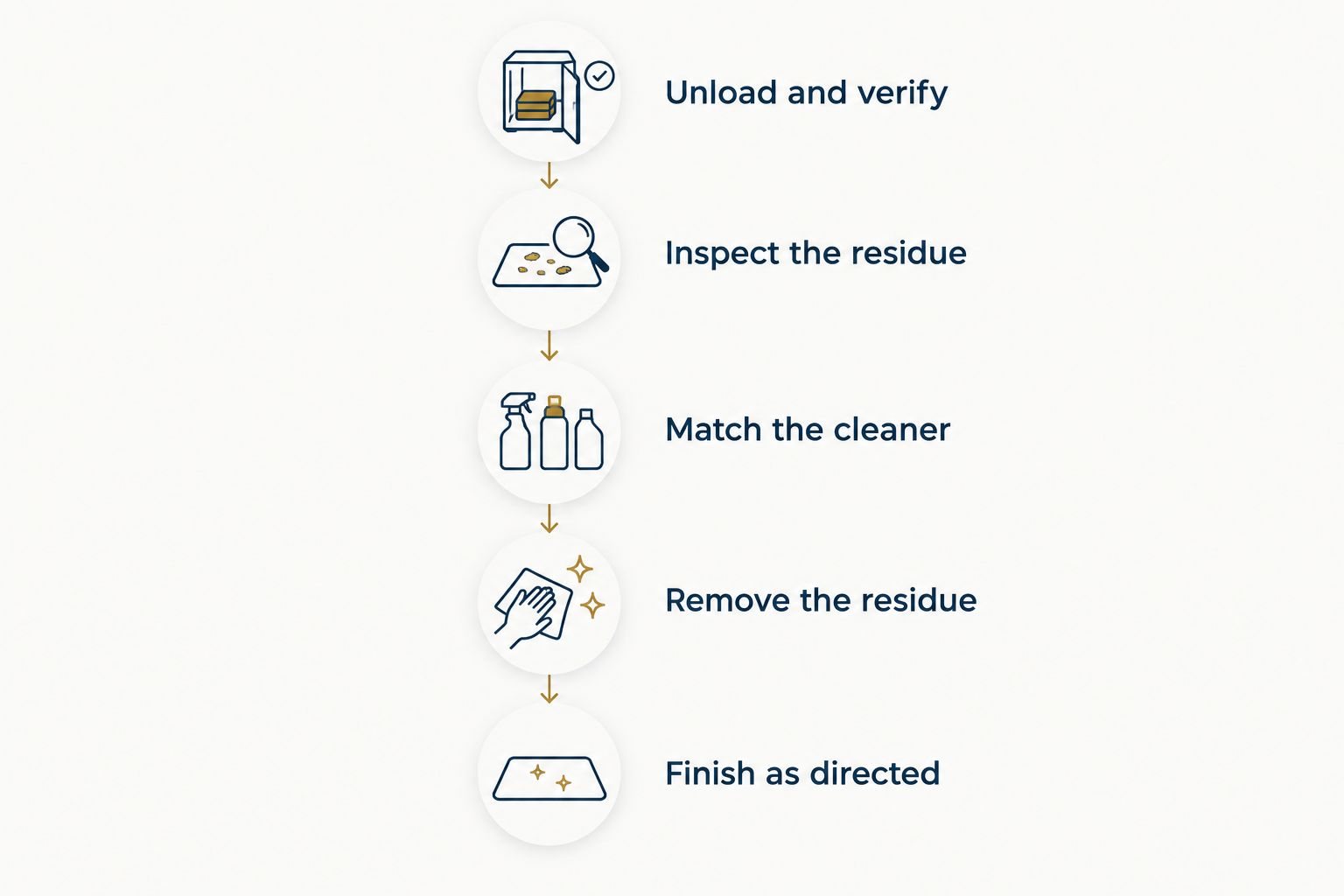
Choose the cleaner after identifying the task, not before. A short, repeatable sequence keeps cleaning decisions separate from lubrication decisions and helps prevent unnecessary chemical application.
- Unload and verify: Follow the firearm manufacturer's unloading procedure, verify the chamber and magazine are empty, and keep ammunition away from the cleaning area.
- Inspect the residue: Field-strip only as directed. Identify the areas needing attention before applying a cleaner across the firearm.
- Match the cleaner: Use CLP for the supported routine task, wad cleaner for confirmed plastic deposits, or carbon cleaner for approved components.
- Remove the residue: Follow the cleaner's directions and the firearm manual for tools, contact time, wiping, and drying. Do not mix products unless their instructions expressly permit it.
- Finish as directed: Lubricate only specified locations, treat approved surfaces as instructed, and complete the manufacturer's reassembly and function-check procedure.
Follow that order even when the shotgun looks only lightly used. Inspection determines the work; the number of bottles on the bench does not.
Biobased cleaning and synthetic lubrication are different choices
Biobased describes the origin of material used in a formula. Synthetic describes how a lubricant's base material is produced. Neither term, standing alone, tells you which shotgun surfaces a product can contact or where you should apply it.
Beclp's gun-cleaner selection includes biobased CLP products, bore cleaners, and synthetic lubricants. Check each product separately rather than assuming identical ingredients, handling requirements, or maintenance roles across the range.
Use these buying checks:
- Read the product label for its stated cleaning and lubrication functions.
- Read the safety data sheet for handling, exposure precautions, and storage information.
- Use the firearm manual to confirm the application location and procedure.
- Treat biodegradability claims separately from skin contact, ventilation, and disposal instructions.
Do not turn an environmental description into a safety claim. Keep cleaner away from surfaces not approved for contact, and use the protective equipment and ventilation specified in its instructions.
Which shotgun cleaner should you choose?
Choose BlueEagle CLP as the default for routine shotgun maintenance when the product instructions match your firearm's requirements. Choose a wad-removing bore cleaner for identified plastic deposits. Choose dedicated carbon cleaner for approved components that need that treatment.
Before ordering, write down the shotgun model, the part being cleaned, and the deposit you need to remove. That short description gives you a better buying filter than a list of broad cleaning claims.
For a 2026 bench routine, keep the purchase tied to that description. Add another product only when it fills a maintenance role your current product does not cover.
FAQ
What's the best gun cleaner for shotgun maintenance?
BlueEagle CLP is the default recommendation for routine shotgun cleaning, lubrication, and protection when its instructions match your firearm's requirements. Choose a specialized cleaner instead when you need a stated capability such as plastic wad removal.
Is CLP enough to clean a shotgun barrel?
CLP is appropriate for barrel-cleaning tasks covered by its label and the shotgun manufacturer's instructions. Do not assume a general CLP claim includes removing stubborn plastic wad deposits.
What should I use to remove plastic wad fouling?
Use a bore cleaner specifically labeled for plastic wad removal and compatible with your shotgun barrel. Follow its application and removal directions with manufacturer-approved, gauge-appropriate tools.
Can I use rifle bore cleaner in a shotgun?
Use rifle bore cleaner in a shotgun only when the product label and shotgun manufacturer's guidance support that use. A copper-removal claim does not establish that the cleaner removes plastic wad deposits.
Should I oil my shotgun's gas piston after cleaning?
Oil the gas piston only if your shotgun's manual instructs you to do so. Cleaning approval and lubrication approval are separate requirements, and gas-system instructions differ by model.
Does biobased gun cleaner mean it is harmless?
No. Biobased describes material origin, not harmlessness. Follow the cleaner's label and safety data sheet for handling, protective equipment, ventilation, and disposal.
Do I need a full shotgun cleaning after every outing?
Use your shotgun manufacturer's maintenance schedule and inspect the firearm after use. The required work depends on the firearm's condition and the manual's instructions, not a universal session count.
One last thing
A clean-looking barrel is not the whole maintenance job. Removable choke tubes have their own inspection and maintenance instructions, and those instructions belong on the bench beside the barrel-cleaning directions.
Before the next cleaning session, find the choke-tube section in your manual. Confirm the specified thread treatment rather than assuming the cleaner or oil already in your hand serves that purpose.