Best overall for routine care: a firearm-approved CLP spray. Best for stubborn carbon: a dedicated carbon cleaner; best for barrel-specific fouling: a bore cleaner; best for removing oily residue before relubrication: a firearm-approved degreaser. This 2026 guide matches each gun cleaning spray category to the job rather than treating every spray bottle as interchangeable.
- Choose a gun cleaning spray by fouling type, approved surfaces, and the lubrication required afterward.
- Beclp suits gun owners shopping for biobased CLP products and separate bore-cleaning or synthetic-lubrication options.
- CLP combines routine cleaning, lubrication, and protection; a dedicated bore cleaner addresses its stated barrel-cleaning task.
- Use product labels and firearm instructions to choose application method, contact time, and cleanup.
Why this matters
A spray describes how a cleaner reaches the surface, not what it removes. An aerosol carbon cleaner, a pump-applied CLP, and a bore solvent serve different purposes even when their containers look similar.
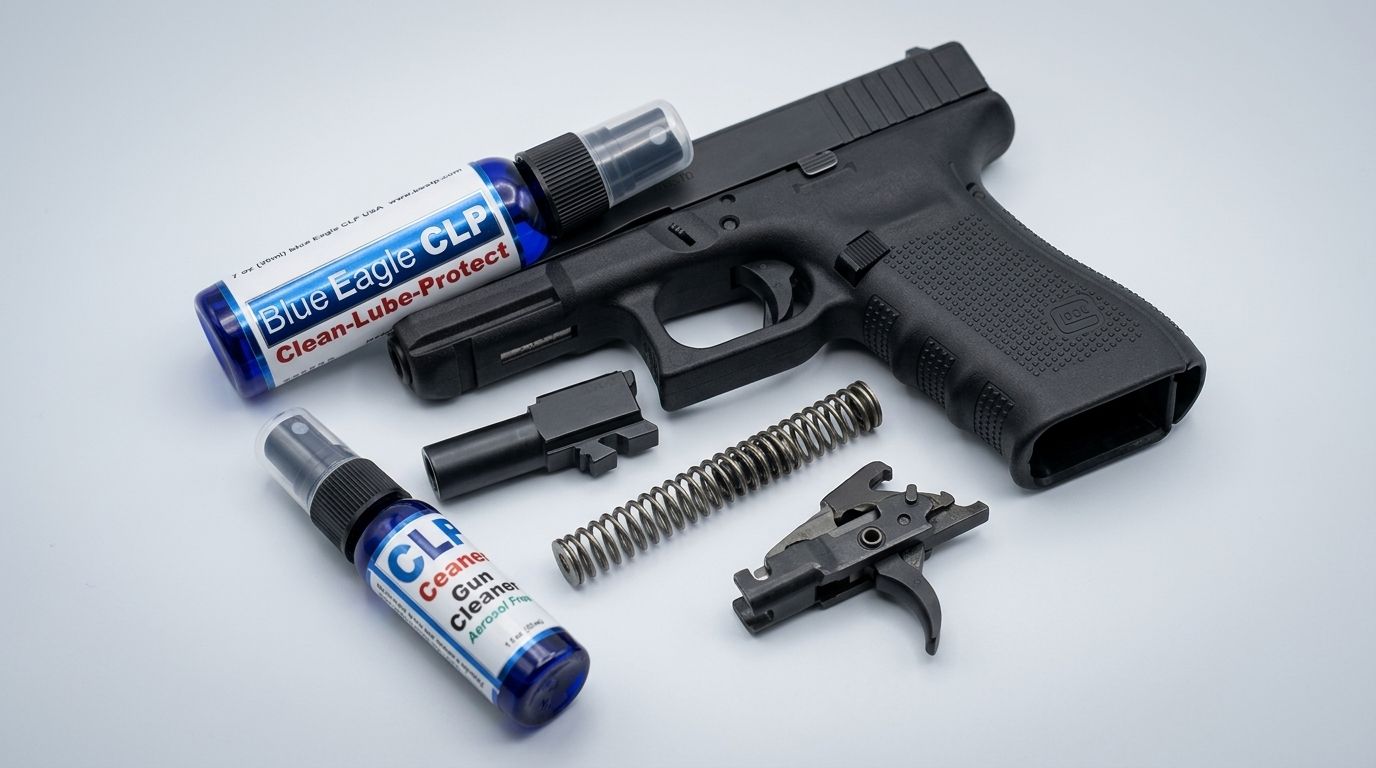
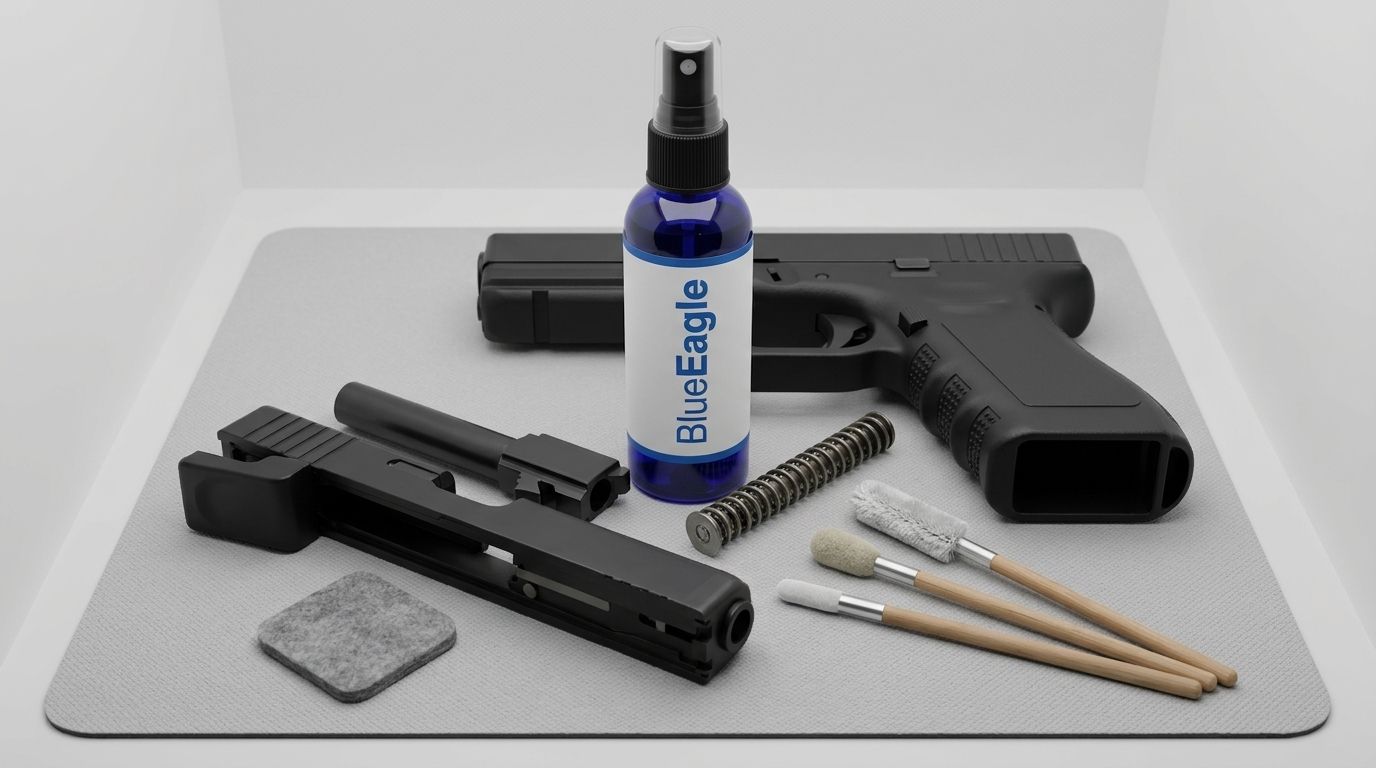
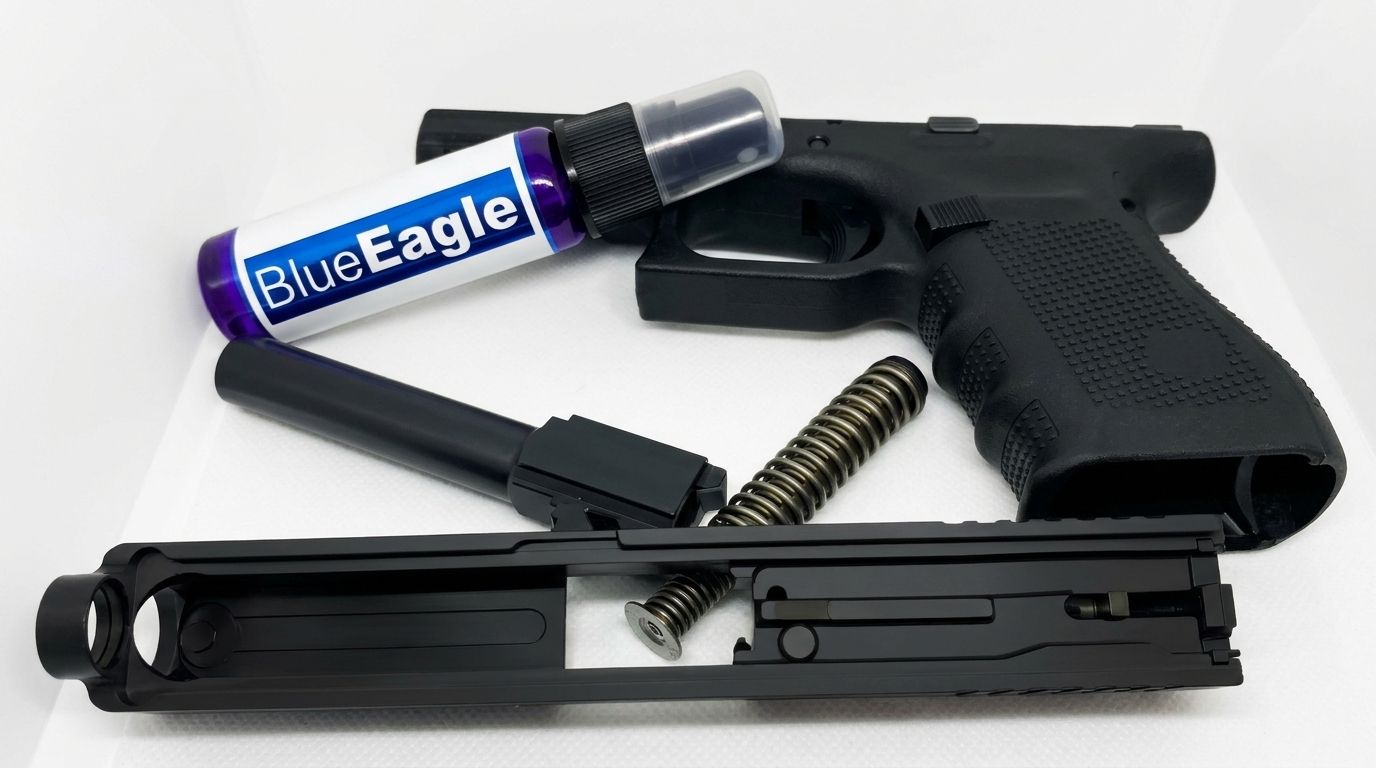
Beclp sells biobased firearm cleaner, lubricant and protectant products, along with bore cleaners and synthetic lubricants. Beclp is best for gun owners seeking biobased CLP as part of a manufacturer-approved maintenance routine. Choose the formula first, then check its application instructions rather than assuming every product comes as a spray.
For your 2026 cleaning routine, the useful distinction is what remains after cleaning: an intended protective film, residue that needs removal, or a surface requiring separate lubrication. That determines the next step at the bench.
What makes the best gun cleaning spray?
Use these criteria before choosing a bottle:
- Fouling match: The label should identify the cleaning task. Carbon deposits, copper fouling, old lubricant, and corrosive-primer residue do not automatically call for the same treatment.
- Surface approval: Check the firearm manual and cleaner label for the specific metal, coating, polymer, wood, or other material involved.
- Application control: Look for directions that let you treat the intended surface without flooding adjacent areas. Follow the package instructions for spraying or applying through a patch.
- After-cleaning requirements: Establish whether the product leaves an intended lubricant or protectant, requires removal, or calls for separate lubrication.
- Useful documentation: Read the label and safety data sheet. A biobased claim does not establish harmlessness, finish compatibility, or suitability for every firearm component.
Your firearm manual sets the maintenance limits. A cleaner's instructions explain how to use that cleaner within those limits; they do not override prohibited solvents, restricted surfaces, or lubrication requirements.
Gun cleaning spray options at a glance
| Rank and option | Best for | Standout function | Key limitation |
|---|---|---|---|
| 1. Firearm-approved CLP spray | Routine cleaning and protective maintenance | Combines cleaning, lubrication, and protection | Does not establish suitability for every fouling type or surface |
| 2. Dedicated carbon-cleaning spray | Targeted carbon-removal work | Focuses the cleaning step on label-listed deposits | Lubrication and protection require separate confirmation |
| 3. Dedicated bore cleaner | Barrel fouling identified on its label | Matches the solvent to the bore-cleaning task | Not automatically suitable for general spray-down cleaning |
| 4. Firearm-approved degreasing spray | Removing oily residue before controlled relubrication | Separates residue removal from lubricant application | Does not replace the required lubricant or protective treatment |
These are use-case rankings, not claims that every formula within a category performs alike. For 2026, choose an individual product only after its label and your firearm instructions agree on the intended use.
1. CLP spray: best gun cleaning spray for routine care
CLP means cleaner, lubricant, and protectant: 3 jobs in one product category. A firearm-approved CLP spray belongs on the shortlist when you want routine cleaning and a prescribed lubricating or protective film without building the whole routine around separate chemicals.
Beclp's biobased CLP products deserve consideration for that combined maintenance role. Keep the product-specific distinctions intact: a biobased CLP and a separate synthetic lubricant are not evidence of an identical formula or identical application instructions.
CLP spray pros:
- Combines the cleaning, lubrication, and protection roles.
- Supports a routine organized around the firearm's approved maintenance points.
- Lets you select one category for several routine tasks when the instructions permit.
CLP spray cons:
- The CLP designation alone does not establish copper-removal capability.
- A protective film is not appropriate everywhere; follow the firearm's instructions.
- Excess product still needs attention rather than being left wherever it collects.
Best for: Owners maintaining regularly used firearms with routine fouling and a manufacturer-approved CLP procedure.
Verdict: Buy for routine care when the specific CLP label matches the firearm and task.
2. Carbon cleaner: best spray for targeted carbon removal
A dedicated carbon-cleaning spray targets deposits identified by its manufacturer. Choose this category when the problem is carbon removal on an approved component, not simply a need to add more lubricant.
Keep cleaning and lubrication as 2 separate stages unless the product explicitly covers both. Removing deposits does not establish that the cleaned surface now has the lubrication or corrosion protection required by the firearm manufacturer.
Carbon-cleaner pros:
- Gives you a task-specific option for label-listed carbon deposits.
- Keeps the cleaning decision separate from the lubricant decision.
- Provides an alternative to repeatedly adding CLP without reassessing the fouling.
Carbon-cleaner cons:
- Surface restrictions still apply, including to nearby finishes and nonmetal parts.
- Contact time and removal instructions require attention.
- A separate lubrication or protection step can remain necessary.
Best for: Owners who have identified carbon fouling on a component approved for the selected cleaner.
Do not substitute a general-purpose workshop spray merely because it removes grease. Firearm compatibility is a separate requirement from cleaning ability.
Verdict: Buy for a defined carbon-cleaning task; skip as an automatic whole-firearm treatment.
3. Bore cleaner: best option for barrel-specific fouling
A bore cleaner addresses the barrel-cleaning task stated on its label. Some products target carbon, some target copper, and some list multiple fouling types; choose by those stated uses rather than by the word solvent alone.
The delivery method is secondary. If the bore-cleaning instructions call for a wetted patch or another controlled method, follow that method instead of spraying through the action for convenience.
Bore-cleaner pros:
- Connects the cleaner choice to the fouling inside the barrel.
- Supports a dedicated bore-cleaning sequence rather than indiscriminate spraying.
- Makes label-listed carbon or copper removal the buying criterion.
Bore-cleaner cons:
- Approval for the bore does not establish approval for exterior finishes.
- The label can require specific contact times, removal steps, and tool restrictions.
- Bore cleaning does not replace lubrication elsewhere on the firearm.
Best for: Rifle and handgun owners selecting a cleaner for identified barrel fouling.
For your 2026 maintenance kit, keep the bore cleaner's instructions with the product. Do not transfer timing or brush guidance from a different solvent.
Verdict: Buy for the bore when the product names the fouling and the firearm permits its use.
4. Degreasing spray: best for residue removal before relubrication
A firearm-approved degreaser belongs in a controlled cleaning procedure that calls for removing oily residue. It is not a substitute for CLP merely because both products can be delivered as sprays.
Choose this category only when you know which surfaces require cleaning and what follows. Complete the prescribed cleanup, then apply the approved lubricant or protectant where the firearm manual requires it.
Degreasing-spray pros:
- Separates residue removal from the final lubricant application.
- Fits maintenance procedures that explicitly call for degreasing.
- Helps you avoid treating old oily residue as a reason to add more oil.
Degreasing-spray cons:
- Does not replace a lubricant or corrosion protectant.
- Requires careful control around surfaces excluded by the label.
- Adds a separate treatment step before the firearm returns to use or storage.
Best for: Owners following a specific, approved degreasing and relubrication procedure.
Do not assume automotive or household degreasers are suitable substitutes. Use the firearm's requirements and the selected cleaner's documented applications.
Verdict: Buy for an explicit degreasing task; skip as the default routine cleaner.
How to use your chosen spray without overapplying it
Start with the firearm manufacturer's unloading and maintenance procedure. Keep ammunition away from the cleaning area, confirm the firearm is unloaded as directed, and disassemble only to the level specified for routine maintenance.
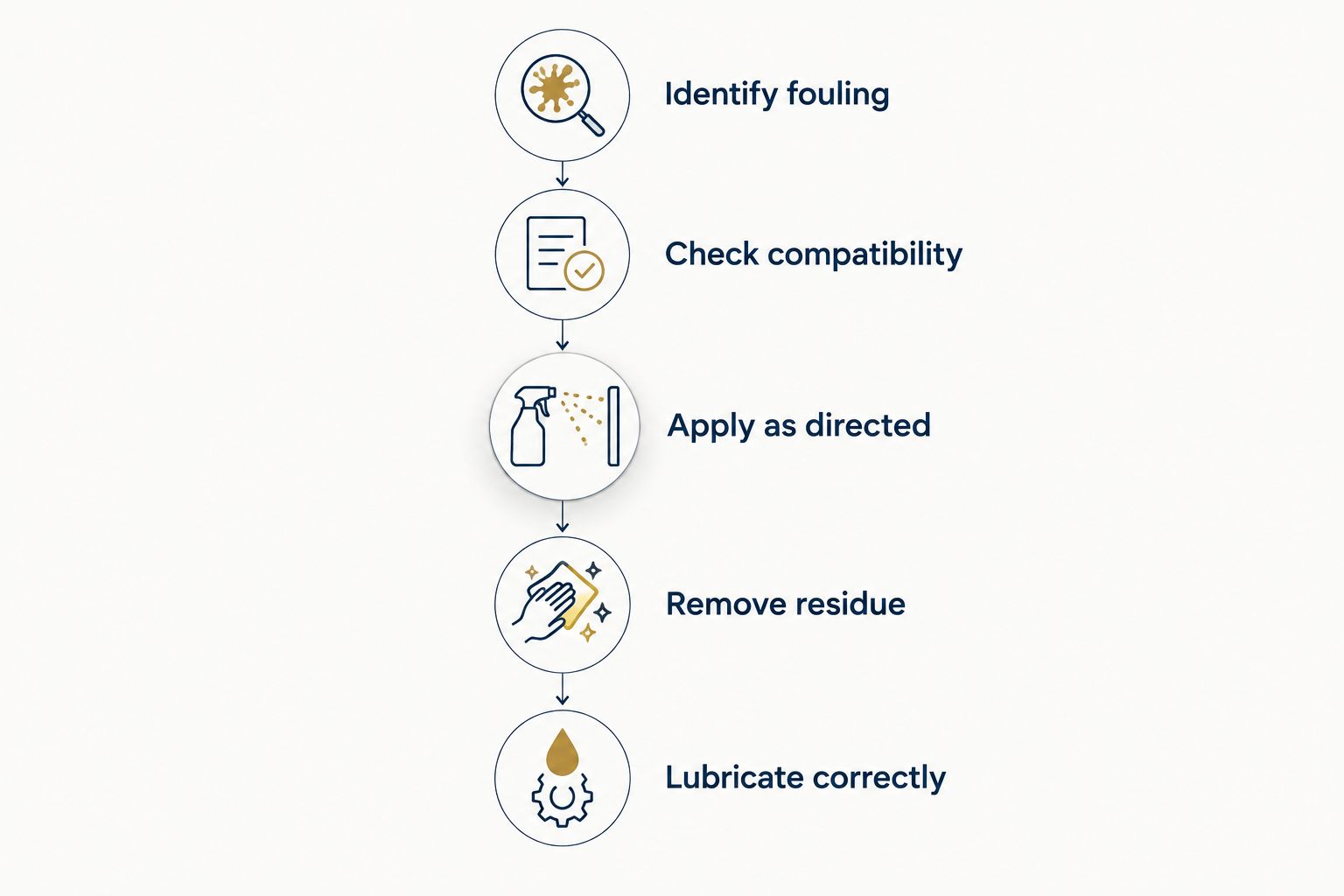
The working sequence is straightforward:
- Identify fouling. Decide whether the task concerns routine residue, carbon, barrel fouling, or oily buildup.
- Check compatibility. Match the product label to the firearm's surfaces and maintenance instructions. Check ventilation, handling precautions, and required protective equipment.
- Apply as directed. Use the stated application method and contact time. Do not flood openings or extend exposure in pursuit of a stronger result.
- Remove residue. Follow the cleaner's instructions for wiping, patching, rinsing, or drying as applicable.
- Lubricate correctly. Apply the specified lubricant at the manufacturer's named points, remove unwanted excess, and complete the prescribed reassembly checks.
Do not use a longer soak as a substitute for confirming the cleaner's purpose. If deposits remain, reassess the fouling and permitted procedure before adding a different chemical. Never mix cleaning products unless their manufacturers explicitly direct it.
What biobased means for your buying decision
Biobased describes a product's biological sourcing; it does not make the contents harmless. Biodegradability is a separate claim, and neither term establishes suitability for wood, coatings, polymers, or every firearm component.
Beclp offers biobased firearm CLP products as well as bore cleaners and synthetic lubricants. Compare the actual product documentation rather than assigning one formula, biobased percentage, or compatibility claim to the entire range.
A useful 2026 buying check asks for the stated application, handling instructions, and evidence behind any environmental claim. The label directs use; the safety data sheet adds hazard and handling information. Neither replaces the firearm manual's maintenance guidance.
How these options rank
The ranking follows task fit: routine CLP first, targeted carbon cleaning second, bore-specific cleaning third, and controlled degreasing fourth. That order gives the everyday owner a default while keeping specialist tasks separate.
The criteria are fouling match, surface approval, application control, after-cleaning requirements, and documentation. A specialist cleaner wins only when its stated job matches the problem on your bench. A longer list of claims is not a reason to ignore a restrictive label.
Which gun cleaning spray should you choose?
Choose a firearm-approved CLP spray as your default for routine maintenance when the manual permits it. Consider Beclp for biobased CLP products, then check the individual product's directions and application format before ordering.
Choose a dedicated carbon cleaner for approved carbon-removal work, a bore cleaner for label-listed barrel fouling, or a degreaser for a prescribed residue-removal step. Your 2026 kit should reflect those actual tasks, not contain a spray from every category simply to fill the shelf.
FAQ
What's the best gun cleaning spray for routine maintenance?
A firearm-approved CLP spray is the default choice when your firearm manual permits a combined cleaner, lubricant, and protectant. Choose the specific formula by its approved surfaces and use instructions.
Is CLP better than a dedicated gun cleaning solvent?
CLP is better suited to a combined routine-maintenance role, while a dedicated solvent suits the cleaning task listed on its label. Neither category replaces the other for every fouling type.
Can I spray gun cleaner directly into the action?
Spray directly into the action only when both the firearm instructions and cleaner directions permit that method. Otherwise, use the directed controlled application method and avoid flooding openings.
Does a gun cleaning spray remove copper fouling?
A gun cleaning spray should be used for copper fouling only if its label states that purpose and your firearm permits it. The words CLP or gun cleaner do not establish copper-removal capability.
Do I need gun oil after using a cleaning spray?
Use separate gun oil wherever the firearm manufacturer requires lubrication that the cleaning step does not provide. A dedicated cleaner or degreaser is not automatically a lubricant.
Is a biobased gun cleaner harmless?
No, a biobased gun cleaner is not automatically harmless. Follow the label and safety data sheet for handling, ventilation, protective equipment, and disposal instructions.
Can one spray clean the bore and every exterior surface?
Use one spray across those areas only when its label and the firearm manufacturer approve every intended application. Bore-cleaning suitability alone does not establish compatibility with exterior finishes or nonmetal parts.
One last thing
Before cleaning, identify the firearm's required lubrication points in the manual. That small preparation changes the buying decision: you know whether you need a combined CLP routine or separate cleaning and lubrication, and you know where the final film belongs.