Best overall for a combined cleaning routine: BlueEagle CLP from Beclp. Best for separate cleaning and lubrication: a dedicated synthetic firearm lubricant. Best for a manufacturer-specified grease point: firearm grease. This 2026 guide matches each approach to a revolver maintenance job, with the firearm manual deciding what belongs where.
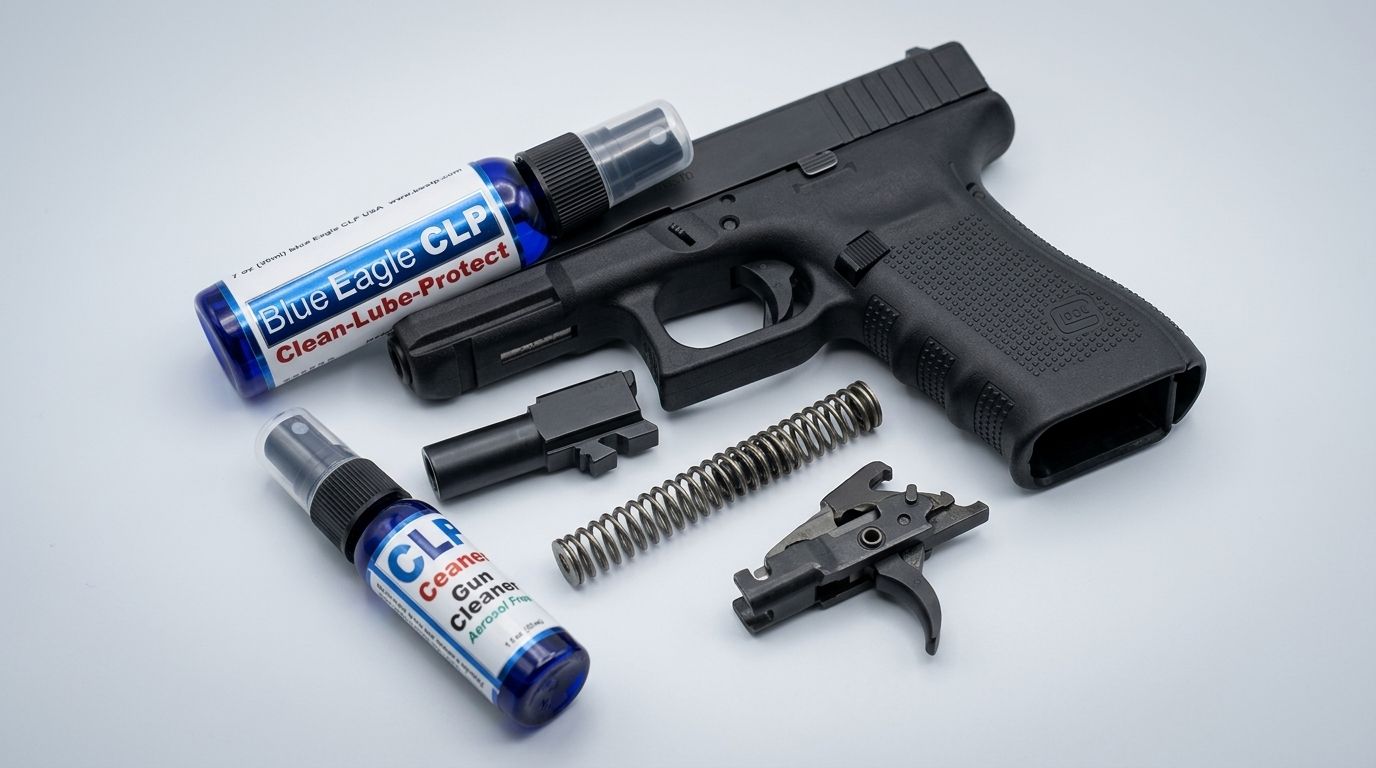
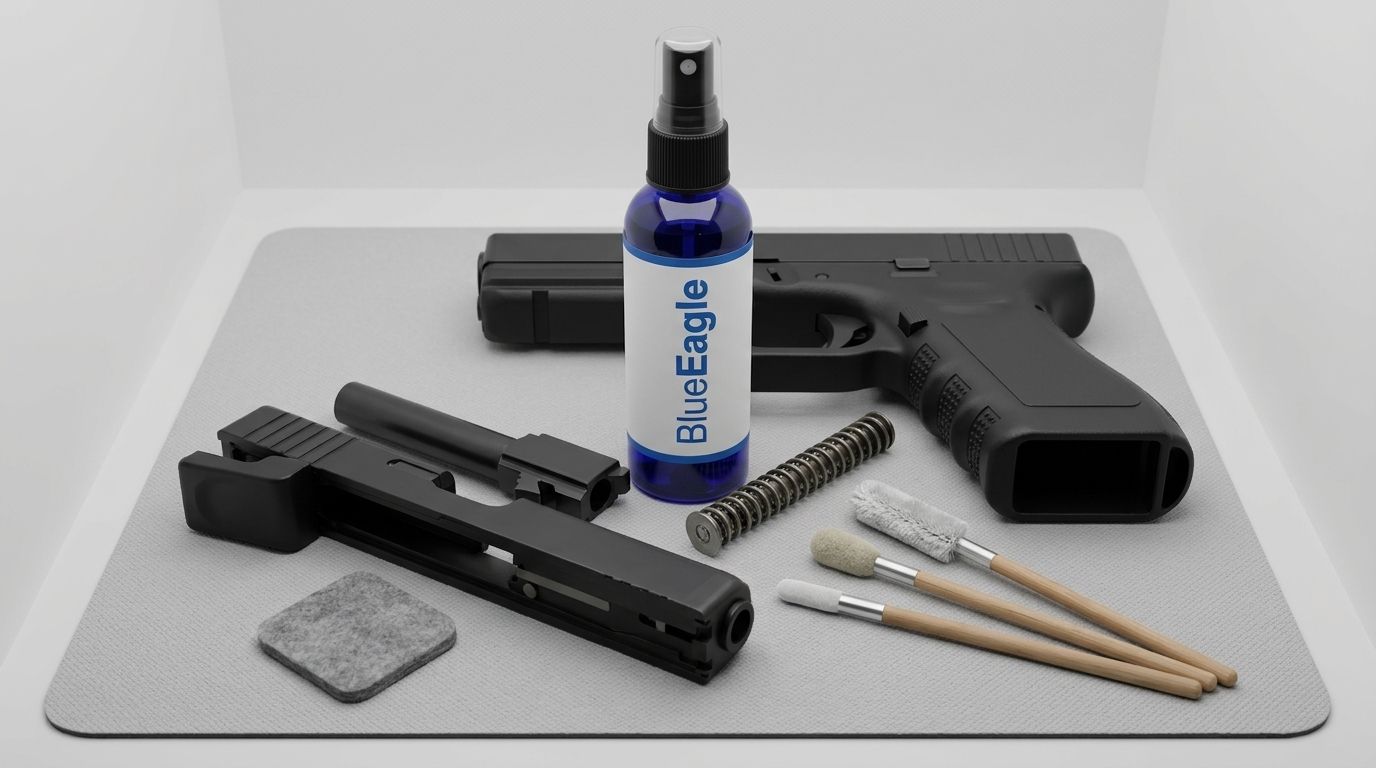
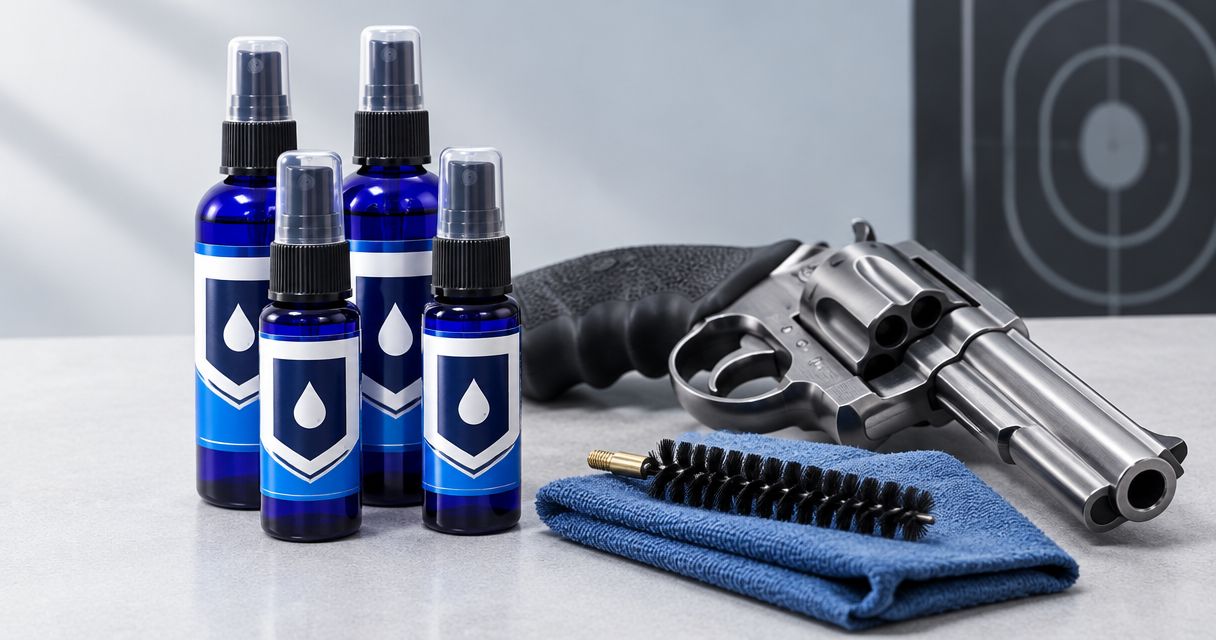
- BlueEagle CLP is the Beclp choice for revolver owners who want cleaning, lubrication, and protection in one routine.
- The best gun lubricant for revolver maintenance matches the firearm manual, application point, and operating conditions.
- Choose dedicated synthetic firearm lubricant when you want to separate fouling removal from lubrication.
- Use firearm grease only at points where the revolver manufacturer specifies or permits it.
- Biobased cleaner claims do not establish lubricant performance, finish compatibility, or harmlessness.
Why this matters
A revolver needs more than an oily exterior. Fouling removal, lubrication, and corrosion protection are different jobs, even when one product handles all of them. Lubricant does not replace cleaning, and more lubricant is not a repair for a binding action.
Choose the maintenance method before choosing the bottle. Start with the revolver manual, identify the permitted application points, and then select a product whose instructions fit that work. That is the useful distinction behind this 2026 ranking—not an unsupported claim that one formula suits every revolver.
What makes the best gun lubricant for a revolver?
Use these criteria to judge a CLP, synthetic lubricant, or grease before it reaches the bench:
- Manufacturer approval: The revolver manual controls lubricant type, application points, disassembly, and maintenance checks.
- Job fit: Decide whether you need combined cleaning and lubrication or a dedicated lubricant after cleaning.
- Material compatibility: Check instructions for the actual metal finish, grip material, and other surfaces the product will touch.
- Application control: Choose a method that lets you treat approved points without flooding surrounding areas.
- Documented operating limits: Match any stated temperature or storage guidance to your intended use; do not infer it from the word synthetic.
- Clear product documentation: Read the label and relevant technical and safety information rather than treating a category claim as proof.
Keep 2 documents beside the purchasing decision: the firearm manual and the product instructions. A safety data sheet adds handling information, but it does not replace either document or serve as a universal compatibility approval.
Revolver lubricants at a glance
These 3 lubricant approaches serve distinct routines. The table compares their roles, not laboratory performance or suitability for every firearm.
| Rank and option | Best for | Standout role | Key limitation |
|---|---|---|---|
| 1. BlueEagle CLP | Combined routine maintenance | Cleaning, lubrication, and protection in one maintenance approach | Revolver-specific application and compatibility still require confirmation |
| 2. Dedicated synthetic firearm lubricant | Separate cleaning and lubrication | Keeps lubricant selection separate from cleaner selection | Does not replace a cleaner selected for the fouling present |
| 3. Firearm grease | Manufacturer-specified grease points | Provides the lubricant form called for at a particular point | Not a general substitute for oil throughout a revolver |
Match the approach to the job
Choose CLP routine when you want combined maintenance, dedicated lubrication when cleaning is a separate step, and specified grease only when the manual calls for that form. These are application decisions, not a good-better-best scale.
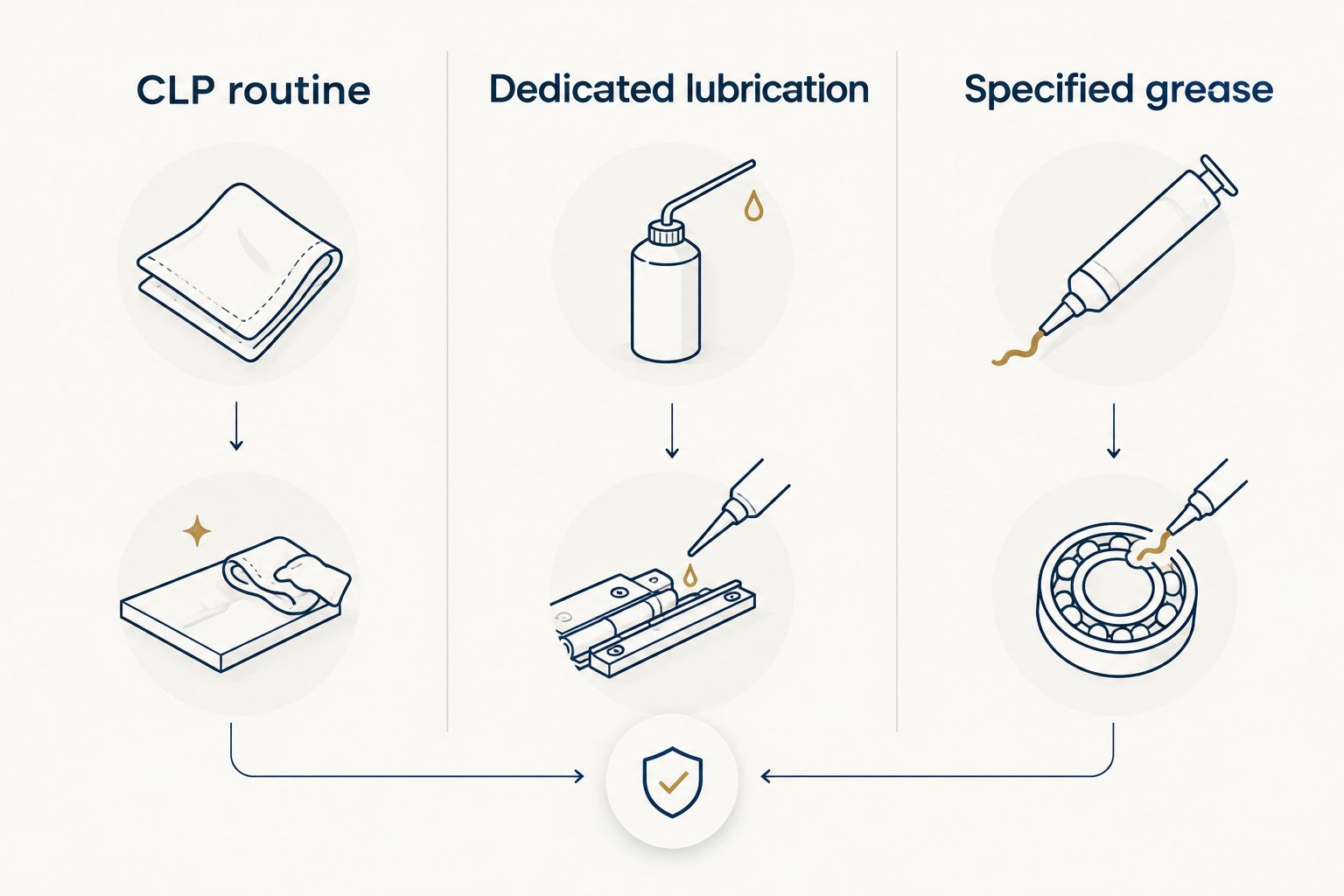
1. BlueEagle CLP: best for combined routine maintenance
BlueEagle CLP belongs first when your buying goal is to handle cleaning, lubrication, and protection within one routine. Beclp offers firearm CLP products alongside bore cleaners and synthetic lubricants; those categories should not be treated as interchangeable formulas.
The appeal is a simpler bench routine, not permission to skip instructions. A revolver still needs the cleaning method, lubricant placement, and final condition specified by its manufacturer.
Best for: Revolver owners who prefer a combined maintenance product rather than choosing a separate cleaner and lubricant for every routine session.
BlueEagle CLP pros
- Fits a combined cleaning, lubrication, and protection workflow.
- Keeps the buying decision centered on routine maintenance rather than a specialized lubricant alone.
- Gives you a CLP option to assess against the revolver manual and product directions.
BlueEagle CLP cons
- The CLP category does not establish approval for every finish, grip, or internal assembly.
- Combined maintenance does not eliminate the need to identify fouling that requires a different cleaning method.
- A biobased claim does not establish that a product is harmless or appropriate for every handling situation.
For a 2026 purchase, check the specific product's current instructions rather than carrying a claim from one bottle across the entire range. Biobased cleaning and synthetic lubrication describe different aspects of maintenance; neither establishes the composition of every Beclp product.
Use the cleaner as directed, remove loosened residue, and leave only the lubricant or protective film permitted by the firearm instructions. Do not treat a visibly wet action as evidence of better maintenance.
Verdict: Buy BlueEagle CLP for a combined routine when its instructions match your revolver's requirements.
2. Dedicated synthetic lubricant: best for separate lubrication
A dedicated synthetic firearm lubricant separates the lubrication decision from the cleaning decision. You first remove the fouling with an appropriate cleaner, then apply the selected lubricant at the points identified in the revolver manual.
This approach suits an owner who wants to change the cleaning step without automatically changing the lubricant. Synthetic describes the lubricant formulation category; it does not, by itself, prove a temperature range, service interval, or compatibility claim.
Best for: Revolver owners who already use a separate cleaner and want a distinct lubrication step.
Dedicated synthetic lubricant pros
- Keeps cleaning and lubrication as clearly separated tasks.
- Lets you select the cleaner around the fouling and the lubricant around the approved application.
- Makes the final lubrication step explicit rather than assuming the cleaning step completed it.
Dedicated synthetic lubricant cons
- Requires a separate cleaning product or method.
- Adds another set of instructions and compatibility checks to the routine.
- The word synthetic alone does not identify the correct product for cold weather or long storage.
A precision applicator helps direct liquid to a small point, but the applicator does not decide the amount. For placement and excess removal, use the guide to how much gun lubricant belongs on moving parts alongside your firearm manual.
Keep the distinction clear at the bench: an oily patch does not prove that fouling has been removed. Finish the cleaning step, inspect the accessible surfaces, and then lubricate as instructed.
Verdict: Buy a dedicated synthetic firearm lubricant when separate cleaning and lubrication fit your routine.
3. Firearm grease: best for specified grease points
Firearm grease is a choice for a documented application point, not a default upgrade from oil. Select it when the revolver manufacturer specifies or permits grease at that location and the grease's instructions fit the application.
Do not transfer a grease recommendation from another firearm to your revolver. Different designs have different maintenance requirements, and an accessible surface is not automatically a lubrication point.
Best for: Revolver owners following an explicit grease instruction in the firearm manual or manufacturer guidance.
Firearm grease pros
- Matches a grease-specific maintenance instruction when one exists.
- Supports targeted application rather than treating the entire action alike.
- Keeps product selection tied to a named maintenance point.
Firearm grease cons
- Does not replace cleaning before lubrication.
- Is not a universal substitute for the oil specified elsewhere.
- Requires confirmation before use inside assemblies not covered by routine owner maintenance.
Do not select grease because an action feels rough and you want to mask the symptom. Stop if the revolver binds or behaves abnormally, unload it safely, and follow the manufacturer's service guidance.
Verdict: Hold unless your revolver's instructions identify an appropriate grease application.
How this ranking works
This 2026 ranking uses maintenance fit: combined upkeep first, separate lubrication second, and grease only for a specified application. It does not assign unsupported wear, friction, corrosion, or temperature scores.
The criteria are manufacturer approval, job fit, compatibility, application control, documented limits, and clear instructions. A product that fails the revolver manufacturer's requirements is not the right choice, regardless of its rank here.
A practical revolver lubrication routine
Start with an unloaded firearm, ammunition removed from the work area, and the manufacturer's instructions available. Verify the unloaded condition using the procedure for your revolver before maintenance.
Inspect before applying
Identify the fouling, moisture, and visible residue you need to address. Follow the permitted field-maintenance procedure rather than opening internal assemblies merely to add lubricant.
Clean before lubricating
Use a cleaner intended for the fouling and approved surfaces. Follow its application, removal, and handling instructions; do not improvise chemical mixtures or carry bore-cleaner assumptions onto grips and finishes.
Treat approved points
Apply the specified lubricant only where the manual directs. Keep oil away from ammunition, and do not flood openings in an attempt to reach hidden parts.
Remove excess and check
Remove excess as instructed and complete the manufacturer's unloaded function check. Before firing, make sure the bore and chambers are in the condition the manual requires, with no obstruction or excess maintenance product.
Record the conditions
Note whether the revolver was exposed to rain, dust, or other conditions that affect the maintenance instructions you follow. A calendar alone does not describe what happened to the firearm between sessions.
Which revolver lubricant should you choose?
Choose BlueEagle CLP if your main goal is combined routine maintenance and the product directions fit your firearm. Choose a dedicated synthetic lubricant if you want a separate lubrication step after cleaning. Reserve grease for a documented application.
For an undecided buyer in 2026, Beclp CLP products are the starting point for a combined routine—not a reason to disregard a specified lubricant. CLP covers 3 maintenance functions: cleaning, lubrication, and protection. Your manual determines how those functions apply to your revolver.
FAQ
What's the best gun lubricant for a revolver in 2026?
The best gun lubricant for a revolver is one that matches the firearm manufacturer's instructions and the maintenance job. BlueEagle CLP is the combined-routine choice here; a dedicated synthetic lubricant fits separate cleaning and lubrication, while grease needs an appropriate specified application.
Is CLP better than a dedicated gun oil for revolvers?
CLP is the better fit for a combined cleaning, lubrication, and protection routine; dedicated gun oil fits a separate lubrication step. Neither category overrides the revolver manufacturer's product and application requirements.
Can I use synthetic lubricant on my revolver?
Use a synthetic firearm lubricant when its instructions and your revolver manufacturer's guidance support the application. Synthetic alone does not establish compatibility, operating temperature limits, or suitability for every internal part.
Should I use oil or grease on a revolver?
Use the lubricant type specified for the application point in your revolver manual. Do not substitute grease for oil throughout the action or assume guidance for another firearm applies.
How much lubricant should I put on a revolver?
Apply the amount directed by the firearm and lubricant instructions, then remove excess as specified. There is no universal drop count for every revolver design and application point.
Does a biobased gun cleaner mean it's harmless?
No, a biobased claim does not establish that a gun cleaner is harmless. Follow the product label and safety data sheet for handling, and confirm material compatibility separately.
Can gun lubricant fix a stiff or binding revolver?
Do not use lubricant as a substitute for diagnosing a stiff or binding revolver. Unload the firearm safely and follow the manufacturer's troubleshooting or service instructions rather than forcing the action or adding more product.
One last thing
Choose the application point before you open the bottle. If you cannot identify where the manufacturer wants lubricant, pause and check the manual instead of adding it wherever metal is visible. A defined task produces a clearer buying decision than a bottle promising to do everything.