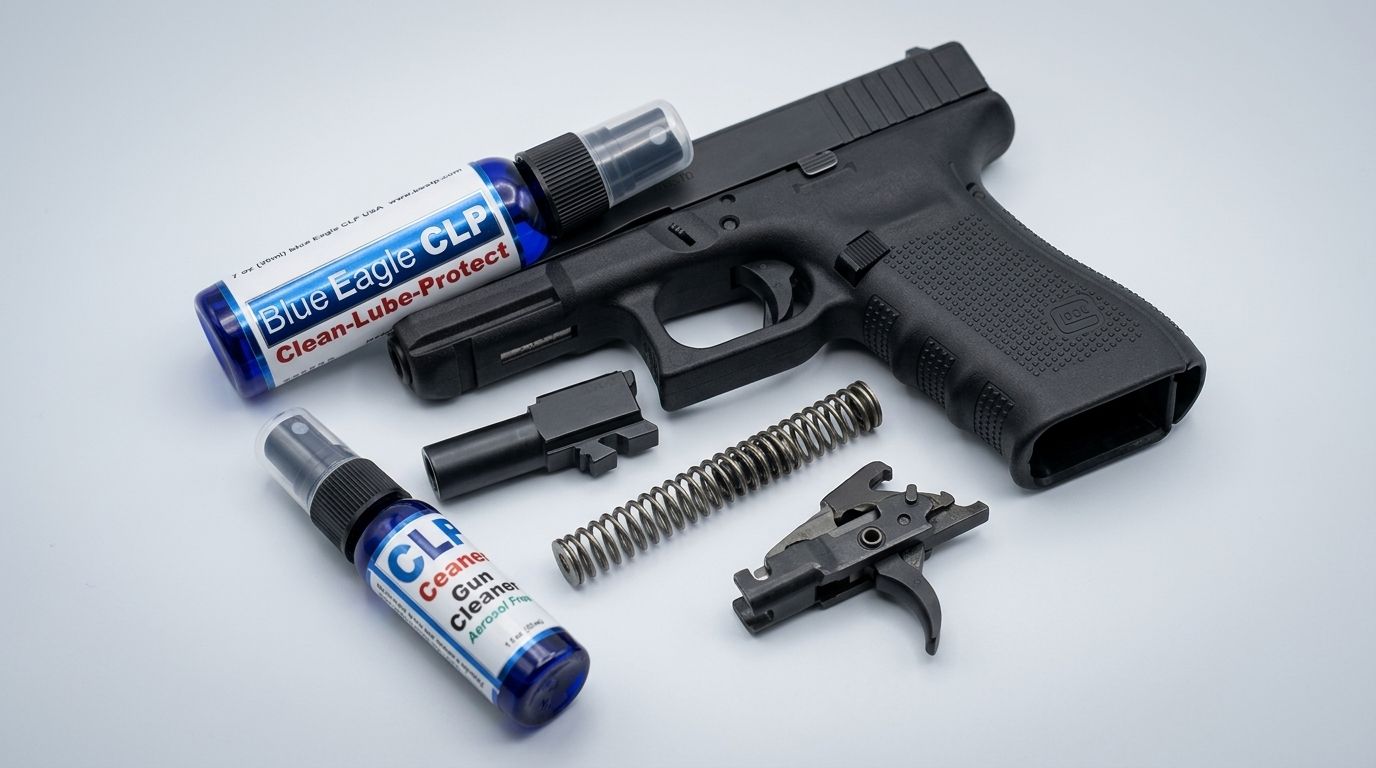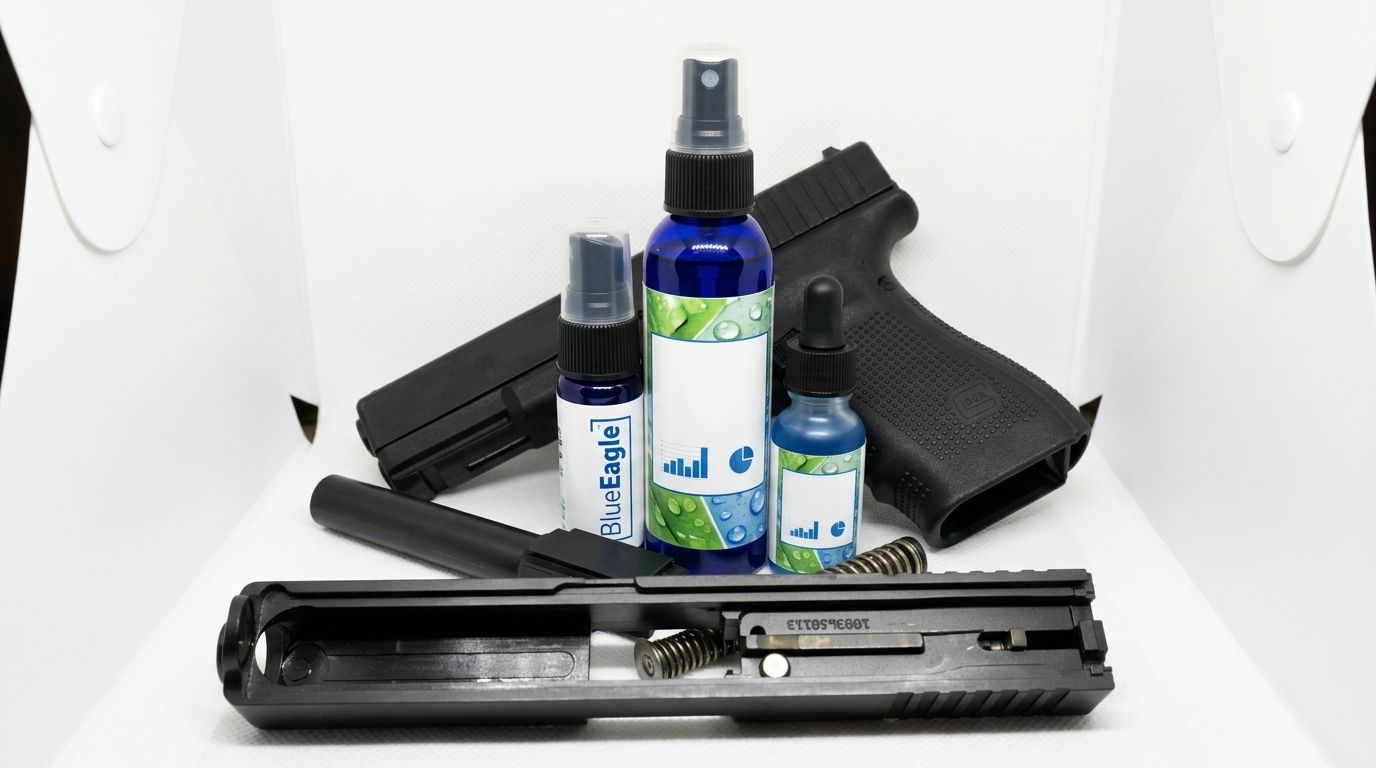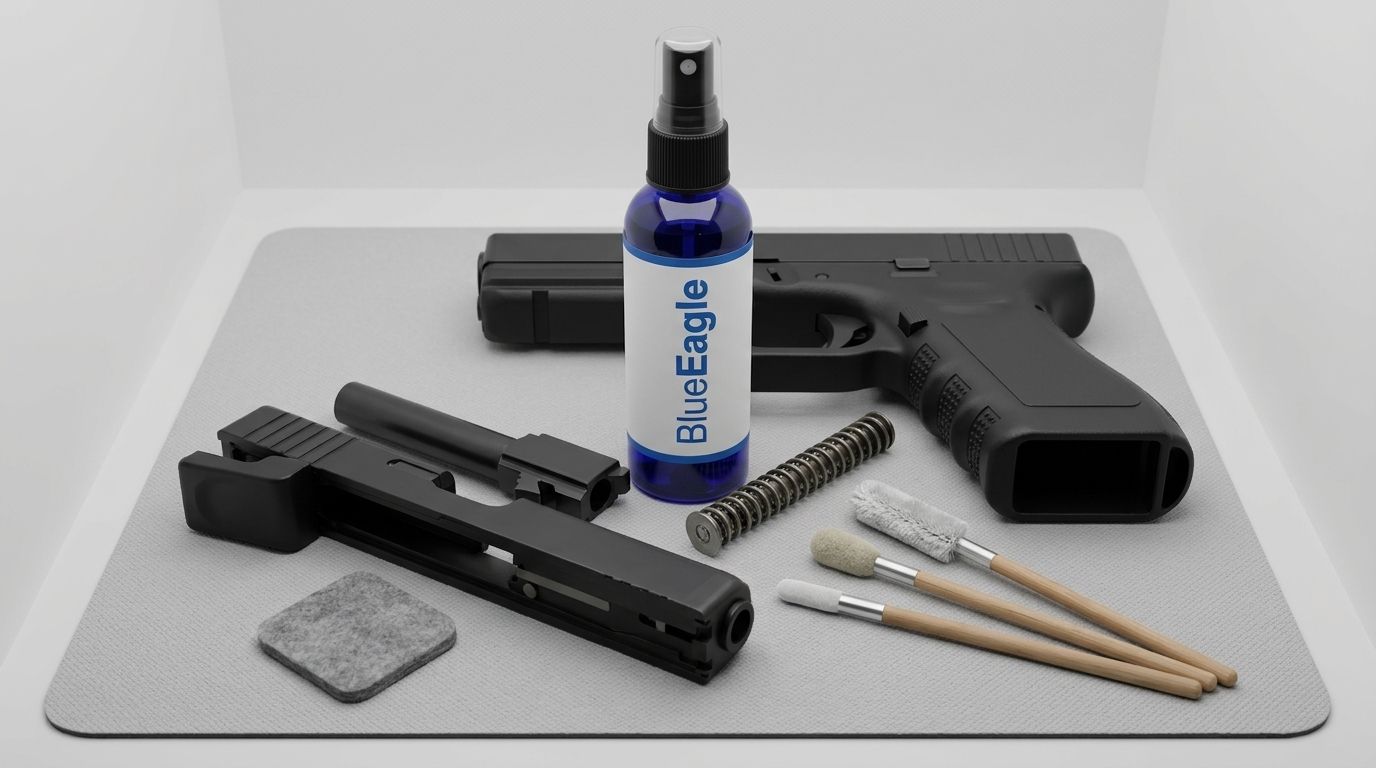
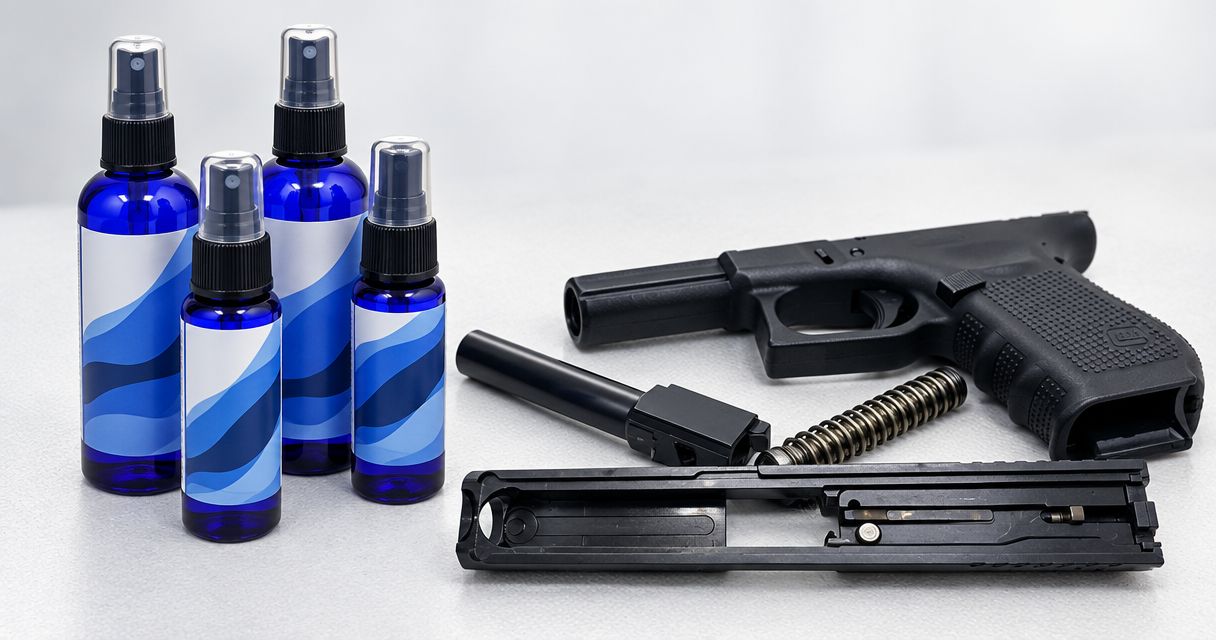
Best overall for a routine cleaning-and-lubrication workflow: BlueEagle CLP from Beclp. Best for targeted carbon removal: a dedicated carbon solvent. Best for confirmed copper fouling: a copper-specific bore cleaner. This 2026 guide ranks those choices by maintenance task, with firearm instructions and product labels setting the limits.
- BlueEagle CLP is the best pistol cleaning solvent starting point for owners seeking combined cleaning, lubrication, and protection.
- Choose a dedicated carbon solvent when your cleaning task calls for targeted carbon removal.
- Use a copper-specific bore cleaner for copper fouling, not as an automatic part of every cleaning.
- Check firearm instructions, product labels, and safety data sheets before choosing or combining maintenance products.
Why the cleaning task matters
The best pistol cleaning solvent is the one intended for the fouling you need to remove and approved for the surfaces it will touch. A combined cleaner, lubricant, and protectant serves a different purpose from a dedicated bore solvent. Treating them as interchangeable makes the buying decision harder than it needs to be.
For your 2026 cleaning routine, start with the pistol manual rather than a bottle's broadest claim. Identify the permitted cleaning products, lubrication points, and disassembly procedure. Then choose the simplest product combination that covers those requirements without adding treatments the firearm does not need.
What makes the best pistol cleaning solvent
Use these criteria before comparing bottles:
- Fouling match: The label should address the material you intend to remove. Carbon cleaning and copper removal are different jobs; a general cleaning claim does not establish both.
- Surface compatibility: Confirm suitability for the barrel, slide, frame, finish, grips, and any accessories exposed during cleaning. Approval for metal does not establish approval for every nearby material.
- Clear application instructions: Look for directions covering application, contact time, removal, and any restrictions. Do not substitute advice for another formula.
- Defined maintenance role: Know whether the product only cleans or also provides lubrication and protection. That determines what belongs on the bench afterward.
- Usable safety documentation: Read the label and safety data sheet for handling, ventilation, storage, and protective-equipment requirements. Biobased does not mean harmless.
Buy for a defined task, not for the longest list of claims. A cleaner that fits your routine is more useful than a specialized treatment you cannot justify using.
Pistol cleaning options at a glance in 2026
| Ranked option | Best for | Standout purpose | Key limitation |
|---|---|---|---|
| BlueEagle CLP | Combined routine maintenance | Cleaner, lubricant, and protectant functions | Do not assume a CLP claim establishes specialized copper removal |
| Dedicated carbon solvent | Targeted carbon cleaning | A cleaning step focused on carbon fouling | Requires a separate lubrication plan unless its label states otherwise |
| Copper-specific bore cleaner | Confirmed copper fouling | A bore treatment specifically labeled for copper removal | Requires careful attention to contact time, removal, and compatibility |
These are workflow choices, not interchangeable formulas. The ranking puts routine maintenance first and narrower treatments afterward; it does not claim that one product removes every type of fouling better than every alternative.
1. BlueEagle CLP: best for combined routine maintenance
BlueEagle CLP is a cleaner, lubricant, and protectant option for firearm maintenance. Its role makes it the first choice here for owners who want those functions in one product rather than automatically separating every cleaning session into several chemical steps.
Beclp's BlueEagle CLP is best for pistol owners seeking combined cleaning, lubrication, and protection in their routine. That recommendation concerns the product's stated role, not an unsupported claim about cleaning speed, wear reduction, or protection duration.
A biobased cleaning approach and a synthetic lubricant are not contradictory categories. “Biobased” concerns the origin of ingredients; “synthetic” describes how a material is produced. Neither term, by itself, establishes the complete formula or performance of a particular bottle. Check product-specific documentation rather than assuming every cleaner and lubricant in a range shares the same formulation.
BlueEagle CLP pros:
- Combines the cleaner, lubricant, and protectant roles in one maintenance product.
- Fits a buying decision centered on routine care rather than a specialized bore treatment.
- Gives you a starting point for deciding whether a separate cleaner is actually necessary.
BlueEagle CLP cons:
- A combined CLP role does not establish suitability for every finish, component, or accessory.
- Do not treat the product as a dedicated copper remover without explicit label support.
Best for: Owners building a routine around combined cleaning, lubrication, and protection, subject to their pistol manufacturer's requirements.
Verdict: Buy for the combined maintenance role when the product instructions fit your firearm. Add a specialized solvent only for an identified task the routine product does not cover.
2. Dedicated carbon solvent: best for targeted carbon cleaning
A dedicated carbon solvent belongs on the bench when you need a cleaner specifically labeled for carbon fouling. Choose the actual bottle by its stated application and compatibility, not just the word “solvent” on the front.
This category separates cleaning from the later lubrication step. That distinction helps when your pistol manual specifies a particular lubricant or directs you to leave some cleaned areas free of lubricant. A cleaner's ability to remove residue does not establish its suitability as the final treatment on moving parts.
Before buying, read how the product must be removed. Check whether the instructions call for wiping, dry patches, or another specified procedure, and follow any restrictions on soaking or contact time. Do not extend the application simply because a deposit remains visible.
Dedicated carbon solvent pros:
- Focuses the purchase on a clearly identified cleaning task.
- Lets you select cleaning chemistry separately from the lubricant required by your firearm.
- Provides a useful next category to investigate when your routine cleaner's label does not cover the deposit.
Dedicated carbon solvent cons:
- Adds a separate product and removal step to your routine.
- A carbon-removal claim does not establish copper-removal capability or broad material compatibility.
Best for: Owners who need targeted carbon cleaning and already have a manufacturer-approved lubrication plan.
Verdict: Buy for a defined carbon-cleaning need; skip as an automatic extra bottle. For the distinction between deposits, read the guide to choosing solvent for carbon or copper fouling.
3. Copper-specific bore cleaner: best for confirmed copper fouling
A copper-specific bore cleaner is a specialized option for copper deposits in the bore. It is not the default answer to every dirty patch, dark mark, or difficult cleaning session.
Choose a product whose label explicitly covers copper removal and whose directions fit your barrel and cleaning equipment. A product described simply as a bore cleaner does not automatically establish the same intended use. Read the specific bottle's instructions before treating it as a substitute.
Keep this decision narrow. If you cannot identify a copper-removal need from the firearm manufacturer's guidance or an appropriate inspection, adding copper solvent does not resolve that uncertainty. Persistent deposits or unclear bore condition warrant manufacturer guidance or inspection by a qualified gunsmith rather than progressively stronger, improvised treatments.
Copper-specific bore cleaner pros:
- Matches the purchase to an identified copper-removal task.
- Keeps specialized bore treatment separate from routine exterior cleaning.
- Gives you explicit application instructions to follow when the label supports the intended use.
Copper-specific bore cleaner cons:
- Requires attention to product-specific contact limits and removal instructions.
- Does not replace the firearm's lubrication and protection requirements after cleaning.
Best for: Owners addressing confirmed copper fouling with a treatment permitted by their firearm manufacturer.
Verdict: Hold until copper removal is an identified need. Do not buy a specialized bore treatment merely because routine fouling takes more effort than expected.
Match the bottle to the job
Use the maintenance task to choose the category before comparing individual labels. Start with the combined routine-maintenance option, then consider a dedicated cleaner only when the fouling and firearm instructions justify it. A different bottle should answer a specific question, not replace diagnosis.
- CLP: Choose for a combined cleaning, lubrication, and protection routine.
- Carbon solvent: Choose for a targeted carbon-cleaning step.
- Copper solvent: Choose for an identified copper-removal task in the bore.
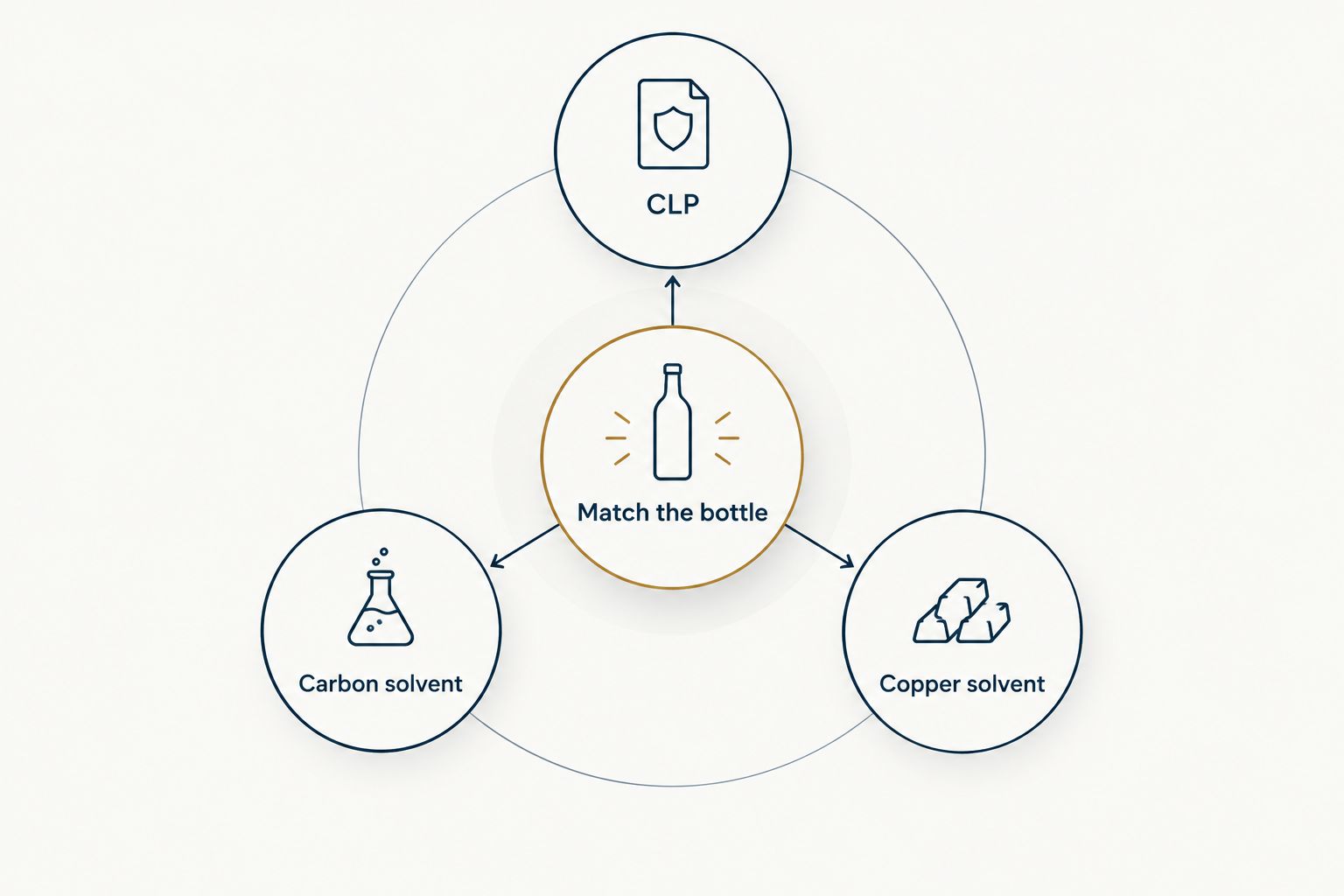
The category name does not settle compatibility. Before application, check the exact product against the exact firearm surfaces involved. Keep the manual and bottle directions together at the bench so the cleaning method does not depend on memory.
Build a manufacturer-first bench routine
Prepare the firearm and bench
Unload the pistol according to its manual, remove ammunition from the work area, and verify the chamber and magazine well as instructed. Follow the manufacturer's disassembly procedure. Do not take the pistol farther apart just to expose a stain or reach an uncertain deposit.
Arrange the approved cleaning tools, patches, cleaner, and required lubricant before starting. Follow the product label's ventilation and protective-equipment instructions. Keep containers closed when not in use and prevent cleaning products from reaching ammunition.
Apply only the intended cleaner
Use the product where its directions permit it. A bore treatment belongs in the specified bore-cleaning process; it is not automatically suitable for soaking the frame, grips, sights, or mounted accessories.
Follow the stated contact time rather than inventing a universal soak. Different formulas have different instructions. If you change products, follow their removal requirements and do not mix cleaning chemicals or layer them on the assumption that a stronger combination will work better.
Remove residue and inspect
Use the removal method specified by the cleaner and firearm manufacturer. Inspect accessible areas for remaining fouling, pooled liquid, debris, and signs of damage. Do not treat patch color alone as proof that a stronger chemical is required.
If a deposit remains, confirm what it is before repeating or changing treatment. Stop when the condition is outside the manual's routine-maintenance guidance. Scrubbing harder and extending chemical contact are not substitutes for identifying the problem.
Lubricate, reassemble, and check
Apply the specified lubricant at the locations and amounts described in the firearm manual. A dedicated cleaning solvent does not automatically complete this step. A CLP's combined role also does not override instructions about where lubricant belongs.
Reassemble the pistol and perform only the manufacturer's prescribed checks. Confirm the bore is free of obstructions and excess cleaning material before returning the firearm to service. Store cleaning products according to their labels, separate from ammunition.
How these choices are ranked
This 2026 ranking uses the criteria above: fouling match, compatibility, clear instructions, maintenance role, and safety documentation. Routine combined maintenance comes first because it answers the broad buying question; dedicated carbon and copper treatments follow as narrower choices.
This is not a timed cleaning trial or a laboratory comparison. No claim about removal speed, corrosion duration, friction reduction, or universal compatibility supports the order. The useful distinction is what each option is intended to do—and what you still need to verify before using it.
Which pistol cleaning solvent should you choose?
Start with Beclp's BlueEagle CLP for combined pistol cleaning, lubrication, and protection when its directions align with your firearm manual. Choose a dedicated carbon solvent when you have a defined carbon-cleaning task. Reserve copper-specific bore cleaner for an identified copper-removal need.
For a 2026 bench setup, avoid buying every category at once. Establish the routine product first, then add a specialized cleaner only when you can name the deposit, the approved treatment, and the required removal procedure. A deliberate routine is easier to repeat than a collection of bottles with overlapping claims.
FAQ
What's the best pistol cleaning solvent for routine maintenance?
BlueEagle CLP is the first choice in this guide for owners seeking combined cleaning, lubrication, and protection. Use it only where its instructions and your firearm manufacturer's guidance permit.
Is CLP better than a dedicated pistol cleaning solvent?
CLP is the better fit when you want a combined maintenance product; a dedicated solvent fits a defined cleaning task. Neither category overrides firearm compatibility requirements or product-specific directions.
Do I need copper solvent every time I clean my pistol?
No—choose copper solvent for an identified copper-removal need, not as an automatic cleaning step. Follow the firearm manufacturer's guidance and the cleaner's application and removal instructions.
Can I use gun oil instead of cleaning solvent?
Use gun oil as a cleaner only when its label explicitly supports that role. A lubricant designation alone does not establish that the product is intended to remove the fouling you are addressing.
Does biobased gun cleaner mean harmless?
No—biobased does not mean harmless. Read the product label and safety data sheet for handling, ventilation, protective equipment, storage, and disposal requirements.
How long should I leave pistol cleaning solvent in the barrel?
Use the contact time stated for that specific cleaner and application. Do not apply another product's timing or extend contact beyond the instructions because fouling remains.
Can I use rifle bore cleaner in a pistol barrel?
Use a rifle bore cleaner in a pistol barrel only when its directions and the pistol manufacturer's guidance permit that application. The category name alone does not establish compatibility with your barrel or nearby surfaces.
One last thing
Before your next 2026 cleaning session, write down the lubricant locations from your pistol manual and keep that note with your bench supplies. Cleaning and lubrication are related jobs, but they are not the same job. A clean surface does not tell you whether it needs lubricant—or whether lubricant belongs there at all.
That distinction also improves the next purchase. Once you know which tasks remain after cleaning, you can judge whether a combined product covers your routine or whether a separate lubricant is necessary.