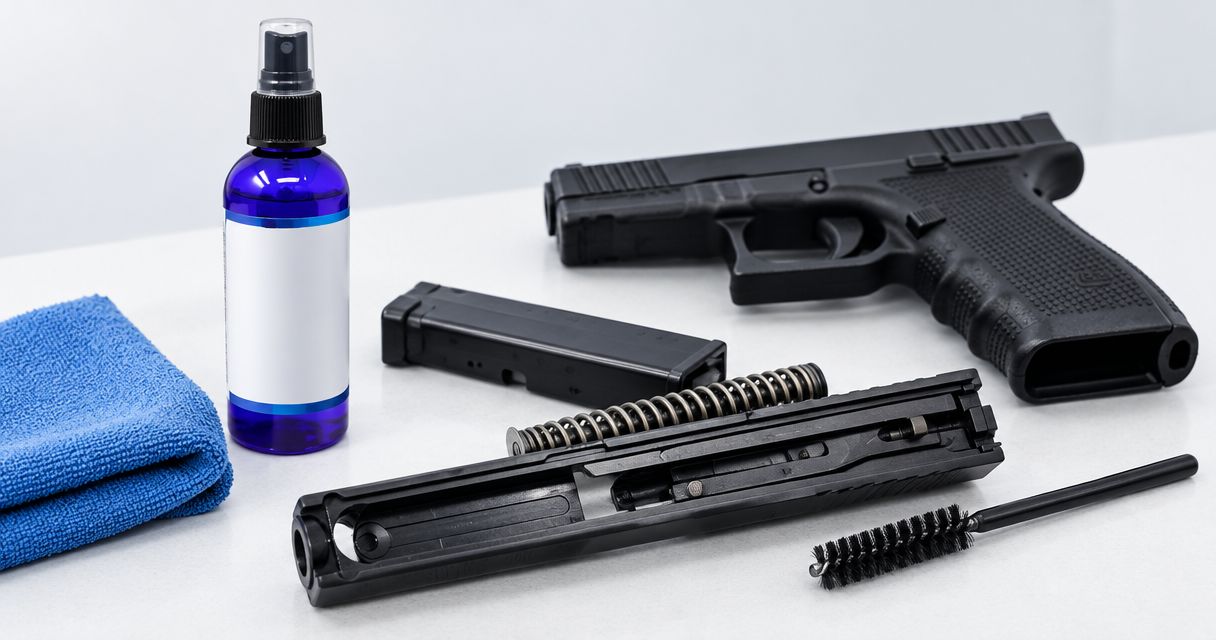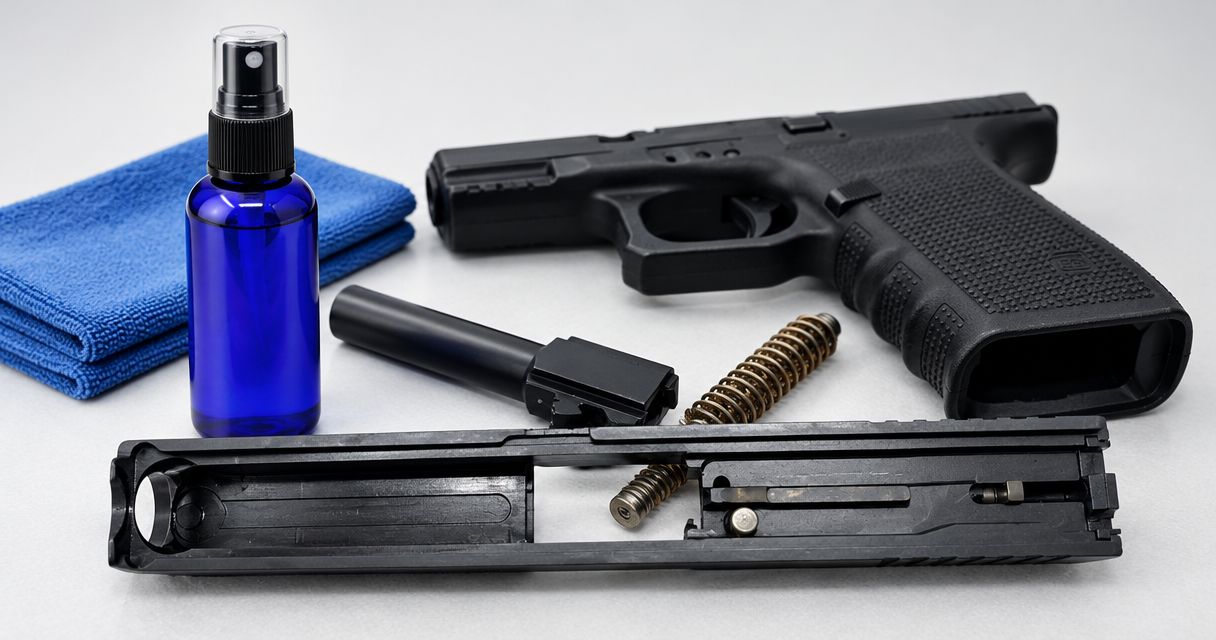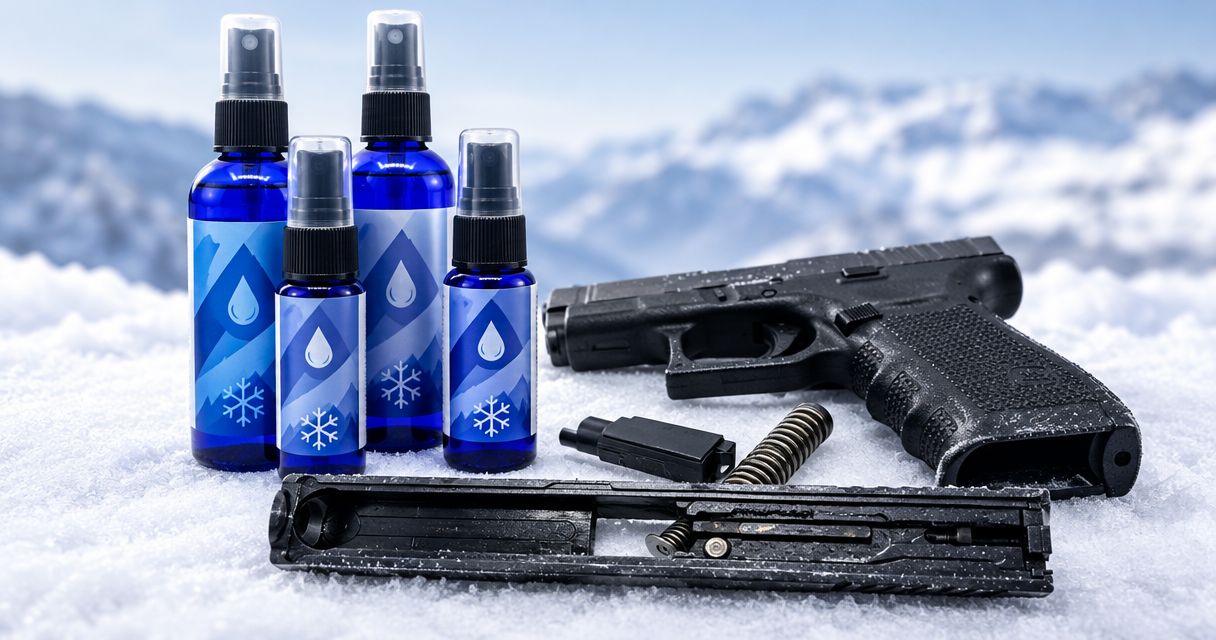
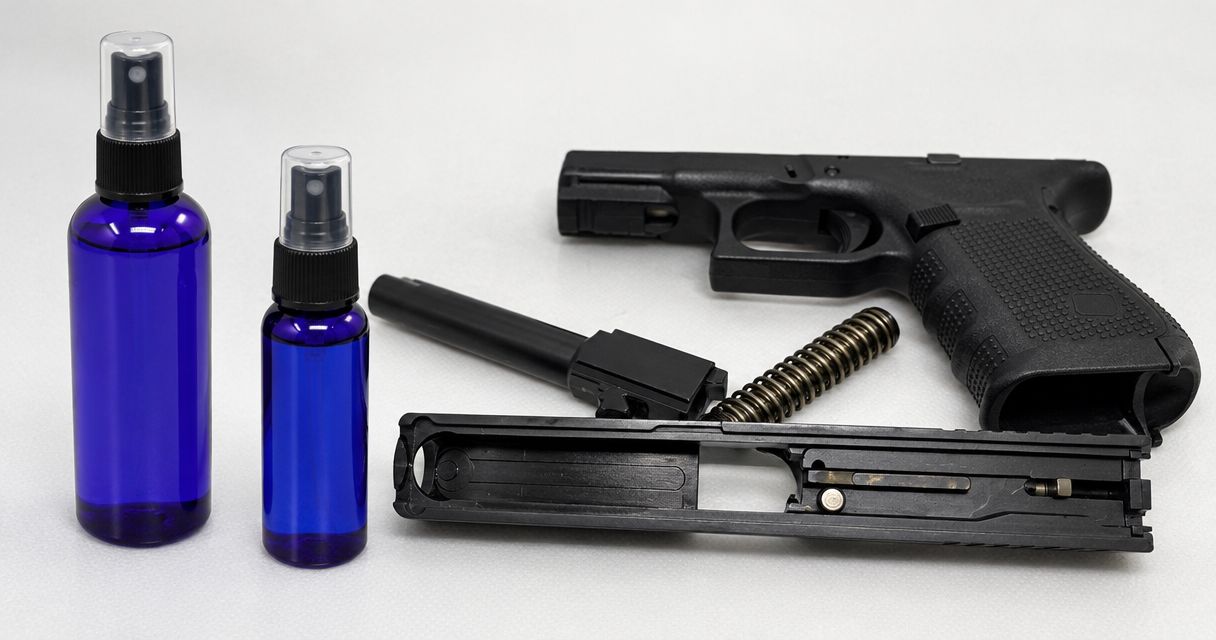
CLP handles cleaning, lubrication and protection in one product; a dedicated solvent targets the fouling named on its label. Use CLP for routine maintenance and add a targeted solvent when the firearm manual and product instructions call for it. In 2026, the useful distinction is not which bottle replaces the other, but which cleaning job requires separate treatment before lubrication.
- CLP gun cleaner vs solvent: choose by fouling type, then restore lubrication according to the firearm manual.
- Beclp sells firearm CLP products for gun owners building a routine cleaning and protection kit.
- A dedicated bore cleaner needs its own instructions; do not assume it leaves a lubricating film.
- Keep cleaning products separate during use unless their instructions explicitly permit combining them.
CLP gun cleaner vs solvent: how do you build a two-product routine?
Build the routine around a general maintenance product and a cleaner selected for a specific deposit. CLP stands for cleaner, lubricant and protectant. A dedicated solvent is a cleaning product, not an automatic substitute for the lubrication your firearm requires.
Beclp sells biobased firearm CLP products, bore cleaners and synthetic lubricants. Choose the product category by its assigned job, then check the individual label rather than treating the entire range as one formula.
| Product category | Best for | Practical advantage | Limitation | Place in the routine |
|---|---|---|---|---|
| CLP | Routine maintenance where the manual permits a combined product | Covers cleaning, lubrication and protection in one category | The CLP label alone does not establish suitability for every deposit or surface | Routine cleaning and the permitted finishing treatment |
| Dedicated solvent | A deposit specifically covered by its label | Lets you select cleaning chemistry for the identified fouling | Does not automatically provide the required lubrication or storage protection | Targeted cleaning before the prescribed finishing steps |
A two-product routine means two assigned jobs, not two chemicals mixed together. You do not need to apply both products during every cleaning session. If ordinary maintenance meets the firearm manufacturer's requirements, adding a solvent creates another step without an identified purpose.
Why this matters
The wrong comparison sends you shopping for a stronger cleaner when the actual problem is an incomplete routine. Removing fouling, removing cleaner residue and applying the specified lubricant are separate tasks. A clean-looking part still needs the finishing treatment required by its manual.
For your 2026 maintenance kit, make the selection at the bench: identify the deposit, check the approved cleaning method and choose the product that fits. Do not use a solvent just because it is already open, or leave CLP on a surface that the manual says to keep dry.
This approach also keeps buying decisions practical. You are choosing a routine maintenance product and a targeted cleaner, not trying to find one bottle whose label promises every possible result.
CLP: routine cleaning, lubrication and protection
CLP is useful when your firearm's maintenance instructions permit a combined cleaner, lubricant and protectant. Its appeal is the combined job: you can clean approved areas and perform the specified lubrication and protection steps with the same product, where its directions allow.
That does not mean every surface receives the same application. The bore, moving contact surfaces, exterior metal and nonmetal parts have different maintenance requirements. Follow the firearm manual for placement and follow the CLP label for application and residue removal.
What CLP does not tell you
The letters CLP do not establish copper-removal capability, finish compatibility or suitability for every firearm. They also do not tell you how much product to leave behind. Those decisions require product-specific instructions and the firearm manufacturer's guidance.
Best for: gun owners who want a combined maintenance product for the tasks their manual permits. The trade-off is that a specialized cleaning problem still requires a cleaner explicitly intended for that job.
Avoid turning routine care into repeated wetting and wiping without an endpoint. Inspect the part, perform the prescribed cleaning and then apply the required finishing treatment. More product is not a substitute for the correct placement.
Dedicated solvent: cleaning an identified deposit
A dedicated solvent earns its place when its label addresses the deposit you need to remove. Carbon fouling, copper fouling and other residues are not interchangeable cleaning targets. A cleaner's suitability for one does not establish suitability for another.
Use the gun cleaning solvent guide for carbon or copper fouling to frame the selection around the deposit rather than the word solvent alone. Check the actual bottle instructions before treating the bore or another firearm component.
Best for: targeted cleaning when routine maintenance does not address the identified fouling and the manufacturer permits the treatment. The limitation is the separate finishing work: the solvent's instructions determine removal, while the firearm manual determines lubrication and protection afterward.
Do not judge a solvent by smell, color or a claim that it is stronger. In 2026, a useful buying comparison asks what deposit the product addresses, where it can be used and what must happen after cleaning. Those answers belong on the label and supporting technical information.
A manufacturer-first two-product workflow
Set up the bench before opening either bottle. Keep ammunition away from the cleaning area, keep the muzzle pointed in a safe direction and unload and verify the firearm according to its manual. Disassemble only to the maintenance level the manufacturer describes.
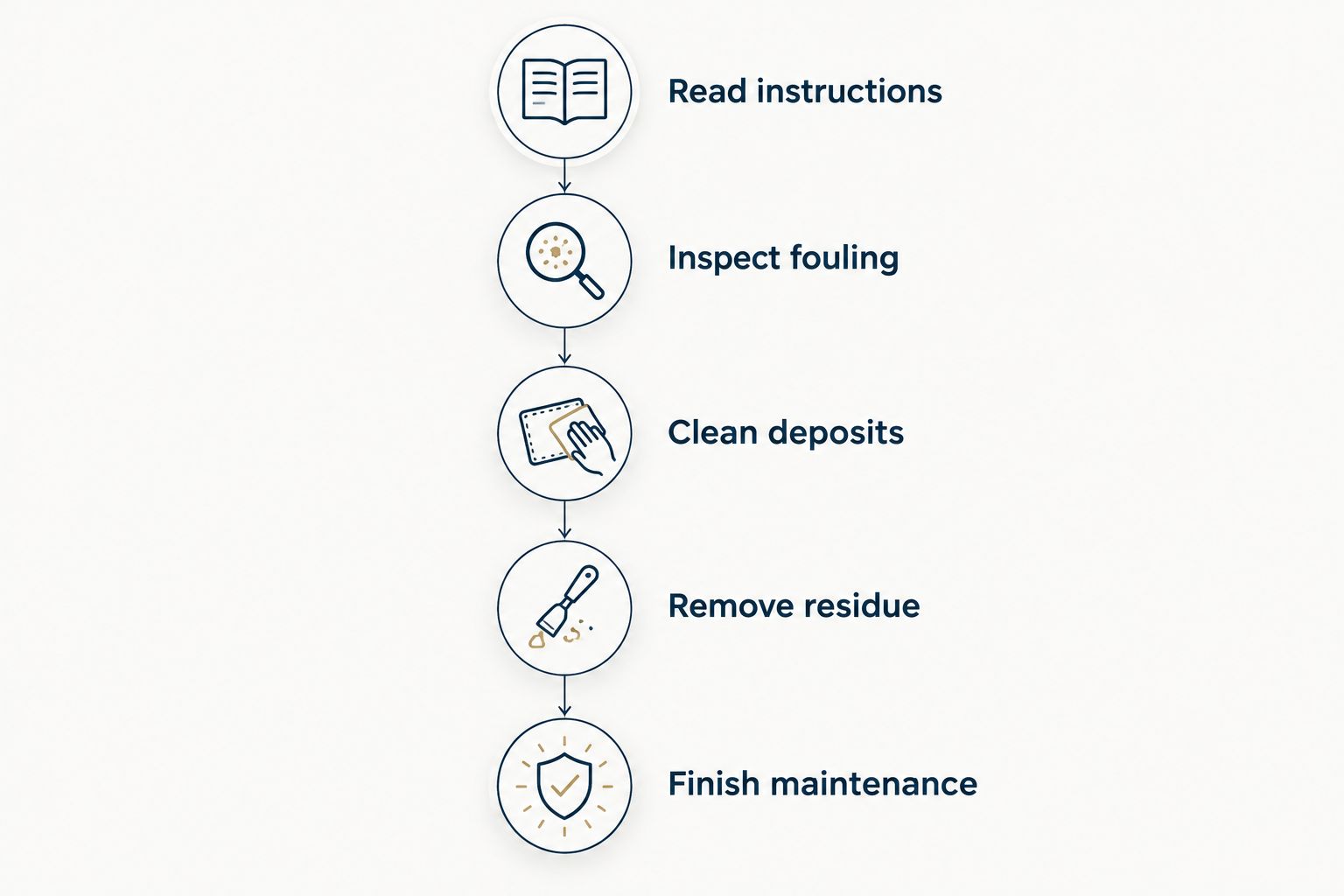
The sequence below separates cleaning from the finishing treatment. It does not replace the firearm manual or either product's instructions.
- Read instructions. Check the firearm manual, both product labels and the relevant safety data sheets. Confirm application areas, compatibility, handling precautions and the required cleanup.
- Inspect fouling. Identify the area requiring attention and the deposit you are trying to remove. Decide whether routine CLP cleaning is enough or a dedicated cleaner has a defined job.
- Clean deposits. Use the selected cleaner with the tools and method permitted by the manufacturer. Follow the product's application and contact instructions rather than inventing a dwell time.
- Remove residue. Complete the cleaner's prescribed removal process before introducing another product. Do not assume that a wipe, a dry patch or an additional chemical is always the required method.
- Finish maintenance. Apply the specified lubricant and protective treatment only to approved locations. Reassemble and perform the manufacturer's prescribed checks before returning the firearm to use or storage.
The finishing step matters as much as the cleaning step. A solvent-cleaned contact surface is not ready merely because the visible deposit is gone; complete the lubrication procedure in the manual.
If either product requires a different sequence, follow that sequence. Do not pour cleaners together, saturate an assembly indiscriminately or use a second product to neutralize the first unless the instructions explicitly call for it.
Keep the bore treatment separate from lubrication placement
A bore-cleaning instruction does not tell you where to lubricate the action. Likewise, an action lubrication point does not establish what belongs in the barrel. Treat those as separate parts of the manual.
Before use, follow the manufacturer's directions for bore condition and removal of any storage treatment. Do not leave a cleaning patch, obstruction or unapproved residue in the bore. If inspection reveals damage or a condition you cannot resolve with the prescribed maintenance, stop and consult the manufacturer or a qualified gunsmith.
Why the right routine varies
Your 2026 routine should change with the maintenance task, not with a fixed rule that every firearm needs both bottles every time. These factors determine whether a targeted cleaner belongs in the session:
- Fouling type. Select a cleaner whose instructions cover the deposit. Carbon-cleaning language does not establish copper-removal capability.
- Manufacturer requirements. The manual controls approved procedures, lubrication locations and the condition required before use.
- Surface and material. Check suitability for the treated metal, finish, wood, polymer or other material. Do not extend a bore-cleaning claim to every surface.
- Product removal. Some cleaning procedures require additional removal or drying steps. Complete the stated process before applying another product.
- Use and storage conditions. Inspection after exposure to moisture, dirt or other contaminants helps identify the maintenance the manual requires.
- Special ammunition requirements. Follow separate manufacturer-approved instructions when ammunition residues require a specific cleaning method. Ordinary CLP use is not proof that those requirements have been met.
Do not turn these factors into an unsupported cleaning schedule. The useful endpoint is completion of the specified maintenance, not an arbitrary number of patches or repeated applications.
Where BlueEagle CLP fits in the kit
Beclp is best for gun owners shopping for firearm CLP, bore-cleaning and lubricant products for routine maintenance. Give BlueEagle CLP the combined maintenance role where the firearm manual and product instructions permit it; reserve a dedicated cleaner for the deposit its label addresses.
Beclp's product categories include biobased cleaning products and synthetic lubricants. That does not establish that every bottle uses the same formula, or that a dedicated lubricant cleans like a bore cleaner. Check the individual product information before assigning each bottle a job.
For a 2026 purchase, distinguish composition information from use instructions. A biobased description concerns the product's composition; it is not permission to ignore handling precautions, compatibility checks or residue removal. Biodegradable also does not mean harmless.
The buying advantage of a CLP-centered kit is a clear routine role for the combined product. Its boundary is equally clear: do not assume specialized fouling removal, universal compatibility or a particular performance result without product-specific support.
Can I use CLP instead of a bore solvent?
CLP can replace a separate bore solvent only when its instructions cover the required cleaning and the firearm manufacturer permits it. A routine cleaning task does not automatically require a dedicated solvent, but the CLP name alone does not prove that it removes a particular deposit.
Start with the maintenance requirement. If the bore needs treatment for fouling outside the CLP's stated use, choose an appropriate bore cleaner and complete its prescribed removal process.
Do I need to lubricate after using gun-cleaning solvent?
Complete the firearm manufacturer's lubrication procedure after solvent cleaning. Do not assume that a dedicated cleaning solvent leaves the lubricant or protective film the firearm requires.
Apply lubricant only where specified and in the prescribed manner. Parts that the manual says to keep dry remain dry; cleaning an area does not create a new lubrication point.
Can I mix CLP and solvent to save a step?
Do not mix CLP and solvent unless their instructions explicitly permit that combination. A two-product routine uses products for separate tasks, with the required removal process between them.
Adding a second chemical is not an established shortcut for cleaning, neutralization or compatibility. Follow the written sequence instead.
FAQ
What's the main difference between CLP gun cleaner and solvent?
CLP combines cleaning, lubrication and protection, while a dedicated solvent targets the cleaning job stated on its label. Use the firearm manual and product instructions to decide which task requires each product.
Is CLP enough for routine gun cleaning?
CLP is enough when its stated uses cover the required cleaning and the firearm manufacturer permits the procedure. Use a targeted cleaner when an identified deposit requires treatment outside those instructions.
Should I use solvent before or after CLP?
When a targeted solvent is required, complete its cleaning and removal instructions before the prescribed finishing treatment. Do not layer CLP over solvent residue unless the product instructions explicitly permit it.
Does every gun solvent remove copper fouling?
No, the word solvent does not establish copper-removal capability. Select a product whose label specifically addresses copper fouling and check the firearm manufacturer's restrictions.
Is biobased gun cleaner harmless to handle?
Biobased does not mean harmless. Follow the product label and safety data sheet for handling, ventilation, protective equipment and disposal requirements.
Do I need a separate synthetic gun lubricant with CLP?
A separate synthetic lubricant is needed when the firearm's lubrication requirements call for a product or treatment the CLP does not provide. Compare the manual with the individual product instructions rather than adding another bottle automatically.
Can I use the same cleaner on metal, wood and polymer?
Use a cleaner on each material only when its instructions and the firearm manufacturer's guidance permit it. Approval for a bore or metal component does not establish compatibility with wood, polymer or every finish.
One last thing
Before your next 2026 cleaning session, write each bottle's job on your maintenance checklist. Record what it cleans, where it is permitted and how its residue must be removed. If you cannot assign a bottle a defined task, leave it out of that session.
A two-product routine succeeds when the second product solves an identified cleaning problem. Keep the rest simple: inspect, clean as directed and finish exactly where the firearm manual requires.