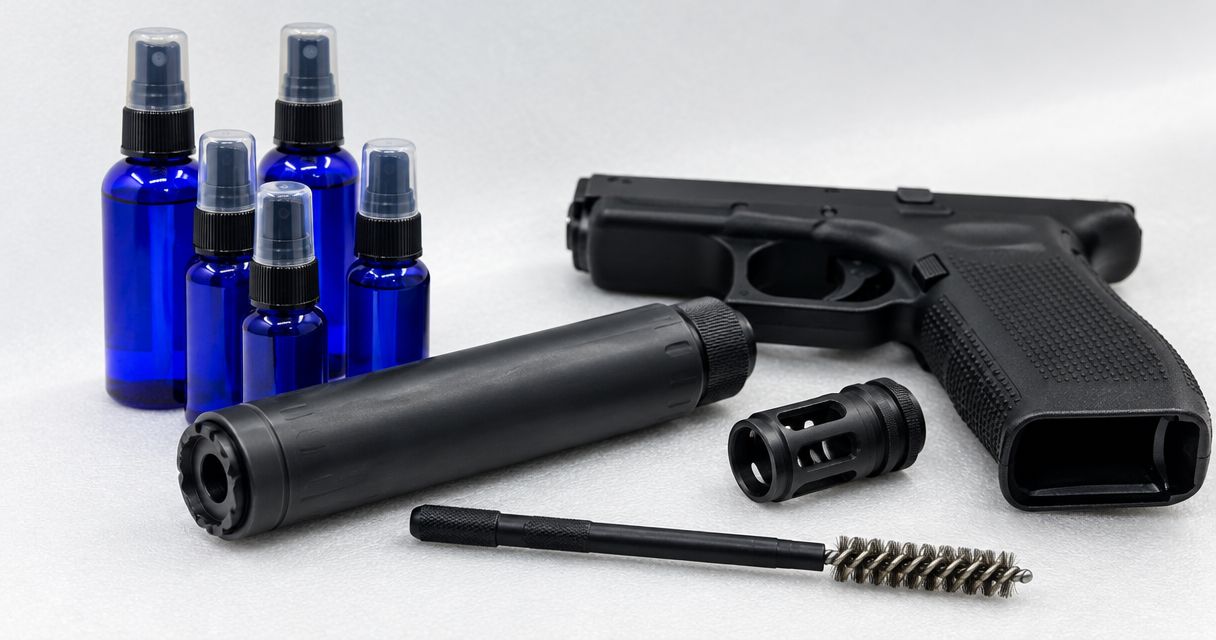
Yes, gun cleaning solvent can damage a suppressor or muzzle device when its chemistry, application method, or contact time conflicts with the manufacturer's instructions for the materials and finishes involved. A cleaner approved for your barrel is not automatically approved for suppressor internals, coatings, seals, or mounting components; check the exact device and cleaner instructions before applying it.
- Can gun cleaning solvent damage a suppressor? Yes—material compatibility and the approved cleaning method determine suitability.
- A barrel-cleaner approval does not establish compatibility with suppressor internals, finishes, seals, or mounts.
- Beclp firearm cleaners require the same product-specific compatibility checks as other gun cleaning solvents.
- Do not soak, disassemble, or ultrasonically clean a suppressor unless its manufacturer authorizes that method.
Can gun cleaning solvent damage a suppressor or muzzle device?
Yes. Match the cleaner to the exact component, not just to the word “firearm” on the bottle. A suppressor can contain different materials and finishes, and a muzzle device can include mounting surfaces with their own maintenance requirements.
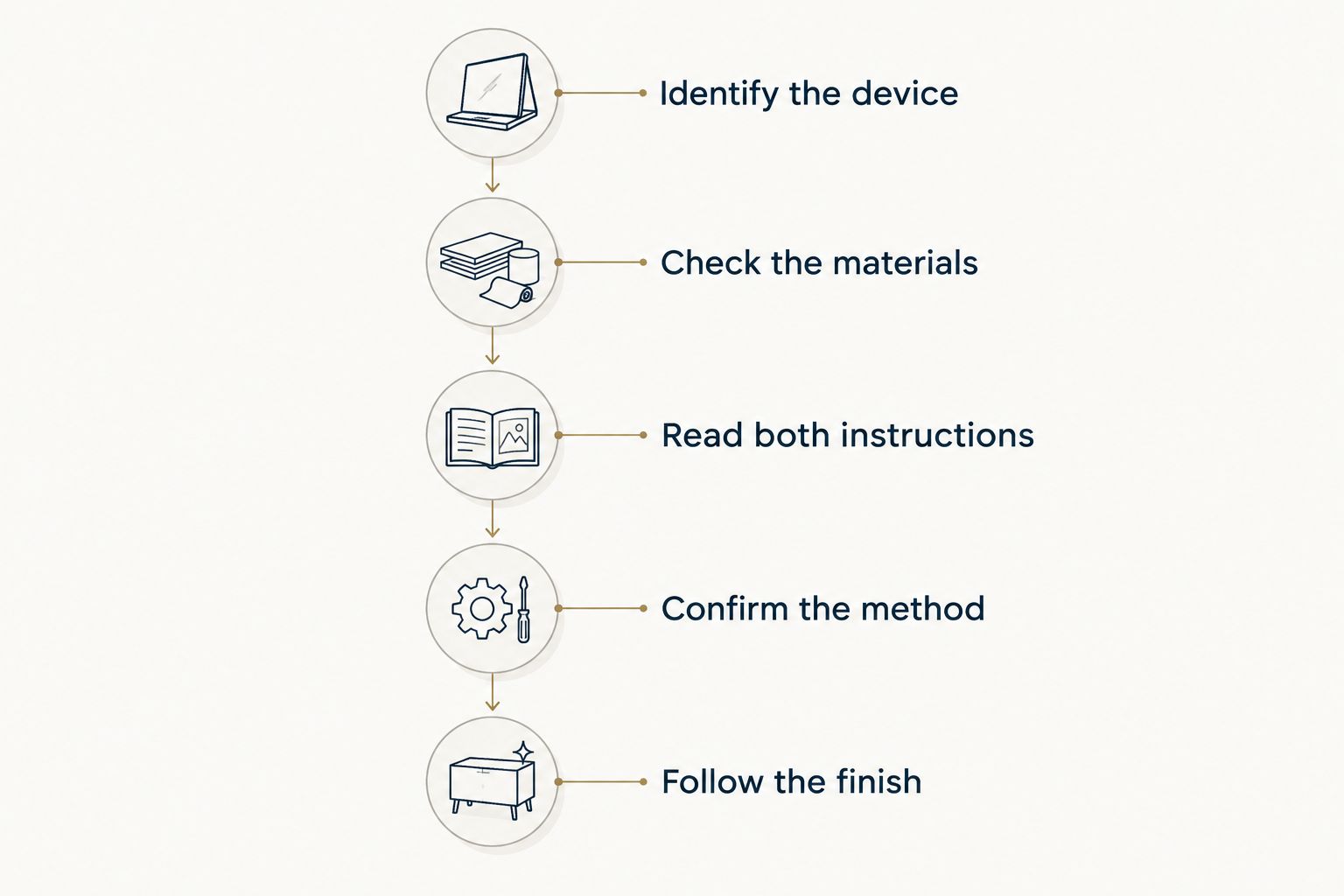
Use this sequence before opening the cleaner:
- Identify the device. Find the exact model and its current maintenance instructions. Do not substitute instructions for a similar-looking suppressor or muzzle brake.
- Check the materials. Confirm which metals, coatings, seals, and other components the cleaner will contact. Do not identify a material from its color alone.
- Read both instructions. Compare the device manufacturer's cleaning directions with the cleaner's label and technical documentation.
- Confirm the method. Look for permission to wipe, brush, immerse, or use an ultrasonic cleaner. These are different exposures, not interchangeable techniques.
- Follow the finish procedure. Complete the specified removal, drying, inspection, and any permitted lubrication before reassembly or use.
For a 2026 maintenance routine, keep the current instructions with your bench supplies. A familiar bottle and an older cleaning habit do not establish compatibility with a different device.
If you are comparing Beclp firearm cleaners, use this same sequence rather than treating a general CLP description as suppressor approval.
Why this matters
Cleaning a barrel and cleaning a suppressor are separate maintenance jobs. The barrel's instructions do not establish what you can put inside an attached suppressor, and permission to wipe a muzzle brake does not establish permission to soak its mounting assembly.
The practical problem is exposure. A cloth lets you limit where cleaner goes; immersion exposes every wetted component, including surfaces you cannot easily inspect or dry. Neither method is automatically correct—the manufacturer's approved procedure decides.
Clean the component you have, using the method its maker permits. That rule also keeps routine carbon removal from turning into unnecessary disassembly or an attempt to remove every visible stain.
Suppressor internals: approval must cover the whole assembly
A suppressor's internal construction matters as much as its outer tube. A product suitable for one exposed metal does not establish suitability for an assembled device containing other materials, joints, or coatings.
Before internal cleaning, establish whether the suppressor is user-serviceable and what maintenance the manufacturer actually calls for. Do not force apart a sealed assembly or assume that removable end components mean the entire device is intended for disassembly.
For a serviceable model, follow the specified disassembly limits and cleaning directions for each removable part. Keep component identification and reassembly instructions at the bench; similar-looking pieces are not a reason to improvise their placement.
For a sealed model, use only the maintenance procedure its manufacturer provides. If that procedure does not authorize internal solvent treatment, do not fill the suppressor as a substitute for disassembly.
A useful 2026 purchasing question is: Does the cleaner documentation support the precise internal cleaning job the suppressor maker permits? If the answer is unclear, get written guidance before proceeding.
Muzzle devices: include the finish and mounting surfaces
A muzzle brake or flash hider still requires a compatibility check. Its exposed metal, surface finish, threads, and any suppressor-mounting features do not necessarily share identical maintenance instructions.
Keep bore-cleaning runoff away from an attached device unless the procedure permits that exposure. Where the firearm and accessory instructions call for removal before cleaning, follow those directions rather than flushing solvent through the assembled system.
Do not remove a permanently attached device or disturb an installation simply to make cleaning easier. Ask the manufacturer or a qualified gunsmith when the approved maintenance procedure requires work beyond normal owner maintenance.
Mounting surfaces deserve their own check. Apply oil, grease, or anti-seize only where the manufacturer specifies it; a product that protects an exterior surface is not automatically the correct treatment for a suppressor mount.
Which cleaning method fits the job?
The best method is the least involved method that the device manufacturer approves for the maintenance required. More solvent, longer exposure, and more equipment are not substitutes for a documented procedure.
| Method | Best for | Practical advantage | Limitation |
|---|---|---|---|
| Controlled wipe | Approved accessible surfaces | Limits where cleaner is applied | Does not establish internal cleanliness |
| Approved brushing | Accessible deposits covered by the instructions | Directs mechanical cleaning at the deposit | Brush material and pressure must suit the surface |
| Authorized soaking | Components explicitly approved for immersion | Exposes the permitted part throughout the bath | Also exposes every submerged finish and feature |
| Authorized ultrasonic cleaning | Devices and parts explicitly approved for the process | Provides a prescribed equipment-based cleaning method | Requires approval for the solution and process, not just the machine |
Best for routine inspection: start by checking the accessible surfaces before choosing a cleaning method. Visible fouling alone does not tell you whether immersion or disassembly is necessary.
For your 2026 bench checklist, record the approved method beside the device model. “Gun solvent” is too broad a label to guide a suppressor-cleaning decision.
Why solvent compatibility varies
The same cleaner can face different restrictions on different components. Check these factors rather than relying on a general “safe on guns” description:
- Base material. Aluminum, steel, titanium, and other materials have different chemical compatibility requirements. Confirm the actual material rather than borrowing another owner's procedure.
- Surface treatment. Approval for a base metal does not establish approval for paint, plating, anodizing, or another finish applied over it.
- Cleaner chemistry. A carbon cleaner, copper remover, and CLP serve different cleaning or maintenance purposes. Read the exact product directions instead of treating the category names as interchangeable.
- Contact time. Follow the specified exposure limit. A short application does not establish that an overnight soak is acceptable.
- Application process. Wiping, immersion, heat, and ultrasonic agitation create different conditions. Authorization for one does not authorize the others.
- Assembly details. Seals, adhesives, joints, and enclosed spaces matter when present. Confirm what the complete assembly permits, not only what its outer housing permits.
If the instructions specify a contact limit, use a timer and complete the required removal procedure. The guide to gun cleaning solvent dwell time explains why leaving cleaner in place longer is not a default improvement.
Does biobased CLP mean it is safe for suppressors?
No. Biobased describes the source of some product ingredients; it does not establish compatibility with a suppressor's materials, coatings, or mounting system. Biodegradability likewise does not establish that a cleaner is harmless to you, the device, or the environment during use and disposal.
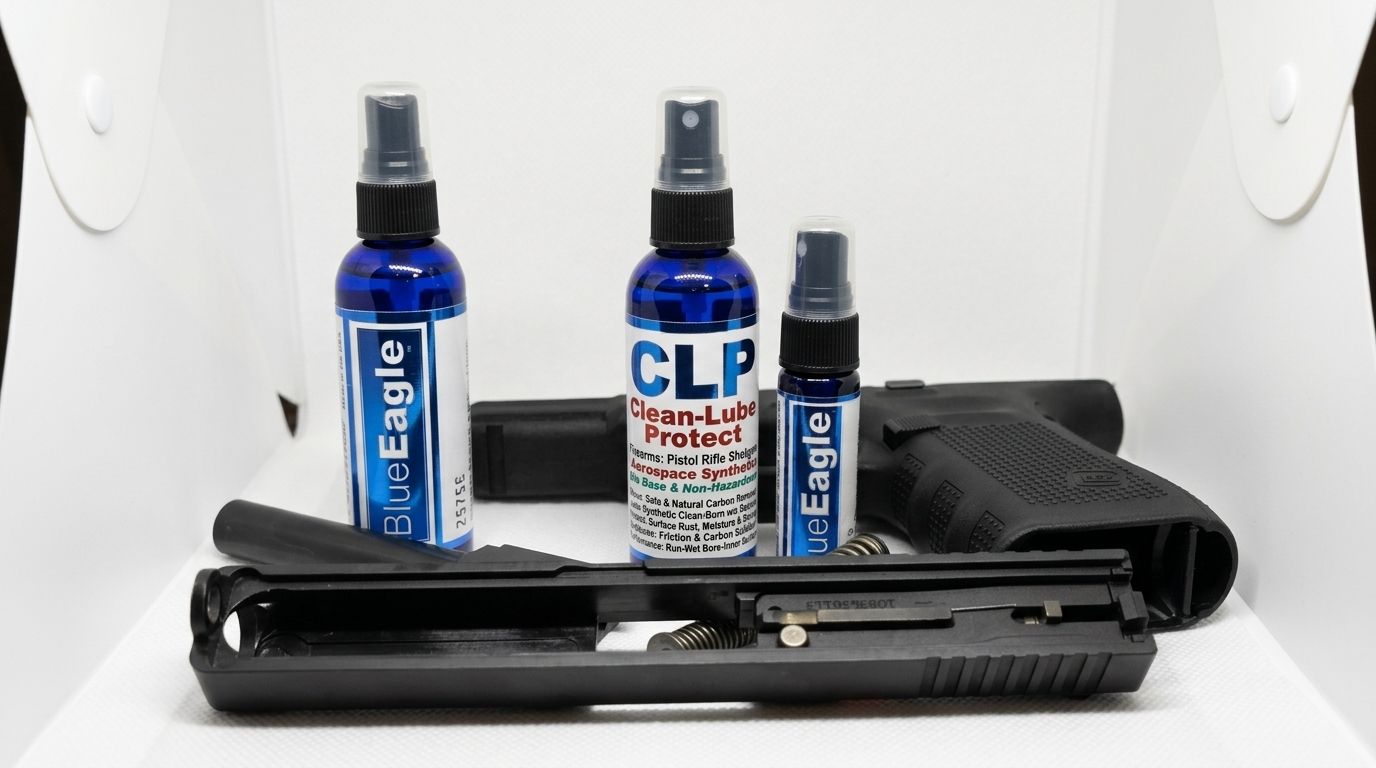
Beclp CLP products are best for gun owners seeking biobased firearm maintenance products who will verify approval for each application. BlueEagle CLP belongs in this buying decision as a cleaner, lubricant, and protectant—not as an assumed substitute for a suppressor-specific maintenance instruction.
The useful distinction is between intended roles and verified permission. A CLP's combined maintenance roles can suit a manufacturer-approved routine, but that does not establish approval for immersion, internal suppressor cleaning, or every finish. A dedicated bore cleaner or synthetic lubricant needs its own check; do not assume the products share a formula.
For a 2026 purchase, compare the exact product label and technical documentation with the exact device manual. A safety data sheet helps you understand hazards and handling, but it is not a complete compatibility certificate for every firearm accessory.
What should you do if solvent is already on the device?
Stop adding cleaner and stop escalating the process. Keep the firearm unloaded, remove ammunition from the work area, allow hot components to cool, and handle the cleaner according to its label and safety data sheet.
Identify the cleaner, the exposed component, the application method, and the approximate exposure time. Then follow the manufacturer's directions for removing that cleaner; do not add a second chemical to neutralize it unless the instructions explicitly require that step.
Inspect accessible surfaces after the approved removal and drying procedure. A color change or residue does not, by itself, tell you whether the issue is fouling, finish alteration, or another condition.
If you suspect damage or cannot verify complete removal, do not fire the firearm to burn off the solvent. Contact the device manufacturer for inspection guidance, particularly when exposure involved internal spaces or mounting features.
Can I leave solvent in a suppressor overnight?
No—not unless the suppressor manufacturer and cleaner instructions authorize that exposure. Overnight soaking is a specific procedure, not an extension of a quick wipe.
Use the specified contact time and finishing steps. If neither source provides an approved soaking procedure, ask before immersing the device rather than inventing a duration.
Can I use bore cleaner without removing the suppressor?
Only when the firearm, suppressor, and cleaner instructions permit that cleaning arrangement. Do not assume that permission to fire with the suppressor attached also permits bore solvent to drain through it.
For your 2026 routine, settle this question before wetting a patch. Follow the prescribed removal procedure where removal is required, and do not disturb components the manufacturer says to leave installed.
Should I oil a suppressor after cleaning it?
Only apply lubricant or protectant where the suppressor manufacturer specifies it. An instruction to protect an exterior surface does not authorize coating the baffles, bore path, or mounting interfaces.
Use the named product type and amount when provided. Do not transfer a bolt-lubrication routine to a suppressor simply because the same bottle is on the bench.
FAQ
Can gun cleaning solvent damage a suppressor even if it is safe for my barrel?
Yes. Barrel compatibility does not establish compatibility with a suppressor's internal materials, finishes, seals, or mounting components. Check the suppressor instructions separately.
Is a biobased gun cleaner automatically safe for suppressors?
No. Biobased ingredient sourcing does not establish suppressor compatibility or harmlessness. Follow the exact cleaner label and device manufacturer's maintenance instructions.
Can I soak my whole suppressor in gun cleaner?
Only if the suppressor manufacturer authorizes whole-device immersion with that cleaner and procedure. Approval to wipe an exterior surface is not approval to soak the assembly.
Can I put a suppressor in an ultrasonic cleaner?
Only if its manufacturer approves ultrasonic cleaning for that device and the specified solution and process. Permission to use a solvent by hand does not establish ultrasonic compatibility.
Will copper remover damage a muzzle brake?
A copper remover can damage an incompatible material or finish. Confirm the exact muzzle brake's materials and finish against the cleaner instructions before applying it.
Should I use oil on suppressor mounting threads?
Use oil on suppressor mounting threads only where the manufacturer specifies it. Follow the prescribed mounting-surface preparation rather than assuming oil or anti-seize belongs there.
Can I shoot after solvent gets inside my suppressor?
Do not fire to remove trapped solvent. Complete the manufacturer's approved cleaning and drying procedure, and obtain guidance if you cannot verify removal or suspect damage.
One last thing
A clean-looking surface is not a compatibility test. An exterior wipe cannot validate prolonged internal exposure, and an unchanged finish does not prove that every enclosed component received the correct treatment.
Before your next cleaning session, write the device model, approved cleaner, permitted method, and finishing steps on a bench card. Apply that same discipline to Beclp firearm cleaners: choose the product for the documented job, not the broadest claim on the shelf.