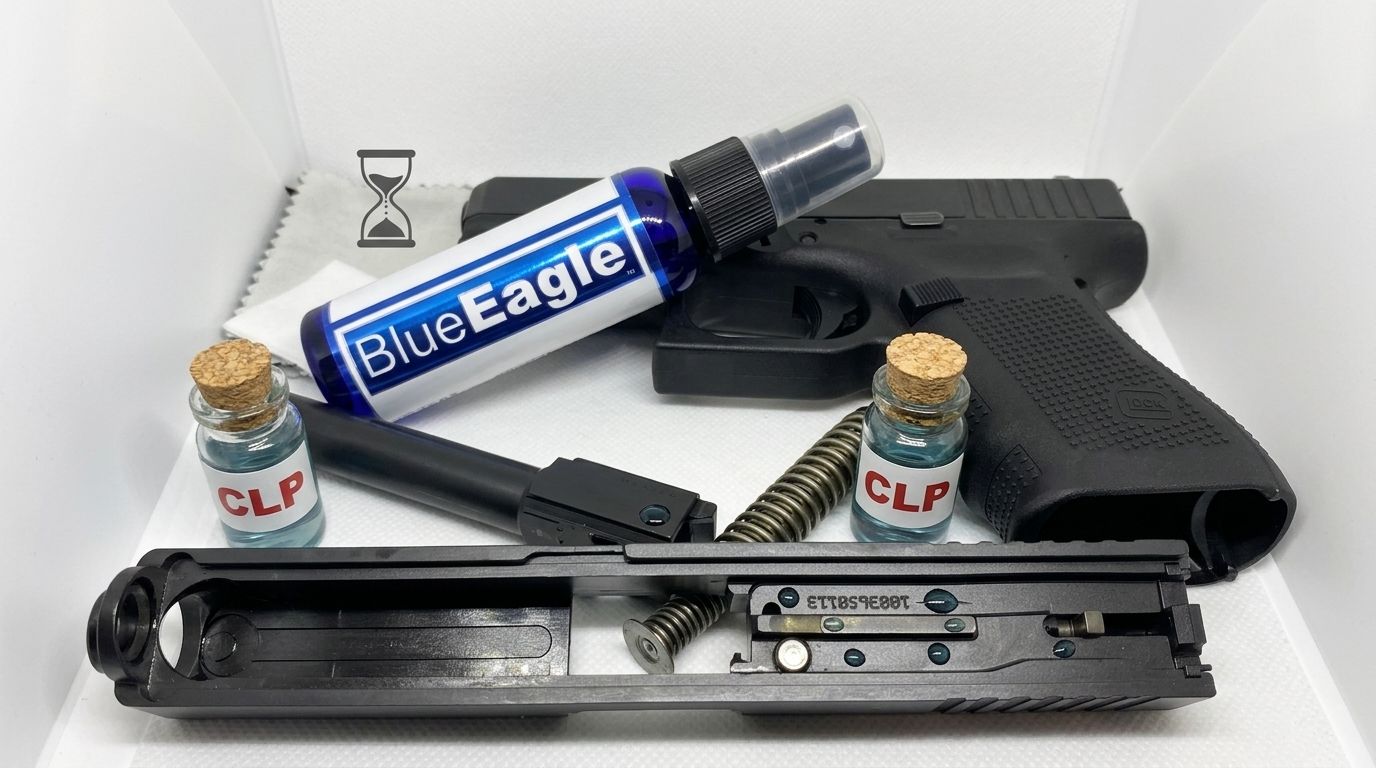
Wipe gun cleaning solvent off at the interval specified on its label, provided your firearm manufacturer permits that product and procedure. Gun cleaning solvent dwell time has no universal minute count: a cleaner’s contact-time limit is not permission to soak every firearm surface, and cleaning residue is not automatically the lubricant you should leave behind.
- Gun cleaning solvent dwell time follows the product label and firearm instructions, not a universal timer.
- Wipe or patch out cleaner as directed; do not extend contact time to chase stubborn fouling.
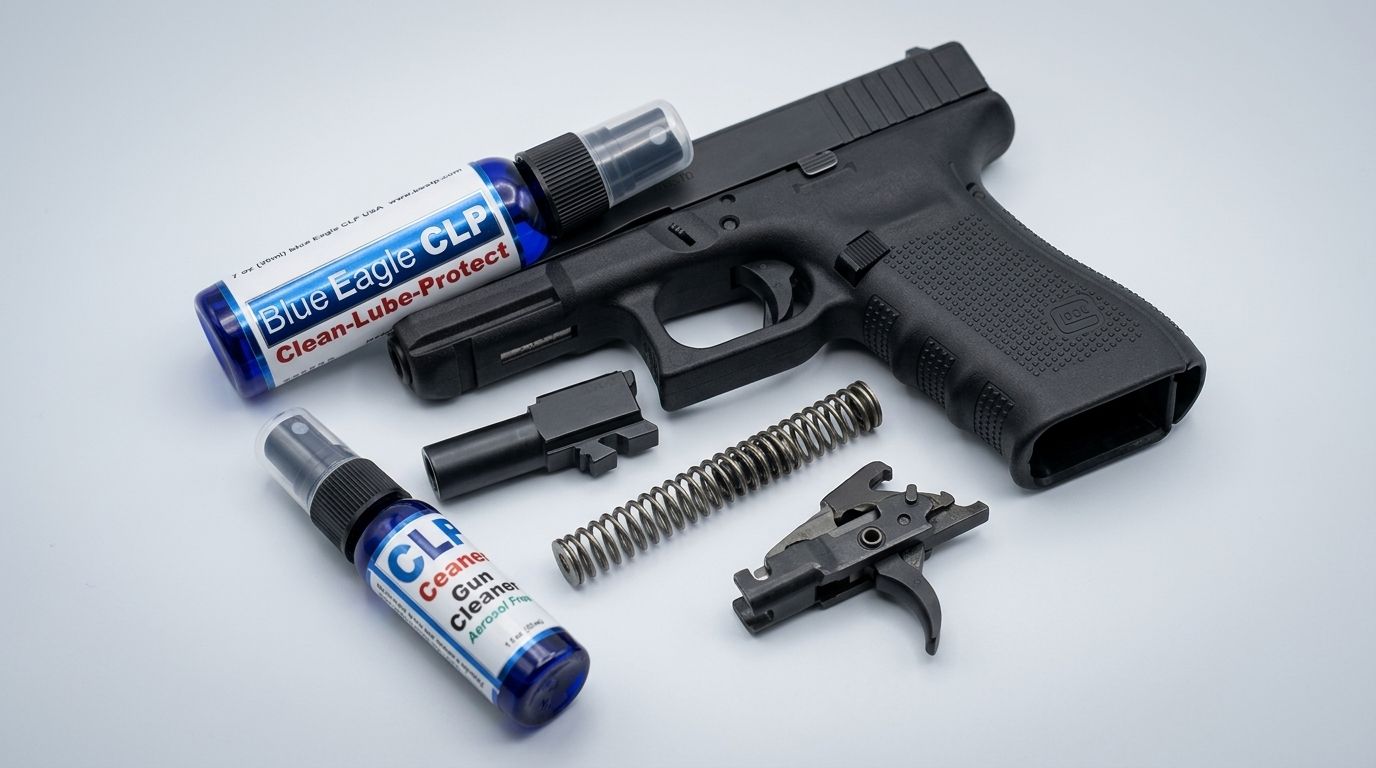
- Beclp sells BlueEagle CLP for buyers seeking a combined firearm cleaner, lubricant and protectant.
- Bore cleaner and gun lubricant serve different jobs; check their separate application and removal instructions.
Why this matters
A timer answers only part of the cleaning question. You also need to know which surface the cleaner can contact, what fouling it addresses, and how its instructions tell you to remove it.
For your 2026 bench routine, choose the cleaner before choosing the dwell time. Start with the distinction between gun cleaning solvent for carbon or copper fouling, then check the actual product label against your firearm manual.
Leaving a cleaner longer is not a substitute for choosing the correct cleaner. Neither is wiping immediately a substitute for following a required contact period.
Gun cleaning solvent dwell time: when should you wipe it off?
Wipe the solvent off when its instructions direct you to remove it, without exceeding any stated contact limit. If the firearm manufacturer gives a stricter restriction, follow that restriction; if the instructions conflict, obtain clarification before using the combination.
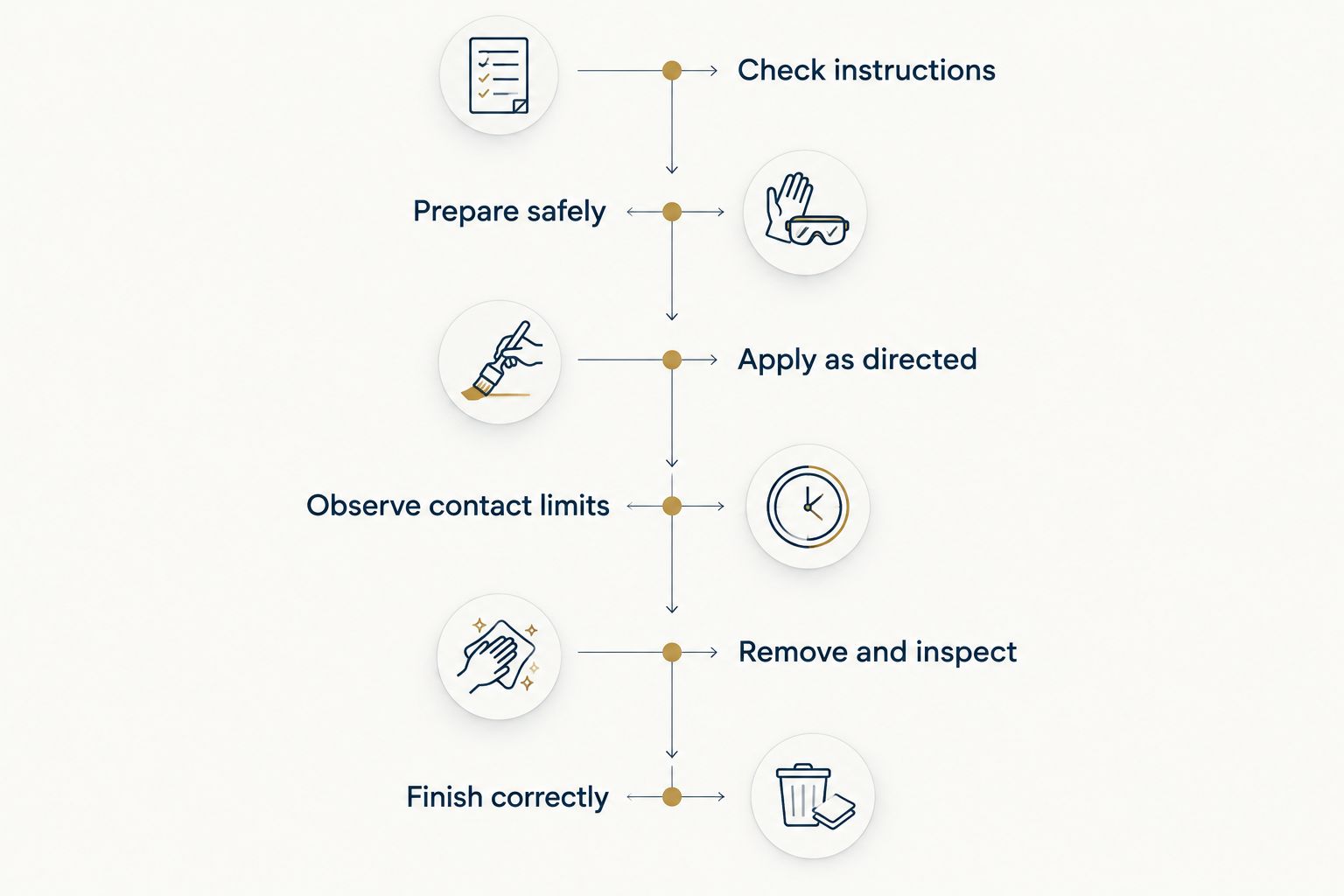
Use this sequence rather than borrowing a soak time from another bottle:
- Check instructions. Read the cleaner label and the firearm’s maintenance instructions before applying anything. Confirm the intended surface, removal method, and any restrictions on contact time.
- Prepare safely. Unload the firearm according to its manual, verify its condition, and keep ammunition away from the cleaning area. Follow the cleaner’s ventilation, handling, and protective-equipment directions.
- Apply as directed. Use the amount and applicator specified for the task. Do not substitute immersion for a wipe-on application or let cleaner reach parts the instructions exclude.
- Observe contact limits. Start timing at application when the product specifies a timed interval. Do not restart that interval merely because you applied more cleaner.
- Remove and inspect. Wipe, patch, rinse, or otherwise remove the product exactly as directed. Inspect the surface before deciding whether another permitted cleaning cycle is needed.
- Finish correctly. Complete the firearm manufacturer’s drying, lubrication, inspection, and reassembly steps. Removing cleaner and applying lubricant are separate decisions, even when a product combines functions.
Keep the bottle within reach while you work. A remembered instruction from a different cleaner is not a reliable basis for the product on your bench.
Dedicated solvent: remove it as its instructions require
A dedicated solvent belongs in the routine when its stated cleaning purpose matches the fouling and the firearm manufacturer permits its use. Its cleaning instructions determine the contact period; the word solvent alone does not.
The benefit is a defined cleaning task. The limitation is that you cannot assume the product also supplies the final lubrication or corrosion protection your firearm requires.
Pay attention to the removal verb. Instructions to wipe, patch dry, rinse, or follow with another treatment describe different processes; a dry cloth is not automatically an acceptable substitute for all of them.
For a 2026 cleaning checklist, record both the contact instruction and the removal instruction. A note that says only how long to wait leaves the job unfinished.
CLP: separate cleaning residue from the intended protective film
CLP means cleaner, lubricant and protectant. That combined purpose does not mean you should leave all the liquid and loosened fouling where you applied it.
Follow the particular CLP’s cleaning directions, remove contamination as instructed, and leave or apply a film only where the firearm manufacturer permits it. Do not assume instructions for a dedicated bore solvent describe how to finish with CLP.
Beclp’s BlueEagle CLP is best suited to buyers seeking a combined firearm cleaner, lubricant and protectant. The buying advantage is the combined purpose; the limitation is that the CLP name alone establishes neither its dwell time nor its suitability for every material or deposit.
Beclp also sells bore cleaners and synthetic lubricants. Treat those as distinct products: biobased cleaning and synthetic lubrication do not establish an identical formula or common contact-time instruction across the range.
Which maintenance product fits the job?
Choose by the task first, then follow that product’s directions. These categories are not interchangeable shortcuts to the same dwell time.
| Product category | Best for | Useful role | Limit to respect |
|---|---|---|---|
| Dedicated cleaning solvent | A cleaning task named on its label | Addresses the specified fouling | Does not automatically replace final lubrication or protection |
| Rifle bore cleaner | Bore maintenance covered by its directions | Provides a bore-focused cleaning procedure | Bore approval does not establish approval for stocks, finishes, or other parts |
| CLP | A routine calling for combined cleaning, lubrication, and protection | Combines maintenance functions | Does not establish a universal soak time or all-material compatibility |
| Dedicated lubricant | Approved moving-part lubrication after cleaning | Supplies lubricant at specified points | Is not a substitute for a cleaner unless its instructions state that use |
Buy for the job the label actually describes. A product category can narrow your choice, but it cannot supply the missing application instructions.
Why gun cleaning solvent dwell time varies
The useful differences are the ones identified in the cleaner’s directions and the firearm manual. Do not build a timing rule around an unsupported assumption about strength, smell, or product color.
- Product formulation. Different cleaners have different instructions. A contact time from another formula does not transfer simply because both bottles say gun cleaner.
- Intended fouling. Carbon removal and copper-fouling removal are different cleaning purposes. Confirm that the label addresses the deposit before extending the cleaning process.
- Contact surface. A bore, exterior finish, stock, grip, and seal are not interchangeable compatibility checks. Approval for one surface does not establish approval for the others.
- Application method. Patching a bore, wiping a part, and immersing an assembly are different procedures. Use only the method the relevant instructions permit.
- Required finishing steps. Removal, drying, lubrication, and protection requirements determine when cleaning is complete. A contact interval alone does not cover those steps.
When updating your routine in 2026, keep these factors attached to the exact product you use. Do not turn a successful cleaning session into a general rule for every cleaner in the cabinet.
What if the label gives a range instead of a single time?
Stay within the stated range and follow the conditions attached to it. A range is not an instruction to choose its longest interval for every job.
Read the surrounding directions for differences in fouling, application, or surface restrictions. If the label provides a maximum, treat it as a ceiling—not a target you must reach to obtain a clean surface.
If the directions do not explain how to choose within the range, ask the cleaner manufacturer. Do not fill that gap with a contact time taken from a forum, another formula, or an unrelated firearm.
What if the solvent label gives no dwell time?
Do not invent a soak time when the label gives none. First check whether the directions describe an apply-and-wipe process rather than a timed treatment.
Read the product’s current technical directions for application details. A safety data sheet supplies hazard and handling information, but it is not automatically a complete firearm-cleaning procedure.
If the application instructions remain unclear, ask the product manufacturer before leaving the cleaner on the firearm. For a 2026 bench reference, save the directions for the exact product rather than a generic timing chart.
Can you leave gun cleaning solvent on overnight?
Do not leave gun cleaning solvent on overnight unless the product directions and firearm manufacturer permit that procedure. An overnight soak is a separate cleaning method, not a harmless extension of ordinary wiping or patching.
This distinction matters when an assembly contains several materials. Permission to clean a metal bore does not establish permission to immerse an assembled firearm or expose nearby finishes for the same period.
If you cannot complete the procedure within the stated instructions, choose another time to start. Do not apply cleaner and leave the unfinished job unattended as a substitute for a defined process.
What should you do if fouling remains after wiping?
Reassess the cleaning method before increasing the contact time. Check that the cleaner addresses the fouling, the applicator is appropriate, and another cleaning cycle is permitted.
A dirty patch shows that material transferred to the patch. It does not, by itself, tell you how much fouling remains or authorize a longer soak.
Use these checks before continuing:
- Confirm the firearm manual’s cleaning procedure for the affected part.
- Check the cleaner’s directions for repeat applications and any total-contact restriction.
- Use only approved brushes, patches, and other cleaning tools.
- Stop if you see an unexpected surface change; seek manufacturer guidance before adding another chemical.
Do not mix cleaners or layer a second product over residue unless the manufacturers explicitly direct that combination. Finish the first product’s removal process before considering a different treatment.
What belongs in your bench notes?
A useful 2026 maintenance note records the product, the firearm or part, and the instructions you followed. Write down any stated contact limit and required removal method without turning them into rules for other products.
Keep observations separate from instructions. Visible fouling remained after the directed procedure is an observation; leave it twice as long next time is an unsupported change to the procedure.
You can also record where the firearm manual calls for lubricant after cleaning. That keeps the final lubrication step from becoming an indiscriminate coat over every surface you just cleaned.
FAQ
How long should I let gun cleaning solvent sit?
Let gun cleaning solvent sit only for the contact period specified in its directions and permitted by your firearm manufacturer. There is no universal minute count that applies to every cleaner, surface, and cleaning method.
Should I wipe gun cleaning solvent off immediately?
Wipe gun cleaning solvent off immediately only when its instructions call for that procedure. If the product specifies a contact period, follow that period without exceeding any applicable limit.
Can I let gun cleaning solvent dry on the firearm?
Do not treat drying on the firearm as an approved removal method unless the product directions specify it. Complete the instructed wiping, patching, rinsing, or other removal process.
Does CLP need to be wiped off after cleaning?
Follow the specific CLP's directions for removing loosened contamination and leaving or applying a protective film. A combined cleaner, lubricant and protectant does not mean every application should remain untouched.
Does a biobased gun cleaner allow a longer soak?
A biobased description does not establish a longer permitted soak time or make a cleaner harmless. Use the product label, safety data sheet, and firearm manufacturer's compatibility and maintenance instructions.
Can I use the same dwell time for bore cleaner and gun oil?
Do not transfer a bore cleaner's dwell time to gun oil. Cleaning and lubrication are different tasks, and each product requires its own application instructions.
Where should I find BlueEagle CLP dwell-time instructions?
Check the label and current product instructions for the exact BlueEagle CLP product from Beclp. Use those directions alongside your firearm manufacturer's maintenance instructions rather than borrowing timing from another formula.
One last thing
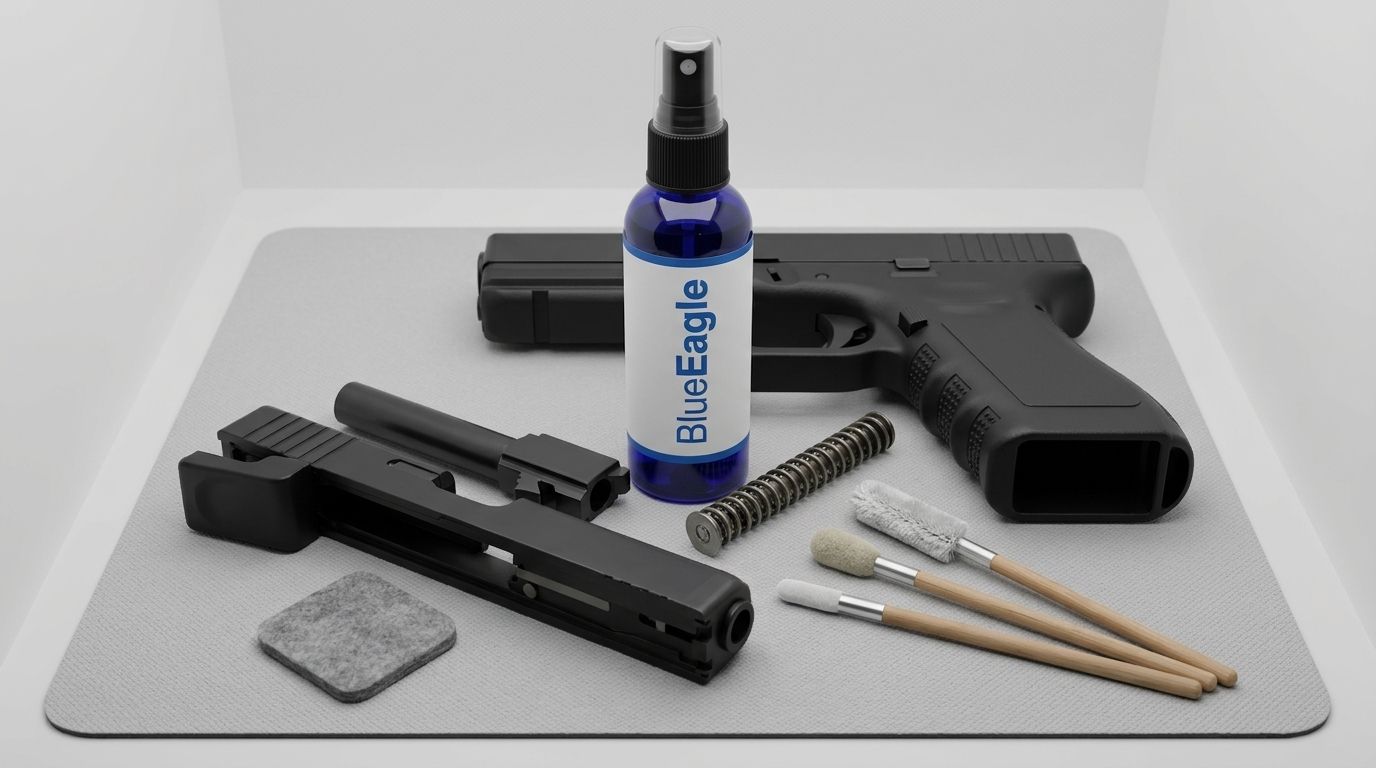
Decide how you will remove the cleaner before you apply it. Have the required patches, cloths, or other specified supplies ready so a missing item does not turn a directed cleaning interval into an improvised soak.
The timer controls contact. It does not tell you whether the firearm is ready for storage or use; that requires completing the manufacturer’s remaining maintenance and inspection steps.