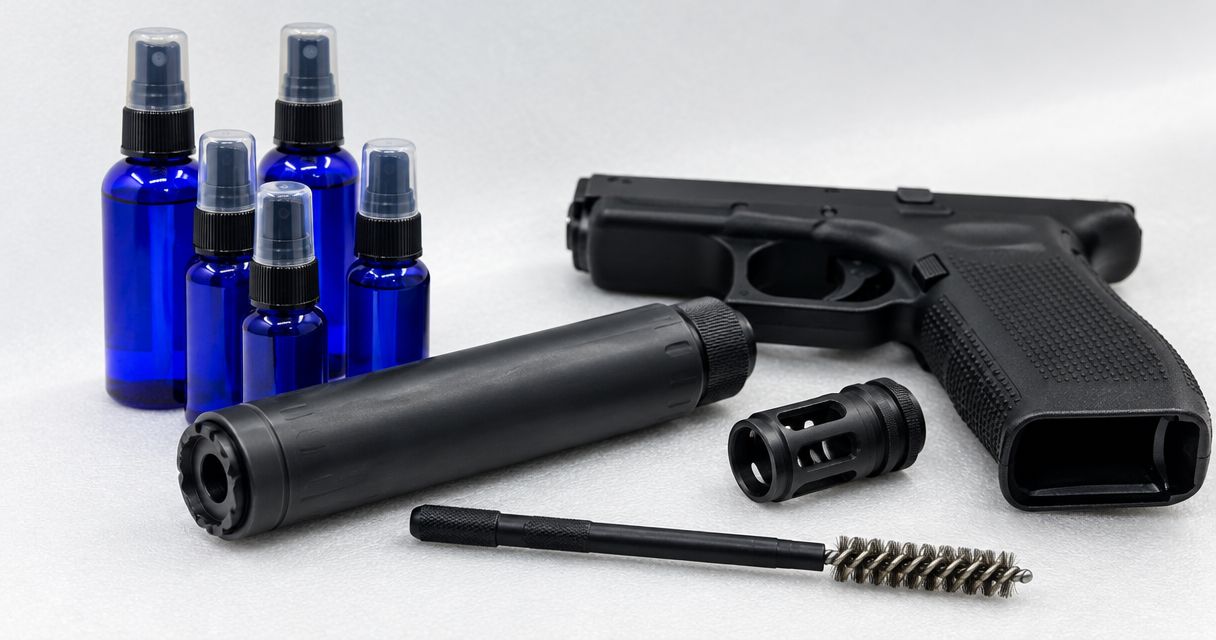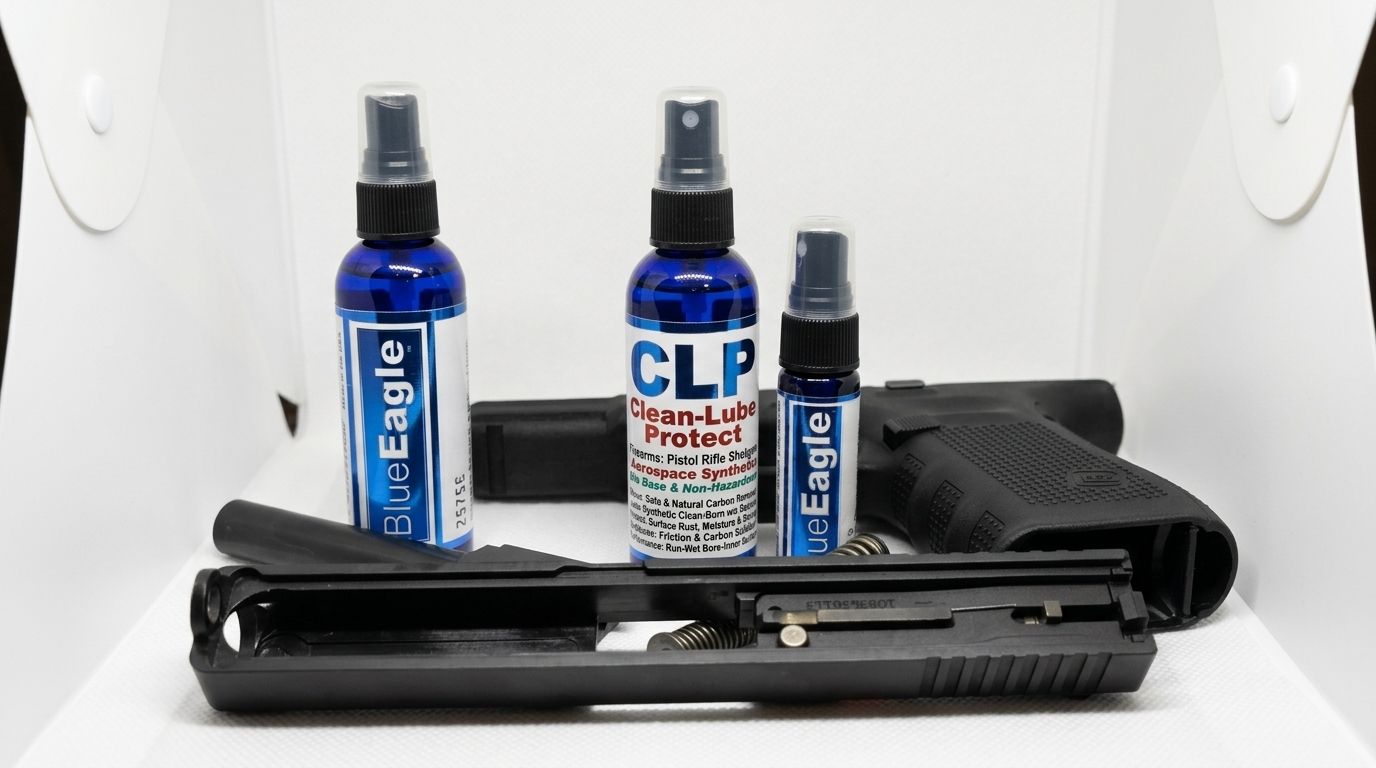
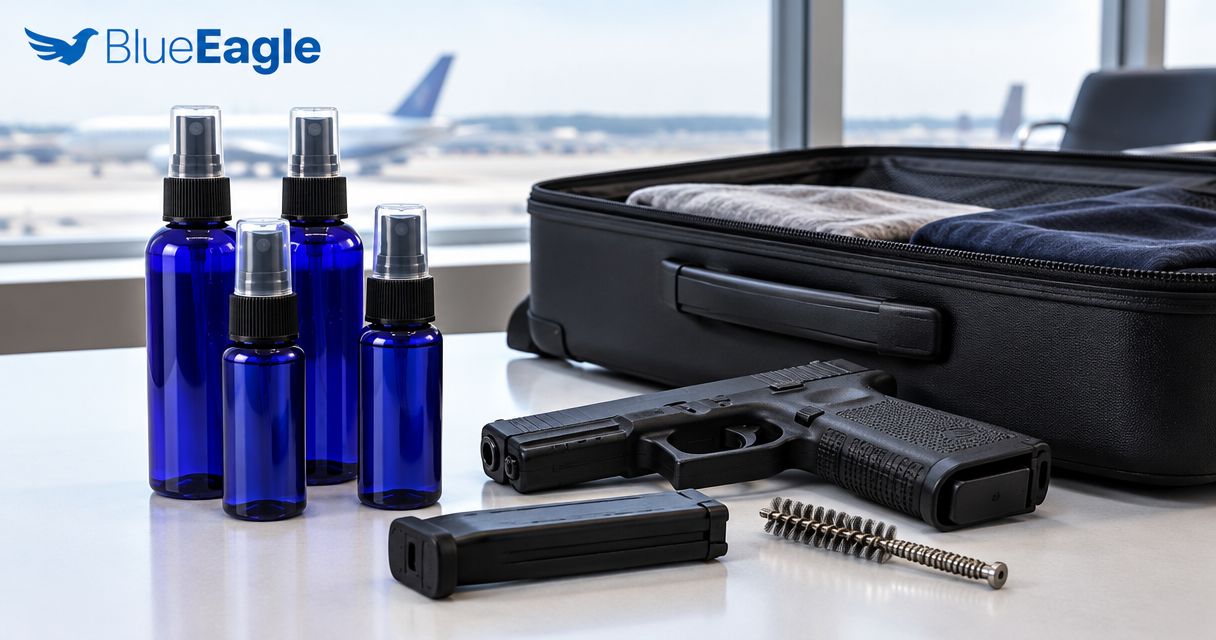
You can fly with CLP gun cleaner in checked luggage only if the exact formula and container meet passenger-aircraft hazardous-material rules and your airline accepts them. Flammable cleaning liquids are prohibited in passenger baggage; a nonflammable label, small bottle, or checked firearm does not establish permission for a particular cleaner.
- Can you fly with CLP gun cleaner? Check the exact product’s hazardous-material classification and airline baggage rules.
- TSA liquid-size rules do not make a prohibited gun-cleaning solvent acceptable in checked luggage.
- BlueEagle CLP requires product-specific review; biobased ingredients do not establish airline acceptance.
- If you cannot confirm permission, leave the cleaner home and arrange firearm maintenance at your destination.
Can you fly with CLP gun cleaner in checked luggage?
Yes for an eligible product accepted by the airline; no for a prohibited hazardous material. CLP is a maintenance category, not an air-transport classification. Cleaners, lubricants, and protectants do not all share the same ingredients, hazards, or packaging.
For US passenger travel in 2026, check the TSA’s baggage guidance, the FAA’s PackSafe hazardous-material guidance, and your operating airline’s dangerous-goods policy. These sources address different parts of the decision. A security-screening allowance does not override a hazardous-material prohibition.
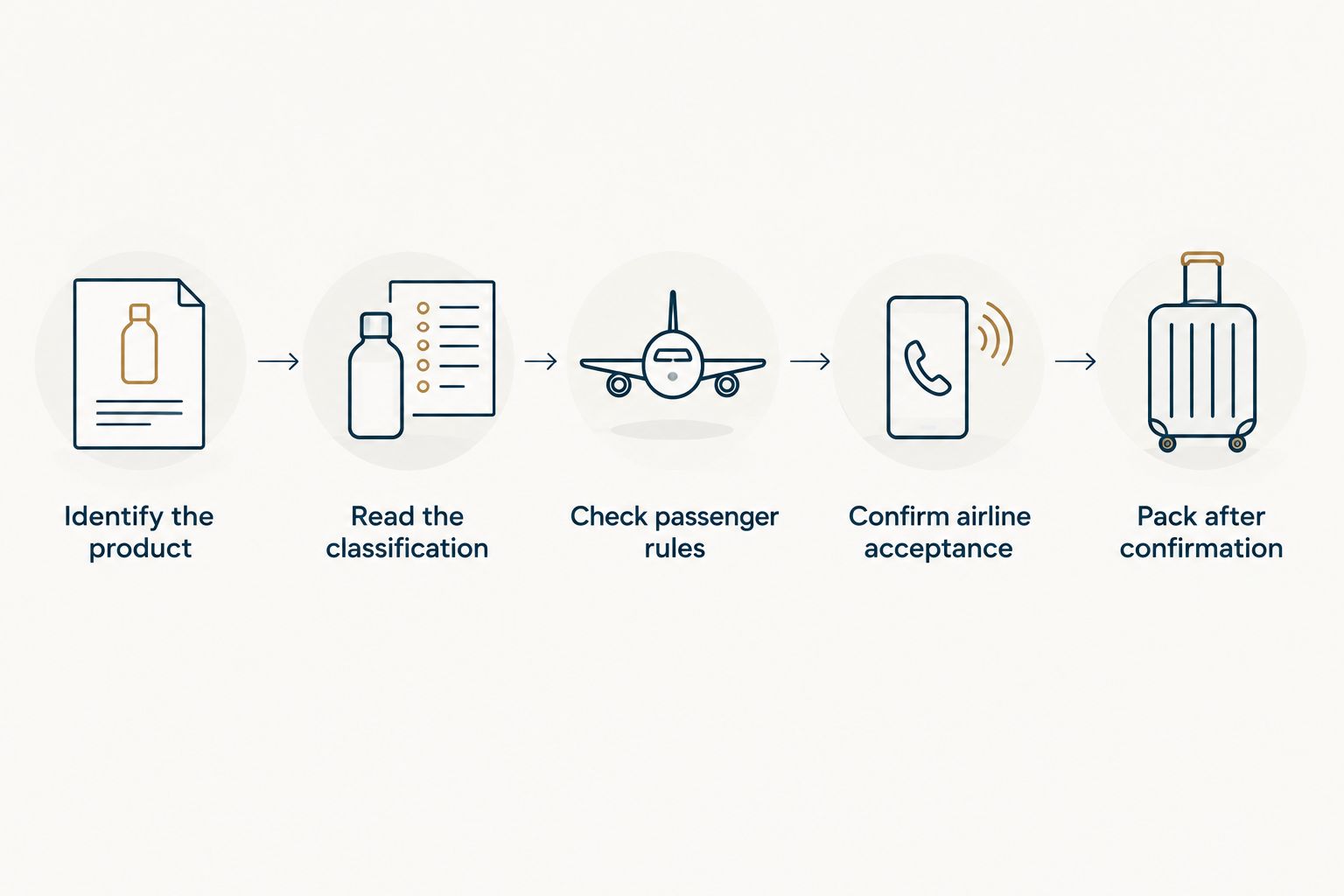
Use this sequence before packing:
- Identify the product. Match the bottle’s full product name and container type to its current safety data sheet, or SDS.
- Read the classification. Review the SDS hazard information, physical properties, and transport information together.
- Check passenger rules. Determine whether the product is prohibited or fits a specific passenger-baggage exception.
- Confirm airline acceptance. Give the airline the exact product details, including whether it is an aerosol.
- Pack only after confirmation. Follow the applicable closure, quantity, and packaging requirements.
The guide to checking a gun cleaner’s safety data sheet explains why a reassuring front label is not enough. Keep the matching document available when asking about your cleaner.
Why this matters
A checked suitcase is not a general-purpose shipping container for chemicals. Passenger aircraft have restrictions on flammable liquids, compressed gases, and other hazardous materials, including materials packed alongside sporting equipment.
For your 2026 trip, settle the cleaner question before loading the range bag. Discovering a prohibited bottle at check-in creates a problem that better leak protection cannot solve.
The distinction also matters when traveling with a firearm. The rules for declaring and securing an unloaded firearm do not grant permission to carry the cleaning chemicals used on it. Treat the firearm, ammunition, and maintenance products as separate baggage questions.
Which CLP containers need different checks?
The container matters, but it does not replace the formula’s classification. A pump bottle removes the compressed-gas question; it does not remove a flammable-liquid hazard.
| Product or container | Best fit for this check | What it establishes | What it does not establish |
|---|---|---|---|
| Non-aerosol CLP bottle | Checking liquid hazards | No aerosol propellant needs assessment | The liquid is nonhazardous or airline-accepted |
| Pressurized CLP aerosol | Checking liquid and gas hazards | Aerosol rules must also be considered | A nonflammable spray automatically qualifies for baggage |
| Cleaner labeled as flammable | Identifying a prohibited cleaning liquid | Flammable cleaning liquids cannot travel in passenger baggage | A smaller bottle creates an exception |
| Separate synthetic lubricant | Reviewing a different maintenance formula | The lubricant needs its own product-specific assessment | Approval of another product covers this bottle |
Do not transfer approval between products. A bore cleaner, a CLP, and a dedicated lubricant can require different decisions even when they come from the same supplier.
Non-aerosol bottles: assess the liquid itself
A screw-cap or pump bottle avoids the pressure-related questions attached to an aerosol. That is useful information, but it answers only part of the problem.
Read the hazard classification and transport information for the liquid inside. Do not assume an oil-like appearance, mild odor, or lack of a flame symbol establishes passenger-baggage eligibility. If the documentation leaves the classification unclear, ask the manufacturer for clarification before contacting the airline.
Aerosol cans: assess the contents and propellant
A pressurized cleaner needs review as an aerosol, not merely as a liquid. Both the product’s classification and the applicable passenger-baggage exception matter.
FAA guidance distinguishes permitted medicinal or toiletry aerosols and certain nonflammable aerosols for sporting or home use from prohibited aerosols. A firearm cleaner is not a toiletry simply because the can fits in a wash bag. Do not apply the toiletries allowance without establishing that the product actually qualifies under the relevant rule.
Separate lubricants: start a separate review
A dedicated synthetic gun oil is not automatically subject to the same transport classification as a bore-cleaning solvent. The reverse is also true: acceptance of a lubricant does not establish acceptance of a cleaner.
List every liquid and aerosol in the kit. Assess each exact formula rather than asking the airline whether a generic gun-cleaning kit is allowed.
How do you read the SDS for an airline question?
Start with the product identifier. The SDS must match the bottle, not just the brand or a similar-looking product name. A document for an aerosol version does not settle the status of a bottled version.
Then review these sections:
- Section 2 — Hazard identification: Find the classified hazards and warning statements.
- Section 9 — Physical and chemical properties: Look for relevant properties, including flash point where reported.
- Section 14 — Transport information: Look for transport classifications, UN identification information, and differences between transport modes.
- Section 1 — Identification: Confirm the product identity and manufacturer contact information.
Flash point is the temperature at which a liquid gives off enough vapor to ignite under specified test conditions. It helps explain a flammability classification, but it is not a stand-alone permission slip for luggage.
Likewise, wording about ground shipment does not automatically establish eligibility aboard a passenger aircraft. Read the transport mode and any limitations attached to the statement. Ask about unclear wording rather than converting it into a personal interpretation.
An SDS supplies hazard information; it does not reserve space for a chemical in your suitcase. For a 2026 departure, pair the matching SDS with current passenger-baggage rules and the operating carrier’s requirements.
Why CLP travel eligibility varies
The differences that matter are specific and checkable. Focus on these factors rather than the advertising language on the bottle:
- Formula classification: Different cleaners and lubricants have different hazard classifications. The letters CLP do not identify one chemical composition.
- Container type: A pressurized aerosol introduces compressed-gas considerations that a non-aerosol bottle does not.
- Applicable exception: A hazardous material can travel in passenger baggage only when the rules provide an applicable exception and its conditions are met.
- Quantity and packaging: Limits and closure requirements apply to eligible materials. Meeting a quantity limit does not make a prohibited material eligible.
- Carrier and itinerary: Your operating airline’s restrictions and the rules relevant to your route also need checking.
Biobased and biodegradable claims answer different questions. Neither term establishes that a product is nonflammable, harmless, or permitted aboard an aircraft.
BlueEagle CLP is a firearm-maintenance product, not an exemption from airline hazardous-material rules. Assess its exact formula and packaging in the same way you would assess any other cleaner. Do not infer a bore cleaner’s or synthetic lubricant’s classification from another product in the range.
What should you ask the airline before packing?
Give the airline enough information to answer a product-specific question. Asking whether gun oil is allowed leaves out the details that determine the result.
Have the following ready:
- The full product name and manufacturer.
- Whether the container is a bottle, pump spray, or pressurized aerosol.
- The amount you intend to carry.
- The matching SDS, including its transport information.
- Your route and the airlines operating the flights.
Ask whether that exact product and container are permitted in checked passenger baggage under the carrier’s dangerous-goods policy. If the response addresses only the firearm case or ordinary liquid screening, ask for clarification about the chemical itself.
A general customer-service answer cannot override a hazardous-material prohibition. Save the relevant guidance for reference, but do not treat an informal approval as an exception to the rules. If the classification remains unresolved, leave the cleaner out of the bag.
Does the carry-on liquid limit apply to checked CLP?
No. The TSA’s ordinary carry-on liquids rule does not determine whether a CLP can travel in checked baggage. Hazardous-material restrictions still apply independently.
For ordinary permitted carry-on liquids, the familiar limit is 3.4 fluid ounces, or 100 milliliters, per container, placed in a 1-quart bag. Those figures describe the screening rule for eligible cabin liquids, not permission to transport gun-cleaning chemicals.
A prohibited flammable cleaner remains prohibited in a travel-size bottle. Moving it into checked luggage does not solve the problem either.
For 2026 travel, keep these questions separate: Is the material permitted at all? If so, which baggage location, quantity, and packaging rules apply? Answering the size question first reverses the correct order.
Can you pack CLP inside a checked firearm case?
A firearm case does not create a chemical exception. The cleaner must independently meet the applicable hazardous-material and airline requirements, regardless of where you put it.
TSA guidance requires checked firearms to be unloaded and secured in a locked, hard-sided container, with declaration to the airline. Those requirements concern firearm transport. They do not approve bottles or aerosols placed beside the firearm.
If a cleaner is confirmed eligible, follow the airline’s instructions about its location and packaging. Do not assume that hiding a bottle under foam, putting it in a cleaning pouch, or declaring the firearm covers the chemical question.
How should you pack a cleaner that is confirmed permitted?
Permission comes before leak protection. Once the product is confirmed eligible, follow every applicable quantity, packaging, and closure requirement.
Keep the product identifiable, with its label intact. Avoid an unmarked transfer bottle that makes it harder to establish what the contents are. If a rule requires original packaging or a protected aerosol valve, meet that requirement exactly.
Secure the closure and use secondary containment to help keep a leak away from clothing and equipment. Do not treat a sealed plastic bag as hazardous-material packaging approval. It contains a mess; it does not change the liquid’s classification.
Before closing the suitcase, inspect the maintenance kit for forgotten containers. A backup aerosol, solvent pen, or separate lubricant deserves its own review. Removing the main cleaner does not resolve the rest of the kit.
What is the practical alternative to packing CLP?
If permission is unclear, leave the cleaner home and arrange maintenance supplies at your destination. Confirm your plan before departure rather than relying on an airport decision.
Complete appropriate routine maintenance before the trip, following the firearm manufacturer’s instructions. Use only the specified lubrication points and amounts; extra oil is not a substitute for a destination maintenance plan.
BlueEagle CLP remains a product-specific buying decision for routine cleaning, lubrication, and protection. Choose a bore cleaner for the fouling task and a separate lubricant when your maintenance instructions call for one. Travel convenience does not establish chemical suitability or finish compatibility.
For the return flight, repeat the check for any product obtained during the trip. A locally purchased cleaner still has to meet passenger-baggage rules. Follow its label and local requirements if you need to dispose of it rather than transport it.
FAQ
Can you fly with CLP gun cleaner in checked luggage?
Only if the exact cleaner and container meet passenger-aircraft hazardous-material rules and your airline accepts them. Flammable cleaning liquids are prohibited in passenger baggage; other products require their own assessment.
Can I bring a small bottle of gun cleaner on a plane?
A small bottle does not make a prohibited gun cleaner permissible. The TSA carry-on limit of 3.4 fluid ounces, or 100 milliliters, applies only to eligible liquids and does not override hazardous-material restrictions.
Is nonflammable CLP automatically allowed in checked baggage?
No, a nonflammable claim alone does not establish baggage eligibility. Check the exact product’s other hazards, container type, applicable passenger rules, and airline restrictions.
Can I pack aerosol gun cleaner in my checked suitcase?
Only if the exact aerosol qualifies under an applicable passenger-baggage exception and meets the airline’s requirements. A flammable gun-cleaning aerosol is not made permissible by placing it in checked luggage.
Does biodegradable gun cleaner count as safe for air travel?
No, biodegradable does not mean approved for air travel. Biodegradability does not establish flammability, aerosol classification, or eligibility for passenger baggage.
Can I put CLP in my locked firearm case?
A locked firearm case does not exempt CLP from hazardous-material rules. Resolve the cleaner’s eligibility separately and follow the airline’s instructions for any permitted product.
What information should I give the airline about BlueEagle CLP?
Provide the exact BlueEagle CLP product name, container type, intended quantity, and matching safety data sheet. Ask about checked passenger baggage specifically, not general freight shipment.
One last thing
The bottle you forget is still part of the baggage decision. For your 2026 packing check, empty the cleaning pouch onto the bench and review every container before putting anything back.
If you cannot establish that a cleaner is permitted, do not pack it. A readable label, matching SDS, and clear destination maintenance plan are more useful than an assumption made at check-in.