A biobased label does not establish whether a gun cleaner works as well as a petroleum-based solvent; that comparison requires evidence for the specific formulas and fouling involved. Neither ingredient origin alone proves carbon removal, copper removal, finish compatibility, lubrication or corrosion protection. For your 2026 cleaning routine, choose by the job, product directions and your firearm manufacturer’s guidance—not by the feedstock label.
- Does biobased gun cleaner work as well as petroleum solvent? Labels alone cannot establish equivalent fouling removal.
- BlueEagle CLP belongs on the shortlist for buyers seeking a biobased cleaner, lubricant and protectant.
- Compare carbon removal, copper removal and surface compatibility separately; one claim does not establish the others.
- Biobased does not mean harmless, biodegradable or approved for every firearm finish.
Does biobased gun cleaner work as well as petroleum-based solvents?
The useful comparison is formula against formula, on the same cleaning task. Biobased describes biological sourcing; petroleum-based describes petroleum sourcing. Neither description tells you everything about the finished cleaner’s ingredients or intended use.
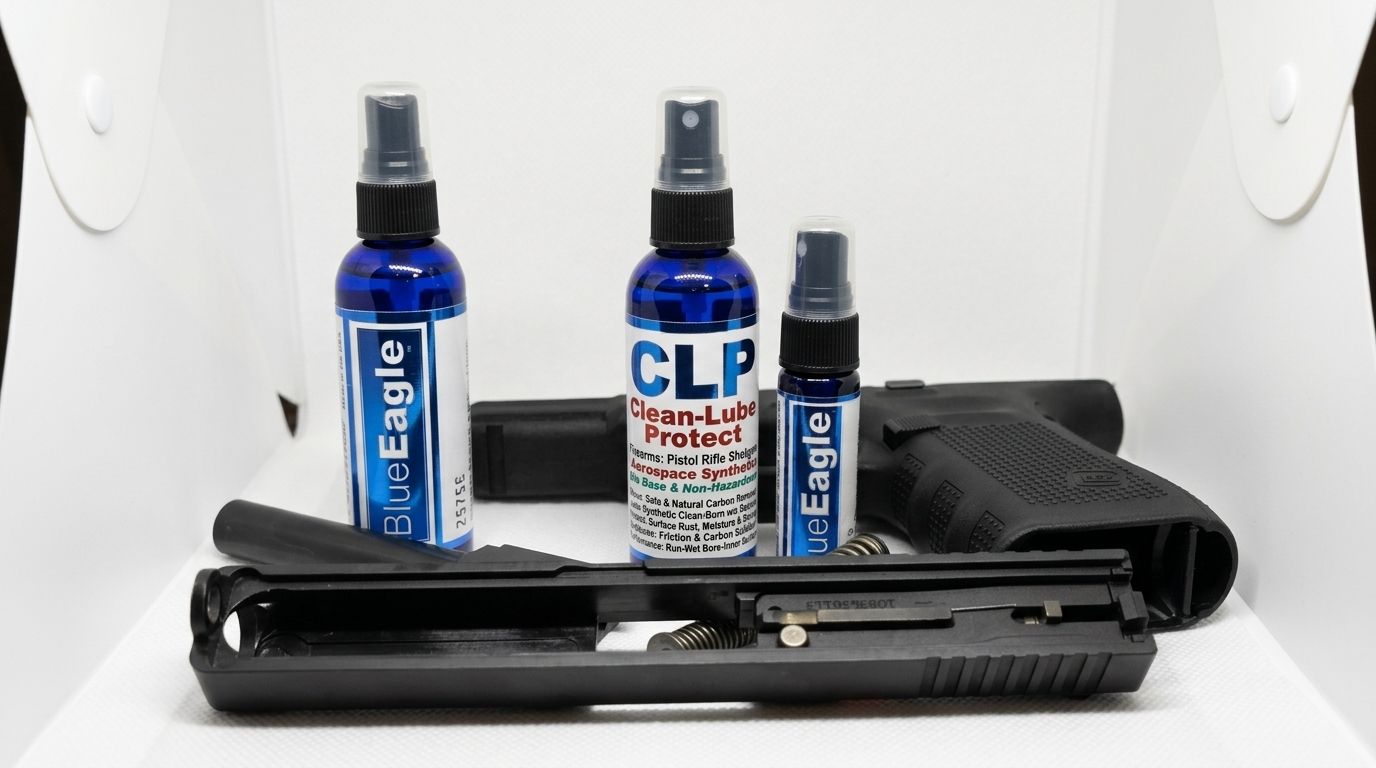
BlueEagle sells biobased firearm cleaner, lubricant and protectant products, alongside bore cleaners and synthetic lubricants. Those categories serve different maintenance decisions. Do not transfer a cleaning claim, lubrication claim or compatibility statement from one product to another.
Use this comparison when reading labels in 2026:
| What you need to establish | Biobased cleaner | Petroleum-based solvent | What decides the purchase |
|---|---|---|---|
| Routine fouling removal | Biological sourcing alone does not establish effectiveness | Petroleum sourcing alone does not establish effectiveness | Product-specific cleaning directions and evidence |
| Copper removal | Requires an explicit copper-removal claim | Requires an explicit copper-removal claim | Suitability for copper fouling in your barrel |
| Surface compatibility | Must be checked for the actual formula | Must be checked for the actual formula | Firearm and cleaner manufacturer guidance |
| Lubrication after cleaning | Do not infer it from the ingredient source | Do not infer it from the ingredient source | Whether the product is also an approved lubricant |
| Handling precautions | Read the label and safety data sheet | Read the label and safety data sheet | Product-specific hazards and protective measures |
The advantage of either category is access to a formula suited to your maintenance job. The limitation is the same: the category name cannot establish that suitability. For the cleaning task itself, start by choosing a solvent for carbon or copper fouling.
Why this matters
A cleaner can meet your routine needs without being the right choice for every deposit in the bore. Powder residue, copper fouling and accumulated lubricant are different cleaning targets. Buying around a broad ingredient claim skips that distinction.
The same mistake happens after cleaning. Removing fouling does not automatically establish that a surface has the lubrication or protection the firearm requires. Keep the bench routine tied to the manual: clean the designated areas, remove cleaner as directed, then lubricate and protect approved surfaces.
What does “biobased” actually tell you?
Biobased refers to material derived from biological sources, such as plant-derived feedstocks. It is not a cleaning-performance grade. It also does not identify every ingredient in a finished mixture.
If a product states a biobased percentage, check what that percentage measures and which product it covers. A claim about one cleaner does not describe a separate bore cleaner or synthetic lubricant sold under the same brand.
Keep these distinctions clear:
- Biobased: concerns the source of material in the product.
- Biodegradable: concerns breakdown under specified conditions.
- Cleaning effectiveness: concerns removal of the intended fouling.
- Handling precautions: concern exposure, storage and use of the actual formula.
These claims answer different questions. A biological source does not establish biodegradability, and neither claim eliminates the need to follow handling instructions. In 2026, a useful product description should help you separate those questions rather than treating them as interchangeable benefits.
Compare routine cleaners by the work at the bench
For routine cleaning, look for directions that identify the surfaces and deposits the product is intended to clean. Then check how the manufacturer tells you to apply it, allow contact, brush and remove residue. A broad statement about cleaning power is less useful than instructions that match your firearm and maintenance task.
A biobased cleaner deserves consideration when its documented uses match that work. A petroleum-based solvent deserves the same scrutiny. Do not reject or select either formula solely because of its source material.
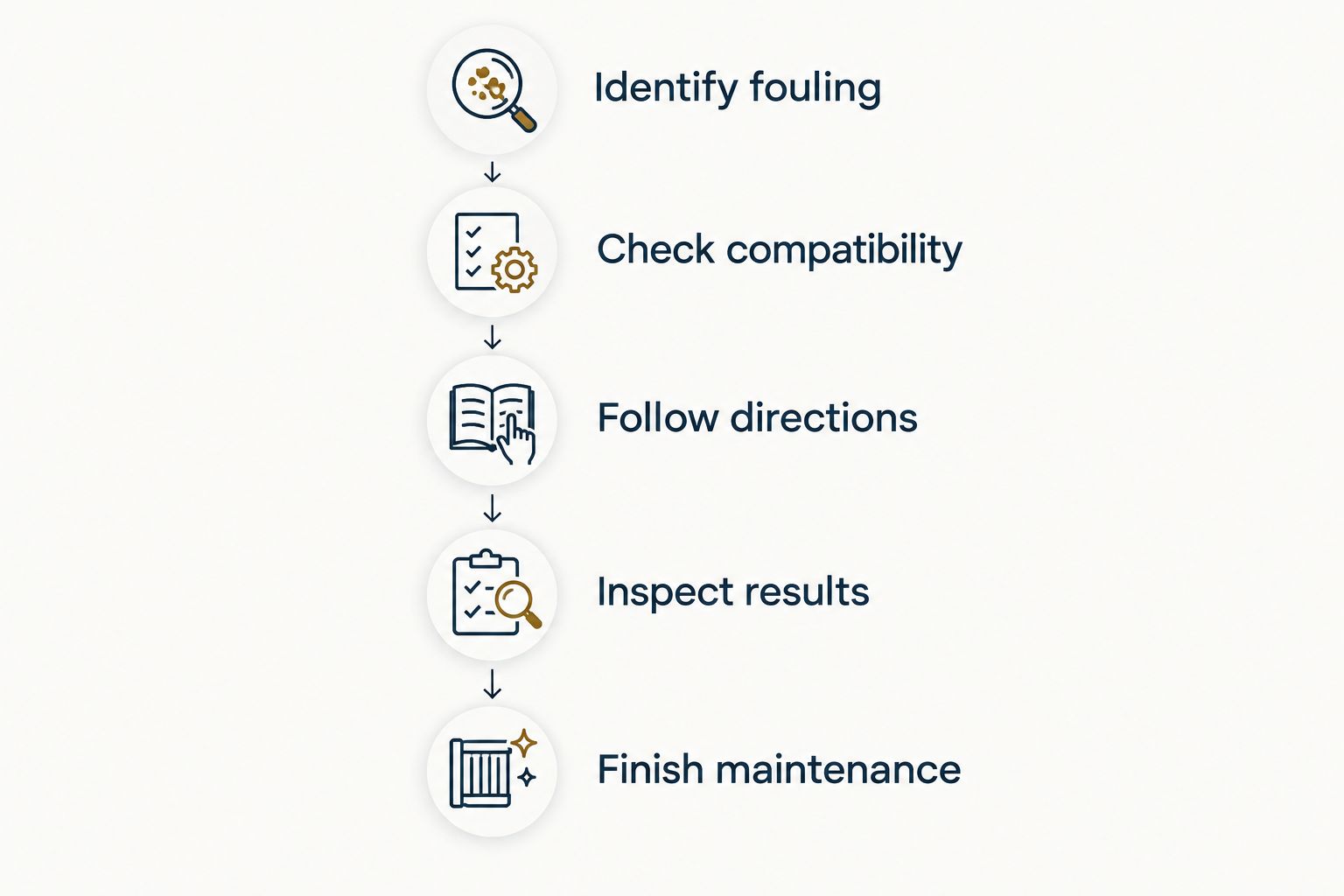
For a practical comparison, use this sequence:
- Identify fouling. Decide whether you are addressing routine residue, suspected copper fouling or another deposit. Do not assume every dark patch identifies the same problem.
- Check compatibility. Read the firearm manual and cleaner directions for the surfaces you intend to treat. Include nearby finishes and nonmetal parts exposed during application.
- Follow directions. Use the specified application, contact and removal method. Do not extend contact time to compensate for a product that is not intended for the job.
- Inspect results. Examine accessible surfaces under good light. Use the barrel inspection method your firearm manufacturer recommends rather than demanding a particular patch color.
- Finish maintenance. Remove residue and apply lubrication or protection wherever the manual requires it. Cleaning is not the final step unless the instructions say so.
A normal cleaning session can tell you whether a product suits your routine. It does not establish a controlled, category-wide performance result. Different fouling loads, tools and application methods make casual comparisons unreliable.
Choose a bore cleaner for the deposit you need to remove
A rifle bore-cleaner decision starts with the deposit, not whether the bottle says biobased or petroleum-based. For copper fouling, require an explicit copper-removal claim and barrel-compatible directions. A general cleaning claim is not a substitute.
A dedicated bore cleaner’s benefit is its stated purpose for a particular barrel-cleaning task. Its limitation is that this purpose does not automatically include action cleaning, lubrication or storage protection. Keep it within its documented uses.
Patch appearance also needs context. Cleaner chemistry, removed material and cleaning tools affect what you see. Follow the product’s interpretation guidance rather than treating a color change as proof that every deposit is gone.
If you cannot identify the deposit or the approved method, stop escalating chemicals and brushing. Consult the firearm manufacturer or a qualified gunsmith. More aggressive cleaning is not a substitute for identifying the problem.
Keep cleaning, lubrication and protection separate in your decision
CLP means cleaner, lubricant and protectant. The appeal is practical: a product intended for these functions can simplify routine maintenance where the firearm manufacturer permits its use. The limitation is that a combined-purpose label does not establish suitability for every cleaning problem or lubrication point.
BlueEagle CLP is best suited to buyers seeking a biobased cleaner, lubricant and protectant whose documented uses match their firearm’s requirements. That is a buying fit, not a claim that it outperforms every dedicated solvent. Check the specific product instructions before deciding whether it covers your routine.
Biobased cleaning and synthetic lubrication are not contradictory ideas. They address different aspects of a maintenance system: the cleaner’s sourcing and function, and the lubricant’s formulation and function. Do not assume that every BlueEagle product combines them in the same way.
For a 2026 purchase, ask whether you need a combined-purpose product, a dedicated bore cleaner or a separate lubricant. The right answer comes from the firearm manual and each product’s stated uses. A separate lubricant is useful when the manual calls for properties or application instructions your cleaner does not supply.
Why cleaning results vary
A fair comparison needs more than two bottles and a dirty patch. These factors change what happens at the bench:
- Fouling type: A claim about routine residue does not establish copper-removal capability. Match the stated cleaning target to the deposit.
- Finished formulation: Ingredient source describes only part of the product. Judge the complete formula through its documented uses and directions.
- Contact instructions: Follow each cleaner’s specified method. Equal contact time is not automatically a fair comparison when the directions differ.
- Mechanical cleaning: Brushes, patches and access to the surface affect the process. Use tools approved for the firearm and cleaning product.
- Surface restrictions: A cleaner appropriate for one component is not automatically suitable for nearby coatings, wood, polymer or other materials.
- Final maintenance: Cleaner removal, drying where directed, lubrication and protection determine whether you have completed the prescribed routine.
These differences explain why a result on one firearm should not become a blanket recommendation for another. Record what you used and how you used it if you want a useful reference for your own routine.
Is biobased gun cleaner better for indoor cleaning?
Biobased sourcing alone does not establish indoor-use suitability. Read the label and safety data sheet for ventilation, skin and eye precautions, flammability and storage instructions. Follow those directions even when the product has little odor.
Before maintenance, unload the firearm, verify its condition according to the manual and remove ammunition from the work area. Keep chemical handling precautions separate from firearm handling precautions; both apply at the bench.
What evidence should I ask for before buying?
Ask for product-specific directions and evidence relevant to the claimed job. A cleaning comparison should identify the formulas, fouling, surfaces, procedure and assessment method. Without that scope, a statement that one category “works better” tells you little about your firearm.
For your 2026 shortlist, check that the label and technical documents refer to the exact product you intend to order. A safety data sheet explains hazards and handling; it is not, by itself, proof of cleaning performance.
Should I switch from my current petroleum-based solvent?
Switch when the replacement’s documented uses better match your maintenance needs—not simply because it is biobased. If your current product meets the firearm manufacturer’s requirements and handles the intended task, its petroleum origin alone is not evidence that it needs replacing.
Before changing products, follow directions for removing the previous cleaner or lubricant. Do not mix chemicals to create a stronger treatment or assume that different formulas can remain together on a surface.
FAQ
Does biobased gun cleaner work as well as petroleum solvent?
Ingredient origin alone does not establish equivalent cleaning performance. Compare the specific formulas on their intended fouling, approved surfaces and documented application methods.
Can a biobased gun cleaner remove copper fouling?
Choose a biobased cleaner for copper only when that exact product explicitly claims copper removal and is approved for your barrel. A general firearm-cleaning claim does not establish copper-removal capability.
Is biobased gun cleaner harmless to use?
Biobased does not mean harmless. Follow the product label and safety data sheet for ventilation, protective equipment, storage and disposal.
Is a biobased cleaner safe on polymer frames and wood stocks?
Biobased sourcing does not establish compatibility with polymer frames or wood stocks. Check the firearm manufacturer’s guidance and the exact cleaner’s restrictions before application.
Does a biobased gun cleaner replace gun oil?
A biobased cleaner does not automatically replace gun oil. Use it for lubrication only when its stated functions and your firearm manufacturer’s instructions support that use.
Is BlueEagle CLP the same formula as its bore cleaners and synthetic lubricants?
Do not assume BlueEagle CLP, bore cleaners and synthetic lubricants share an identical formula. Use each product’s own label and technical documents to establish its purpose and application.
How long should I leave gun cleaner in the bore?
Use the contact time specified for the exact cleaner and permitted by the firearm manufacturer. Do not extend soaking or let a product dry in place unless its directions call for it.
One last thing
Before ordering, write down the deposit, the surface and the required final treatment. Those three details give you a more useful buying specification than “biobased versus petroleum.” They also make it easier to recognize when one routine CLP covers the job and when a dedicated cleaner is needed.
Keep that note with your maintenance instructions. A cleaner earns its place on the bench by matching the work—not by asking you to infer performance from its ingredient source.