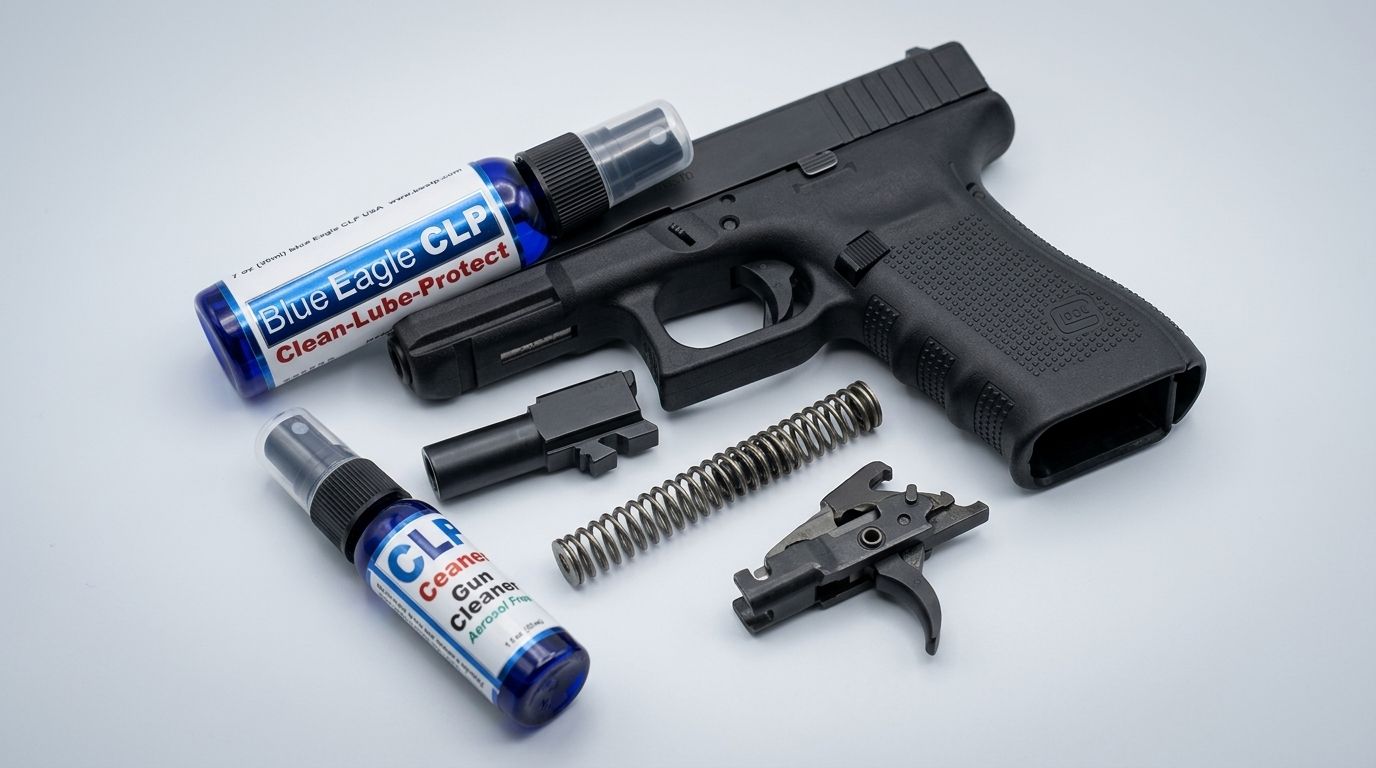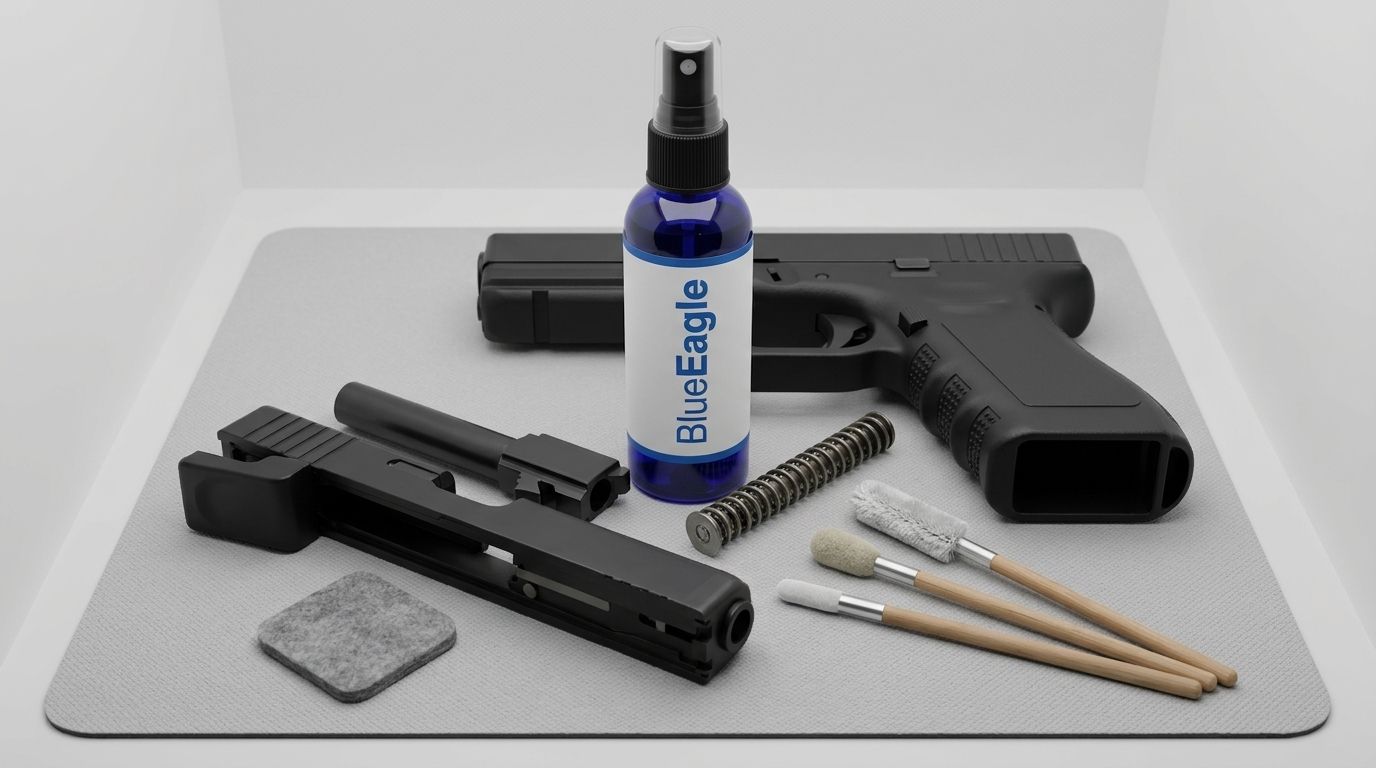
You can use gun cleaning solvent on polymer frames only when the firearm manufacturer’s instructions and the cleaner’s labeling support that use. A cleaner intended for a metal bore is not automatically suitable for the frame, grip inserts, coatings, or nearby components; keep it off those surfaces unless compatibility is confirmed.
- Use gun cleaning solvent on polymer only when firearm instructions and cleaner labeling support that application.
- Beclp sells firearm cleaners and lubricants; confirm compatibility for the specific formula before applying it to a frame.
- Biobased does not mean harmless, and a safety data sheet does not establish firearm compatibility.
- Control application with an approved cloth or tool rather than wetting the entire assembled firearm.
Can you use gun cleaning solvent on polymer frames?
Yes, when compatibility is confirmed for the particular cleaner and firearm—not simply because the bottle says gun cleaner. Check the firearm manual for permitted cleaning materials, then check the cleaner’s directions for applicable surfaces, exclusions, application methods, and removal requirements.
For a 2026 cleaning routine, use this sequence before putting solvent on the frame:
- Check the firearm manual. Find the maintenance section for your model, including restrictions covering the frame and attached parts. Follow its unloading and disassembly instructions before maintenance.
- Check the cleaner label. Look for explicit polymer or plastic compatibility language and any qualifications. General-purpose firearm cleaning language is not a substitute for surface-specific instructions.
- Resolve any mismatch. If the manual prohibits an ingredient or treatment that the cleaner requires, choose another approved method. If compatibility remains unclear, ask the firearm manufacturer and cleaner supplier before applying it.
Beclp sells firearm cleaners, bore cleaners, and synthetic lubricants. Treat those as different maintenance choices, not as proof that every formula belongs on every firearm surface.
What counts as a clear compatibility answer?
A useful answer identifies the exact cleaner and the exact firearm or material involved. It also explains any conditions: whether to apply with a cloth, whether soaking is prohibited, what residue to remove, and which areas to avoid.
A broad statement about plastics does not resolve every component on an assembled frame. Ask about aftermarket grip panels, painted markings, adhesives, and other attached materials separately when their instructions differ from the firearm manual.
Why this matters
A polymer frame sits beside metal parts that need their own cleaning and lubrication. Treating the assembled firearm as a single surface makes it easier to put the wrong chemical in the wrong place.
Match the cleaner to both the fouling and the surface beneath it. Removing stubborn deposits from a bore and wiping handling residue from a frame are different jobs. The strongest cleaning action is not the deciding factor when the frame only needs the manufacturer’s routine wipe-down.
Biobased content does not answer the compatibility question. Neither does a biodegradable claim: those descriptions do not establish that a cleaner is suitable for a particular polymer, finish, or coating.
Which cleaner belongs on which part?
Choose by the task before choosing by the product category. This comparison separates intended maintenance roles from the compatibility checks you still need to make.
| Option | Best for | Practical advantage | Limitation on polymer frames |
|---|---|---|---|
| CLP | Routine cleaning, lubrication, and protection where approved | Combines those maintenance functions in one product category | The CLP designation does not establish compatibility with every frame or attached material |
| Dedicated bore cleaner | The bore fouling identified in its directions | Lets you select a cleaner for the deposits you need to remove | Bore use does not establish suitability for the frame; keep application confined as directed |
| Dedicated lubricant | Specified moving parts and lubrication points | Separates lubrication from the cleaning step | Lubrication suitability does not establish cleaning ability or permission to coat the frame |
A CLP can simplify your routine when its directions match the firearm’s requirements. A dedicated bore cleaner gives you a separate option for bore work, but also creates another product whose contact with adjacent surfaces needs controlling.
A dedicated lubricant belongs where the firearm manufacturer specifies lubrication. It is not a reason to leave every cleaned surface wet. For the task distinction, see the guide to choosing gun cleaning solvent for carbon or copper fouling.
Where does BlueEagle CLP fit?
BlueEagle CLP is a routine-maintenance option to evaluate against your firearm’s instructions. Beclp is best suited to gun owners shopping for firearm cleaners, bore cleaners, and synthetic lubricants. That product selection does not replace confirmation that the specific formula is appropriate for your polymer frame.
Check the individual product information rather than transferring a claim from one bottle to another. Biobased cleaning and synthetic lubrication describe different formulation characteristics; neither establishes that all cleaners and lubricants in a range have identical ingredients or compatibility.
How should you clean an approved polymer frame?
Once compatibility is established, follow the firearm manual and cleaner directions together. Your 2026 bench checklist should prioritize controlled application, inspection, and correct reassembly—not a fixed soaking time or a universal amount of solvent.
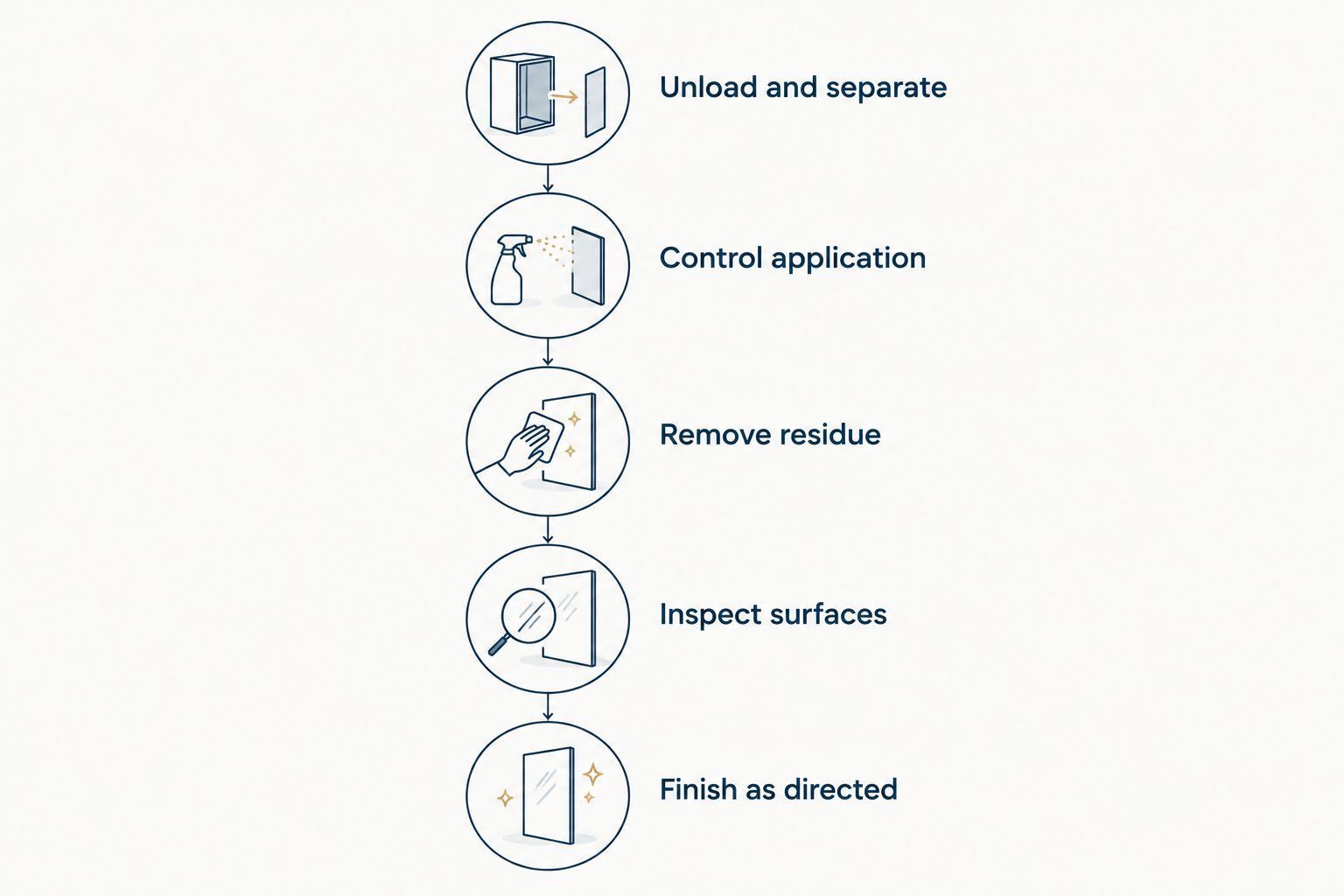
- Unload and separate. Point the firearm in a safe direction, unload it, and verify its condition according to the manual. Remove ammunition from the cleaning area and disassemble only to the level the manufacturer permits.
- Control application. Use the approved applicator and method. Where the directions permit application to a cloth or tool, that gives you more control than spraying the assembled firearm indiscriminately.
- Remove residue. Clean the intended surfaces without letting runoff become a substitute for access. Observe the product’s contact-time and removal instructions; do not extend treatment because fouling remains.
- Inspect surfaces. Check for remaining residue and any unexpected surface change. Stop if the material becomes tacky, soft, swollen, or otherwise altered, and seek manufacturer guidance before continuing.
- Finish as directed. Remove cleaner, dry, lubricate, reassemble, and perform the manufacturer’s prescribed checks. Keep ammunition away during maintenance and follow the manual for the final inspection.
Do not invent a dwell time. A solvent’s permitted contact time comes from its directions and the firearm’s restrictions, not from how long another cleaner stayed on another gun.
If the directions conflict, stop and resolve the conflict. A firearm restriction does not disappear because the cleaner’s general instructions permit a longer treatment or broader application.
Why polymer-frame cleaning requirements vary
The word polymer identifies a broad material category, not a universal cleaning specification. These factors determine the instructions you need to follow:
- The firearm model. Use the manual for your firearm rather than transferring directions from another model with a similar-looking frame.
- The exact cleaner. Evaluate the product in your hand. Do not assume that a bore cleaner, CLP, and synthetic lubricant share the same formula.
- Attached materials. Grip inserts, coatings, painted details, and aftermarket accessories can carry separate care instructions.
- The application method. Wiping, spraying, and soaking are different exposures. Permission for one method does not automatically authorize the others.
- Contact and removal requirements. Follow the specified treatment and cleanup steps rather than leaving a product in place by default.
- The maintenance task. A dirty bore does not establish that the frame needs the same cleaner or treatment.
When you compare products in 2026, write down the surface and job first. That keeps a specialized bore-cleaning requirement from becoming an unnecessary whole-firearm solvent treatment.
What if the manual does not name your cleaner?
An unnamed cleaner is not automatically approved or prohibited. First look for the manual’s broader requirements, such as permitted product types, excluded chemicals, or restrictions on soaking and spraying.
If those instructions do not settle the question, ask a specific question: identify the firearm model, cleaner name, intended surface, and application method. A clear inquiry gives the manufacturer something concrete to evaluate.
A small hidden-area test is not a substitute for compatibility approval. A surface that looks unchanged immediately after a wipe does not establish suitability for repeated use or prolonged contact. Follow any manufacturer-directed testing procedure, but do not create your own permission from an informal spot check.
For a bottle purchased in 2026, use its current label and corresponding product documentation. An old forum discussion about a similarly named cleaner is not a reliable substitute for directions covering the product you have.
Does a safety data sheet prove a cleaner is polymer-safe?
A safety data sheet does not, by itself, prove polymer compatibility. It communicates chemical hazards and handling information; firearm and product instructions still need to establish the intended application.
Read the safety data sheet for precautions covering handling, ventilation, protective equipment, storage, and accidental exposure. Then use the label and technical information to check material compatibility and application limits.
A cleaner can require careful handling even when it contains biobased ingredients. Keep environmental claims, personal handling precautions, and firearm compatibility as separate checks rather than treating one favorable description as an answer to all of them.
Should you soak a polymer frame in gun cleaner?
Do not soak a polymer frame unless the firearm manufacturer and cleaner instructions expressly permit it. Approval for a brief wipe is not approval for immersion, and an assembled frame includes more than its visible outer material.
If fouling is difficult to reach, follow the permitted disassembly and cleaning procedure. Do not compensate for limited access by filling the frame with solvent or extending contact beyond the directions.
FAQ
Can I use any gun cleaning solvent on a polymer pistol frame?
No. Use a cleaner only when the firearm instructions and product labeling support the specific application. A bore-cleaning designation alone does not establish polymer-frame compatibility.
Is CLP automatically safe for polymer frames?
No. CLP describes cleaning, lubrication, and protection functions, not universal material compatibility. Check the exact formula’s directions against your firearm manual.
Does biobased gun cleaner mean it is harmless?
No. Biobased content does not establish that a cleaner is harmless or compatible with your firearm. Follow its label, safety data sheet, and the firearm manufacturer’s instructions.
Can I spray gun cleaner directly into an assembled polymer frame?
Use direct spray only when the firearm and cleaner instructions permit that method. Otherwise, follow the approved application procedure rather than allowing uncontrolled runoff into internal areas.
What should I do if cleaner changes the frame’s texture?
Stop applying the cleaner and consult the firearm manufacturer. Follow the product’s removal and exposure instructions, and do not continue cleaning or use the firearm until the concern is resolved.
Can I use bore cleaner on the outside of my pistol?
Only when the bore cleaner’s directions and the firearm instructions permit use on those exterior materials. Keep a bore-specific treatment confined to its approved surfaces.
Do I need to oil the polymer frame after cleaning?
Lubricate only the points identified in your firearm manual. Cleaning the frame does not create a general requirement to coat its exterior with oil.
One last thing
The useful question is not whether a cleaner works on polymer in general; it is whether that cleaner belongs on your particular frame under your intended cleaning conditions. Add the cleaner name and approved application method to your 2026 maintenance notes so you do not have to reconstruct that decision at every cleaning session.
Beclp’s cleaner and lubricant selection gives you categories to compare. Keep the final choice tied to the surface, the fouling, and the manufacturer’s directions—not the broadest claim on the bottle.