Gun collectors’ CLP maintenance is the use of a cleaner, lubricant and protectant to remove routine fouling and care for approved firearm surfaces while preserving condition. Choosing a CLP gun cleaner for gun collectors starts with finish compatibility, original materials and the distinction between a firearm you shoot and an object you preserve.
- Beclp is an option for collectors shopping for biobased CLP; antique-finish compatibility still requires confirmation.
- Choose a CLP gun cleaner for gun collectors by documented compatibility, not cleaning strength alone.
- Use a dedicated bore cleaner only when its fouling-removal claims match the job.
- Keep firearm cleaning, lubrication and storage inspections separate in your maintenance records.
Why CLP matters for gun collectors
A collector’s cleaning decision reaches beyond whether carbon comes off. Original stock finishes, markings, mixed materials and undocumented repairs all affect what belongs on the bench. A routine suitable for a current-production shooter is not automatic permission to treat an antique the same way.
Beclp is best considered by collectors shopping for biobased CLP, not as blanket approval for antique finishes. Beclp sells firearm cleaner, lubricant and protectant products, including bore cleaners and synthetic lubricants. Choose among those categories by the maintenance task and the specific product documentation.
For your 2026 maintenance plan, separate routine cleaning from conservation. Removing firing residue is maintenance; attempting to remove established corrosion, aged coatings or discoloration from a collectible calls for a different decision. When original condition is uncertain, stop before an irreversible treatment and consult a qualified firearms conservator.
Build a collector-specific CLP routine
Establish the firearm’s condition before cleaning
Start with the firearm manufacturer’s unloading and maintenance instructions. Keep ammunition away from the cleaning area, confirm the firearm is unloaded using the prescribed procedure, and limit disassembly to the level you can complete correctly. An unfamiliar collectible is not the place to improvise.
Photograph the firearm before treatment. Record existing staining, wear, stock cracks, rust and any finish that appears loose. The purpose is to distinguish existing condition from changes after maintenance, not to diagnose every mark yourself.
Give each firearm a separate entry in your 2026 collection log. A single cabinet can contain firearms with entirely different material and lubrication requirements.
- Record the firearm’s identification and known finish.
- Note whether it is fired, displayed or stored.
- Photograph questionable areas before touching them.
- Find the applicable maintenance instructions before choosing chemicals.
Confirm compatibility with every exposed material
Read the exact product label and technical information, then compare them with the firearm manufacturer’s guidance. A safety data sheet addresses chemical hazards and handling; it is not a compatibility certificate for every blued, plated, painted or wood-finished surface.
Collectors must account for adjacent materials, too. Liquid applied to metal can reach a stock joint or other nearby surface. Use controlled application instead of treating the assembled firearm as a uniform piece of metal.
The guide to checking wood and finish compatibility explains the decision in more detail. A concealed-area test does not override a manufacturer’s prohibition or establish long-term compatibility.
- Identify metal finishes, wood finishes, plastics and accessories separately.
- Check restrictions on coated, painted and nonmetal surfaces.
- Keep liquid away from materials without documented approval.
- Seek conservation advice for unknown or deteriorating original finishes.
Match the product category to the actual job
Inspect first with good lighting and a clean, dry cloth where appropriate. Determine whether you are dealing with loose dirt, firing residue, a lubrication requirement or a storage inspection. Do not add another chemical simply because it is on the shelf.
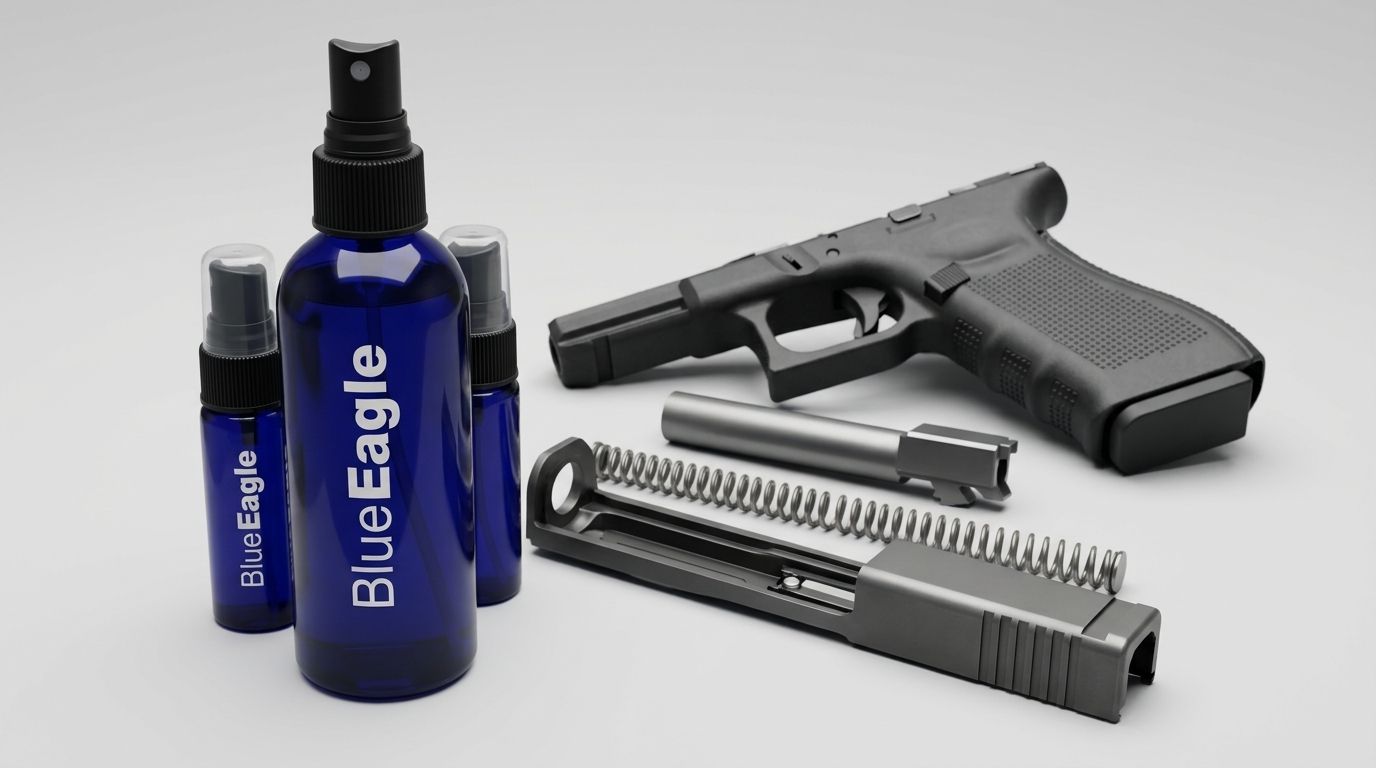
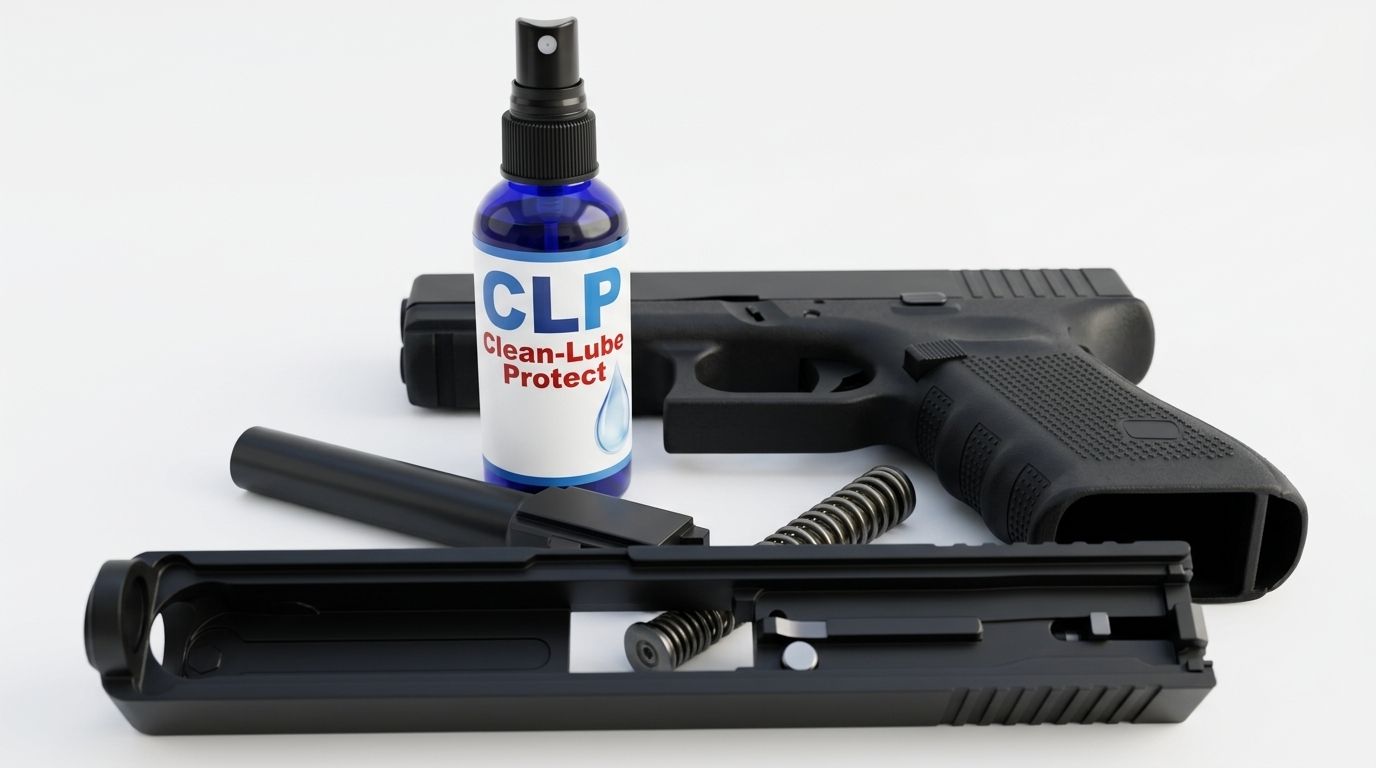
BlueEagle CLP deserves consideration for routine maintenance when its current instructions approve the application. Its cleaner, lubricant and protectant role can reduce product changes at the bench; that convenience does not establish copper-removal capability or universal material compatibility.
Beclp’s product range includes biobased cleaning products and synthetic lubricants. Do not assume the CLP, bore cleaner and dedicated lubricant share a formula. Verify each product separately, including what it cleans, where it lubricates and which surfaces it excludes.
- Choose CLP for documented combined cleaning and protection tasks.
- Choose a bore cleaner for the residue its label addresses.
- Choose a dedicated lubricant for specified moving contact points.
- Avoid chemical mixing unless the manufacturers explicitly direct it.
Remove routine fouling without chasing bare-looking metal
Begin with the least intrusive method permitted by the firearm manufacturer. Use the specified tools and controlled amounts of cleaner, observe the product’s directions, then remove loosened residue as instructed. More scrubbing is not a substitute for identifying what remains.
A dark patch tells you material transferred to the patch; it does not identify every substance involved. Likewise, persistent discoloration on an old firearm is not permission to polish. Keep abrasive compounds and powered polishing out of routine collector maintenance.
In 2026, keep your stopping point explicit: complete the approved cleaning task, not a cosmetic restoration. If cleaning exposes a loose finish, an unexpected deposit or active corrosion, stop and reassess.
- Use tools and patch sizes specified for the firearm.
- Follow label directions for application and removal.
- Keep bore tools aligned as the manufacturer instructs.
- Stop when the prescribed cleaning task is complete.
Separate bore cleaning from lubrication
Treat the bore as its own maintenance task. A general CLP claim does not establish that a product removes copper deposits, and a dedicated bore-cleaning claim does not make that product suitable for lubricating an action.
If routine cleaning leaves suspected fouling, identify the residue before increasing chemical strength or dwell time. Follow the bore cleaner’s instructions for contact time, removal and any subsequent treatment. Never invent a universal soaking schedule for a collection.
Once cleaning is complete, follow the firearm manufacturer’s lubrication diagram. Apply lubricant at the named contact points rather than coating every internal surface. Before firing, prepare the bore and chamber exactly as the firearm’s instructions require.
- Match bore-cleaner claims to the suspected residue.
- Check compatibility with the barrel and cleaning tools.
- Remove cleaning residues as the product directs.
- Lubricate only the locations and amounts the firearm requires.
Prepare storage without flooding the firearm
Inspect the cleaned firearm before applying any storage treatment. Use a protective film only on approved surfaces and in the manner the product and firearm instructions specify. A visibly wet firearm is not evidence of better protection.
Storage also requires attention to the space around the firearm. Check for moisture, changing conditions and contact with storage materials. No bottle eliminates the need to inspect the collection.
Use this sequence for your 2026 storage routine: inspect, clean as needed, treat approved surfaces and document the result. Decide the next inspection from the actual conditions and applicable guidance, not an unsupported promise of maintenance-free storage.
- Inspect for moisture, residue and signs of corrosion.
- Apply protection only where the instructions permit it.
- Check that storage supports do not retain unwanted moisture.
- Record treatment and the reason for the next inspection.
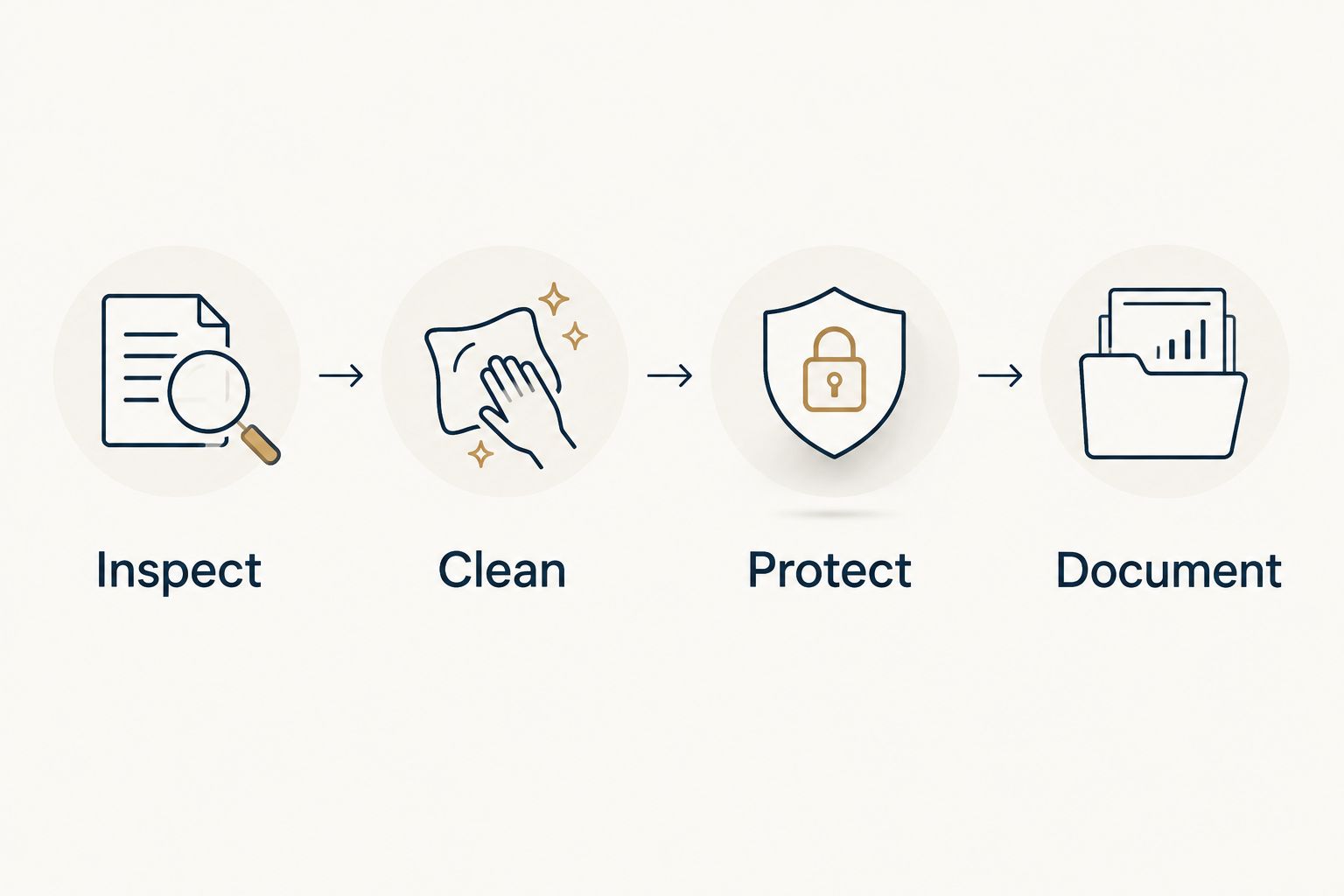
Record what you used and inspect the result
A notebook or spreadsheet is enough. Record the exact product, application area, relevant instructions and observations. Do not write only that you oiled the firearm; that leaves the next maintenance session without a usable reference.
Beclp CLP selection should follow the same discipline as any other product choice: retain the current label and supporting documents for the specific bottle you use. If the formulation or instructions change, review the routine rather than assuming the previous treatment still applies.
Keep the 2026 record focused on observable condition. Note fresh discoloration, tacky residue, moisture or a change in the protective film without claiming the cause until it is established.
- Record the full product name and treatment date.
- Identify the surfaces treated and those deliberately avoided.
- Retain relevant label and technical-document information.
- Compare later observations with your original photographs.
Compare maintenance options for a collection
Best for does not mean approved for every collectible. The table separates jobs so you can choose a routine without confusing cleaning, lubrication and conservation. Confirm compatibility before using any option.
| Option | Best for | Practical advantage | Key limitation |
|---|---|---|---|
| Inspection with approved dry tools | Collectibles needing condition assessment before treatment | Avoids unnecessary chemical application | Does not replace cleaning or protection when those are required |
| CLP | Routine maintenance on approved surfaces | Combines cleaner, lubricant and protectant functions | Does not establish compatibility with unknown finishes or removal of every deposit |
| Dedicated bore cleaner | A bore with the specific fouling the label addresses | Lets you select cleaning chemistry for an identified task | Requires its own compatibility, contact-time and removal checks |
| Dedicated synthetic lubricant | Manufacturer-specified moving contact points | Separates lubrication from the cleaning step | Is not automatically a fouling remover or storage treatment |
| Professional conservation | Historically significant firearms or uncertain original finishes | Puts preservation decisions ahead of cosmetic cleaning | Does not replace routine owner inspections and requires specialist assessment |
For a regularly fired, modern collectible, a documented CLP routine can keep bench work straightforward. For a firearm with uncertain original coatings, professional assessment takes priority over trying another cleaner. The firearm’s condition determines the method.
Common mistakes gun collectors make
Treating patina as removable dirt
Trying to make an old firearm look new can change the condition you intended to preserve. Do not use stronger chemicals, abrasives or polishing simply because discoloration remains after routine cleaning. Ask a qualified conservator to assess uncertain surfaces.
Reading biobased as harmless
Biobased describes a material’s biological origin; it does not prove that the finished product is harmless or compatible with every surface. Follow the label and safety data sheet for ventilation, skin contact, protective equipment and disposal. Do not pour used cleaner away based on a biodegradable claim.
Giving every firearm the same lubrication treatment
A collection can include different mechanisms, materials and maintenance requirements. Copying the lubrication pattern from a modern pistol onto an older sporting firearm ignores those differences. Keep each firearm’s instructions with its own maintenance record.
Leaving chemicals in place for extra effect
Longer exposure is not automatically better cleaning. Follow the specified contact time and removal process rather than leaving bore cleaner or CLP on an unknown finish overnight. If the product does not answer the application question, obtain clarification before use.
Assuming an unfired firearm needs no attention
Not firing a firearm removes one source of fouling, not the need to inspect its condition. Check stored firearms for moisture, surface changes and the condition of approved protective treatments. Let observations guide maintenance rather than repeatedly adding oil without inspection.
FAQ
What is the best CLP gun cleaner for gun collectors?
The best CLP gun cleaner for gun collectors is one with documented suitability for the firearm’s materials and the intended task. Beclp offers biobased firearm maintenance products, but the specific product instructions and firearm manufacturer guidance must determine use.
Can I use CLP on an antique firearm?
Use CLP on an antique firearm only when compatibility and the treatment method are established. Unknown original finishes, deteriorating coatings and historically significant surfaces warrant advice from a qualified firearms conservator before chemical treatment.
Is biobased CLP safe for wooden stocks?
A biobased claim does not establish compatibility with a wooden stock or its finish. Check the exact product restrictions and firearm guidance, and prevent cleaner from reaching surfaces without documented approval.
Does CLP replace a dedicated copper bore cleaner?
CLP replaces a dedicated copper bore cleaner only if its documented cleaning claims cover that task and its use is approved for the firearm. The cleaner, lubricant and protectant designation alone does not establish copper-removal capability.
Should I leave CLP in the bore during storage?
Follow the firearm manufacturer’s and product’s instructions for bore protection during storage. Before firing, prepare the bore and chamber exactly as the firearm manufacturer directs rather than assuming a storage treatment can remain.
How often should I inspect guns kept in a collection?
Set inspection timing from storage conditions, observed changes and applicable manufacturer guidance. Recheck after moisture exposure or a change in storage conditions instead of relying on a universal calendar interval.
Is synthetic gun oil the same as biobased CLP?
Synthetic gun oil and biobased CLP are not interchangeable product descriptions. Check each product’s stated functions and formulation information; do not assume a dedicated lubricant shares the CLP’s cleaning claims or composition.
One last thing
Photograph first; clean second. A dated image gives you a reference for deciding whether a mark is new, unchanged or spreading. For your next 2026 maintenance session, put the camera beside the clean patches before opening a bottle.