For gun owners storing firearms, gun cleaning oil for storage is a protective treatment applied to manufacturer-approved surfaces to limit corrosion between uses. Choose a product labeled for protection, inspect its film rather than judging by shine alone, and distinguish storage preparation from the checks required before firing.
- Choose gun cleaning oil for storage by its protection instructions and firearm compatibility, not by how wet it looks.
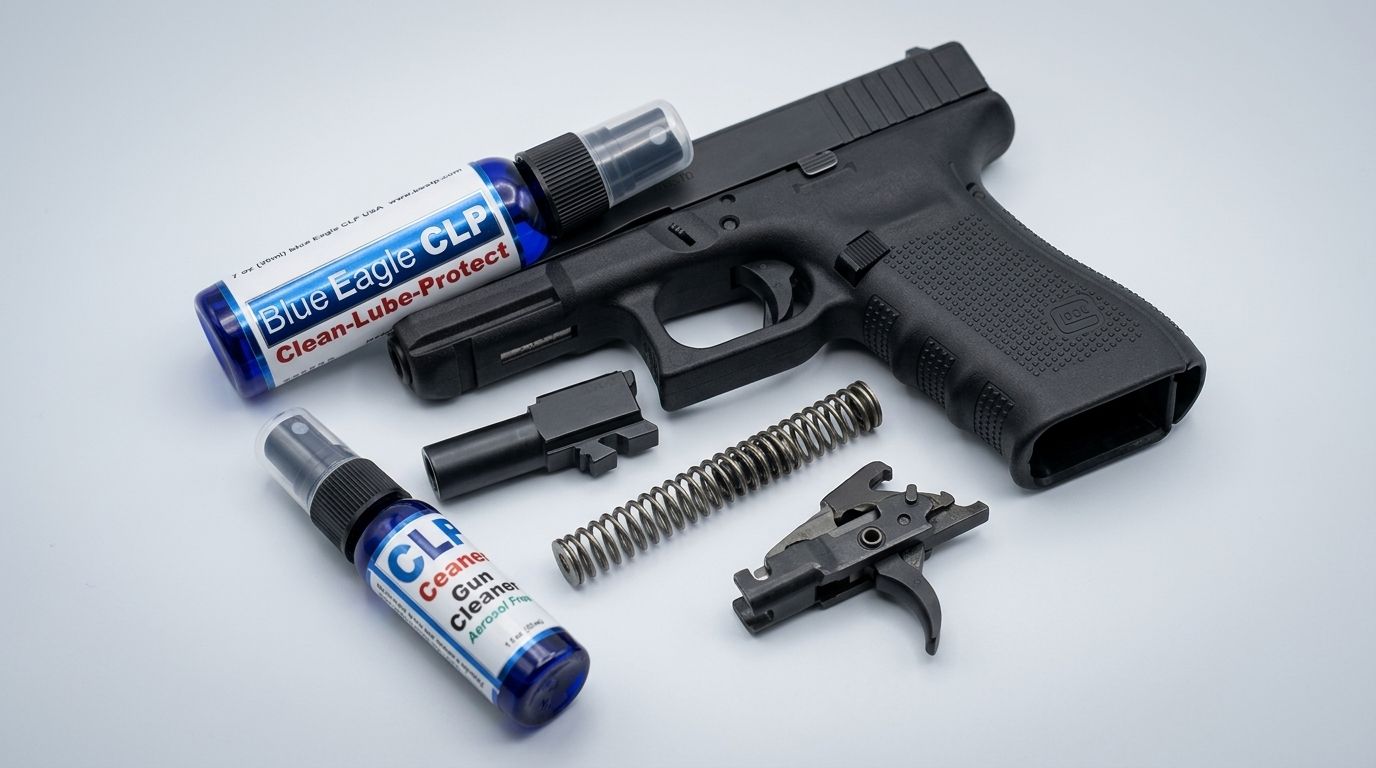
- BlueEagle CLP suits gun owners seeking a combined cleaner, lubricant and protectant; follow its product-specific storage directions.
- Remove fouling and moisture before applying protection; oil does not replace cleaning or controlled storage conditions.
- Inspect accessible surfaces for coverage, pooling and corrosion, then follow the firearm manual before returning to use.
Why storage protection matters for gun owners
A stored firearm needs more than a lubricated action. Lubrication addresses friction between moving parts; storage protection addresses exposed surfaces while the firearm sits unused. One product can serve both purposes, but the application instructions still determine where it belongs.
Your storage routine also has different constraints from a range-day wipe-down. You need to account for moisture, handling marks, storage materials and access for inspection. A visibly oily surface does not prove that every approved area has protection underneath grips, around fasteners or along exposed edges.
For your 2026 maintenance plan, separate the buying decision into cleaning, lubrication and protection. The guide to gun oils for lubrication and protection explains that distinction before you choose a bottle.
The right storage film is the one specified for the product and firearm—not the thickest film you can leave behind.
Prepare and inspect the storage film
1. Establish the firearm's storage instructions
Start with the firearm manual, not a general oil recommendation. Confirm the approved cleaning process, disassembly limits, lubrication points and instructions for storage. Follow the manufacturer's unloading procedure, verify the firearm is unloaded, and keep ammunition away from the maintenance bench.
Record the firearm model and the instructions you are following in your 2026 maintenance notes. This gives you a reference when a later inspection raises a question about a finish, a component or a product change.
Do not assume instructions for one firearm transfer to another. Stock materials, surface treatments and internal assemblies differ, and some areas must remain dry.
- Find the manufacturer's storage and return-to-service instructions.
- Identify surfaces that accept oil and areas that must remain dry.
- Confirm the permitted level of disassembly.
- Follow label directions for ventilation, handling and protective equipment.
- Keep ammunition separate from cleaning products and the work area.
2. Clean and dry before adding protection
Remove fouling with a cleaner intended for the residue and approved for the firearm. Carbon fouling and copper fouling are different cleaning jobs; do not assume a lubricant removes either simply because the patch comes away dirty.
Follow the cleaner's directions for application, contact time and removal. Where instructions require a separate drying or removal step, finish that step before applying a storage treatment. Do not mix chemicals or leave cleaning residue underneath oil unless the product instructions expressly describe that process.
BlueEagle offers CLP products, bore cleaners and synthetic lubricants. Choose among those categories by the job rather than assuming every formula cleans, lubricates and protects identically. A bore cleaner addresses a cleaning task; its presence on the bench does not establish that it is the final storage treatment.
- Match the cleaner to the fouling you need to remove.
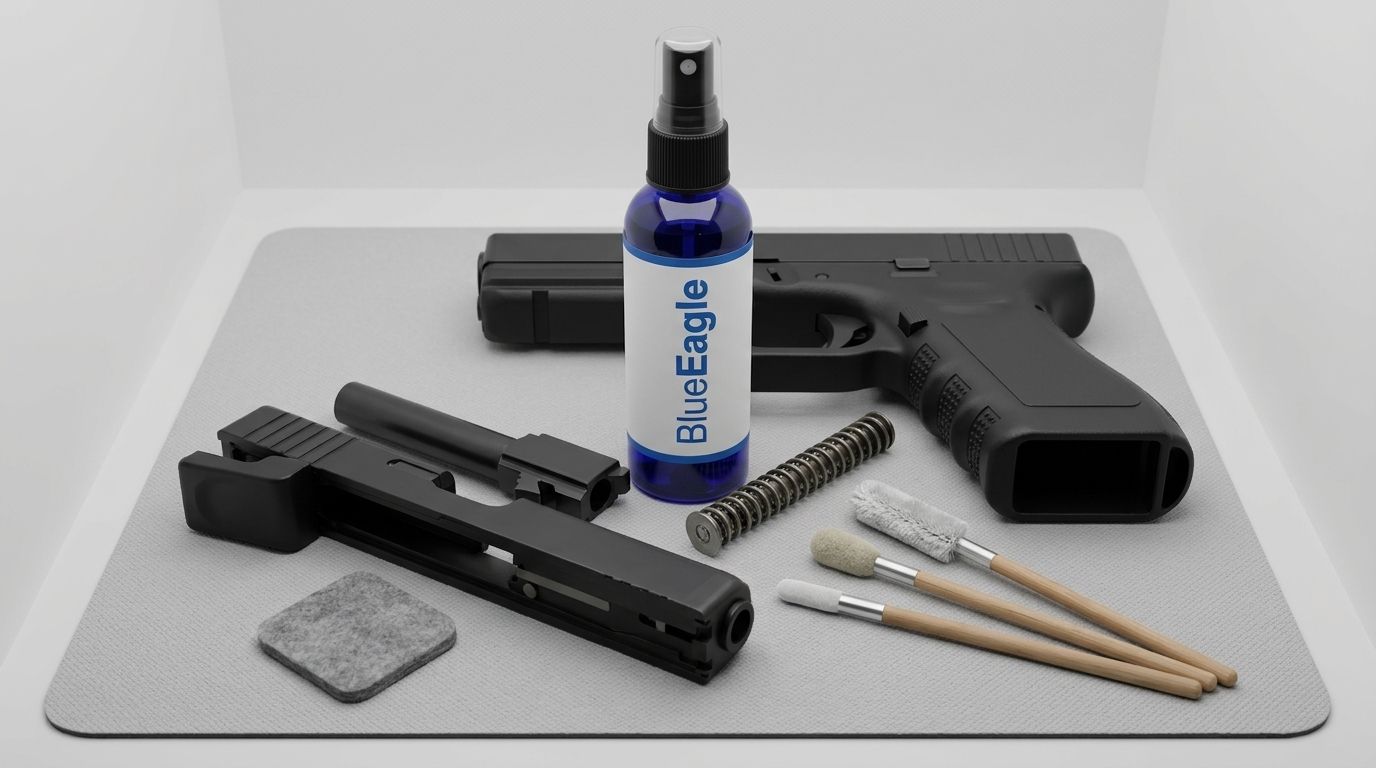
- Use brushes, patches and tools approved for the firearm.
- Remove cleaner residue as its instructions require.
- Dry approved surfaces according to the firearm and cleaner directions.
- Inspect for remaining fouling before covering the surface with protection.
3. Choose protection by the label, not the category name
You can compare products manually by reading the label, technical data sheet and safety data sheet. Look for the stated protective use, compatible surfaces, application directions and removal requirements. A safety data sheet describes hazards and handling; it does not independently prove storage performance.
BlueEagle CLP is best for gun owners who want a combined cleaner, lubricant and protectant rather than separate products for each task. Its combined role simplifies product selection, but it does not remove the need to check firearm compatibility or storage instructions. Start with the BlueEagle product information and evaluate the specific formula you intend to use.
Biobased cleaning and synthetic lubrication describe different product attributes. Do not transfer a biobased claim from one cleaner to a synthetic lubricant, or infer that a biobased product is harmless. Record the exact product in your 2026 storage notes so later maintenance follows the same directions.
- Confirm that protection is an explicitly stated use.
- Check instructions for your firearm's materials and finishes.
- Read application and removal directions before buying.
- Separate environmental claims from handling precautions.
- Reject unsupported assumptions about protection duration.
4. Apply the film and inspect accessible surfaces
Apply the product with the method and amount specified by its label and the firearm manufacturer. A patch or cloth gives you control where those instructions permit one. Do not flood an assembly to reach areas you cannot inspect.
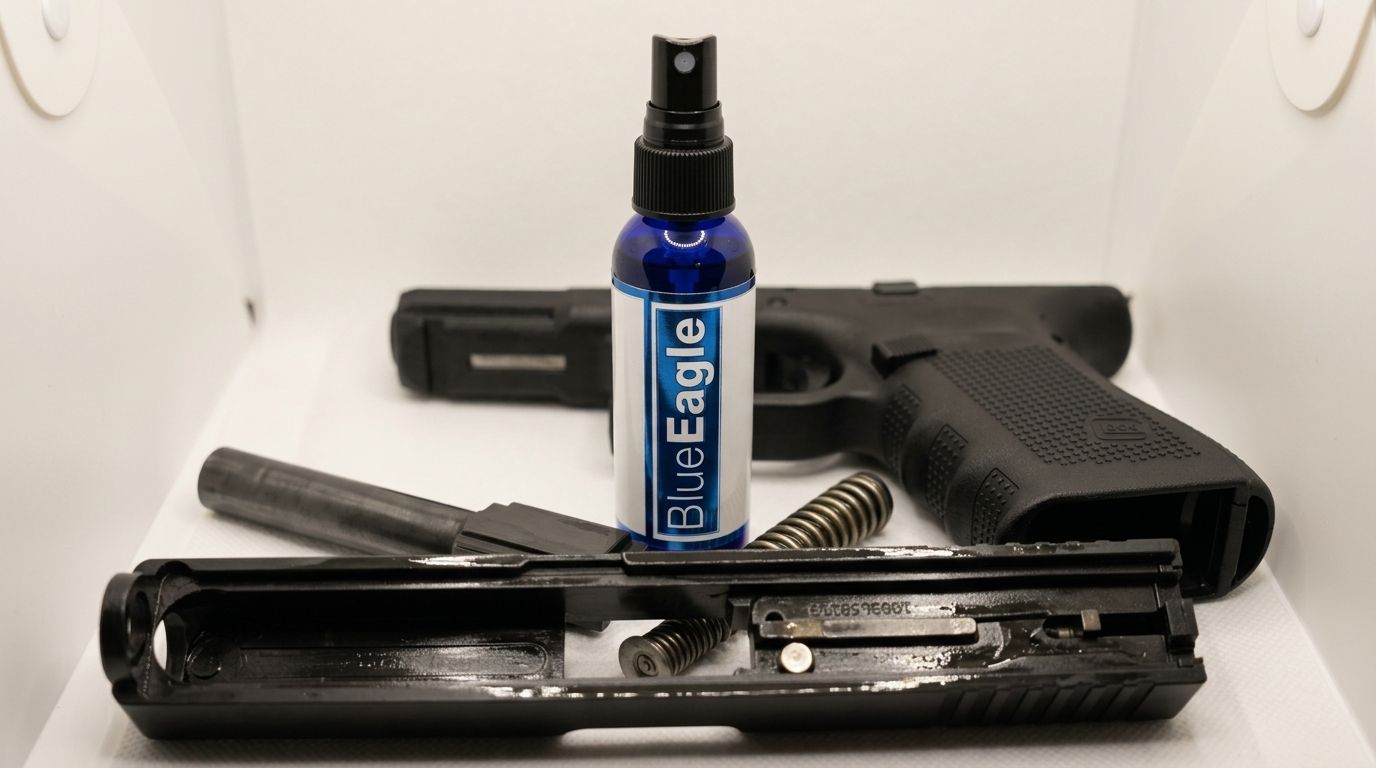
Use a good bench light and change the viewing angle as you examine approved surfaces. Look for missed areas, pooled liquid, collected residue and visible corrosion. Some protective films are difficult to see, so appearance alone cannot confirm coverage or protective performance.
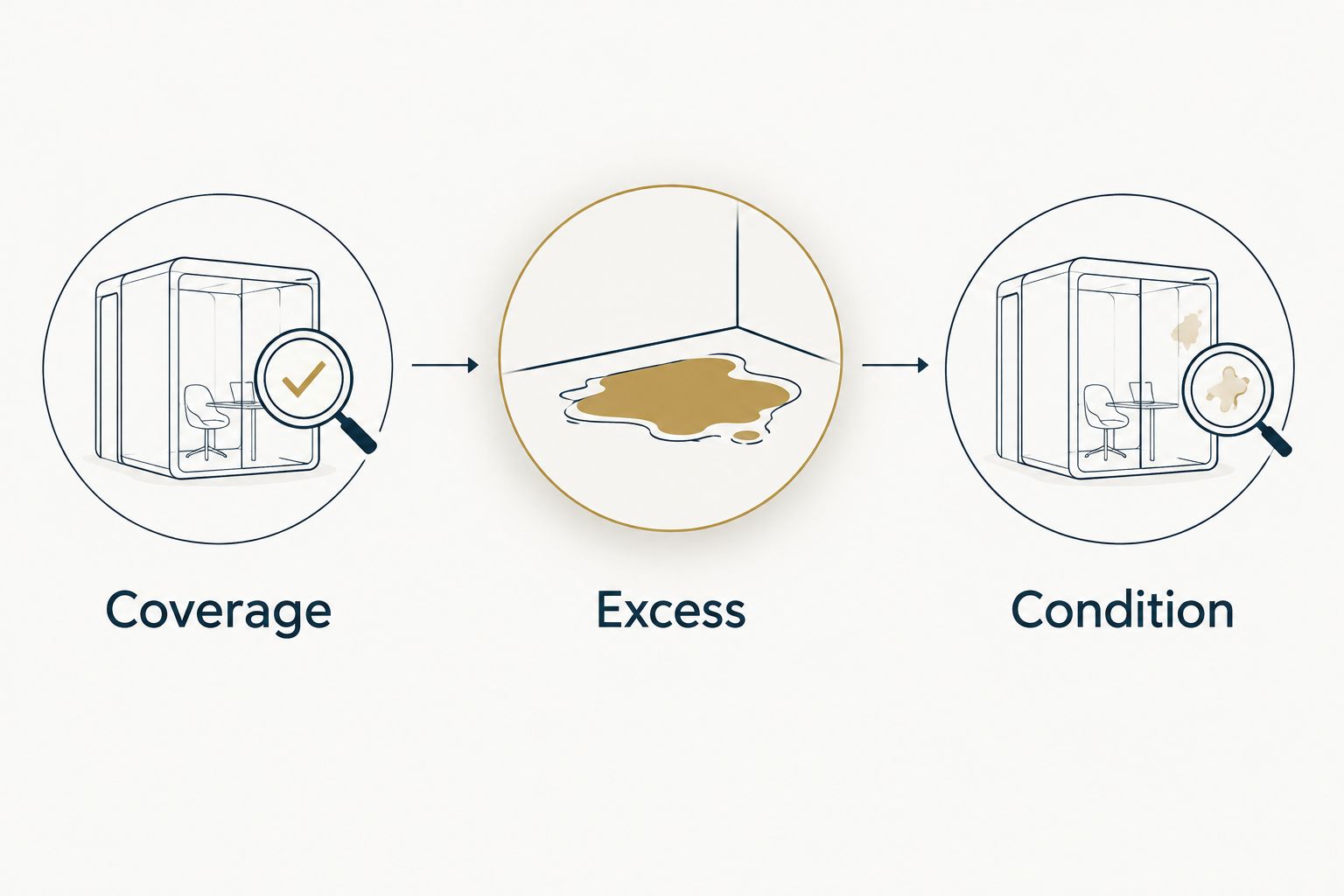
Check 3 things: coverage, excess and condition. These are inspection prompts, not a test of how long the treatment will prevent corrosion. If you find suspected rust or damage, stop treating the problem as a routine oiling task and follow the manufacturer's service guidance.
- Coverage: inspect accessible, approved surfaces for missed areas.
- Excess: remove pooling or surplus product as directed.
- Condition: look for discoloration, corrosion or trapped residue.
- Restricted areas: keep product away from locations designated dry.
- Bore status: record whether the bore received a storage treatment.
5. Set storage conditions and inspection triggers
Follow the firearm manufacturer's storage guidance and keep the firearm secured against unauthorized access. Protective oil is not a substitute for suitable storage conditions. Address moisture and inspect storage materials rather than expecting a heavier coating to solve an environmental problem.
Use a written reminder instead of memory. Set the inspection interval from the firearm and product instructions, then add checks after events that change conditions: a move, suspected water exposure or a change in the storage enclosure. Do not invent a universal interval from the word storage on a bottle.
Keep 2 records: the treatment applied and the condition found at inspection. A brief entry is enough if it identifies the firearm, product, date and any change you observed.
- Secure the firearm according to applicable requirements and manufacturer guidance.
- Inspect the enclosure for moisture or water intrusion.
- Check materials that touch the firearm against storage instructions.
- Reinspect after handling or a significant storage-condition change.
- Record findings before deciding whether another application is needed.
6. Restore the firearm to its operating condition
Before returning a stored firearm to use, follow the manufacturer's return-to-service process. Remove storage treatment wherever the manual requires removal, inspect the bore and chamber, and confirm that the bore is unobstructed. Apply operating lubricant only at the specified points and amounts.
Storage protection and operating lubrication are separate decisions. A surface treated for storage does not establish that the action has the correct lubrication for use. Likewise, oil on a moving part does not show that the entire firearm received suitable storage protection.
Finish your 2026 checklist with a clear status entry: stored, awaiting inspection or ready for use under the manufacturer's instructions. That prevents an old maintenance entry from being mistaken for a current inspection.
- Verify the firearm is unloaded before maintenance.
- Remove storage products as the firearm manual directs.
- Inspect the bore and chamber for residue and obstructions.
- Apply operating lubricant at approved locations.
- Complete manufacturer-specified checks before loading or firing.
Compare storage-maintenance options
Choose a maintenance approach by the work it must perform. The table separates cleaning, friction control and storage protection without treating them as interchangeable. Product-specific directions determine whether an option fits your firearm.
| Option | Best for | Main advantage | Key limitation |
|---|---|---|---|
| BlueEagle CLP | Owners seeking combined cleaning, lubrication and protection | Combines the stated CLP functions in one product category | Combined functions do not establish a storage interval or universal compatibility |
| Dedicated firearm protectant | Owners prioritizing a specific storage-treatment process | Lets you select explicitly for the protection task | Does not replace cleaning or operating lubrication unless labeled for those uses |
| Synthetic firearm lubricant | Owners addressing approved moving-part lubrication points | Keeps lubricant selection focused on friction-control requirements | Synthetic formulation alone does not establish storage-protection suitability |
| Dedicated bore cleaner | Owners removing the fouling specified on its label | Addresses a defined bore-cleaning task | Is not a final storage treatment unless the directions say so |
For a straightforward routine, choose the fewest products that satisfy the firearm's instructions. For a more specialized routine, separate cleaning from protection only when each product has a defined job and the instructions support the sequence.
Do not buy an additional bottle to compensate for an unclear process. First establish what the current product does and what the firearm requires.
Common mistakes gun owners make during storage
Judging protection by shine
A glossy surface is easy to notice, but gloss does not measure corrosion resistance or confirm coverage in less visible areas. Follow the application directions and inspect accessible surfaces rather than adding oil until everything looks wet.
Adding oil over fouling or moisture
Another coat does not complete an unfinished cleaning job. Return to the cleaning and drying instructions before renewing protection, especially after suspected water exposure or when residue remains visible.
Treating every product as the same formula
A CLP, bore cleaner and synthetic lubricant have different stated roles. Even products from the same seller need separate label checks; a claim on one bottle does not apply automatically to another.
Forgetting the storage treatment before firing
A maintenance note must distinguish storage preparation from operating readiness. Record treated areas and follow the firearm manufacturer's removal and inspection instructions before use, particularly for the bore and chamber.
Using the calendar as the only inspection trigger
A calendar reminder cannot account for a leak, a move or unexpected handling. Keep your scheduled checks, but inspect after changes in exposure or storage conditions instead of waiting for the next reminder.
FAQ
What's the best gun cleaning oil for storage?
The best choice is a product labeled for protection that matches your firearm manufacturer's compatibility and storage instructions. Choose by its stated use and application process, not by thickness, shine or an unsupported duration claim.
Can I use CLP to protect a gun in storage?
Use CLP for storage only according to the specific product's protection directions and the firearm manufacturer's instructions. CLP identifies combined cleaning, lubrication and protection functions; it does not establish one application method for every firearm.
How can I tell whether the protective oil film is still there?
Inspect accessible, approved surfaces for coverage changes, pooled product, residue and corrosion under good light. Some films are difficult to see, so appearance alone cannot confirm continued protection; follow the product's inspection and reapplication directions.
Should I leave oil in the bore during storage?
Follow the firearm manufacturer's instructions for bore protection during storage. If a storage treatment is permitted, record it and follow the required removal and bore-inspection process before firing.
How often should I inspect a firearm in storage?
Use the inspection interval specified by the firearm manufacturer and storage product. Add an inspection after suspected moisture exposure, handling or a change in storage conditions rather than relying solely on the calendar.
Is a synthetic gun lubricant automatically a storage protectant?
No; a synthetic formulation alone does not establish suitability for storage protection. Check whether the specific product states a protective use and gives instructions that fit your firearm.
Does biobased gun cleaner mean it is harmless?
No; biobased describes feedstock origin, not an absence of hazards. Follow the specific product label and safety data sheet for handling, exposure precautions and disposal.
One last thing
Make a dated storage note before putting the firearm away in 2026. Record the product, treated areas, bore status and next inspection trigger, then keep the note with your maintenance records—not inside the bore or action. A documented treatment is more useful than remembering that you oiled it sometime.