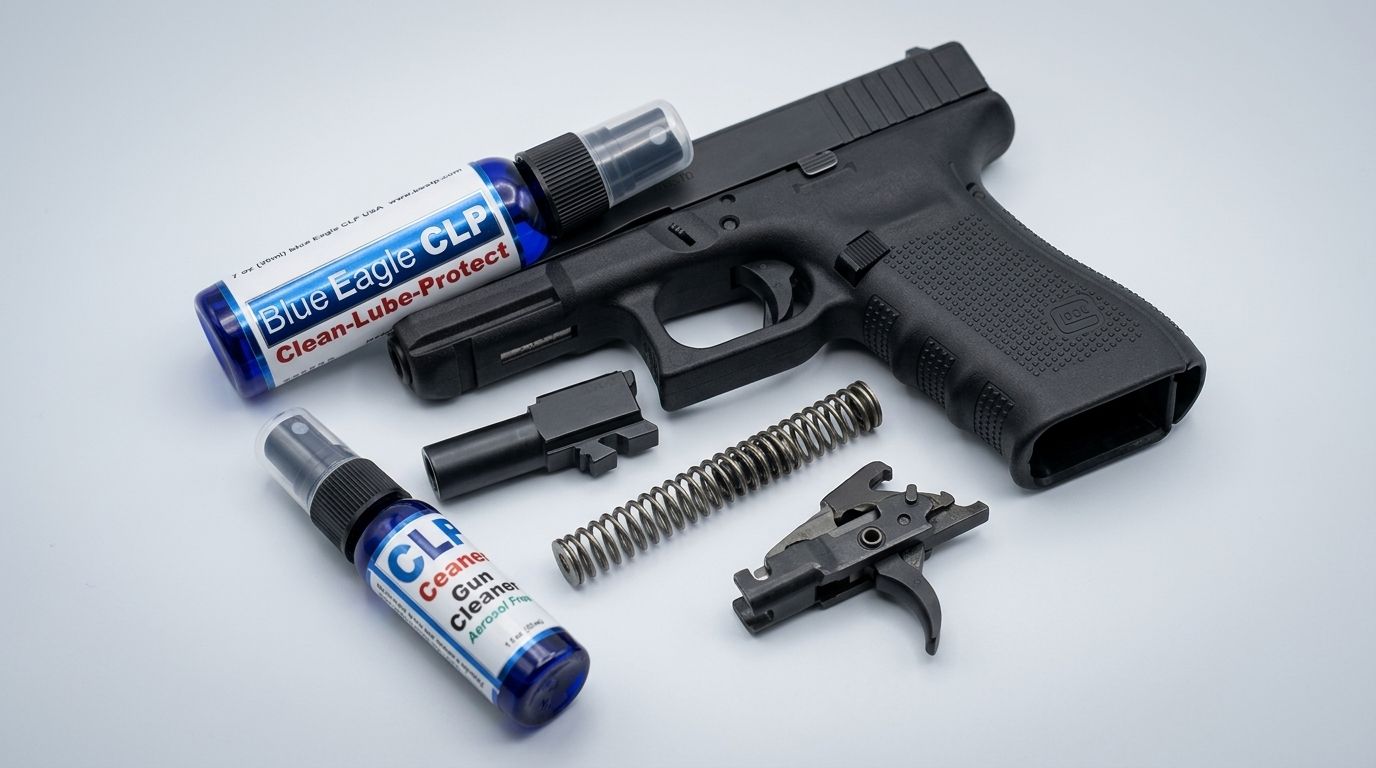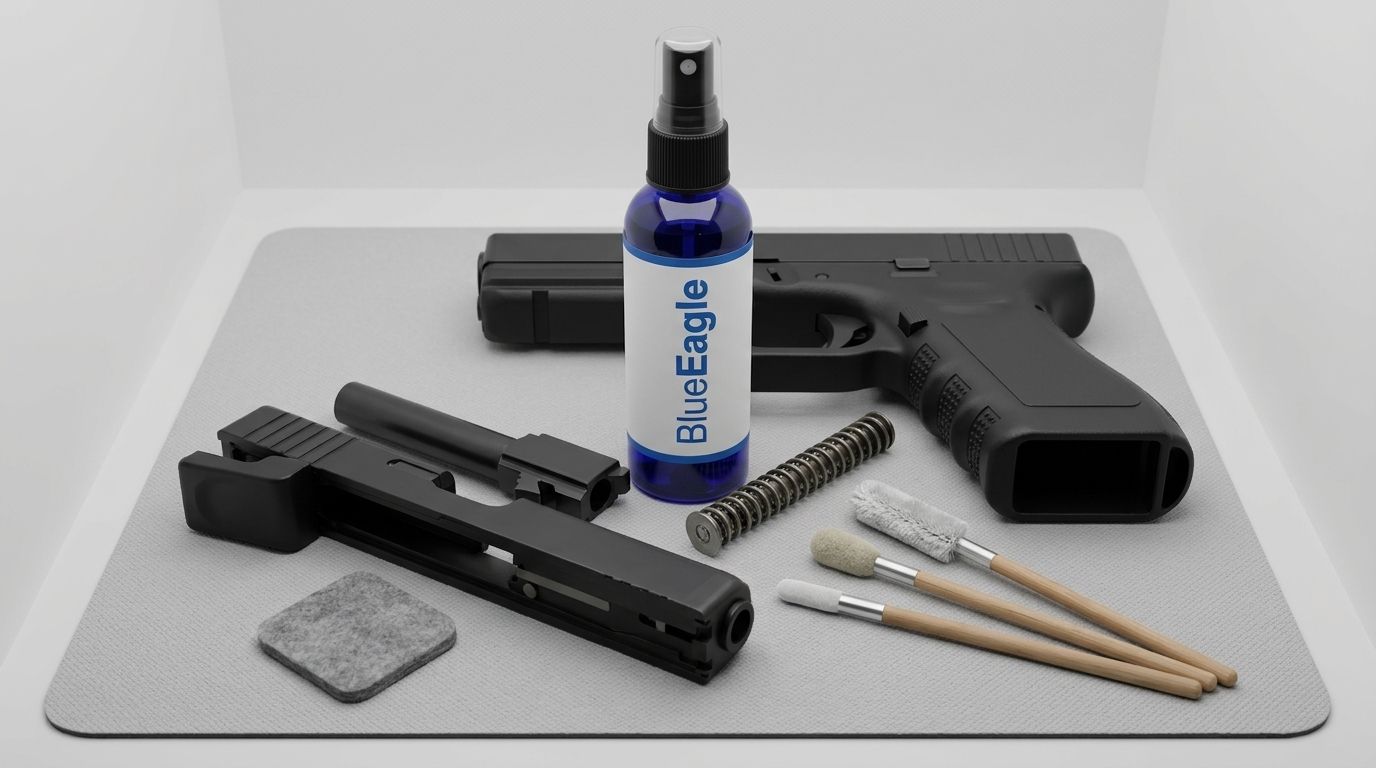
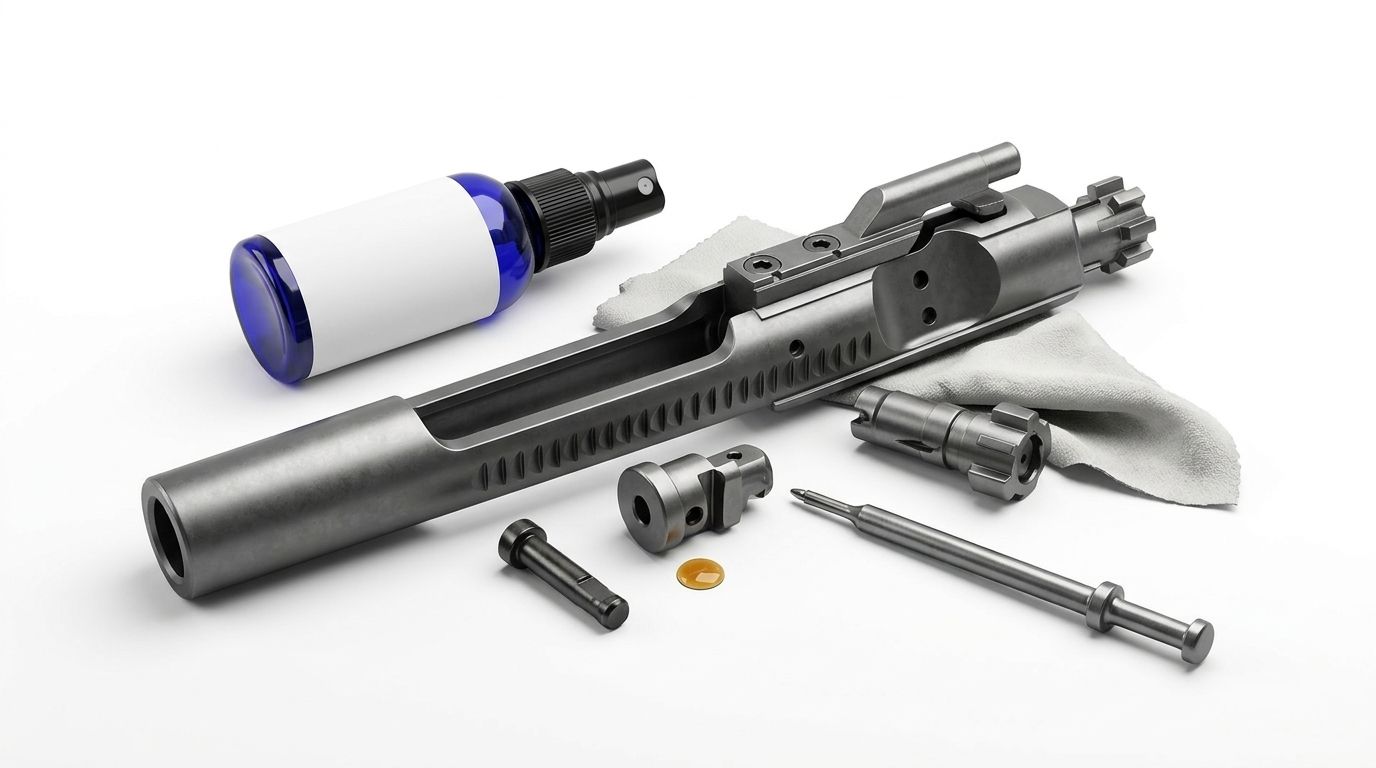
Rifle owners’ CLP maintenance is cleaning, lubricating and protecting approved firearm surfaces with the aim of keeping actions and bolts ready for routine use. Choosing a CLP gun cleaner for rifles in 2026 means separating action maintenance from bore cleaning and following your rifle manufacturer’s instructions for each.
- Choose a CLP gun cleaner for rifles by the firearm manual, product label and fouling you need to remove.
- BlueEagle CLP is best for rifle owners seeking a combined cleaner, lubricant and protectant for manufacturer-approved applications.
- Treat rifle bore cleaner and synthetic lubricant as separate jobs, not interchangeable formulas.
- Clean accessible fouling, remove excess product and lubricate only the points your rifle manufacturer identifies.
Why CLP maintenance matters for rifle owners
A rifle’s bolt, action, chamber and bore do not all need the same treatment. An exposed bearing surface needs a different maintenance decision from an internal firing-pin channel or a barrel with copper fouling. One bottle does not make every surface a lubrication point.
CLP describes 3 functions: cleaning, lubrication and protection. It does not establish compatibility with every finish, specify where oil belongs or prove that a formula removes every type of fouling. Those decisions require the firearm manual and the product instructions.
BlueEagle sells CLP products, bore cleaners and synthetic lubricants. Keep those categories distinct when building your 2026 bench routine: select the cleaner for the residue, then select lubrication for the approved contact points. Do not assume separate products share a formula or application method.
For everyday rifle owners, the practical goal is a repeatable routine without unnecessary disassembly. You should finish knowing which surfaces are clean, where lubrication belongs and which areas need inspection rather than more chemical treatment.
How to maintain rifle actions and bolts with CLP
1. Establish a safe bench and read the manual
Start with the rifle manufacturer’s unloading and maintenance procedure. Keep the muzzle in a safe direction, remove ammunition from the work area and verify the firearm is unloaded as the manual directs. Do not use the safety selector as a substitute for that verification.
Work on 1 rifle at a time so parts and instructions stay together. Use a stable surface, suitable lighting and the protective equipment specified on the product label or safety data sheet. Ventilation and handling requirements still apply to biobased products.
Keep 2 documents available: the firearm manual and the cleaning product’s instructions. Consult the safety data sheet for handling, exposure and disposal information; it does not replace the application directions.
- Follow the manufacturer’s unloading sequence before maintenance.
- Separate ammunition from the cleaning area.
- Confirm the permitted field-stripping procedure.
- Read product handling and protective-equipment instructions.
- Keep removed parts organized by rifle.
2. Identify the residue before choosing a cleaner
Inspect accessible surfaces before applying anything. Loose debris, oily residue and firmly attached fouling call for different amounts of work. Wiping away loose material first lets you see what still needs cleaning without immediately wetting the whole assembly.
Keep the action-cleaning decision separate from the bore-cleaning decision. A CLP label does not automatically establish copper-removal capability. If barrel fouling needs a dedicated treatment, choose a product labeled for that task and approved for the firearm.
Stop when inspection reveals damage, unexpected resistance or a condition the manual does not explain. More cleaner is not a repair. A qualified gunsmith is the appropriate next step for a mechanical concern outside the owner-maintenance procedure.
- Inspect the bolt face and accessible action surfaces.
- Wipe loose residue with suitable clean material.
- Distinguish bore fouling from action deposits.
- Check the cleaner’s stated uses and material restrictions.
- Set damaged or questionable parts aside for assessment.
3. Choose CLP for the approved routine task
BlueEagle CLP is best for rifle owners seeking a combined cleaner, lubricant and protectant for manufacturer-approved applications. Its role in your routine depends on the specific product instructions and the rifle’s maintenance requirements, not on the CLP name alone.
Start with the simplest method: wipe accessible residue, inspect the surface and apply an approved cleaner only where needed. A combined CLP provides a single-product route when its stated uses cover the job. The limitation is scope: a combined product is not proof of dedicated copper removal, universal finish compatibility or suitability inside every mechanism.
For your 2026 buying decision, compare the exact label against the intended task. Read the guide to using CLP without overapplying it before making a soaked assembly your default approach.
- Match the exact product to the manufacturer’s requirements.
- Check instructions for the surfaces you intend to treat.
- Follow stated application and contact-time directions.
- Keep separate formulas distinct in your routine.
- Choose a dedicated cleaner when the task requires one.
4. Clean accessible bolt and action surfaces
Use clean patches, cloths or suitable brushes according to the firearm and product instructions. Apply cleaner in a controlled way rather than flooding openings. Work on the accessible surfaces permitted by the field-stripping procedure, then remove loosened residue with clean material.
A bolt-action rifle and a semiautomatic rifle do not share one universal maintenance sequence. Gas-system components, bolt assemblies and internal channels require model-specific treatment. Do not extend a wiping instruction into permission to disassemble a bolt or soak an internal assembly.
Keep abrasive tools and improvised scraping methods off the bench unless the manufacturer specifically authorizes them. When residue remains, repeat the approved cleaning method rather than increasing force or inventing a longer soak.
- Clean only within the permitted disassembly level.
- Use tools suitable for the specified surfaces.
- Control where liquid enters openings and recesses.
- Replace dirty wiping material instead of redistributing residue.
- Inspect cleaned surfaces before applying more product.
5. Lubricate the specified contact points
Cleaning and lubrication are separate decisions even when the same bottle performs both jobs. After removing residue, follow the rifle manual’s lubrication diagram or instructions. Do not assume the entire bolt, chamber or action should carry the same film.
A dedicated synthetic lubricant belongs in the routine only where its instructions and the firearm manual support its use. BlueEagle offers synthetic lubricants alongside its cleaning products; that does not establish that every product uses the same formula or belongs on the same surfaces.
For a 2026 maintenance checklist, record locations rather than inventing a universal drop count. Application amount depends on the product delivery method and the firearm’s requirements. Visible excess is not evidence that lubrication is correct.
- Identify the manufacturer’s specified lubrication points.
- Keep lubricant away from prohibited areas.
- Apply the amount directed for that firearm and product.
- Remove excess as the instructions require.
- Keep cleaners and dedicated lubricants clearly identified.
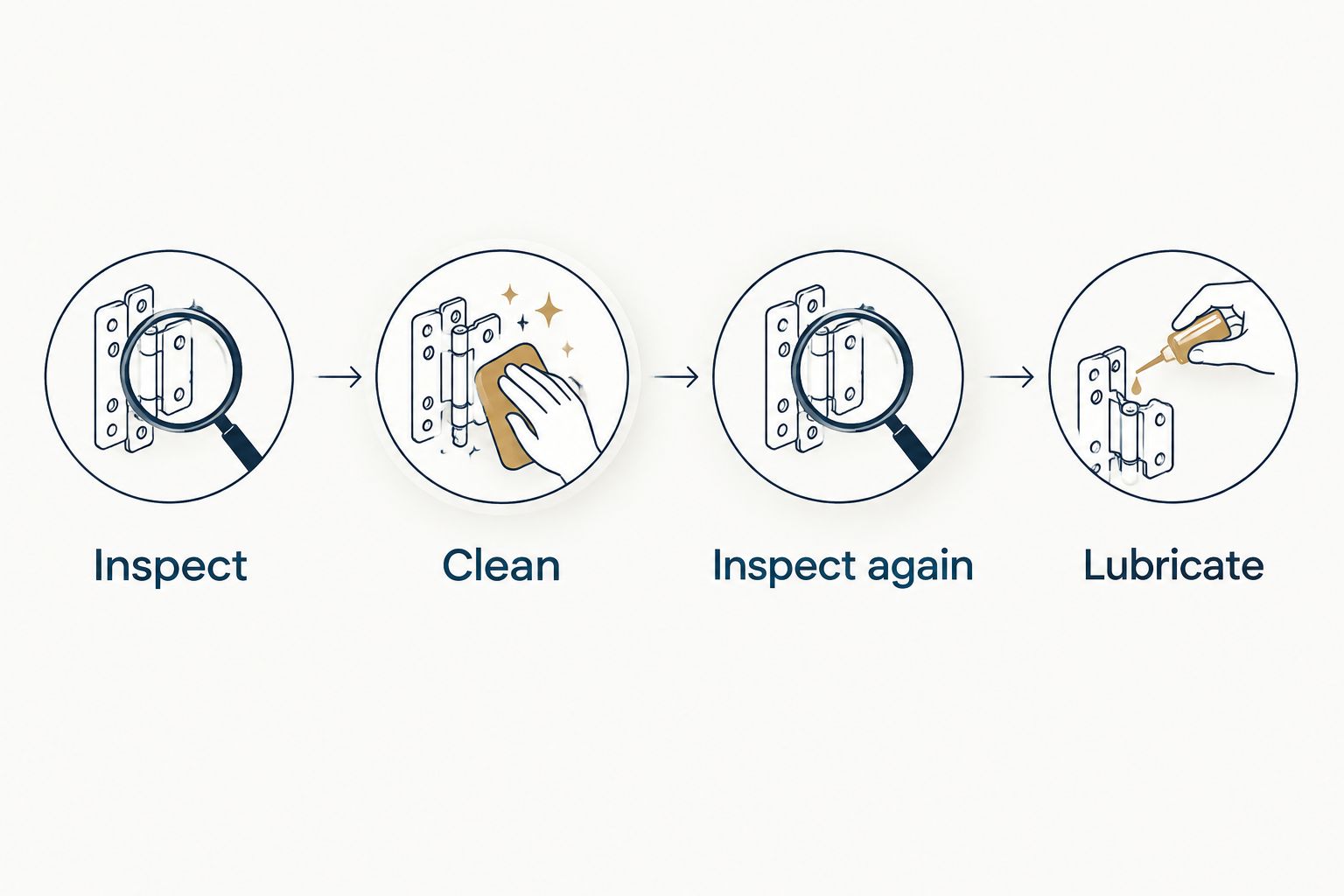
The bench sequence separates residue removal from the final lubrication decision. Inspection comes between them so you do not simply cover remaining fouling with fresh lubricant.
6. Reassemble, check and set the next inspection
Reassemble the rifle according to its manual, accounting for the parts removed during maintenance. Perform only the manufacturer’s prescribed post-maintenance checks, with the firearm unloaded and ammunition separate. Do not improvise a function test.
Before storage, inspect the exterior and apply protection only where approved. Storage conditions matter, but a generic calendar cannot replace the rifle manufacturer’s guidance or an inspection after moisture exposure. Do not assign every rifle the same cleaning interval.
Keep a short 2026 maintenance record naming the rifle, product, work completed and any unresolved concern. A useful entry describes what you observed, not just that you cleaned it. That makes the next inspection easier to interpret.
- Confirm correct reassembly against the manual.
- Complete the specified unloaded checks.
- Inspect approved surfaces for remaining residue or excess product.
- Record moisture exposure and unusual findings.
- Resolve mechanical concerns before returning the rifle to use.
Compare maintenance options for rifle owners
Choose the option by the job it performs. These categories overlap, but overlap does not make their instructions interchangeable. Best-for labels below describe the maintenance task, not a claim that one chemistry suits every rifle.
| Option | Best for | Practical advantage | Key limitation |
|---|---|---|---|
| BlueEagle CLP | Combined cleaning, lubrication and protection where approved | Brings the CLP functions into one product category | Exact applications and restrictions still depend on the specific label and firearm manual |
| Dedicated rifle bore cleaner | Barrel fouling covered by its label | Targets a defined bore-cleaning task | Does not automatically replace action lubricant or storage protection |
| Dedicated synthetic lubricant | Specified moving-part lubrication | Separates lubrication from residue removal | Lubricant labeling alone does not establish cleaning capability |
| Dry wiping and inspection | Loose residue and condition checks | Lets you assess accessible surfaces before adding chemicals | Does not replace required cleaning, lubrication or protection |
For routine maintenance, start with inspection and the least complicated approved method. Add a dedicated product when the task calls for it, not because more bottles necessarily produce a better result.
Review your CLP options
Match the product instructions to your rifle’s cleaning, lubrication and protection requirements.
Common mistakes rifle owners make
Treating the bolt as one lubrication surface
A bolt assembly contains surfaces with different roles. Coating everything skips the location-specific instructions that matter. Use the rifle manual to distinguish approved contact points from areas that must remain free of lubricant or excess product.
Using action cleaner as an assumed copper remover
Carbon cleaning and copper removal are different product-selection questions. Check the stated fouling-removal capability before starting a bore treatment. Do not extend a contact time or combine chemicals to compensate for a product that does not cover the task.
Equating biobased with harmless
Biobased describes a material attribute, not permission to ignore handling instructions. Read the exact product’s label and safety data sheet. Neither biobased nor biodegradable establishes universal skin safety, finish compatibility or an unrestricted disposal method.
Cleaning deeper whenever the action feels wrong
Unexpected resistance is an inspection finding, not an instruction to apply more CLP. Stop and follow the manufacturer’s troubleshooting guidance. Leave disassembly beyond the owner-maintenance procedure to a qualified professional.
FAQ
What’s the best CLP gun cleaner for rifles?
The best CLP gun cleaner for rifles is one whose stated applications match your rifle manufacturer’s cleaning, lubrication and protection requirements. BlueEagle CLP is an option for a combined-product routine; verify the exact product instructions before use.
Can I use CLP on a rifle bolt?
Use CLP on rifle bolt surfaces only where the firearm manufacturer and product instructions permit it. A bolt assembly is not one uniform lubrication surface, so follow location-specific directions rather than coating every part.
Does CLP replace rifle bore cleaner?
CLP replaces a separate bore cleaner only when its stated uses cover the fouling and the firearm manufacturer approves the application. Do not assume a general CLP removes copper fouling or follows the same treatment procedure as a dedicated bore cleaner.
How much lubricant should I put on a rifle action?
Apply the amount and use the locations specified by your rifle manufacturer and lubricant instructions. There is no universal drop count for all rifle actions, and excess product does not prove that the correct surfaces are lubricated.
Should I lubricate the chamber after cleaning?
Follow your rifle manufacturer’s chamber instructions rather than applying a general lubrication rule. Do not treat a chamber as a moving-part lubrication point simply because the cleaning product also contains lubricant.
Is biobased gun cleaner harmless to handle?
Biobased gun cleaner is not automatically harmless to handle. Follow the exact product label and safety data sheet for protective equipment, ventilation, exposure precautions and disposal.
How often should I clean my rifle in 2026?
Set your rifle-cleaning routine around manufacturer guidance, use, exposure and inspection findings, not the calendar year. Moisture exposure, storage conditions and observed fouling are reasons to reassess the routine rather than rely on a universal interval.
One last thing
A cleaner-looking bolt is not proof of correct lubrication. Before putting the rifle away, compare the finished job with the manual’s lubrication instructions. That final check catches a mistake that another pass with a wet patch will not: treating cleaning coverage as lubrication guidance.