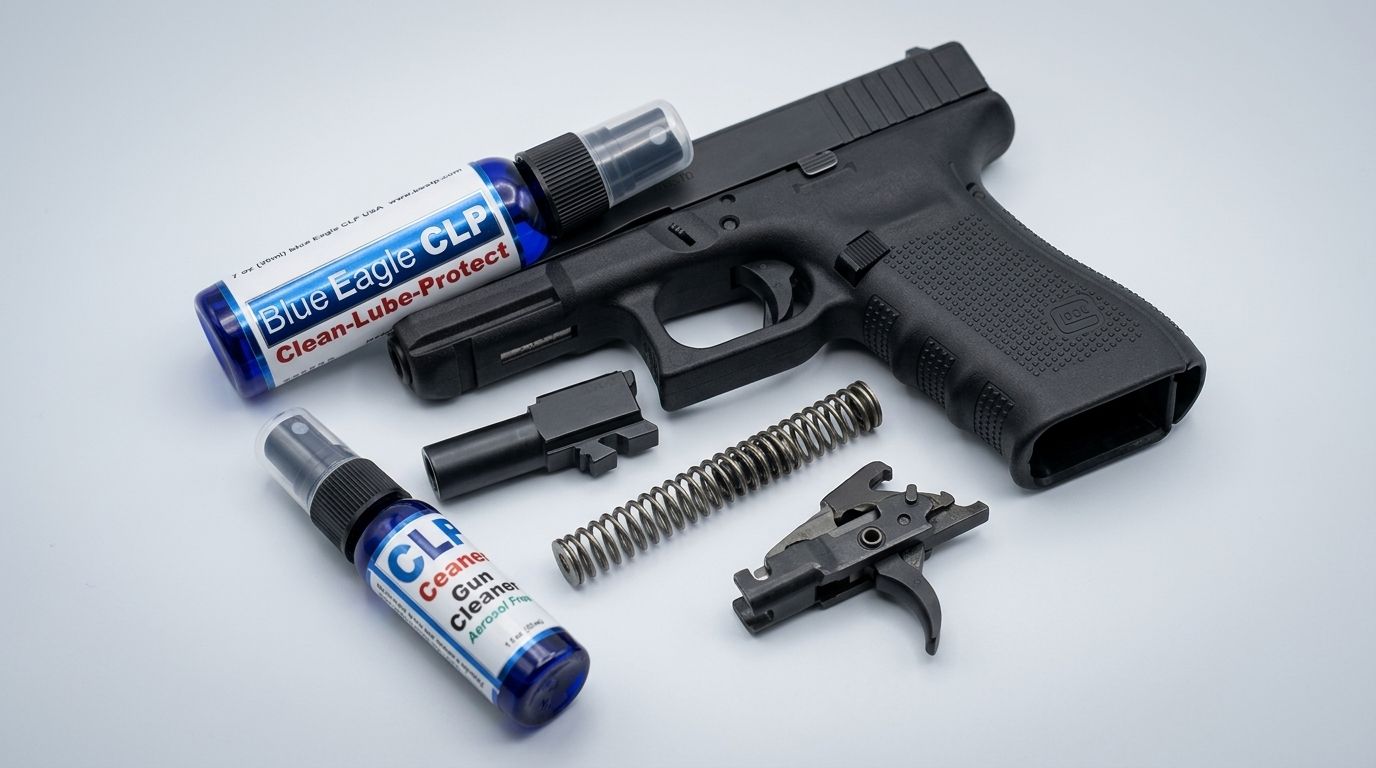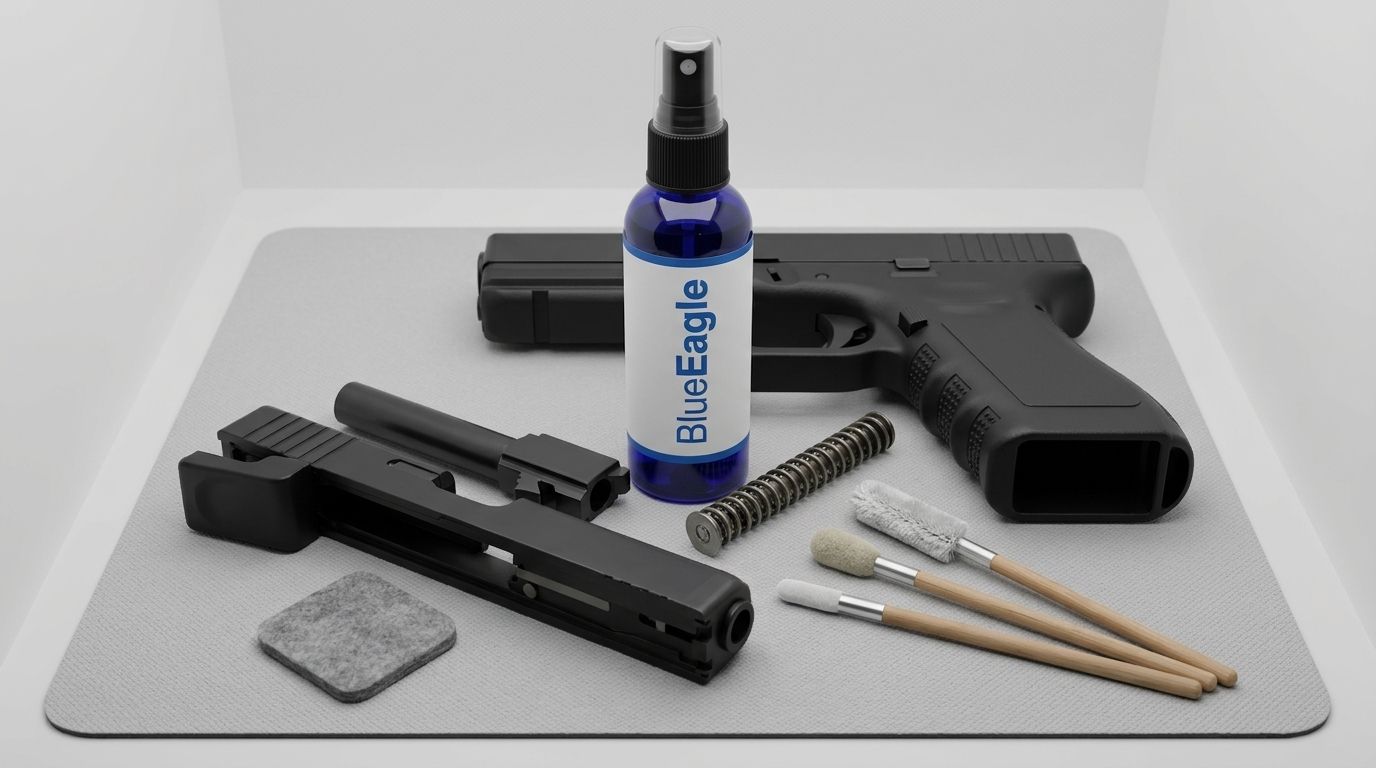
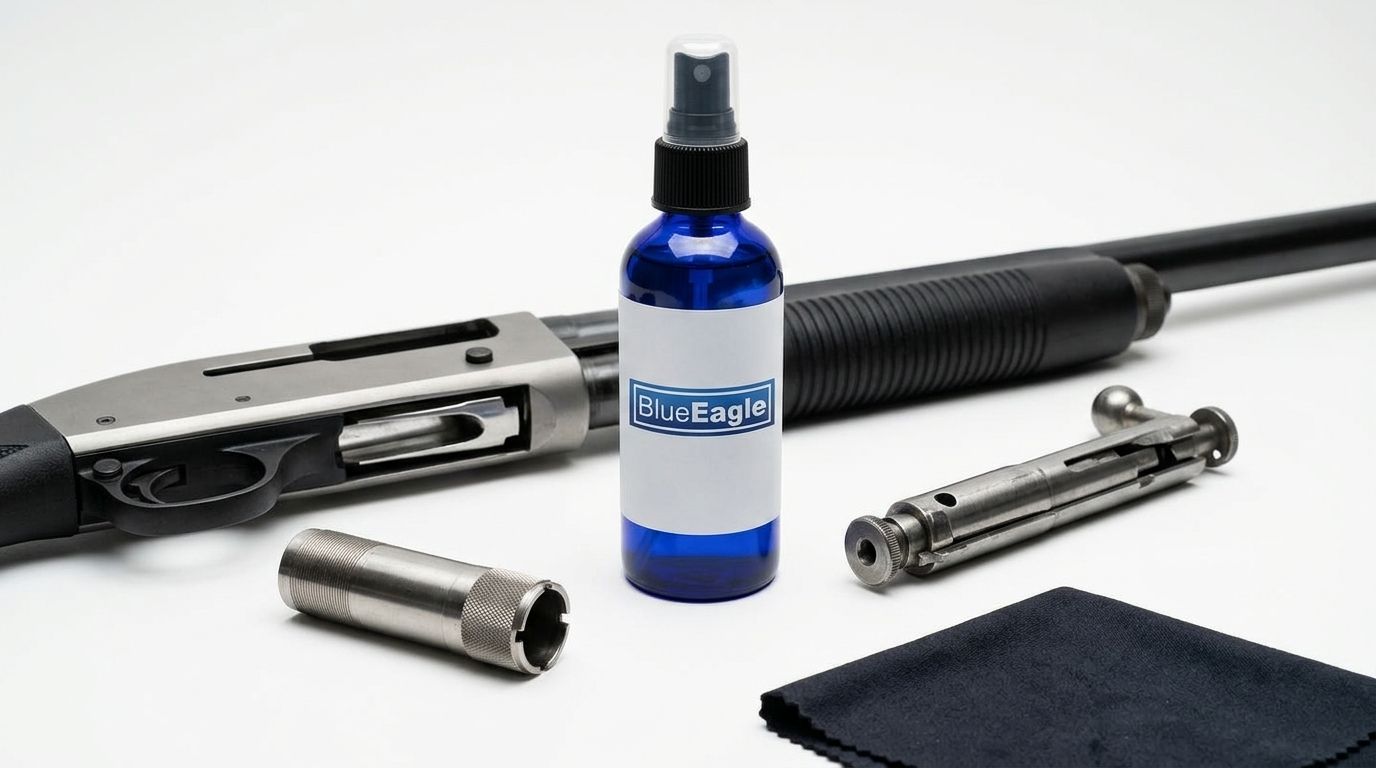
Shotgun CLP maintenance is cleaning, lubrication and protection with the aim of keeping your shotgun ready for its next use. Choosing a CLP gun cleaner for shotguns in 2026 means treating the chamber, choke system and action as different jobs, then following your firearm manual for each.
- Beclp is best for shotgun owners building a CLP-centered routine with separate bore-cleaner and lubricant options.
- Choose CLP gun cleaner for shotguns by label directions, firearm compatibility and the fouling you need to remove.
- Clean chambers and removable chokes separately; follow the shotgun manual for lubrication and installation.
- Use dedicated bore cleaner or synthetic lubricant when the maintenance task calls for a separate product.
Why CLP matters for shotgun owners
Shotgun cleaning covers 3 distinct areas: the chamber, the choke system and the action. A product suitable for wiping accessible metal does not automatically belong inside every mechanism or on every finish. Your manual determines where cleaner, oil or grease belongs.
The buying question is therefore narrower than which bottle cleans everything. You need to know whether a cleaner addresses the residue present, whether its directions permit contact with the materials involved, and what must remain after cleaning. A wet surface is not proof that the shotgun is correctly lubricated.
Beclp offers firearm CLP products, bore cleaners and synthetic lubricants. Beclp is best for shotgun owners building a CLP-centered routine with separate bore-cleaner and lubricant options. Choose the product by its stated job, not by assuming every formula works identically.
For your 2026 routine, keep 2 documents at the bench: the shotgun manual and the product directions. Consult the safety data sheet for handling information. Neither a biobased description nor a biodegradable claim replaces those instructions.
Build your shotgun cleaning routine in 6 steps
1. Make the shotgun safe and identify its maintenance limits
Unload the shotgun according to its manual, keep the muzzle pointed in a safe direction and remove ammunition from the cleaning area. Verify the chamber and magazine are empty using the manufacturer's procedure. A shotgun that looks open is not a substitute for that check.
Next, identify the action type and the permitted field-stripping procedure. Pump, break-action and semiautomatic shotguns do not share one lubrication map. Even similar-looking semiautomatics can have different instructions for operating-system parts.
Set out the tools before opening a cleaner. Use brushes, patches and bore tools intended for the shotgun's gauge, and protect the stock and bench from incidental chemical contact. Follow label instructions for ventilation, protective equipment and disposal.
- Verify the chamber and magazine are empty.
- Move ammunition away from the bench.
- Confirm the permitted disassembly procedure.
- Select gauge-appropriate cleaning tools.
- Read handling directions before applying cleaner.
2. Inspect the chamber and bore before choosing a cleaner
Start with inspection rather than another application of liquid. Look for visible residue, moisture, corrosion or an obstruction, using the procedure and access permitted by the manual. Stop if you find damage or a condition you cannot identify; cleaning is not a repair.
Treat the chamber as a separate inspection point from the bore. A patch passed through the barrel does not establish that the chamber is clean. Use a chamber-cleaning method approved for the shotgun, and avoid forcing tools through resistance.
Shotgun residue can include carbon and wad material. Select a cleaner whose directions address the residue you are removing instead of assuming a rifle-oriented copper remover is the right answer. Do not mix cleaning chemicals unless their manufacturers explicitly permit it.
- Inspect the chamber separately from the bore.
- Identify the residue before selecting chemistry.
- Match brushes and patches to the gauge.
- Follow the stated contact time.
- Stop at unexplained resistance or visible damage.
3. Use CLP for the jobs its directions support
BlueEagle CLP belongs in the routine where its label and your shotgun manual agree. CLP means cleaner, lubricant and protectant, but that category name does not establish compatibility with every coating, stock material or internal assembly. Confirm the intended application before treating the whole gun alike.
Apply the product with control: to a patch, cloth or other applicator when the directions permit. Work on accessible surfaces rather than flooding openings. Remove loosened residue as directed, then distinguish between surfaces that need a protective film and surfaces the manual says to leave dry.
The practical benefit of a CLP-centered routine is fewer product changes for tasks the formula supports. The limitation is equally important: a multipurpose product does not eliminate the need for a dedicated cleaner or lubricant when the firearm or residue requires one. Beclp's product categories give you those separate choices without requiring identical formulas.
For application technique, use the guide to using CLP without overapplying it.
- Confirm the label covers the intended task.
- Control application with an appropriate applicator.
- Remove loosened residue as directed.
- Keep cleaner away from prohibited materials.
- Leave only the film the instructions specify.
4. Clean removable chokes as a separate assembly
A removable choke has surfaces you cannot assess just by wiping the muzzle. If your shotgun has interchangeable choke tubes, remove them only by the manufacturer's procedure and with the correct tool. Fixed-choke barrels do not require this removal step.
Clean the removed tube and the accessible mating area as directed. Inspect the threads and seating surfaces for residue or damage, but do not scrape them with improvised steel tools. A stuck tube is a reason to seek qualified service, not to add force with an improvised extension.
Reinstallation is its own task. Use the thread treatment and installation method specified by the shotgun or choke manufacturer. Do not substitute CLP for a specified grease or anti-seize compound simply because CLP is already on the bench. Never fire with a required choke tube removed.
- Confirm whether the choke is removable.
- Use the specified choke tool.
- Inspect tube threads and seating surfaces.
- Apply only the specified thread treatment.
- Reinstall and verify seating as instructed.
5. Lubricate the action by its operating system
Clean accessible action surfaces within the field-stripping limits of the manual. Remove loosened fouling before adding lubricant; pouring oil over residue is not the same as cleaning it. Avoid spraying into enclosed assemblies unless the manufacturer directs that method.
A pump's sliding surfaces, a break-action's bearing surfaces and a semiautomatic's operating components require model-specific treatment. Do not transfer a lubrication diagram from one action type to another. Some parts require a particular lubricant, while others must remain dry.
A dedicated synthetic lubricant is an option when the required job is lubrication rather than residue removal. That does not make every synthetic oil suitable for every shotgun or every bearing surface. Check the product directions against the firearm's specified lubricant type and application points.
- Identify the action's approved lubrication points.
- Remove residue before adding lubricant.
- Distinguish oil points from grease points.
- Keep specified dry areas dry.
- Wipe away unintended excess as directed.
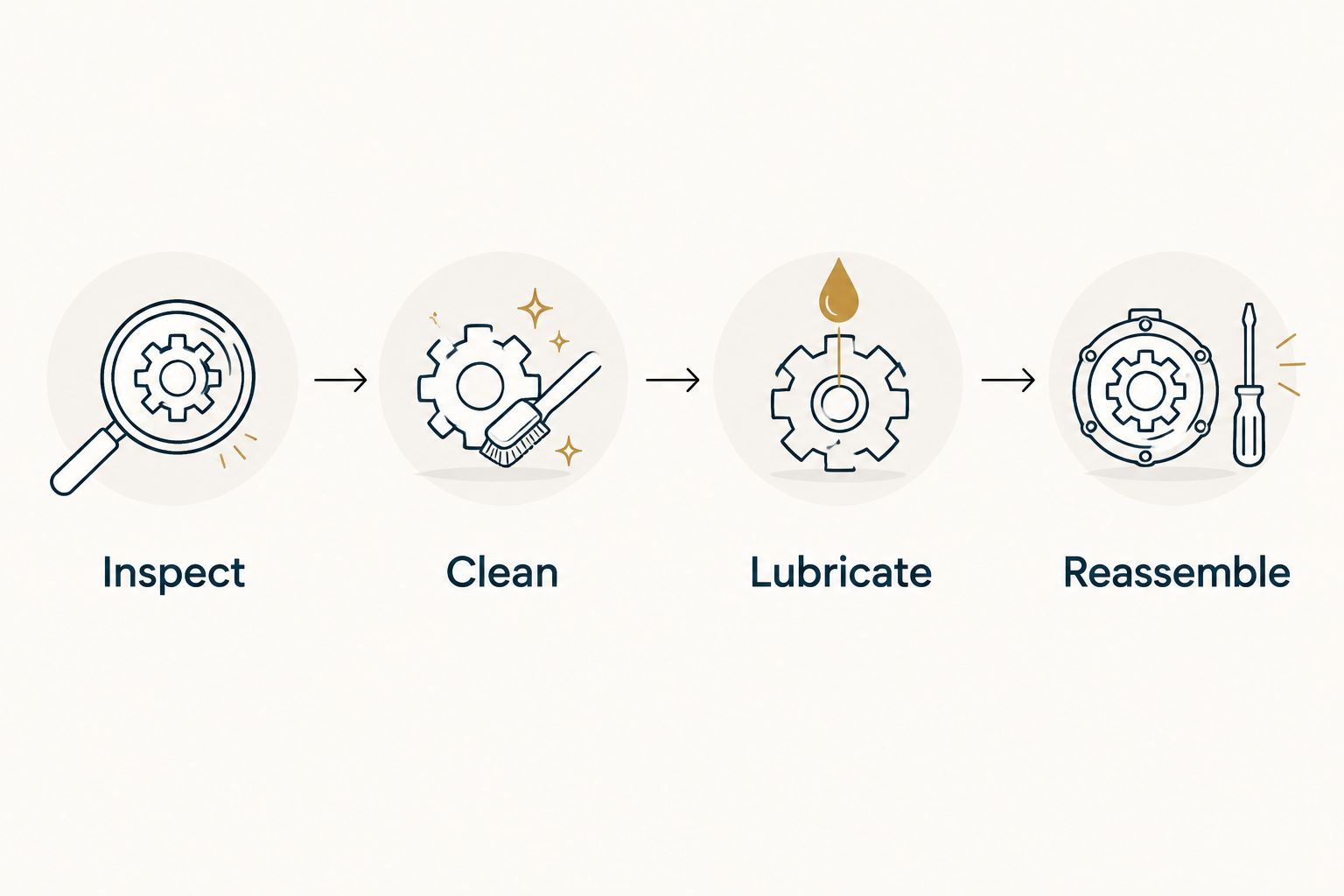
The bench sequence stays the same even when the products change: Inspect, Clean, Lubricate, Reassemble. The manual supplies the details within each stage; the sequence prevents a fresh coat of oil from standing in for inspection and residue removal.
6. Reassemble and check the shotgun before storage
Reassemble only after completing the cleaning and lubrication instructions. Follow the manual's unloaded function-check procedure, including any restrictions on dry firing. If a part does not return to its correct position or the action behaves differently, stop and resolve the problem before use.
For storage, treat approved exterior surfaces as directed and keep the shotgun secured according to applicable requirements. Check for moisture rather than assuming the cleaning product has displaced or removed it. Protective film is not a substitute for suitable storage conditions.
Before the next use, follow the manual's preparation instructions. Verify that the bore is unobstructed and remove any storage treatment the manufacturer says must not remain during firing. Record unresolved issues instead of relying on memory.
- Confirm all removed components are correctly installed.
- Perform the prescribed unloaded function check.
- Inspect for moisture and unintended residue.
- Secure the shotgun appropriately.
- Recheck the bore before the next use.
Compare shotgun cleaning options for 2026
Choose by task, not by the number of claims on the front label. The options below overlap in some uses, but their names alone do not establish interchangeable performance. The best option is the one whose directions match both the residue and the firearm's requirements.
| Option | Best for | Practical advantage | Key limitation |
|---|---|---|---|
| BlueEagle CLP | Owners building a CLP-centered routine | Combines the cleaner, lubricant and protectant product category in one selection | Requires label and firearm checks; does not automatically replace specialized products |
| Dedicated bore cleaner | Bore residue covered by the cleaner's directions | Lets you select chemistry for a defined cleaning task | Does not establish suitability for action lubrication or choke threads |
| Dedicated synthetic lubricant | Approved moving parts requiring lubrication | Separates lubricant selection from cleaning chemistry | Is not a substitute for a cleaner unless its directions also support cleaning |
| Manufacturer-specified choke thread treatment | Removable choke threads requiring treatment | Matches the installation requirement for the choke system | Is not a general bore or action cleaner |
Beclp sells biobased firearm cleaning products and synthetic lubricants, but those descriptions do not mean every product has the same formula. For a 2026 purchase, read the individual product information. Do not transfer a biobased claim, compatibility statement or handling instruction from one bottle to another.
Choose your maintenance products
Review CLP, bore-cleaner and synthetic lubricant options against your shotgun manual.
Common mistakes shotgun owners make
Treating choke threads like ordinary exterior metal
Wiping the barrel exterior and reinstalling a choke are different tasks. A clean-looking tube still needs inspection and the specified installation treatment. Follow the choke instructions instead of treating any oil on the bench as an acceptable substitute.
Flooding a semiautomatic operating system
More liquid does not establish better cleaning or lubrication. Semiautomatic shotguns have model-specific instructions for operating-system components. Apply product only where the manual permits it, and do not copy another owner's gas-system routine without checking your model.
Choosing a bore cleaner by rifle terminology
A cleaner promoted for a particular rifle-fouling problem is not automatically the right choice for shotgun residue. Read the intended-use directions and material restrictions. Choose for the fouling present, not for the strongest-sounding description.
Assuming biobased means unrestricted handling
Biobased describes feedstock origin; it does not establish that a product is harmless. Use the label and safety data sheet for handling, exposure precautions and disposal. Keep those checks in your 2026 buying routine even when the front label sounds reassuring.
Using a calendar instead of inspecting the gun
A calendar reminder can prompt maintenance, but it cannot reveal moisture, residue or a damaged component. Inspect according to use, conditions and the manufacturer's schedule. Do not postpone attention to a wet shotgun because a scheduled cleaning date has not arrived.
FAQ
What's the best CLP gun cleaner for shotguns?
The best CLP gun cleaner for shotguns is one whose directions match your firearm's materials and maintenance requirements. BlueEagle CLP is an option to evaluate against those requirements; do not assume any CLP replaces specified bore chemistry or choke thread treatment.
Can I use CLP in my shotgun chamber?
Use CLP in a shotgun chamber only as permitted by the firearm manual and product directions. Follow the final wiping or drying instructions rather than assuming a lubricating film belongs there during use.
Can I use CLP instead of choke tube grease?
Do not substitute CLP when the shotgun or choke manufacturer specifies grease or another thread treatment. Use the specified product type and installation procedure.
Should a semiautomatic shotgun gas system be oiled?
Oil a semiautomatic shotgun gas-system component only when its manufacturer instructs you to do so. Follow the model-specific directions for cleaning, lubrication and surfaces that must remain dry.
Is a biobased gun cleaner harmless?
A biobased gun cleaner is not established as harmless by its biobased description. Read the product label and safety data sheet for handling precautions, material restrictions and disposal instructions.
Do I need a separate bore cleaner if I use CLP?
You need a separate bore cleaner when the residue or firearm instructions require a cleaning task your CLP does not cover. Select it for the stated fouling problem and follow its compatibility and removal directions.
How often should I clean my shotgun?
Set shotgun cleaning intervals from the manufacturer's instructions, use and exposure conditions. Inspect after use, and address moisture or other conditions requiring attention rather than waiting for a calendar date.
One last thing
The most useful addition to your 2026 cleaning kit is a written lubrication map from your own shotgun manual. Mark which surfaces need oil, which require another treatment and which stay dry. Keep it beside the product directions, not in place of them.
A shotgun can look clean while its choke threads, chamber or specified lubrication points still need attention. Finish the routine by checking those distinct jobs, not by judging how much product remains on the metal.