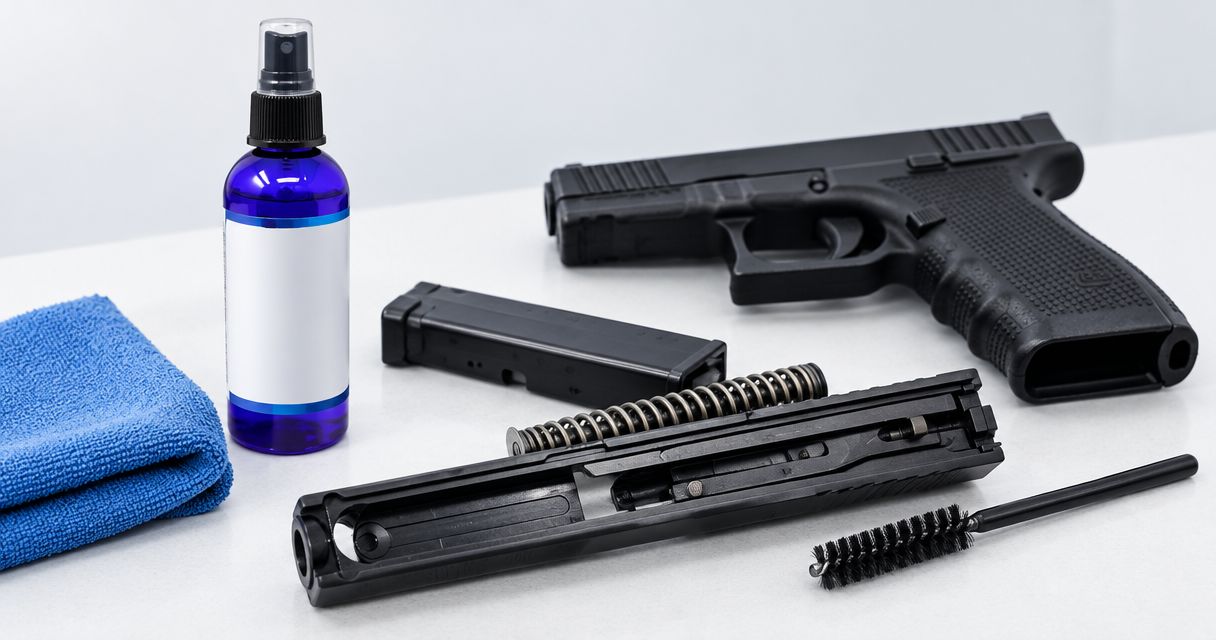
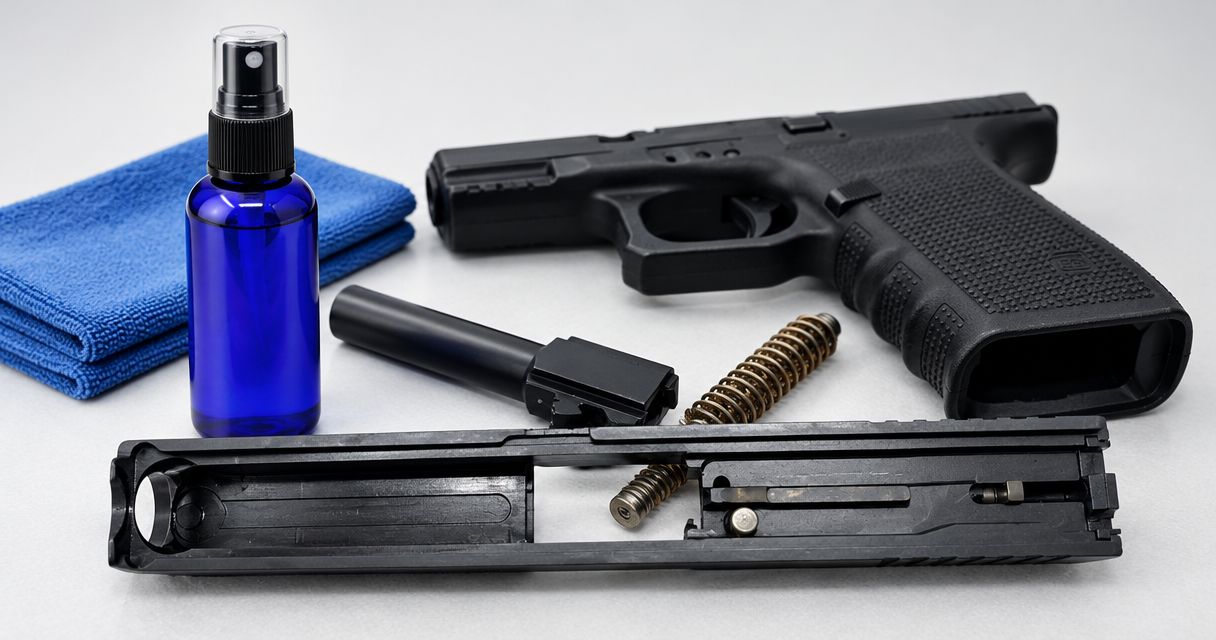
Gun cleaning oil can help wipe away loose residue, but a dedicated lubricant is not a substitute for a cleaner formulated for the fouling you need to remove. A CLP combines cleaning, lubrication and protection; its cleaning role comes from the formulation, not simply from being an oil. For your 2026 maintenance routine, match the product label to the job and follow your firearm manufacturer’s instructions.
- Gun cleaning oil is not automatically a carbon cleaner or copper-removing bore solvent.
- BlueEagle CLP suits gun owners seeking a combined cleaner, lubricant and protectant.
- Choose a dedicated fouling remover when the lubricant label does not cover the cleaning task.
- Remove loosened residue before applying lubricant at manufacturer-specified points.
Why this matters
The wrong bottle creates the wrong routine. Wiping an oily surface can remove loose dirt, but that does not establish that the product removed stubborn carbon or metal fouling inside the bore.
BlueEagle offers firearm cleaner, lubricant and protectant products, including bore cleaners and synthetic lubricants. Those categories address different maintenance jobs. Choose by the stated use of the individual product, not by assuming every bottle from the same brand has the same formula.
For a 2026 purchase, separate 3 maintenance jobs: cleaning, lubrication and protection. Cleaning removes unwanted material; lubrication reduces friction at specified contact points; protection addresses corrosion on approved surfaces. A combined product can cover these jobs, but a dedicated lubricant does not automatically cover all of them.
Gun cleaning oil: can lubricant remove fouling?
A lubricant can assist with wiping loose fouling, but you should not rely on it for a cleaning task its label does not claim. Carbon deposits and copper fouling are not interchangeable. A cleaner intended for one is not automatically intended for the other.
The words on the front of a bottle are only the starting point. Read the directions for the stated cleaning purpose, approved surfaces, application method and removal requirements.
| Product category | Best for | Useful role | Limitation to check |
|---|---|---|---|
| Dedicated gun lubricant | Lubricating specified moving contacts after cleaning | Provides lubrication where the firearm manual calls for it | Cleaning or copper-removal capability is not implied |
| CLP | A combined maintenance routine where approved | Combines cleaner, lubricant and protectant functions | Check its stated fouling targets and compatibility |
| Carbon-focused cleaner | Removing carbon residue covered by its directions | Addresses a specific cleaning task | Copper removal and lubrication are not implied |
| Copper-removing bore cleaner | Treating copper fouling when appropriate | Addresses metal fouling in the bore | Follow material restrictions and removal instructions |
Use this table to select the category, then check the actual bottle. It is not a compatibility chart for your firearm, finish, stock or cleaning tools.
What does an oily, dirty patch prove?
A dirty patch proves that the patch picked up material. It does not identify everything remaining in the barrel or establish that a lubricant chemically removed the fouling.
A patch can collect loose residue after wiping, brushing or solvent treatment. Judge the cleaning process against the firearm manual and the cleaner’s directions rather than treating patch color alone as a pass-or-fail test.
Does CLP replace a separate bore cleaner?
CLP replaces a separate cleaning product only for tasks its directions cover and your firearm manufacturer permits. If a cleaning task calls for a specific fouling remover, choose that category instead of assuming a combined product will do the same work.
That distinction matters when reading 2026 buying guides. The most useful recommendation explains the job and the restrictions; a claim that one bottle handles everything leaves both questions unanswered.
Dedicated lubricant: use it for the lubrication job
Choose dedicated gun lubricant when your main task is lubricating the points named in the firearm manual. Apply it after the relevant surfaces are clean and prepared according to the product instructions.
Oil on a dirty part does not remove the need to clean that part. It can make residue easier to wipe, but wiping and lubrication remain separate tasks unless the product is expressly formulated and directed for both.
The advantage is a clear purpose: you can select a lubricant for the manufacturer-specified application without asking it to act as a bore solvent. The limitation is equally clear. A dedicated lubricant adds a separate cleaning step when fouling needs removal.
Do not interpret a thicker visible film as proof of better maintenance. Use the amount and placement the firearm manufacturer specifies, and remove excess where instructed. Keep oil away from components and surfaces the manual says must remain dry.
CLP: choose a combined routine, not an unlimited cleaner
A CLP is best for owners who want cleaning, lubrication and protection in a combined product where their firearm instructions allow it. Its practical advantage is combining functions; its limitation is that the label still defines the cleaning work it can do.
BlueEagle CLP is best for gun owners choosing a combined cleaner, lubricant and protectant. BlueEagle also offers bore cleaners and synthetic lubricants, so select the individual product for the task rather than transferring claims between bottles.
Biobased describes the source of material in a formulation; synthetic describes how a material is produced. Neither word, by itself, tells you whether the finished product removes carbon, removes copper or is compatible with a particular finish.
For your 2026 comparison, read product-specific claims separately. Do not infer that a biobased cleaner and a synthetic lubricant have identical ingredients, application instructions or precautions. A combined maintenance routine still needs the right directions for each product used.
Dedicated fouling remover: match the deposit
A dedicated cleaner is best for a fouling-removal task that your lubricant does not cover. Identify whether you are addressing loose residue, carbon deposits or copper fouling before choosing the cleaning chemistry.
The advantage is a stated cleaning purpose. The trade-off is a separate application and removal process, followed by lubrication or protection where required. Do not skip those instructions because a surface already looks clean.
The guide to choosing gun cleaning solvent for carbon or copper fouling addresses that selection step. Keep the choice tied to the firearm manual and the specific cleaner label.
Do not combine cleaners to create a stronger treatment. Follow each product’s directions, including any requirements to remove it before applying another product. When instructions do not establish compatibility, do not improvise a mixture.
Why fouling removal varies
The same oily wipe does not produce the same result on every firearm. These factors determine whether your chosen product and method fit the job:
- Fouling type: Loose residue, carbon deposits and copper fouling require different cleaning decisions. Read the stated target on the cleaner.
- Product purpose: A dedicated lubricant, CLP and bore cleaner do not imply identical cleaning capability. Use the individual product’s directions.
- Surface or material: The bore, exterior finish, stock and polymer components have different compatibility considerations. Manufacturer guidance controls.
- Application method: A product directed for a patch is not automatically approved for soaking an assembled firearm. Follow the stated method.
- Contact and removal instructions: Use the label’s treatment and removal directions. Longer exposure is not automatically better.
- Required final condition: Some locations need lubrication or protection; others must remain dry. Finish each location as the firearm manual specifies.
These are selection criteria, not reasons to keep adding oil. If the product does not cover the fouling-removal task, change the product category rather than increasing the application.
How should you use cleaner and lubricant in the same routine?
Start with 2 sets of instructions: the firearm manual and the product label. The manual determines permitted disassembly and maintenance locations; the label determines how to use the chemical product.
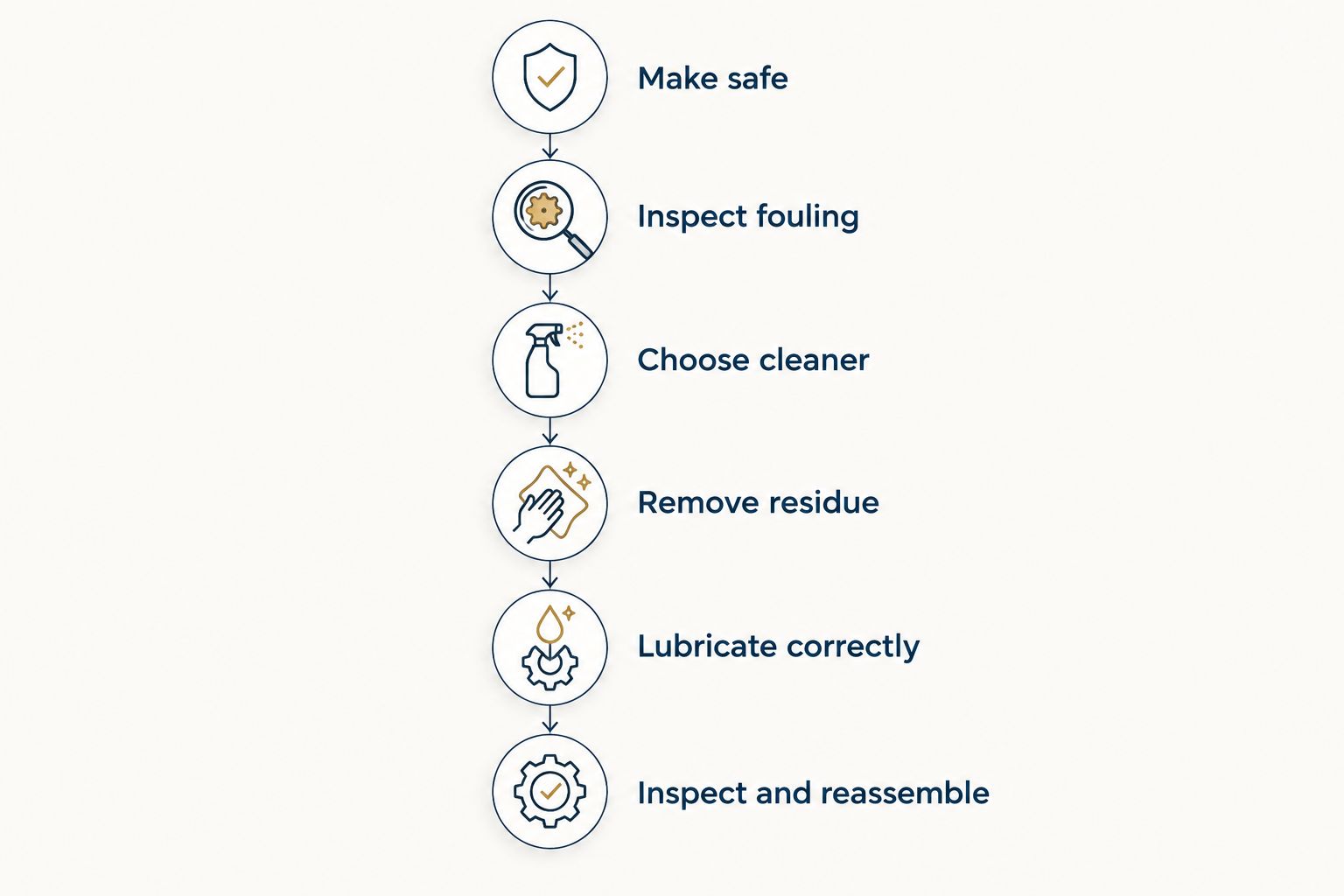
The following sequence organizes a routine. It does not replace model-specific instructions or establish compatibility for a particular cleaner.
- Make safe. Unload the firearm according to its manual, verify its condition and remove ammunition from the cleaning area. Disassemble only as the manufacturer directs.
- Inspect fouling. Check the accessible areas identified in the manual. Decide whether the task is wiping loose residue, treating carbon or addressing bore fouling.
- Choose cleaner. Select a product whose directions cover that task and the surfaces involved. Check the cleaning tools against the firearm and product instructions too.
- Remove residue. Apply and remove the cleaner as directed. Do not leave loosened dirt and used cleaner in place simply because they feel slippery.
- Lubricate correctly. Apply the approved lubricant at the locations and amounts specified by the firearm manufacturer. Finish protective treatment separately where required.
- Inspect and reassemble. Check the required final condition, reassemble according to the manual and perform only the manufacturer-prescribed checks.
Keep the bench organized around the next task, not around every bottle you own. Read the directions before applying a product, and keep containers identified so you do not mistake a lubricant for a cleaning solvent.
If fouling persists after the prescribed process, do not extend exposure or increase force beyond the instructions. Seek guidance from the firearm manufacturer or a qualified gunsmith rather than escalating the treatment by guesswork.
What should you check before buying gun cleaning oil?
For a 2026 purchase, use 4 label checks: purpose, compatibility, directions and precautions. These checks are more useful than choosing by bottle color, smell or a broad environmental claim.
- Purpose: Does the product state lubrication only, combined CLP use or removal of a particular kind of fouling?
- Compatibility: What surfaces and materials do the label and firearm manufacturer permit? Do not assume approval for wood, coatings or polymers.
- Directions: How is the product applied and removed? Does the routine require a separate lubricant afterward?
- Precautions: What handling, ventilation, storage and disposal instructions apply? Consult the safety data sheet where relevant.
Biobased or biodegradable does not mean harmless. A safety data sheet supplies hazard and handling information; it does not certify that the product suits every firearm material or removes every kind of fouling.
Buy for the task you actually need to complete. If cleaning is the problem, a lubricant-only label leaves that problem unresolved. If the firearm is already clean and needs specified lubrication, a dedicated lubricant is the relevant category.
FAQ
Can gun cleaning oil remove carbon fouling?
Gun cleaning oil can help wipe away loose carbon residue, but a dedicated lubricant is not automatically a carbon cleaner. Use a product whose directions cover carbon removal and follow the firearm manufacturer’s guidance.
Can lubricant remove copper fouling from a rifle barrel?
Do not rely on a lubricant to remove copper fouling unless its directions explicitly cover that task. Select a copper-removing bore cleaner permitted by the firearm manufacturer and follow its application and removal instructions.
Is CLP the same thing as gun oil?
CLP combines cleaning, lubrication and protection, while gun oil generally describes a lubricant. Read the individual label because the terms do not establish identical formulas or cleaning capability.
Should I clean my gun before putting oil on it?
Remove the fouling and used cleaner required by your firearm’s maintenance instructions before the final lubrication step. Apply lubricant only where, and in the amount, the manufacturer specifies.
Does a dirty patch mean the oil cleaned the bore?
A dirty patch shows that material transferred onto the patch, not that the bore is fully clean. Follow the cleaner’s directions and the firearm manual rather than judging the result by patch color alone.
Does biobased gun cleaner mean it is harmless?
Biobased gun cleaner is not automatically harmless or compatible with every surface. Follow the label, safety data sheet and firearm manufacturer’s instructions for handling and use.
Can I mix gun oil and cleaning solvent?
Do not mix gun oil and cleaning solvent unless the products’ instructions explicitly direct that use. Follow any required removal steps before applying a different product.
What should I compare when buying gun cleaning oil in 2026?
Compare the product’s stated purpose, compatibility, directions and precautions when buying gun cleaning oil in 2026. Choose cleaning capability for a cleaning task and lubrication capability for manufacturer-specified moving contacts.
One last thing
The useful question is not whether a bottle feels oily. It is whether its directions cover the material you need to remove and the surface you need to maintain.
Before opening the bottle, name the job: clean, lubricate or protect. Then check the instructions for that job. This small bench habit keeps a dedicated lubricant from becoming an assumed bore cleaner and keeps a combined product within its stated uses.