Choose a gun cleaning solvent for copper only when its label or technical instructions explicitly identify copper-fouling removal and permit use in your barrel. A general cleaning claim, a CLP designation, or a colored patch does not establish that the product removes copper deposits; you also need the correct contact time, tools, and after-cleaning procedure.
- Choose a gun cleaning solvent for copper with an explicit copper-fouling removal claim and barrel-specific instructions.
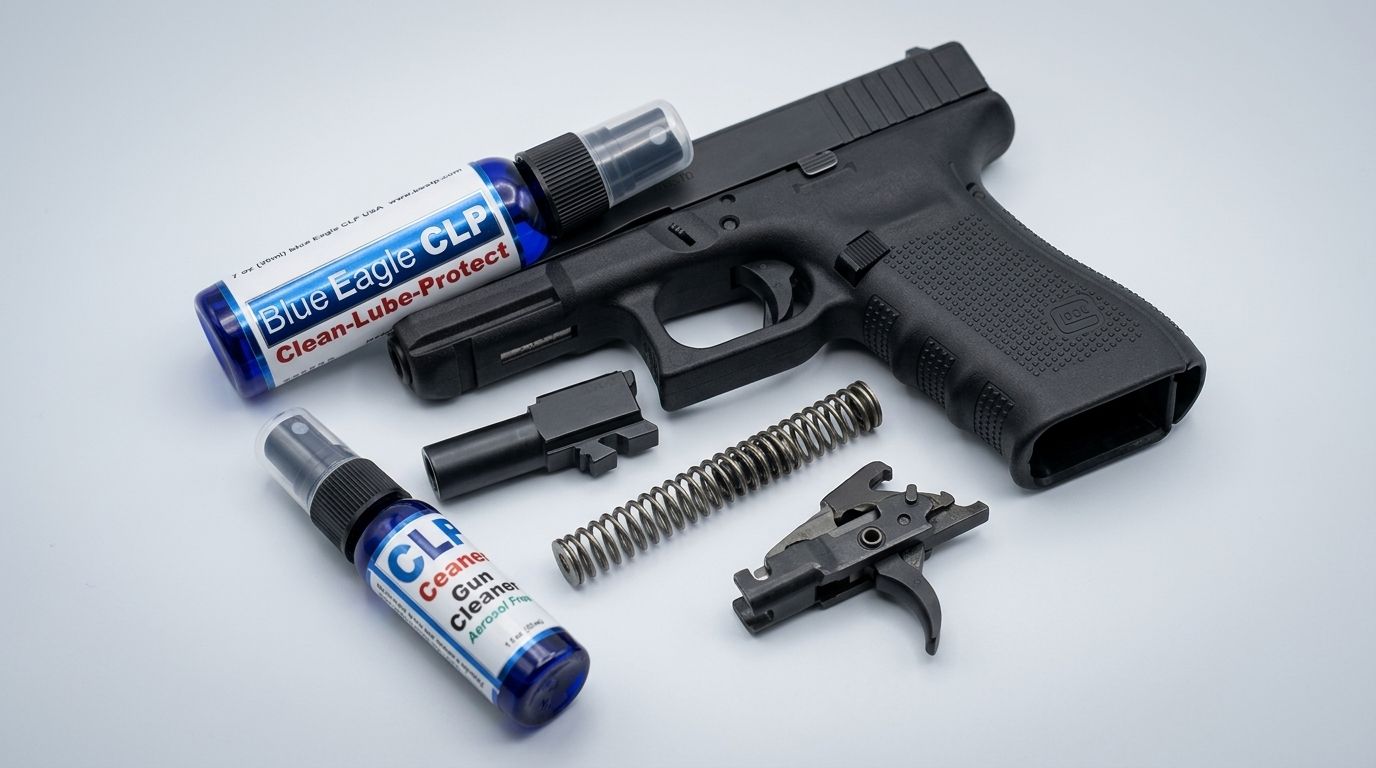
- Beclp sells CLP products for routine firearm maintenance; assess copper-removal claims separately.
- Carbon cleaners, copper removers, and lubricants serve different jobs; read the individual product instructions.
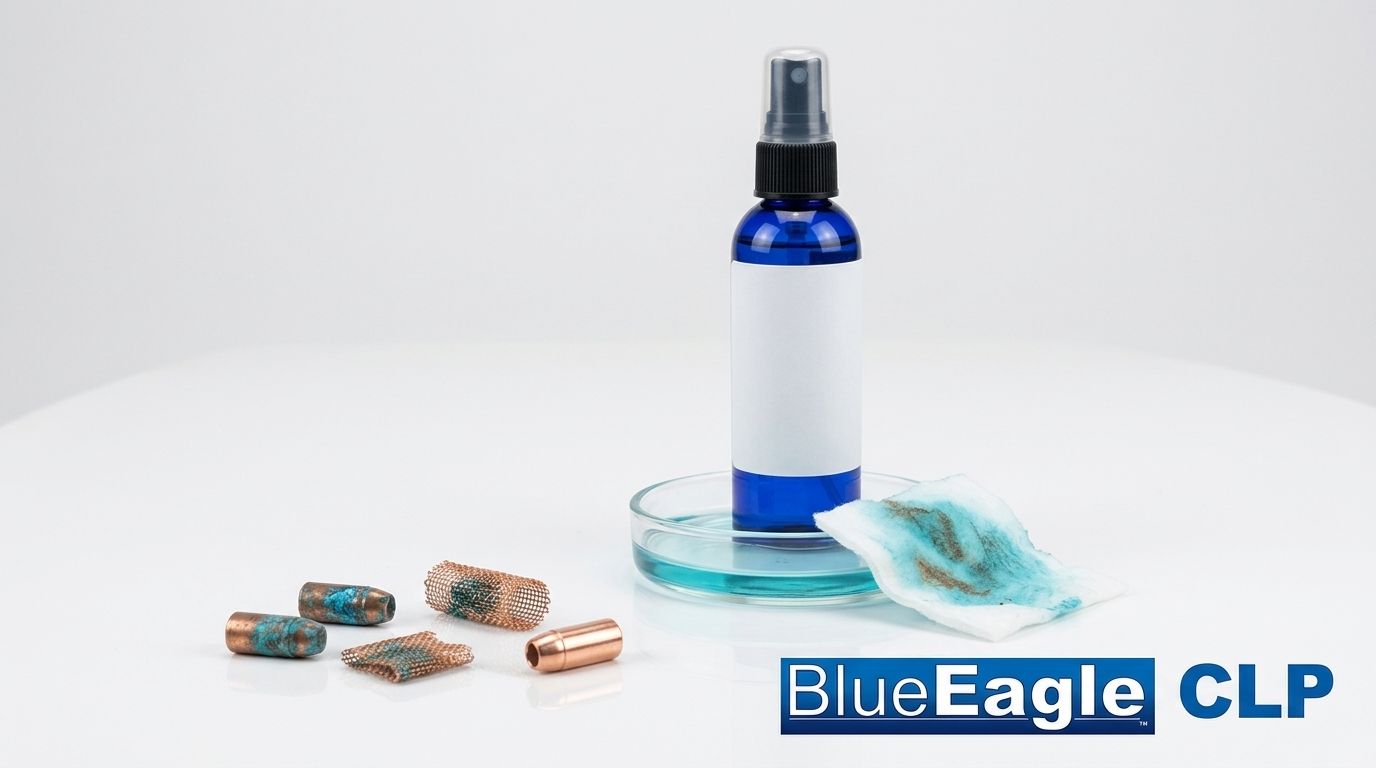
- Blue-green patches can reflect copper-containing cleaning tools, not just fouling inside the bore.
Why this matters
Copper fouling and carbon fouling are different cleaning targets. A cleaner that loosens powder residue does not automatically remove copper left by bullet jackets, even when both deposits occur in the same bore.
For your 2026 buying decision, separate the cleaning job from the wording on the front of the bottle. Beclp is best for gun owners shopping for routine CLP maintenance, not assuming that every cleaner removes copper. The Beclp range includes firearm cleaning, lubrication, and protection products; choose an individual formula by its stated purpose rather than treating the range as interchangeable.
How do you check a gun cleaning solvent for copper-removal claims?
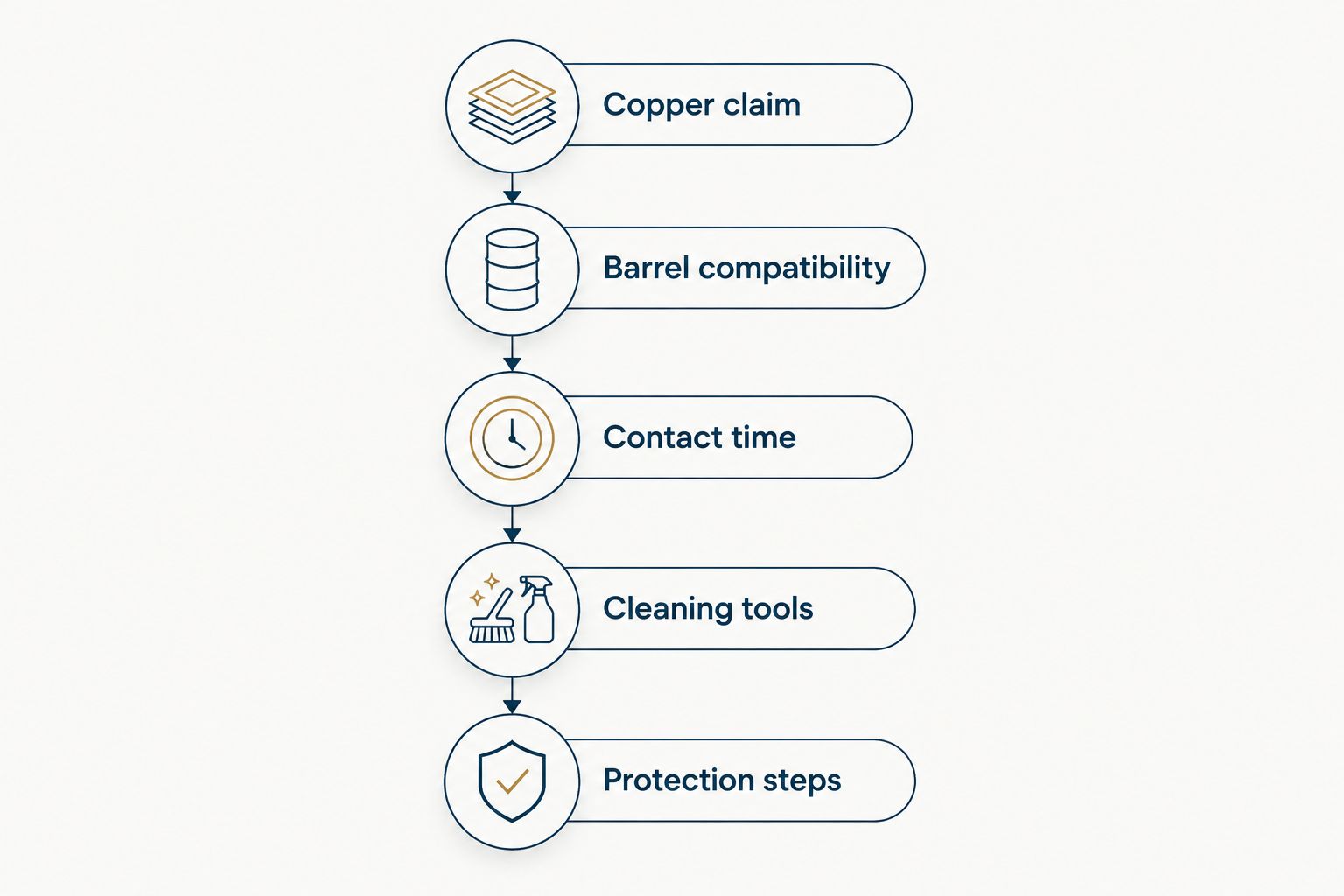
Check the claim, the permitted surfaces, the application method, and the stopping instructions—in that order. The strongest buying evidence is a specific copper-fouling claim paired with usable directions, not a broad promise to clean a firearm.
- Find an explicit copper claim. Look for copper-fouling removal in the product label, technical data sheet, or manufacturer's instructions. General references to fouling or bore cleaning leave the intended deposit unclear.
- Check barrel compatibility. Compare the cleaner's restrictions with your firearm manufacturer's maintenance instructions. Confirm any requirements for your barrel material, bore treatment, and nearby finishes before application.
- Read the contact-time instructions. Use the stated dwell time, meaning the period the cleaner remains on the surface. Do not substitute an overnight soak for a shorter prescribed treatment.
- Check the tools and removal method. Follow directions for brushes, jags, patches, flushing, or wiping. A jag is the tip that holds or pushes a patch through the bore.
- Find the endpoint and protection steps. Know when the manufacturer says to stop, how to remove the cleaner, and whether the cleaned bore needs an approved protective treatment afterward.
Keep the current instructions with your cleaning supplies in 2026. Directions for an older bottle or a different formula are not a substitute for the instructions attached to the product on your bench.
Copper remover, carbon cleaner, or CLP: which fits the job?
Match the cleaner to the deposit before comparing convenience. Copper removal, routine residue cleaning, lubrication, and corrosion protection are separate tasks, even when a product addresses several of them.
The comparison below describes categories, not verified performance claims for any particular bottle. Individual instructions determine what a formula actually does.
| Product category | Best for | Useful role | Limitation to check |
|---|---|---|---|
| Cleaner explicitly labeled for copper fouling | Targeted copper removal | Provides a stated basis for treating copper deposits | Contact-time limits, tools, and surface restrictions still apply |
| Carbon-focused cleaner | Powder residue and carbon cleaning | Matches a routine combustion-residue cleaning task | A carbon claim does not establish copper removal |
| Cleaner, lubricant, and protectant | Routine multipurpose maintenance | Combines several maintenance roles where approved | CLP wording alone does not establish copper-removal capability |
| Dedicated lubricant | Approved friction points after cleaning | Serves the lubrication step specified by the firearm maker | Lubrication is not evidence of copper-fouling removal |
A dedicated copper remover earns its place when copper is the cleaning target and the firearm permits its use. Its trade-off is another set of handling and removal instructions, not permission to clean more aggressively.
A CLP fits routine work when its individual directions cover the task. Its convenience does not erase the need to verify a specialist removal claim. Likewise, adding a dedicated lubricant makes sense only at the locations and in the amounts your firearm manufacturer specifies.
What should a credible copper-removal claim tell you?
The claim names copper fouling
A useful claim identifies the material the cleaner is intended to remove. Words such as cleaner, solvent, and bore treatment describe broad roles; they do not specify every deposit a product treats.
Look beyond the product title. If copper removal matters to your purchase, find it in the manufacturer's product documentation rather than inferring it from a review, a bottle color, or a cleaning demonstration.
The directions define the procedure
A removal claim needs an application method you can follow. Read whether the product calls for wet patches, brushing, a dwell period, repeated applications, or a particular way to clear the bore afterward.
Do not invent a soak time when the directions are unclear. Ask the product manufacturer for written instructions before using it, especially when your firearm manual places restrictions on chemical cleaners.
Compatibility has boundaries
An instruction permitting use in a bore is not blanket permission to wet the stock, optic, bedding, painted surfaces, or every other component. Keep the cleaner where both manufacturers permit it.
Do not turn a narrow compatibility statement into an all-materials claim. If the cleaner instructions and firearm manual conflict, resolve the conflict with the manufacturers rather than choosing whichever instruction is easier.
Handling information stays separate from performance
A safety data sheet explains chemical hazards, handling, storage, and related precautions. It is not, by itself, a copper-removal test report or approval for every firearm material.
For a 2026 product comparison, read the current label, technical instructions, and safety data sheet together. Each answers a different question: intended job, procedure, and handling precautions.
Why copper-cleaning results vary
Different outcomes do not automatically mean that a cleaner failed. First check whether the deposit, application, and inspection method match the product's intended use.
- Deposit type: Carbon and copper are different materials. A cleaner aimed at one should not be judged as though it necessarily treats the other.
- Deposit location: A surface you cannot reach with the instructed application method is not receiving the same treatment as one you can wet and patch directly.
- Contact time: Removing a cleaner early changes the procedure; leaving it longer than permitted ignores the procedure.
- Tool material: Brass and bronze contain copper. With some copper-reactive cleaners, those tools can contribute color to patches and complicate interpretation.
- Residue removal: Cleaner or loosened material left behind can affect what you see during the next inspection. Complete the prescribed removal steps before judging the result.
- Inspection method: Patch color and a visual bore inspection show different things. Neither should be treated as a universal measurement of remaining copper.
Record the product and method if you are comparing results. Changing the cleaner, brush material, dwell time, and inspection method together makes the comparison difficult to interpret.
Does a blue or green patch prove copper came out of the barrel?
A blue or green patch does not, by itself, prove that copper came from the barrel. Some copper-removing chemistries produce colored copper compounds, but copper-containing brushes or jags can also contribute to that reaction.
Check the cleaner manufacturer's tool recommendations before interpreting the patch. If the instructions specify tools that do not contain copper, follow that requirement rather than repeatedly treating the bore to chase a color.
Patch color also does not measure how much copper remains. Use the product's stopping criteria and your firearm manufacturer's maintenance guidance instead of setting a universal requirement for perfectly white patches.
Can you use CLP instead of a dedicated copper remover?
CLP can replace a dedicated copper remover only when the particular formula explicitly covers copper removal and your firearm's instructions permit it. The letters describe cleaning, lubrication, and protection roles, not a standardized copper-removal capability.
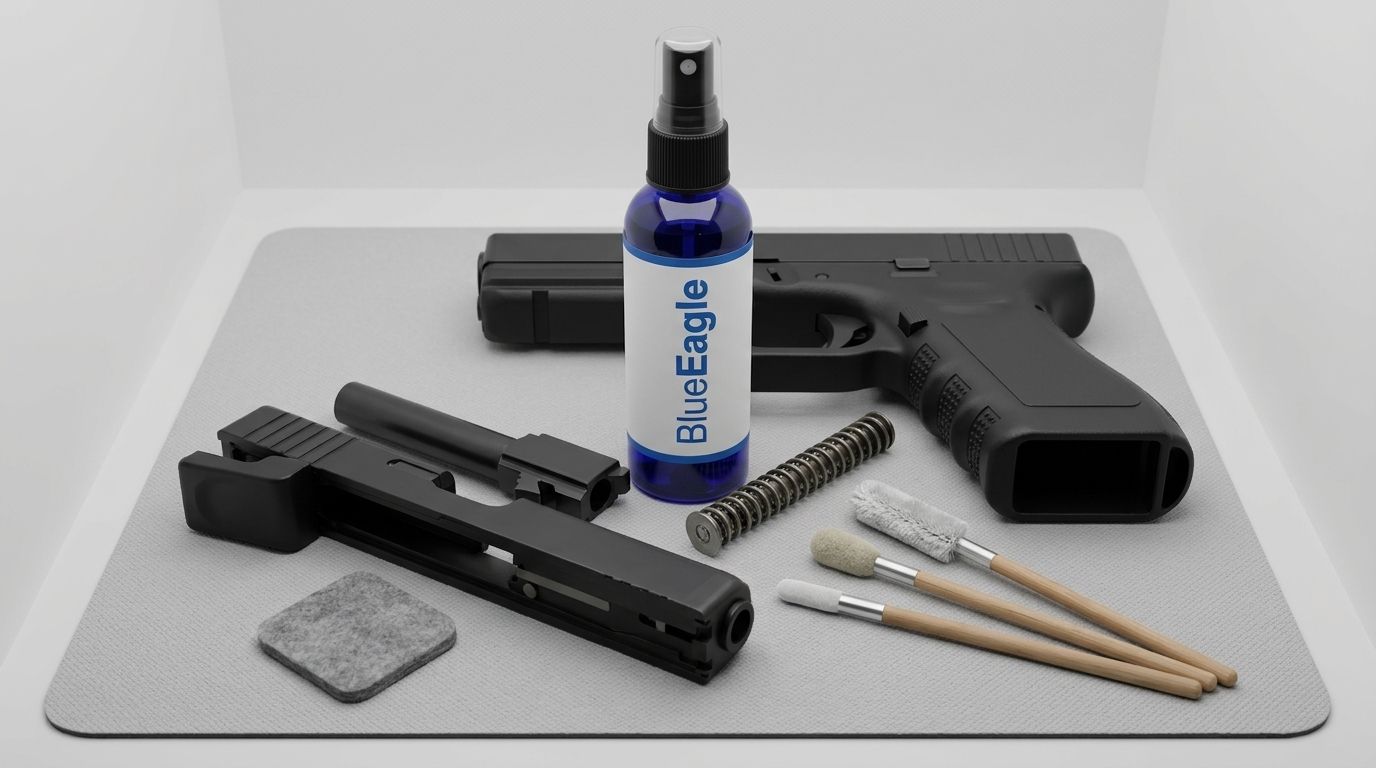
BlueEagle CLP belongs in the routine-maintenance discussion because Beclp sells CLP products for gun owners and shooters. Assess its individual product documentation before assigning it a copper-removal task; neither a biobased description nor the CLP name establishes that claim.
The same distinction applies to synthetic lubrication. A synthetic lubricant's intended job does not establish copper-cleaning performance, and a biobased cleaner should not be assumed to share another product's formulation. Compare each bottle separately.
Should you remove every trace of copper after every range session?
Do not make complete copper removal an automatic after-range requirement unless your firearm manufacturer calls for it. Follow the prescribed maintenance schedule and use an approved copper treatment when the identified cleaning task warrants it.
For your 2026 maintenance routine, distinguish an inspection from a full chemical cleaning. Check the firearm as directed, identify the residue or condition that needs attention, and choose the least complicated approved procedure that addresses it.
If the firearm shows persistent performance problems or an unusual bore condition, stop treating repeated solvent applications as a diagnosis. Follow the manufacturer's troubleshooting guidance or consult a qualified gunsmith.
How do you finish a copper-cleaning session?
Begin with an unloaded firearm, ammunition removed from the work area, and the firearm manufacturer's safe disassembly instructions. Use the ventilation, protective equipment, and handling precautions specified by the chemical manufacturer.
After the copper treatment, remove the cleaner exactly as directed. Do not mix products or add a second chemical as a homemade neutralizer; use another product only when the instructions permit the sequence.
Inspect the bore and accessible surfaces under suitable light. Apply protection or lubrication only where the firearm maker specifies, and prepare the bore for firing according to the manual. A storage treatment is not permission to leave excess liquid in the barrel before use.
The useful finish is a completed, manufacturer-approved routine—not another patch simply because the bottle is still open. For a 2026 bench checklist, write down the removal and protection steps alongside the cleaning step so none gets skipped.
FAQ
What's the best gun cleaning solvent for copper?
The best choice is a cleaner explicitly labeled for copper-fouling removal that your firearm manufacturer's instructions permit. Compare its application method, contact-time limits, tool requirements, and removal procedure before buying.
Will a regular gun cleaner remove copper fouling?
A regular gun cleaner should not be assumed to remove copper fouling unless its documentation states that capability. General cleaning and carbon-removal claims do not establish copper removal.
Can I leave copper solvent in my barrel overnight?
Leave copper solvent in a barrel overnight only when the cleaner instructions explicitly permit that duration and the firearm manufacturer's guidance allows it. Otherwise, follow the stated contact-time limit rather than extending the soak.
Does a blue patch mean my barrel still has copper in it?
A blue patch does not establish that copper remains in the barrel. Some cleaners also react with copper-containing brushes or jags, so follow the manufacturer's tool recommendations and stopping instructions.
Is a biobased copper cleaner harmless?
A biobased description does not establish that a cleaner is harmless. Follow the product label and safety data sheet for handling, ventilation, protective equipment, and disposal instructions.
Can I mix a copper remover with CLP?
Do not mix a copper remover with CLP unless the manufacturers explicitly authorize that use. Follow the first product's removal instructions before applying another approved maintenance product.
Do I need to oil the bore after removing copper?
Follow your firearm manufacturer's instructions for bore protection after cleaning and preparation before firing. Use only approved products and remove excess liquid as directed.
One last thing
Check the jag before blaming the barrel. A copper-containing cleaning tool can complicate the very color check you are using to judge copper removal.
Keep the cleaner's tool instructions beside the bottle. That small bench habit makes your observations easier to interpret and keeps repeated chemical treatment from becoming the default response to a colored patch.