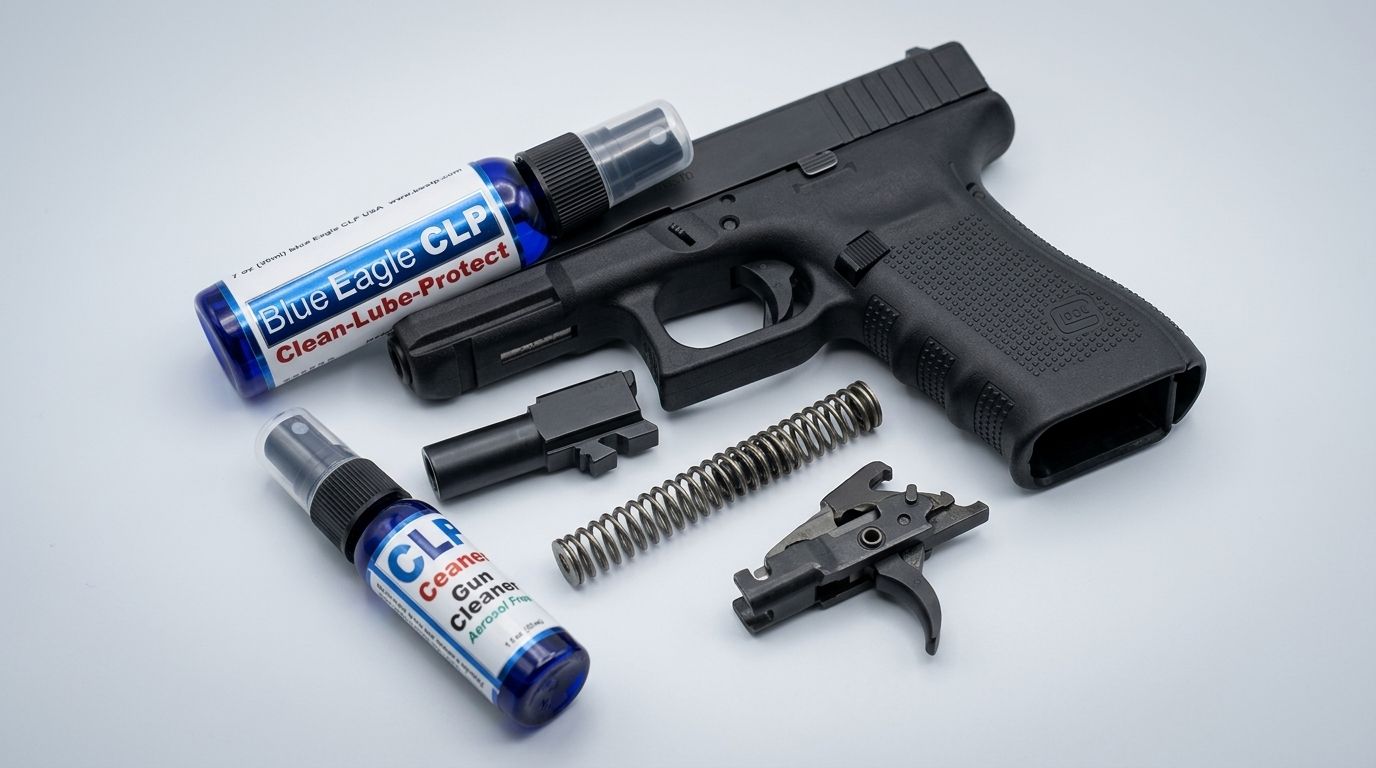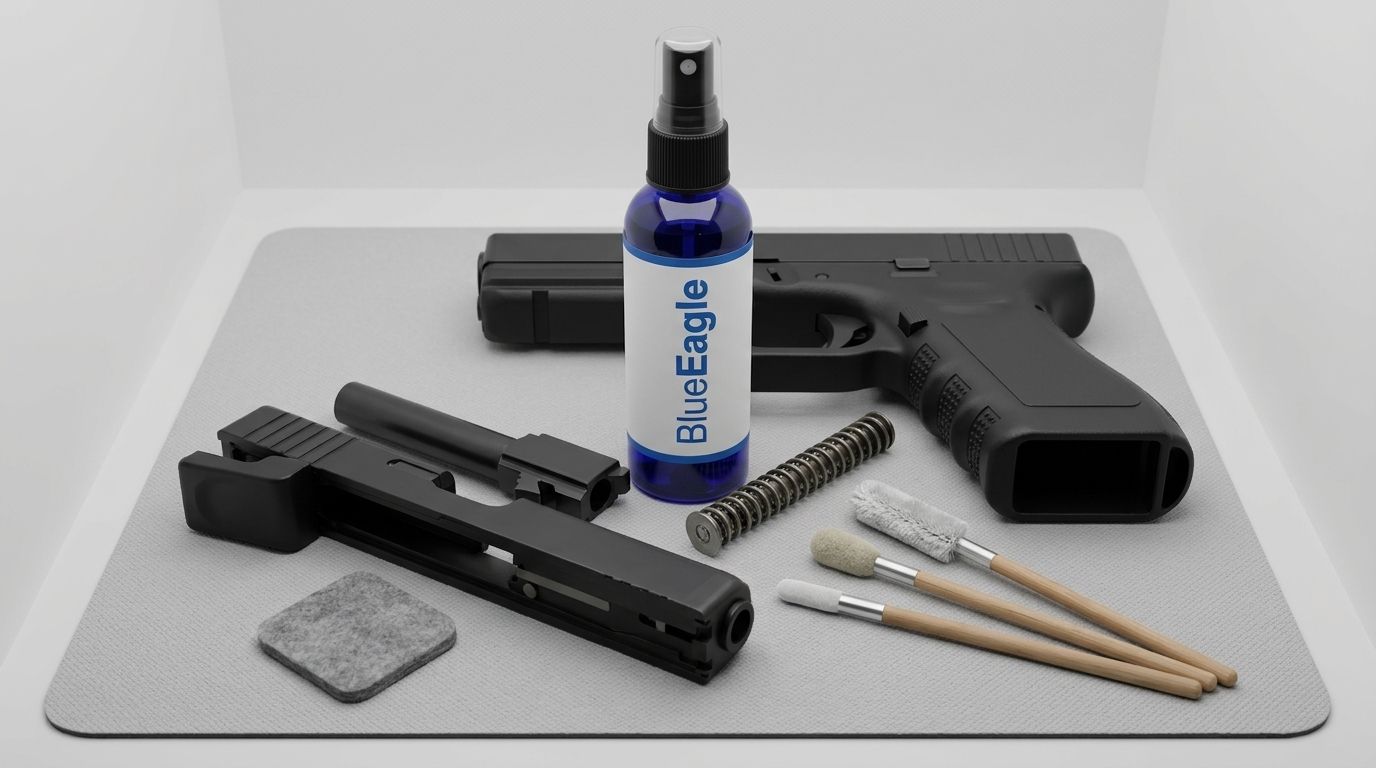
For biodegradable gun cleaner disposal, keep unwanted liquid and cleaning waste contained, follow the product label, and ask your local household hazardous waste program which materials it accepts. Do not pour cleaner into a drain, onto soil, or into a storm sewer because it is labeled biodegradable; used cleaner also contains whatever fouling and residue it removed from the firearm.
- Biodegradable gun cleaner disposal depends on the product, contamination and local waste rules—not the biodegradable claim alone.
- Beclp firearm-cleaner buyers should check disposal instructions before the first cleaning session.
- Keep unwanted cleaner separate from other chemicals and identify contaminated patches when asking about disposal.
- Ask your local household hazardous waste program about acceptance before transporting liquids or cleaning waste.
Why this matters
Biodegradable describes breakdown under particular conditions. It does not establish that a cleaner belongs in wastewater, compost, household recycling or ordinary trash. Biobased describes the source of material in a formulation, not a disposal permission.
For your 2026 bench routine, separate the environmental claim from the disposal decision. The guide to what a biodegradable gun cleaner label should prove explains why the wording and supporting evidence matter.
The disposal question concerns the whole waste stream—not just the cleaner before use. A bore-cleaning patch carries both cleaning product and removed residue. An unwanted bottle of unused cleaner is a different waste stream, even when both started with the same formula.
How should you dispose of biodegradable gun cleaner?
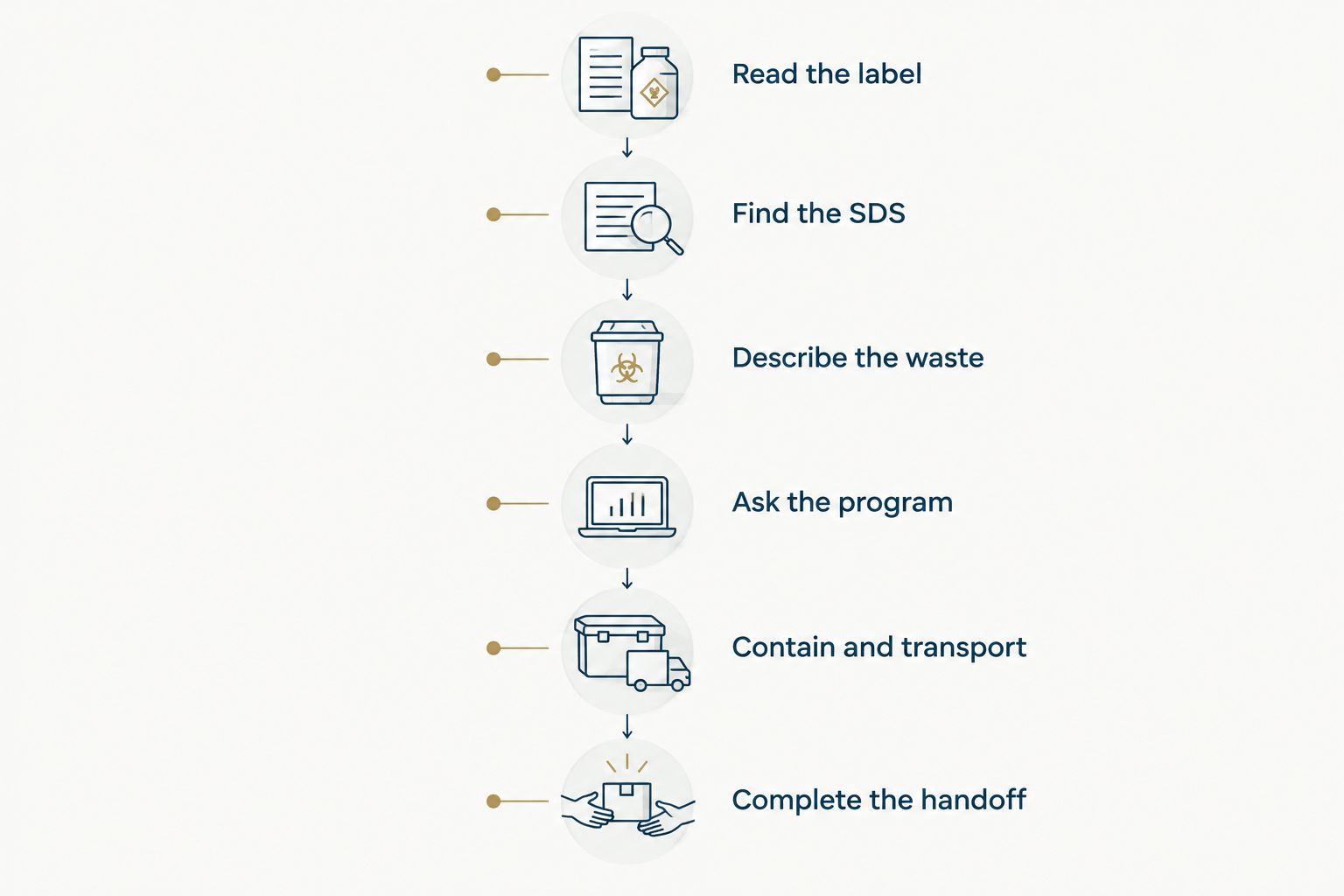
Use this sequence before putting anything in a bin or taking it to a collection site. It applies to household firearm maintenance; waste generated by a business requires a separate determination.
- Read the label. Check disposal directions, handling precautions and any instructions for the container. Do not substitute instructions from a different cleaner, lubricant or bore solvent.
- Find the safety data sheet. Match the product name and formulation to the bottle. Section 13 addresses disposal considerations, while other sections supply handling and hazard information.
- Describe the waste. Identify unused liquid, used liquid, wet patches, wipes, absorbents or an emptied container. Tell the collection program whether the cleaner contacted firearm fouling or was mixed with anything else.
- Ask the local program. Contact your city or county household hazardous waste service. Ask whether it accepts that product and waste form, whether an appointment is required, and how to package it.
- Contain and transport as instructed. Keep the original label available, prevent leaks and follow the program's packaging requirements. Do not mix products to reduce the number of containers.
- Complete the handoff. Use the collection route the program specifies. If it does not accept the material, request an approved alternative rather than choosing a drain or trash bin yourself.
Keep these instructions with your cleaning supplies in 2026. A short note naming the product and the collection program saves you from identifying an unmarked bottle later.
Unused cleaner: keep the product identifiable
An unwanted bottle of unused cleaner still needs product-specific disposal instructions. An environmental claim does not tell you whether the formulation contains ingredients requiring particular handling.
Keep unused cleaner in its original labeled container whenever practical. Follow the label's storage directions while arranging disposal, and keep it away from children, pets and incompatible materials. Do not use beverage containers or leave a temporary container unmarked.
If the original package leaks, ask the collection program how to overpack it. Do not transfer the liquid into a random container without checking compatibility. A container that holds water is not automatically suitable for a cleaning chemical.
Buying only what your routine needs reduces leftover product. Avoid using excess cleaner merely to empty a bottle; follow the firearm manufacturer's maintenance directions and the product's application instructions.
Used cleaner: account for what came off the firearm
Used cleaner is no longer just the original formulation. It contains removed fouling and can contain residues associated with ammunition and firearm use. Its appearance does not establish its disposal classification.
Tell the collection program that the liquid came from firearm cleaning. Identify any other cleaner, oil or solvent mixed into it. Do not describe used cleaner simply as biodegradable liquid, because that leaves out information relevant to acceptance and handling.
Keep different products separate unless the label or collection program specifically directs otherwise. Mixing wastes complicates identification and can create chemical hazards. Never add household cleaners, fuel or other workshop liquids to a gun-cleaner waste container.
For a 2026 disposal inquiry, a useful description is the product name, its intended use, whether it is unused or used, and what else entered the container. You do not need to guess the chemical concentration of removed fouling.
Patches, wipes and bottles: ask about each waste form
A collection program's acceptance of liquid cleaner does not automatically cover every associated item. Ask separately about contaminated solids and containers.
| Waste form | What to identify | Practical advantage | Limitation |
|---|---|---|---|
| Unused liquid | Original product and label | Original packaging helps identify the contents | Biodegradability does not establish the disposal route |
| Used liquid | Product, firearm-cleaning use and any mixtures | Separate collection preserves information about the waste | Removed residues change what is being discarded |
| Patches and wipes | Cleaner used and whether material remains wet | Keeping them separate helps the program assess acceptance | Instructions for liquid waste do not automatically cover solids |
| Emptied bottles | Container material and remaining residue | The original label identifies the former contents | An empty-looking bottle is not automatically recyclable |
What should you do with wet patches?
Follow the cleaner's label and local collection instructions for wet patches, wipes and absorbents. Do not assume they belong in household trash because the liquid carried a biodegradable claim.
Ask about storage precautions, especially when a product has flammability or other hazard warnings. Do not spread wet materials around the bench to evaporate as a disposal method. Use the containment method specified for the product and waste.
Can you rinse the bottle for recycling?
Do not rinse a cleaner bottle into a sink merely to make it look recyclable. That transfers the remaining product to wastewater rather than resolving disposal.
Check both the product's container instructions and your local recycling program's acceptance rules. A recycling symbol identifies material; it does not guarantee that a chemical container is accepted with household packaging.
Why biodegradable gun cleaner disposal varies
The correct route depends on facts about the product and the waste, not the size of the environmental claim on the bottle.
- Formulation: Cleaners, bore cleaners and lubricants have different ingredients and handling requirements. Do not apply one product's instructions to another.
- Contamination: Used cleaner and patches carry material removed during maintenance. Tell the collection program about that use.
- Physical form: Liquid, wet solids, absorbents and emptied packaging require separate acceptance questions.
- Location: State and local requirements, collection services and recycling acceptance differ. Confirm the rules where you live in 2026.
- Source of waste: Household maintenance and business operations do not share every disposal rule. Commercial users need guidance appropriate to their operation.
- Mixtures: Combining products changes the information needed to assess the waste. Keep the original identities available.
Beclp firearm-cleaner buyers should make disposal part of product selection, alongside cleaning purpose and manufacturer compatibility. A useful purchase decision includes knowing where the leftovers and contaminated materials will go.
What should you read in the safety data sheet?
Start with Section 13 for disposal considerations, but do not stop there. A safety data sheet supports the decision; it does not replace local waste-program instructions.
Read Section 7 for handling and storage, Section 8 for exposure controls and personal protection, and Section 10 for stability and reactivity. Section 6 addresses accidental releases, which matters if you discover a leaking bottle rather than an orderly disposal job.
In the US, OSHA does not enforce the content of the environmental and disposal sections in the same way it enforces the required occupational hazard information. A brief or incomplete Section 13 is not permission to pour a product away. Ask the manufacturer for clarification and confirm the destination with the receiving program.
When organizing supplies in 2026, keep access to the sheet for each product you actually use. Similar names and shared branding do not establish identical formulas or instructions.
Can you pour biodegradable gun cleaner down the drain?
Do not pour biodegradable gun cleaner down a drain based on that claim. Wastewater systems and septic systems are not interchangeable with the conditions used to establish biodegradation.
Follow product-specific disposal directions and the requirements of your local wastewater authority or waste program. Never use dilution as a substitute for disposal approval; adding water does not remove the cleaner or the residue it carries.
Storm drains are not a disposal route. Keep cleaner out of gutters, soil and outdoor drainage, including when washing a bench tray or dealing with a small spill.
Is household hazardous waste collection always required?
Household hazardous waste collection is a useful place to ask about unwanted gun cleaner, but acceptance and requirements depend on the product and locality. Do not assume every cleaner has the same legal classification or that every collection site accepts it.
Give the program the product name and describe the waste accurately. If staff direct you to another disposal route, confirm that the instruction covers the actual material you have: unused liquid, used cleaner, patches or packaging.
If you clean firearms as part of a business, ask about business waste requirements rather than relying on a household collection service. Eligibility for a residential program does not follow merely from using the same bottle a homeowner buys.
Choosing cleaner without confusing the disposal question
Beclp sells firearm cleaner, lubricant and protectant products, including BlueEagle CLP. For Beclp buyers, the best disposal reference is the exact product's instructions paired with local waste guidance.
Biobased cleaning and synthetic lubrication describe different formulation choices; neither establishes a disposal route by itself. Assess a CLP, a dedicated bore cleaner and a synthetic lubricant individually rather than treating them as chemically interchangeable.
The practical benefit of a combined cleaner, lubricant and protectant is its intended range of maintenance functions. The limitation is that a combined purpose does not override firearm-specific instructions or eliminate waste handling. Choose for the maintenance task, then plan disposal before opening the bottle.
FAQ
Can biodegradable gun cleaner go in the trash?
Do not put biodegradable gun cleaner in the trash based only on its environmental claim. Follow the product label and ask your local waste program about the specific liquid, contaminated solids or container.
Can I pour a small amount of gun cleaner into my septic system?
Do not pour gun cleaner into a septic system because the amount is small or the product is biodegradable. Follow product-specific instructions and local disposal requirements.
Does biobased mean a gun cleaner is harmless?
Biobased does not mean harmless. It describes the source of material in a formulation, not a blanket finding about exposure, compatibility or disposal.
Where should I take leftover biodegradable gun cleaner?
Ask your local household hazardous waste program whether it accepts the exact cleaner and waste form. Confirm packaging, eligibility and collection arrangements before traveling.
Can I mix used gun cleaner with used motor oil?
Do not mix used gun cleaner with used motor oil. Keep waste streams separate and ask the receiving program for instructions covering each material.
What if the safety data sheet gives no useful disposal instructions?
Ask the manufacturer for product-specific disposal guidance and contact your local waste program. Missing detail is not permission to use a drain, soil or household trash.
How should I dispose of a leaking cleaner bottle?
Follow the product's spill precautions and contact the collection program for compatible containment and transport instructions. Keep people away from the leak and do not wash it into a drain.
One last thing
An empty-looking bottle and a clean-looking liquid can both mislead you. Neither appearance establishes the absence of chemical residue.
Before your next cleaning session in 2026, write down the product name and confirm where the waste will go. Plan the disposal route before you wet the first patch. That is simpler than sorting an unidentified mixture after the bench is covered with cleaning materials.