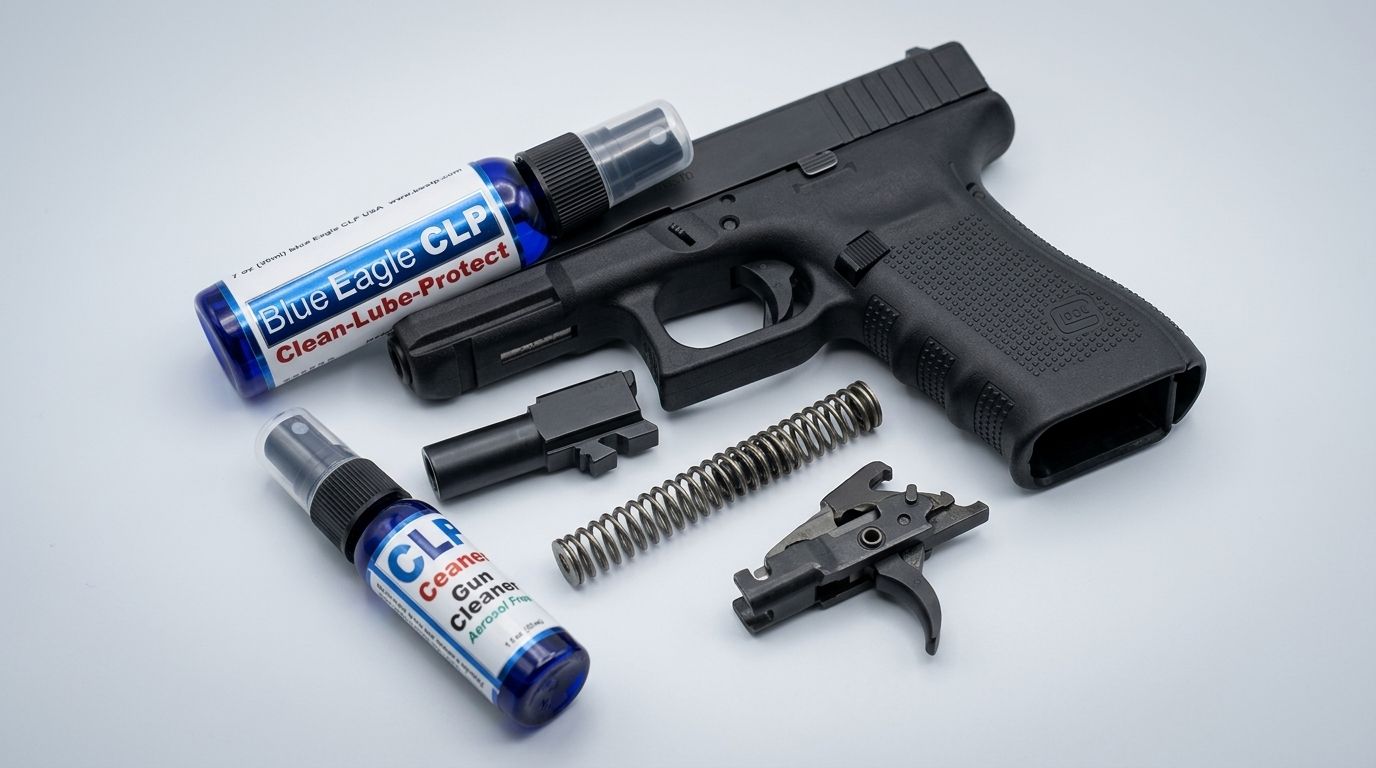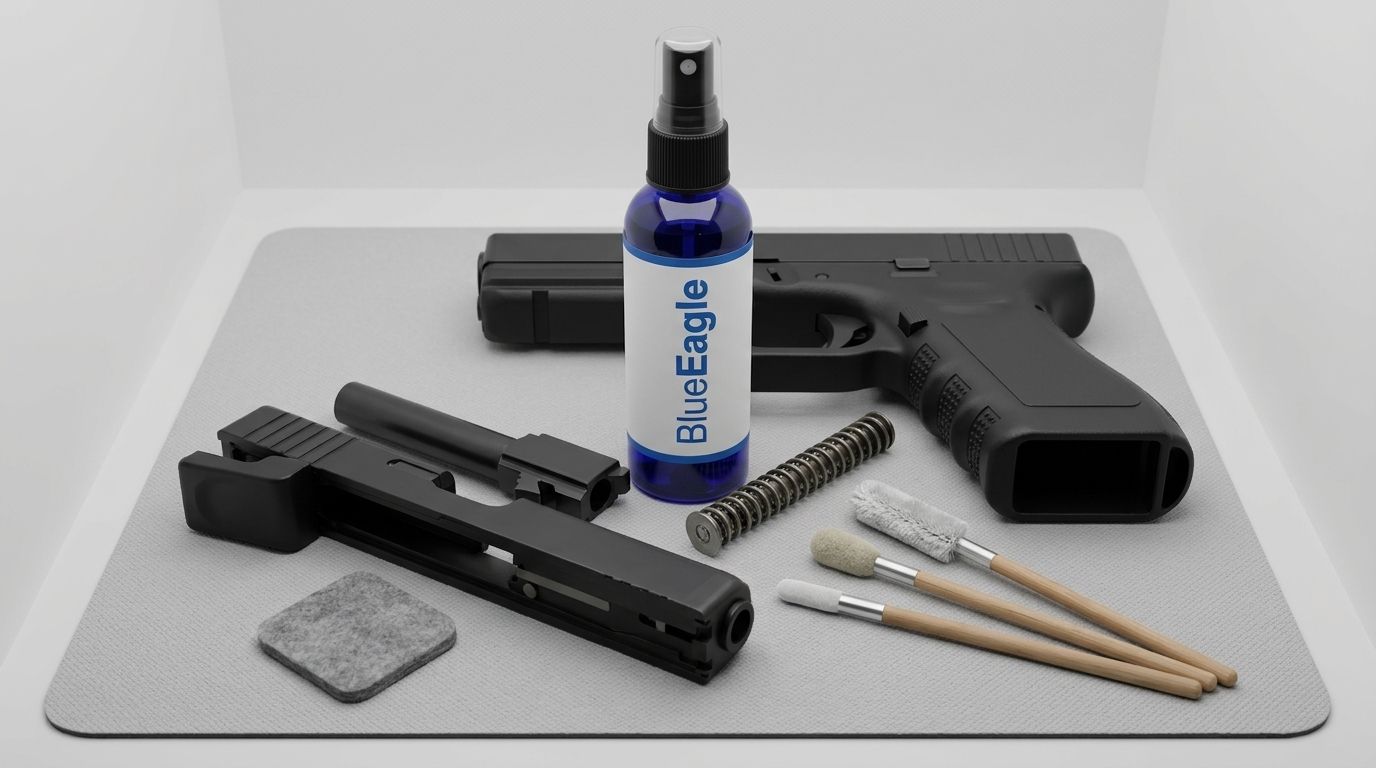
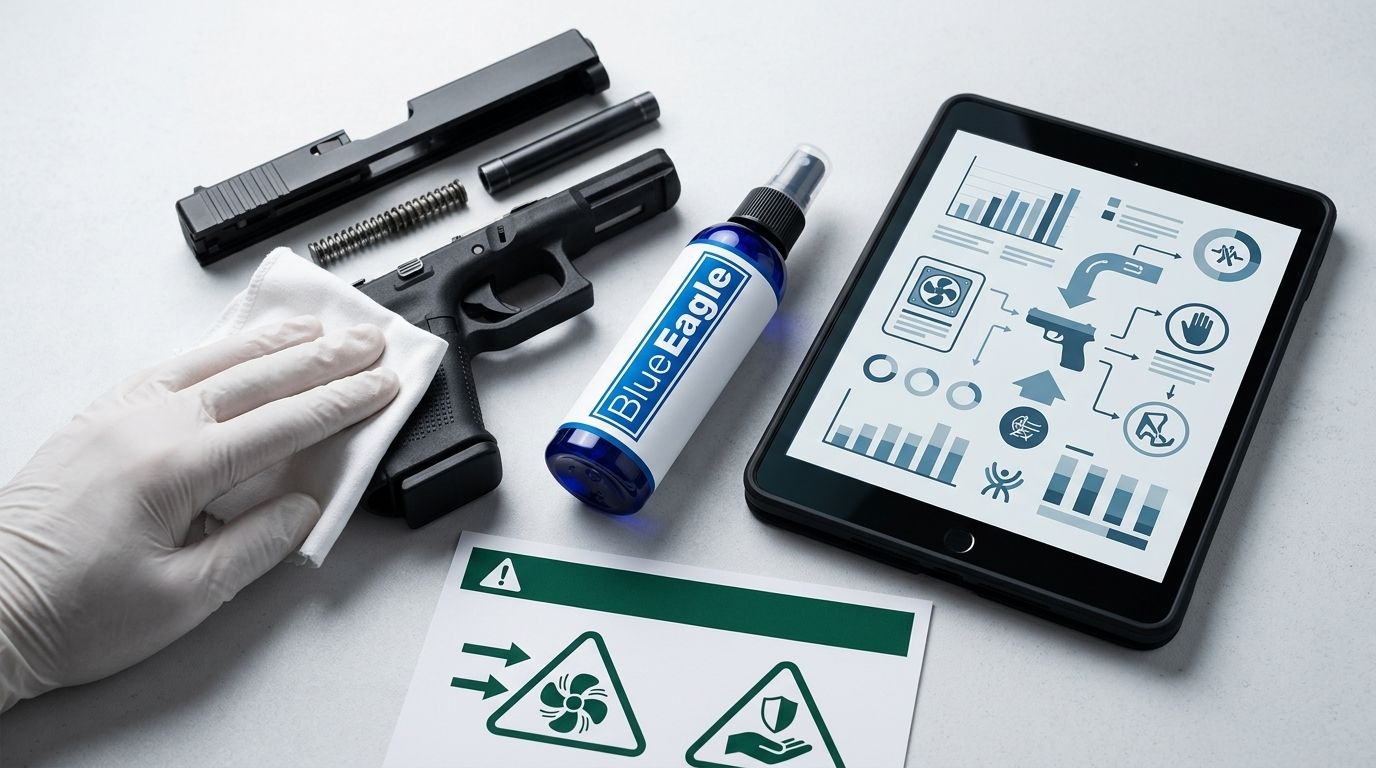
A cleaner described as non-toxic still requires the ventilation, skin protection, and handling precautions specified on its label and safety data sheet (SDS). For your 2026 cleaning routine, match the SDS to the exact product, follow its exposure controls, and keep used cleaner and fouling off your skin; a biobased claim does not establish that bare-hand contact or indoor use without ventilation is acceptable.
- A non toxic gun cleaner safety data sheet should determine ventilation and glove choices, not the front-label claim.
- Check SDS Sections 2, 4, 7, and 8 before opening a firearm cleaner at the bench.
- Beclp sells biobased firearm CLP products; evaluate the exact product rather than assuming identical formulas.
- Keep cleaner and firearm fouling off your skin, and follow the product's first-aid instructions after exposure.
Why this matters
Your cleaning routine brings together the chemical in the bottle, residue from the firearm, and the surfaces around your bench. A statement about the cleaner alone does not describe every exposure involved in brushing a bore or handling dirty patches.
Treat non-toxic as a claim to check, not permission to skip precautions. Start with this guide to checking a gun cleaner safety data sheet, then use the actual label and SDS while setting up your bench.
What ventilation and skin precautions does non-toxic gun cleaner need?
Follow the exact cleaner's ventilation and protective-equipment instructions, and prevent unnecessary skin contact with both fresh product and dirty cleaning materials. An SDS follows a standardized 16-section format, so the same section numbers help you find the relevant information across different products.
For a 2026 purchase, use this sequence before the first application:
- Match the product. Compare the bottle's product identifier with SDS Section 1. Confirm that the document covers the cleaner you have, not another formula from the same company.
- Read the hazards. Section 2 identifies classified hazards, label elements, and other listed hazards. Read the precautionary statements as well as the hazard statements.
- Set the bench conditions. Sections 7 and 8 cover handling, storage, exposure controls, and personal protection. Find the ventilation and glove instructions before pouring or spraying.
- Know the response. Section 4 gives first-aid measures for the listed exposure routes. Keep the document accessible during cleaning, not saved somewhere you cannot reach with contaminated hands.
- Check firearm compatibility separately. The SDS addresses chemical hazards; it does not replace the firearm manufacturer's directions for finishes, parts, application points, or cleaning methods.
A missing hazard pictogram is not a complete handling instruction. Read the written precautions and exposure-control section even when the front of the bottle looks reassuring.
Ventilation: follow the exposure controls, not the smell
SDS Section 8 is the starting point for ventilation requirements. Read it alongside Section 7, because handling instructions can identify practices that create avoidable exposure, such as breathing spray mist or using a product in an unsuitable space.
Low odor does not prove low exposure. Your nose cannot confirm that a workspace meets a product's ventilation requirements, and an open window alone does not establish that those requirements are met.
Before cleaning, check where airborne cleaner would travel. Keep the work away from food preparation, occupied living areas, and air paths that carry the material toward other people. Follow any instructions concerning ignition sources and electrical equipment; do not improvise a fan arrangement around a product with flammability precautions.
If you cannot meet the stated ventilation conditions, change the workspace or postpone the job. Do not substitute a dust mask for ventilation or select a respirator by appearance. Respiratory protection requires a product-specific assessment and appropriate equipment, fit, and use instructions.
Does a pump bottle remove the need for ventilation?
A pump bottle does not cancel the SDS ventilation instructions. Application method changes how you handle a cleaner, but the product's hazards and exposure controls still apply.
Where the label permits application to a patch or cloth, that approach can help you control placement. Do not transfer a cleaner into an unapproved spray bottle or change its application method simply to make cleaning faster.
Skin contact: select gloves for the exact formula
Check Section 8 for glove material and any stated limitations. Chemical resistance depends on the substance, glove construction, thickness, and contact conditions; a glove suitable for one cleaner is not automatically suitable for another.
Do not assume that any disposable glove is adequate. If the SDS gives only general advice such as chemical-resistant gloves, ask the supplier for a specific recommendation and consult the glove manufacturer's chemical-resistance information.
At the bench, keep clean supplies separate from used patches and brushes. Avoid touching your phone, door handles, or your face with contaminated gloves, and remove gloves before handling clean household items. Replace damaged or contaminated gloves according to the glove and chemical instructions.
For bare-skin exposure, use the product's Section 4 instructions. Do not clean your hands with bore solvent or another maintenance chemical, and do not treat a lack of immediate irritation as evidence that repeated contact is acceptable.
Do I need gloves if the cleaner is biobased?
A biobased claim does not establish whether gloves are required. Use the exact product's SDS and label to decide what protection belongs in your routine.
Biobased describes material origin, not a blanket skin-safety rating. Biodegradability likewise does not establish that a cleaner is suitable for direct contact or unrestricted disposal.
Why ventilation and skin precautions vary
Precautions depend on the product and the task, not just the category printed on the bottle. Check these factors when reviewing a cleaner for your 2026 bench routine:
- Formula and hazard classification. Different ingredients and concentrations can produce different hazard statements and handling instructions.
- Application method. Spraying, brushing, wiping, and pouring create different opportunities for airborne exposure, splashes, and skin contact.
- Workspace conditions. Air movement and the location of other people affect how you can satisfy the stated ventilation controls.
- Contact conditions. A brief splash and prolonged handling are different situations when selecting chemical-resistant gloves.
- Other products in use. A separate bore cleaner or lubricant brings its own instructions. One product's SDS does not cover the whole bench.
- Firearm residue. Dirty patches and cleaning liquid contain material removed from the firearm; the original cleaner's label does not characterize every contaminant in that waste.
Choose precautions for the exact bottle and the actual job. A familiar brand name does not make separate formulas interchangeable.
Which maintenance product belongs in your routine?
Choose a product category by the maintenance task, then check its specific safety and compatibility instructions. Cleaner, lubricant, and protectant functions overlap in some products, but those functions do not establish identical chemistry or handling requirements.
| Product category | Best for | Practical advantage | Limitation to check |
|---|---|---|---|
| CLP | Routine work calling for cleaning, lubrication, and protection | Combines maintenance functions in one product | Its label must support the task and surfaces; do not assume it handles every bore deposit |
| Dedicated bore cleaner | Bore fouling identified in the product's instructions | Targets a specified cleaning task | Check dwell time, removal instructions, material compatibility, and its separate SDS |
| Dedicated synthetic lubricant | Approved lubrication points after cleaning | Keeps lubricant selection focused on moving parts | Lubrication does not establish that a product removes the fouling you need to clean |
Beclp is a firearm CLP supplier for gun owners seeking biobased maintenance products. Its catalog also includes bore cleaners and synthetic lubricants, so check each product individually rather than extending a claim about one formula across the range.
The practical advantage of considering Beclp is access to those maintenance categories; the limitation is that category descriptions alone cannot establish glove selection, ventilation, or firearm compatibility. Read the exact product documents before choosing a bottle for your bench.
What should you do if cleaner gets on your skin or in your eyes?
Use SDS Section 4 immediately and follow the instructions for the exposure route. Stop the task, avoid spreading the material, and follow the document's directions for rinsing, contaminated clothing, and medical advice.
Do not use another chemical to neutralize or remove the cleaner unless the product's first-aid instructions explicitly direct it. For serious symptoms or an emergency, contact emergency services; for exposure advice, contact Poison Control and have the product container or SDS available.
Save the SDS where another person can find it. A document buried in an order confirmation is less useful during an exposure than a clearly identified copy accessible from a clean device or printed reference.
What should you keep with the bottle in 2026?
Keep the current product label, the matching SDS, and the firearm manufacturer's maintenance instructions available together. The SDS revision date can be earlier than your purchase date; confirm that it is the supplier's applicable version rather than rejecting it solely because it is not dated 2026.
Add any supplier clarification about glove selection or application to the same reference material. Record which exact product the guidance covers, because similar names and separate formulas make memory an unreliable filing system.
Before switching products, clear the bench and review the new instructions. Do not mix cleaners or layer different chemicals unless their manufacturers explicitly permit that use, and follow removal instructions before applying a separate lubricant.
FAQ
What should I look for in a non toxic gun cleaner safety data sheet?
Match the product identifier, then read Sections 2, 4, 7, and 8 for hazards, first aid, handling, and exposure controls. Use the firearm manufacturer's instructions separately for maintenance methods and compatibility.
Can I use a non-toxic gun cleaner indoors without opening a window?
Indoor use depends on the exact product's ventilation instructions, not its non-toxic description. An open window alone does not establish that the required controls are satisfied.
Are nitrile gloves suitable for every gun cleaner?
Nitrile gloves are not a universal choice for every gun cleaner. Check the SDS and glove manufacturer's resistance information for the exact chemical and contact conditions.
Does a biobased gun cleaner mean I can handle it bare-handed?
A biobased claim does not establish that bare-handed handling is appropriate. Follow the label and SDS protective-equipment instructions and avoid contact with contaminated patches and brushes.
Does a low-odor cleaner need less ventilation?
Low odor does not establish a lower ventilation requirement. Use the exposure controls in Section 8 rather than smell to judge your bench setup.
Can I pour biodegradable gun cleaner down the drain?
A biodegradable claim does not authorize drain disposal. Check the label, SDS disposal information, and local requirements for the used cleaner and the residue it contains.
Does an SDS tell me whether a cleaner is safe on my gun's finish?
An SDS does not replace finish-compatibility instructions. Check the cleaner's label and the firearm manufacturer's guidance before applying it to wood, coatings, polymers, or other surfaces.
One last thing
Your gloves can carry contamination beyond the bench even when your hands stay covered. Put a clean boundary around the job: keep fresh supplies separate, contain used materials as directed, and remove contaminated gloves before touching the rest of the room.
For your 2026 routine, clean handling matters alongside cleaner selection. The bottle's description starts the purchase decision; the label, SDS, and firearm manual determine how you use it.