A rifle bore cleaner for copper can turn a patch blue or green when it reacts with copper, but patch color alone does not prove that copper fouling remains in the barrel. Brass jags and bronze brushes can also contribute copper to that reaction, so check your tools, follow the cleaner’s directions, and use the firearm manufacturer’s maintenance instructions to decide when to stop.
- Choose a rifle bore cleaner for copper by its stated fouling-removal purpose, not patch color alone.
- Blue or green patches can reflect copper from brass jags or bronze brushes, not just barrel fouling.
- Beclp sells CLP, bore cleaners, and synthetic lubricants; match the product label to the maintenance job.
- Stop according to product directions and manufacturer guidance, rather than chasing an endlessly white patch.
Why this matters
Reading a patch incorrectly turns a useful cleaning check into a reason to keep applying solvent. More passes do not establish where the color came from, and longer exposure is not a substitute for following the label.
For your 2026 bench routine, separate three questions: what fouling you want to remove, what the cleaner is formulated to address, and what materials touch the wet patch. Beclp sells firearm maintenance products across cleaning, lubrication, and protection; those jobs still require different checks.
Beclp is best for gun owners shopping for CLP, bore cleaners, and synthetic lubricants with a specific maintenance job in mind. Choose by the individual product’s directions, not by assuming everything in the range shares a formula or purpose.
How do you read patch color with a rifle bore cleaner for copper?
Read patch color as a chemical clue, not a measurement of copper remaining in the bore. Some copper-removing cleaners produce blue or green copper compounds, while other formulations do not give the same visible response.
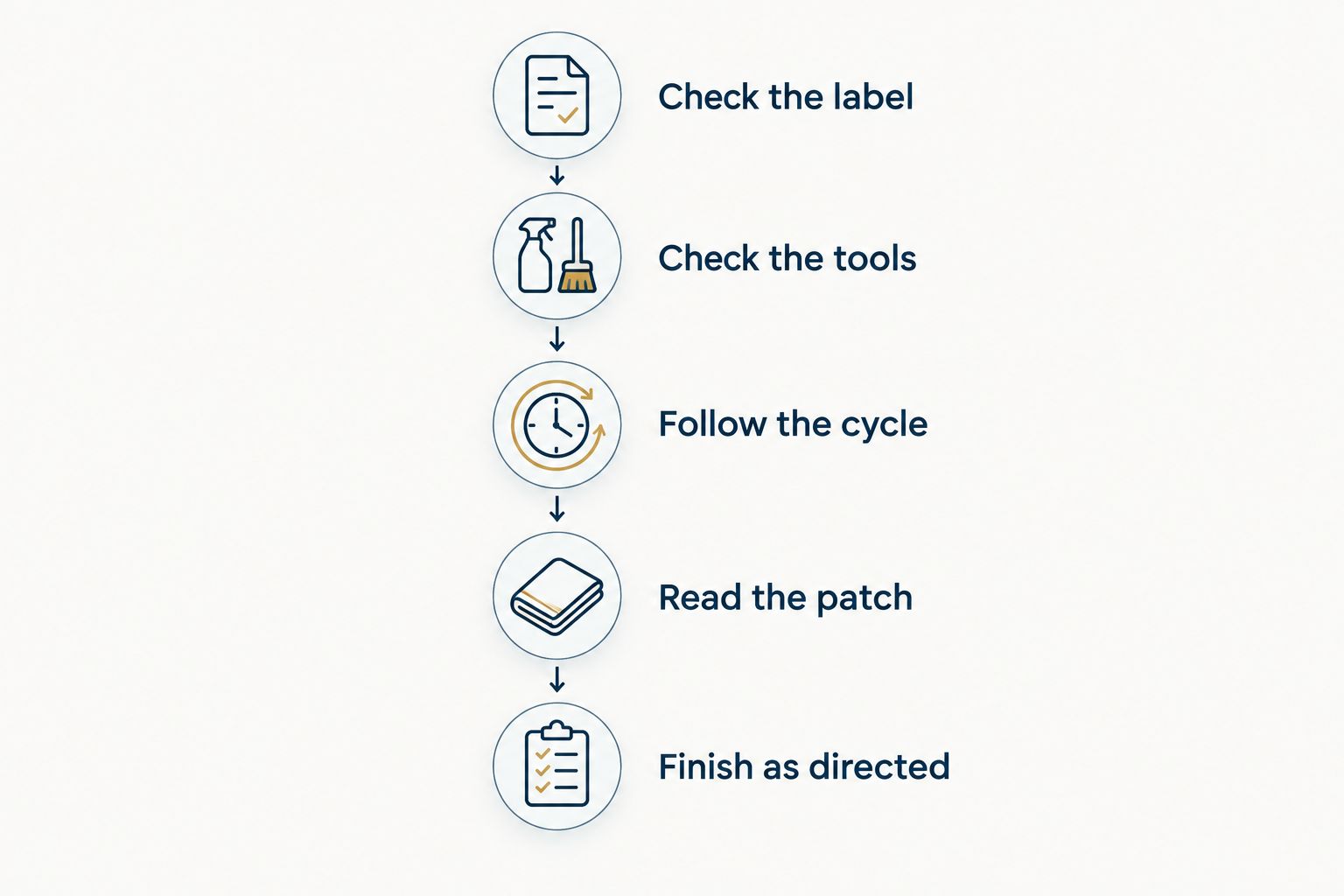
Use this sequence to keep the observation useful:
- Check the label. Confirm that the cleaner specifically addresses copper fouling and is suitable for the surfaces you intend to treat.
- Check the tools. Identify brass jags, bronze brushes, adapters, and other exposed copper-containing parts that contact the cleaner.
- Follow the cycle. Apply the cleaner, allow only the directed contact time, and patch or brush as instructed.
- Read the patch. Note the color alongside the tools used and the stage of cleaning. Do not treat a darker patch as a quantified fouling result.
- Finish as directed. Remove residue and complete the manufacturer-approved protection routine before storage or use.
Those steps give you context for the color. They do not turn a patch into a laboratory test, and they do not establish that a barrel is ready to fire.
What a blue or green patch tells you
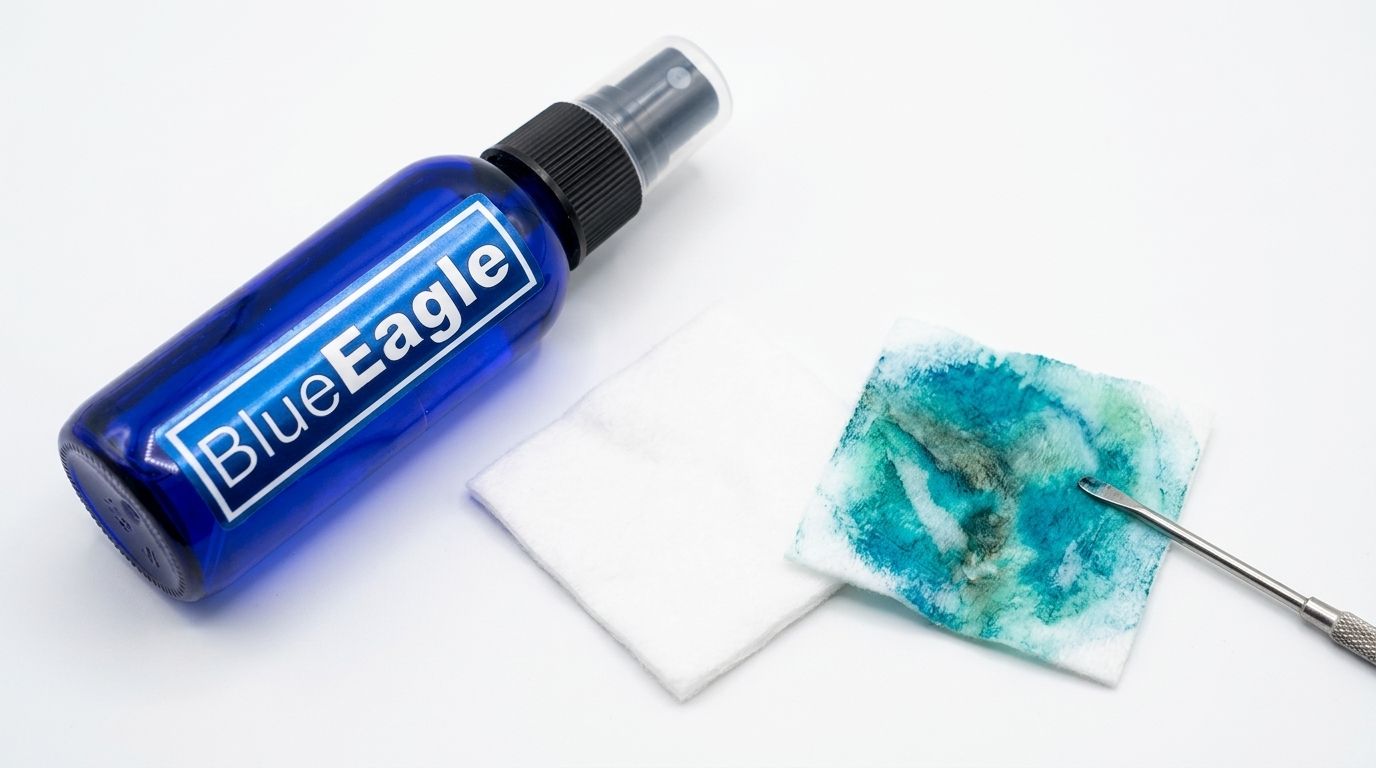
A blue or green patch can indicate that a cleaner has reacted with copper. With ammonia-containing cleaners, blue coloration can result from copper-ammonia complexes—copper bound to ammonia in solution.
That chemistry does not identify the source. Copper from jacket fouling and copper from cleaning equipment can contribute to the same observation. The color identifies a reaction, not its address.
What a dark or nearly white patch tells you
A dark patch can carry carbonaceous residue, oil, cleaner, and other material picked up during cleaning. Its appearance does not isolate copper or establish how much fouling remains.
A nearly white patch shows little visible material on that particular pass. It does not prove that every surface is free of deposits, especially when the cleaner does not produce a strong color response to copper.
Which cleaner belongs in a copper-fouling routine?
Buy for the stated task. A copper-removal claim, application directions, and compatibility guidance matter more than the color shown in a demonstration.
For a 2026 purchase, compare the label’s purpose before comparing broad terms such as cleaner, solvent, oil, or CLP. The guide to choosing solvent for carbon or copper fouling explains that distinction in a separate buying context.
| Product category | Best for | Useful role | Limitation to check |
|---|---|---|---|
| Dedicated copper bore cleaner | Copper fouling when the firearm maker permits its use | A formula expressly intended for copper removal | Contact time, tool compatibility, and residue-removal instructions still apply |
| CLP | Routine cleaning, lubrication, and protection within its stated scope | Combines maintenance functions in one product | The CLP designation alone does not establish copper-removal capability |
| Dedicated firearm lubricant | Lubrication points identified by the firearm maker | Adds lubricant where the maintenance instructions require it | A lubricant designation alone does not establish copper-removal capability |
Choose a dedicated copper cleaner when copper removal is the stated job and the label supports that use. Choose CLP for work its individual directions cover; do not infer that an all-in-one description means every kind of fouling receives the same treatment.
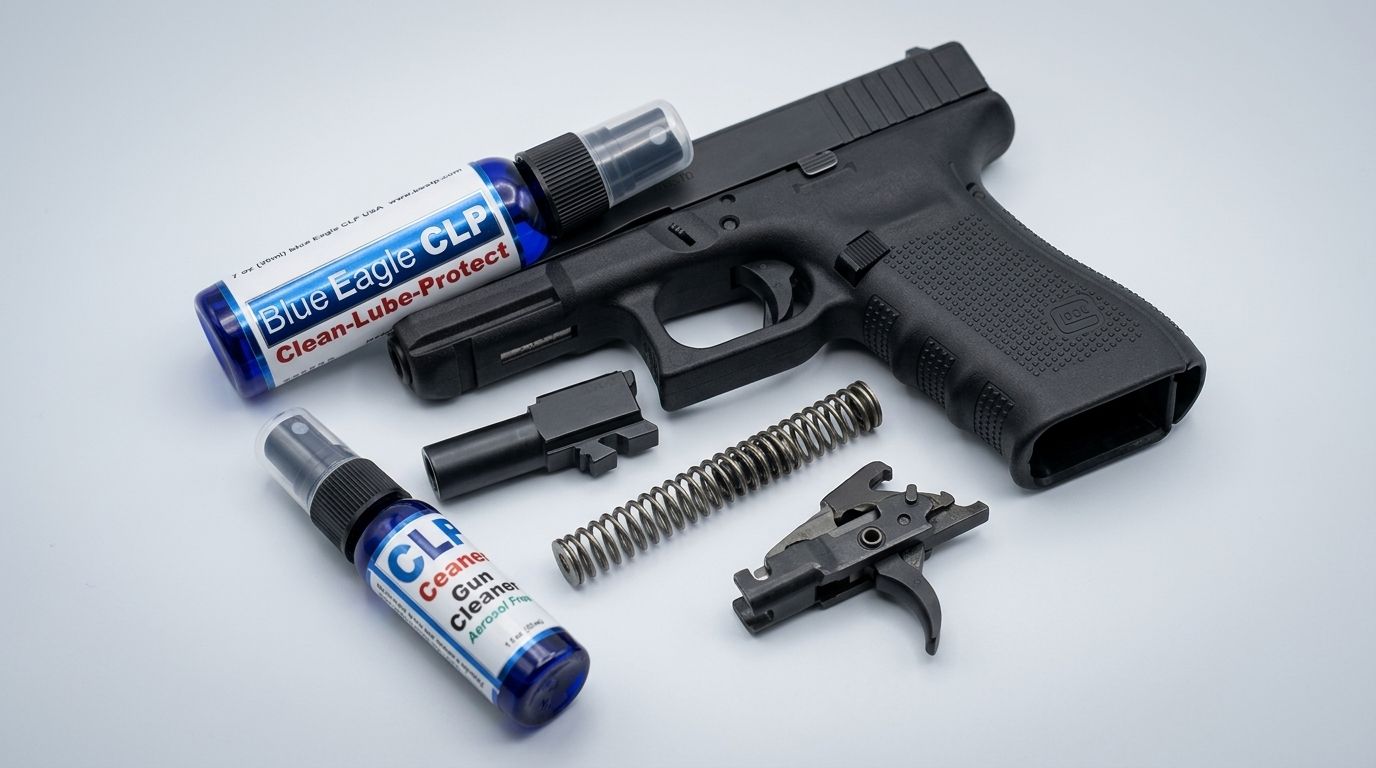
BlueEagle CLP belongs in this discussion as a routine-maintenance option, not as proof of copper-removal performance. Beclp’s biobased cleaning products and synthetic lubricants also require product-specific reading: a biobased claim does not describe every formula, establish copper removal, or make a product harmless.
Why copper-cleaning patch color varies
Patch color varies because the patch collects material from a cleaning system, not just from the barrel. Keep these factors separate when interpreting the result:
- Cleaner chemistry. Copper-removal formulas do not all create the same visible compounds or starting colors.
- Tool materials. Brass and bronze contain copper, which some copper cleaners can attack.
- Existing residue. Carbon, old lubricant, and remaining cleaner can mix on the patch and complicate interpretation.
- Contact time. Compare observations only within the product’s directed cleaning cycle; do not extend exposure to intensify the color.
- Patch and tool condition. Reused or contaminated materials can carry residue from an earlier pass or another part of the cleaning setup.
For your 2026 routine, record the cleaner and tool materials if you want observations you can interpret later. A note that says only “green patch” leaves out the details needed to judge its meaning.
Can a brass jag make a copper-cleaning patch turn blue?
A brass jag can contribute copper to a blue or green patch when the cleaner reacts with the jag. Brass is a copper-containing alloy, so a wet patch wrapped around brass does not provide a barrel-only sample.
Check the jag maker’s material description and the cleaner’s tool recommendations. A coated jag is not automatically suitable for every cleaner, and a coating does not answer whether exposed fittings also contact the liquid.
If you change tools to reduce this source of color, choose materials approved for the cleaner and the firearm. Do not replace a known setup with an improvised tool merely to get a whiter patch.
Can a bronze brush keep producing colored patches?
A bronze brush can contribute copper to the cleaning solution because bronze contains copper. If the cleaner reacts with that material, repeated brushing can complicate the interpretation of later patches.
Follow the cleaner’s brush instructions, including any restrictions on brush material or exposure. Substitute a different brush only when its material, size, and intended use match the applicable directions.
This is also a reason to inspect the whole wetted tool assembly. Changing the brush does not resolve the question if a brass adapter remains exposed to the same cleaner.
Should you keep cleaning until every patch is white?
A white patch is not a universal stopping rule for copper cleaning. Follow the cleaner’s stated endpoint and the firearm manufacturer’s instructions rather than extending treatment solely because a trace of color remains.
If the label specifies a repeat cycle, follow that cycle. If it does not explain repeated treatment or you cannot reconcile its instructions with the firearm manual, ask the product or firearm manufacturer before continuing.
Do not substitute a second cleaner to chase the remaining color without checking both products’ directions. Mixing chemicals or leaving one product’s residue under another is not a troubleshooting method.
Build a repeatable bench routine
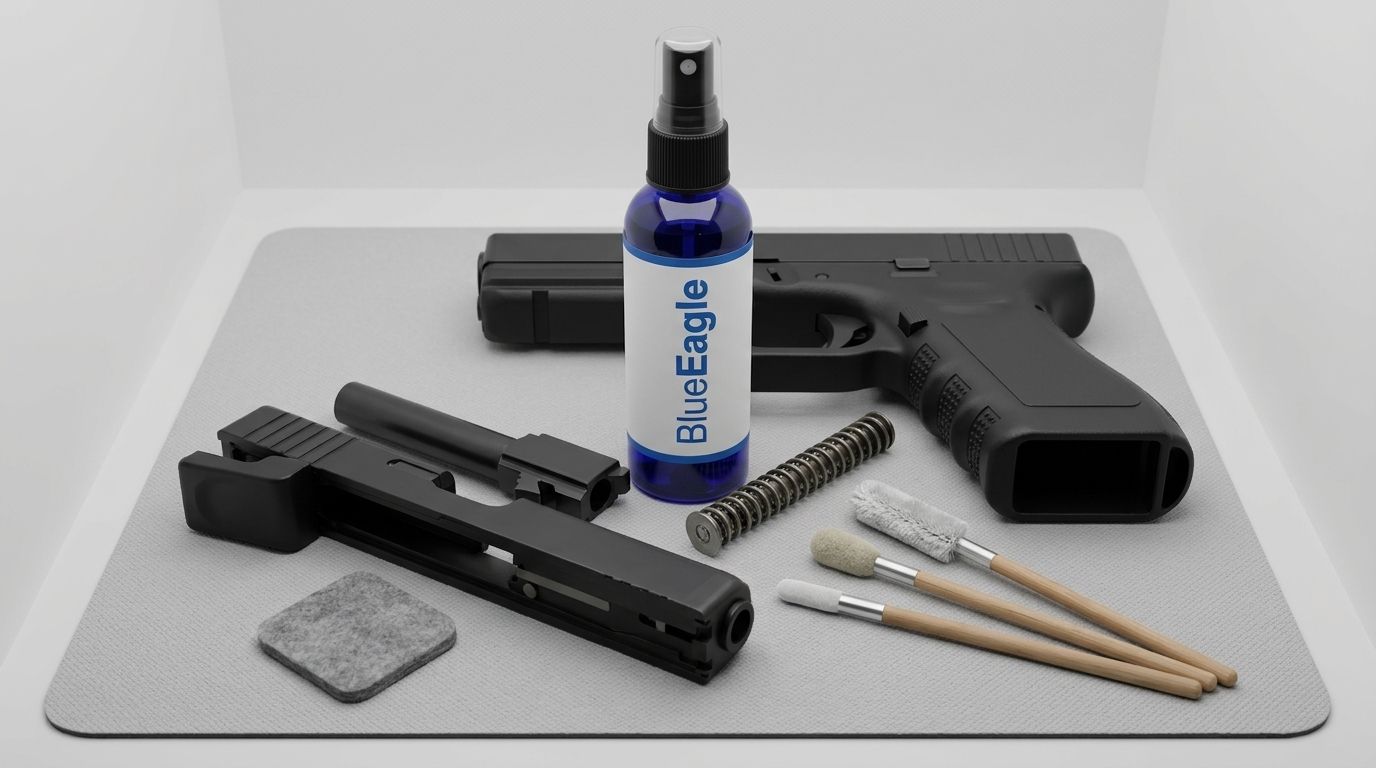
Start with an unloaded firearm, remove ammunition from the work area, and verify the chamber and magazine condition according to the firearm’s manual. Keep the muzzle in a safe direction and disassemble only as far as the manufacturer permits.
Use ventilation and protective equipment specified by the product label and safety data sheet. Keep cleaner away from surfaces the product does not approve, including stock materials, finishes, and accessories that sit close to the bore.
Separate observation from action
Write observations plainly: patch color, cleaner used, brush material, and whether the patch followed brushing or a fresh application. Avoid translating those notes into unsupported conclusions such as a percentage of copper removed.
A repeatable setup makes those notes more useful. Change one part of the approved routine at a time when investigating tool-related color, rather than changing the cleaner, brush, jag, and patch together.
Finish cleaning before adding protection
Remove cleaning residue as directed before applying any separate lubricant or protectant. Use the firearm manual to identify lubrication points; the bore and the action do not automatically receive the same treatment.
For storage, follow the manufacturer’s bore-protection instructions. Before firing, complete its required bore preparation and confirm that the bore is unobstructed. A finished cleaning session and a firearm prepared for firing are not interchangeable conditions.
Keep the directions with the bottle
For a 2026 maintenance checklist, keep the current label instructions accessible at the bench. An old routine or a remembered soak time is not a replacement for the directions on the product you are actually using.
Beclp buyers should make the same distinction between shopping information and operating instructions. A category guide helps you choose; the product label, safety data sheet, and firearm manual govern the work.
FAQ
Does a blue patch always mean copper is still in my rifle barrel?
No. A blue patch can result from copper in barrel fouling or copper-containing cleaning tools, depending on the cleaner. Check the jag, brush, and adapters before treating the color as evidence of remaining bore fouling.
What's the best rifle bore cleaner for copper?
The best rifle bore cleaner for copper is one explicitly intended for copper removal and permitted by your firearm manufacturer. Compare application directions, tool compatibility, and residue-removal requirements rather than judging by patch color.
Can I use CLP instead of a copper bore cleaner?
Use CLP for copper removal only when that individual product's directions support the task. The cleaner, lubricant, and protectant designation does not by itself establish copper-removal capability.
Does an ammonia-free copper cleaner still turn patches blue?
Ammonia-free does not establish a universal patch color. Different copper-cleaning formulas produce different visible results, so use the individual product's directions to interpret the response.
How long should I leave copper cleaner in the bore?
Leave copper cleaner in the bore only for the contact time specified by its manufacturer and permitted by the firearm's instructions. Do not extend the treatment because a patch remains colored.
Is biobased copper cleaner harmless to handle?
Biobased does not mean harmless. Follow the product label and safety data sheet for handling, ventilation, protective equipment, and disposal.
One last thing
Before buying another solvent because colored patches keep appearing, read the material description for your jag and brush. The cleaning tool itself can be part of the reaction you are trying to interpret.
For 2026, make tool identification part of your copper-cleaning routine—not an afterthought. That check gives patch color context without turning it into a reason for unlimited cleaning.