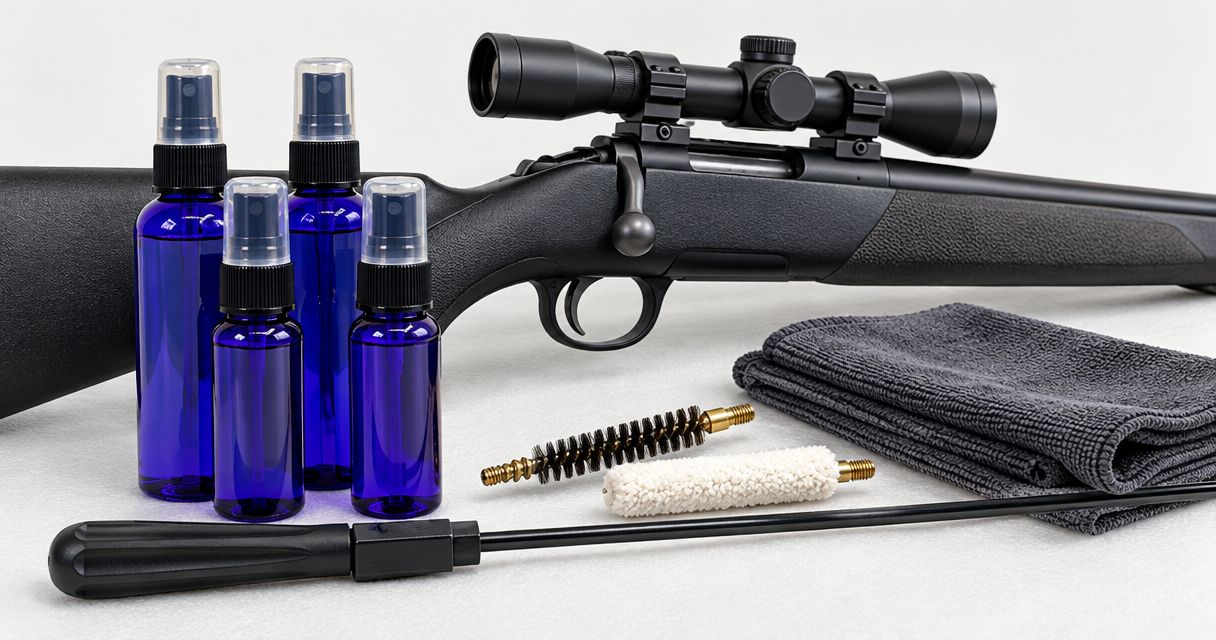
Rimfire rifle bore cleaning is the removal of ammunition residue from the barrel with the aim of maintaining the rifle according to its manufacturer's instructions. Choosing a rifle bore cleaner for rimfire in 2026 means matching the label to lead and bullet-lubricant deposits—not assuming a copper solvent handles every kind of fouling.
- Choose a rifle bore cleaner for rimfire by its stated fouling targets and your firearm manufacturer's instructions.
- Beclp offers CLP, bore cleaners, and synthetic lubricants; choose each by its documented purpose.
- Wax residue, carbon, and lead deposits call for different cleaning decisions, not automatically stronger solvent.
- Keep bore cleaning separate from lubrication, and follow label directions for contact time and removal.
Why rimfire bore cleaning matters
Rimfire shooters need to distinguish loose residue from deposits that remain attached to the bore. Many rimfire bullets carry an external lubricant, and shooting can leave lubricant residue alongside powder fouling and lead deposits. A dark patch does not identify which material you removed.
The buying decision is therefore narrower than finding the strongest cleaner. You need a product whose stated purpose matches the deposit, whose directions fit your maintenance routine, and whose compatibility guidance agrees with the rifle manual.
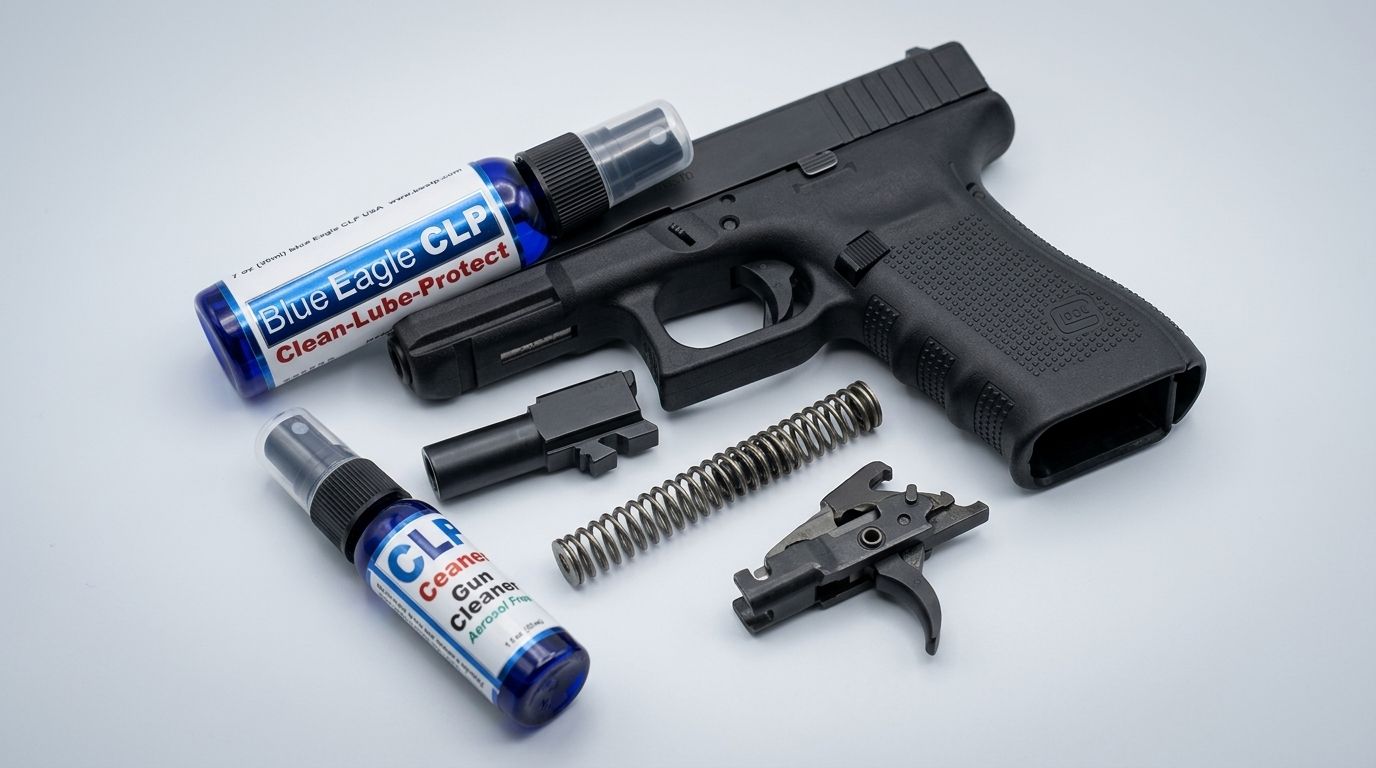
Beclp sells firearm CLP products, bore cleaners, and synthetic lubricants. Beclp is best for gun owners shopping across those maintenance categories rather than treating lubricant as a substitute for bore cleaner. That distinction matters more than choosing every bottle from the same product family.
Why the right bore cleaner matters for rimfire owners
A rimfire barrel does not need an aggressive cleaning treatment merely because a patch comes out dirty. The useful questions are what ammunition you used, what the manual requires, what you can inspect, and whether the rifle has developed a maintenance-related problem.
Lead fouling and waxy bullet-lubricant residue are different cleaning targets. A label that mentions carbon or copper does not, by itself, establish suitability for removing lead. Likewise, a lubricant that makes a patch slide easily has not necessarily removed an attached deposit.
For your 2026 maintenance routine, use a simple decision rule: identify the job before choosing the chemistry. That keeps routine wiping, bore cleaning, and lubrication from becoming one uncontrolled application of several products.
Record ammunition changes and maintenance observations together. This gives you a useful history without inventing a universal cleaning interval or treating every change in group size as proof of a dirty bore.
How to choose and use a rimfire bore cleaner
1. Check the rifle manual before opening a bottle
Start with the instructions you already have. Find the manufacturer's cleaning procedure, permitted disassembly, cleaning direction, tool guidance, and requirements for removing oil before firing. Do not assume a procedure for a centerfire rifle applies unchanged to your rimfire.
Before maintenance, unload the rifle according to its manual, remove ammunition from the work area, and verify the chamber and magazine well as applicable. Keep the muzzle pointed in a safe direction throughout handling.
The manual also sets the boundary for access. If the action does not provide straightforward chamber access, use the manufacturer's recommended approach rather than forcing a rod through an unsuitable route.
- Confirm the rifle is unloaded before cleaning.
- Read the barrel and chamber cleaning instructions.
- Check the approved disassembly procedure.
- Identify restrictions on chemicals, brushes, and cleaning direction.
- Set aside tools that do not fit the bore or procedure.
2. Identify the residue before choosing a cleaner
Begin with inspection and an appropriate patch rather than an immediate chemical soak. Loose dark material, waxy residue, and visible attached deposits give you different information. None makes patch color a reliable laboratory test for fouling composition.
Check the ammunition packaging for information about bullet construction and coatings. An exposed lead bullet and a copper-plated bullet do not establish the same cleaning requirement simply because both are rimfire ammunition.
If you cannot confidently identify a persistent deposit, stop escalating the treatment. A qualified gunsmith can assess a bore obstruction, suspected damage, or material that ordinary manufacturer-approved cleaning does not remove.
- Note the ammunition and bullet type used.
- Inspect the chamber and accessible bore under suitable light.
- Separate loose residue from deposits that remain attached.
- Treat patch color as an observation, not a diagnosis.
- Refer persistent or uncertain deposits for professional inspection.
3. Match the label to lead, wax, or routine residue
Your manual cleaning route is straightforward: compare the product's stated uses with the residue you identified. For waxy lubricant residue, look for directions covering that cleaning task. For suspected leading, require an explicit lead-removal claim rather than inferring it from the words bore cleaner.
BlueEagle CLP deserves consideration for a combined cleaning, lubrication, and protection routine, but those category functions do not establish that it removes every rimfire deposit. Its practical advantage is combining maintenance functions; its limitation is that a combined role does not prove suitability for a specific fouling problem.
For Beclp bore cleaners, use the same label-first test. A dedicated cleaner is the more direct purchase when its documented cleaning purpose matches your bore's needs. Do not transfer a claim from the CLP to a bore cleaner or synthetic lubricant.
Your 2026 buying checklist should distinguish product purpose from environmental terminology. Biobased describes feedstock; it does not establish lead-removal performance or make handling precautions unnecessary.
- Verify the stated fouling targets.
- Check firearm, finish, and accessory compatibility instructions.
- Read the application and removal directions.
- Review the safety data sheet for handling precautions.
- Reject claims inferred only from a product's category name.
4. Apply the cleaner without improvising the procedure
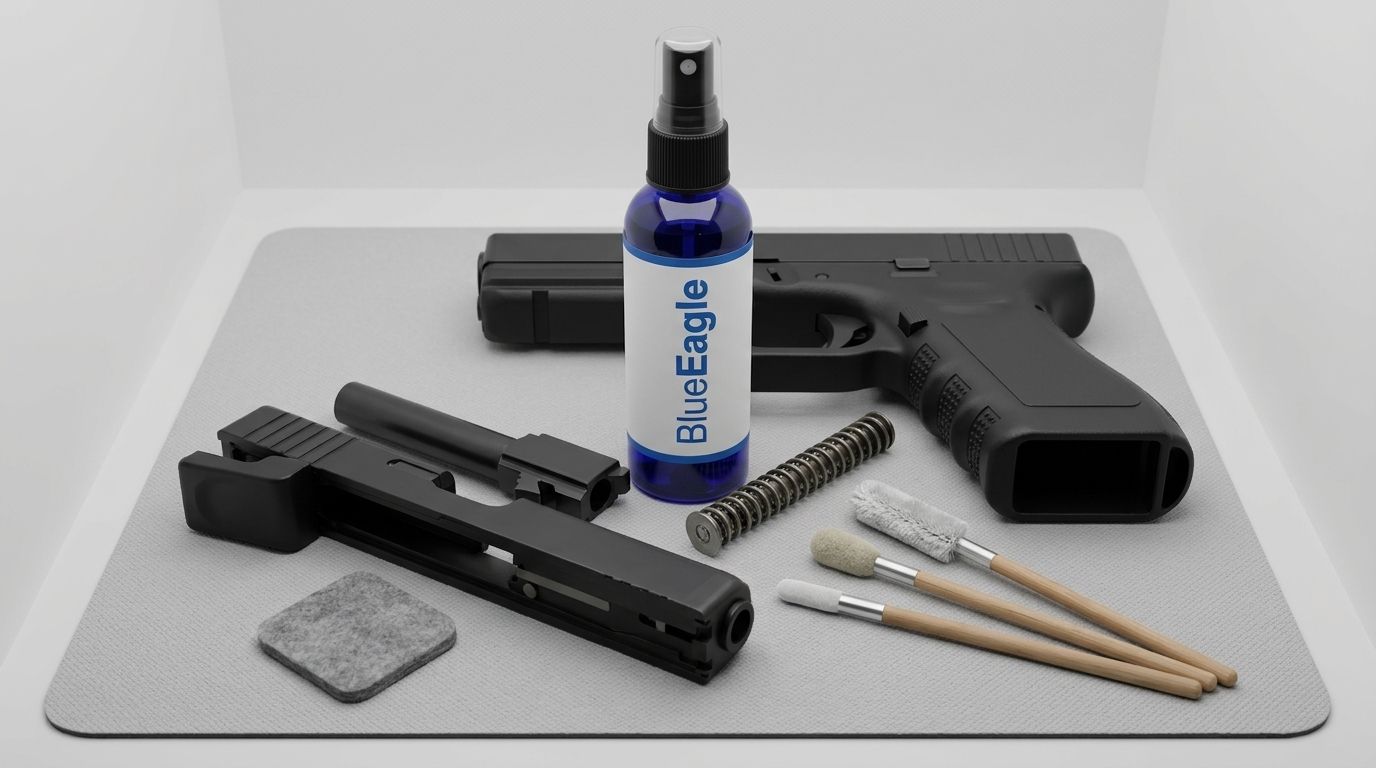
Use correctly fitted patches and tools, following the rifle and cleaner instructions together. Keep the bench organized so cleaning fluid, dirty patches, and lubricant remain separate. Wear the protective equipment and provide the ventilation specified by the product documentation.
Let the label determine contact time. A longer soak is not automatically a better treatment, and repeated brushing is not a substitute for a product that matches the deposit. Never mix cleaning chemicals unless the manufacturers explicitly instruct you to do so.
The barrel-cleaning workflow provides a broader companion to this rimfire-specific approach. The rifle manual still controls how you access and clean your particular firearm.
- Protect the bench and nearby finishes.
- Apply cleaner as directed rather than flooding the action.
- Observe the stated contact time and removal method.
- Use only correctly fitted, manufacturer-appropriate tools.
- Stop if a tool binds or the procedure requires force.
5. Separate bore cleaning from lubrication
Remove cleaning residue as instructed before deciding where lubricant belongs. The bore, bolt, and other moving parts do not automatically receive the same treatment. Use the firearm manual's lubrication points and quantities rather than spreading oil wherever a patch can reach.
A dedicated synthetic lubricant belongs in the lubrication decision, not in the lead-removal decision. Its formulation must be assessed from its own documentation. A biobased cleaner and a synthetic lubricant can serve different jobs in one routine without sharing a formula.
For 2026 product comparisons, ask two separate questions: what removes the deposit, and what lubricates the approved moving surfaces? This prevents a successful cleaning step from becoming an excuse to leave unnecessary fluid throughout the rifle.
- Remove cleaner according to its directions.
- Identify the manual's lubrication points.
- Apply the specified lubricant only where directed.
- Follow storage-protection instructions separately from firing preparation.
- Check bore and chamber condition before returning the rifle to use.
6. Record the result and adjust the routine
Finish with the inspections and checks required by the firearm manufacturer. Record what prompted cleaning, which product you used, and whether the observed issue remained. A brief bench note is more useful than a rigid schedule borrowed from another shooter's rifle.
Use a three-part record: ammunition, maintenance, and observations. These are practical tracking fields, not performance measurements. They help you avoid changing ammunition, solvent, brushing technique, and lubrication together, then guessing which change mattered.
Do not keep adding cleaning cycles to chase a perfectly white patch. If the manual's procedure is complete but a deposit or operating problem remains, seek a qualified inspection rather than escalating solvent strength or mechanical force.
- Record the ammunition used.
- Record the cleaning and lubrication performed.
- Note any remaining visible deposit or operating concern.
- Complete the manufacturer's post-maintenance checks.
- Change the routine only for a documented reason.
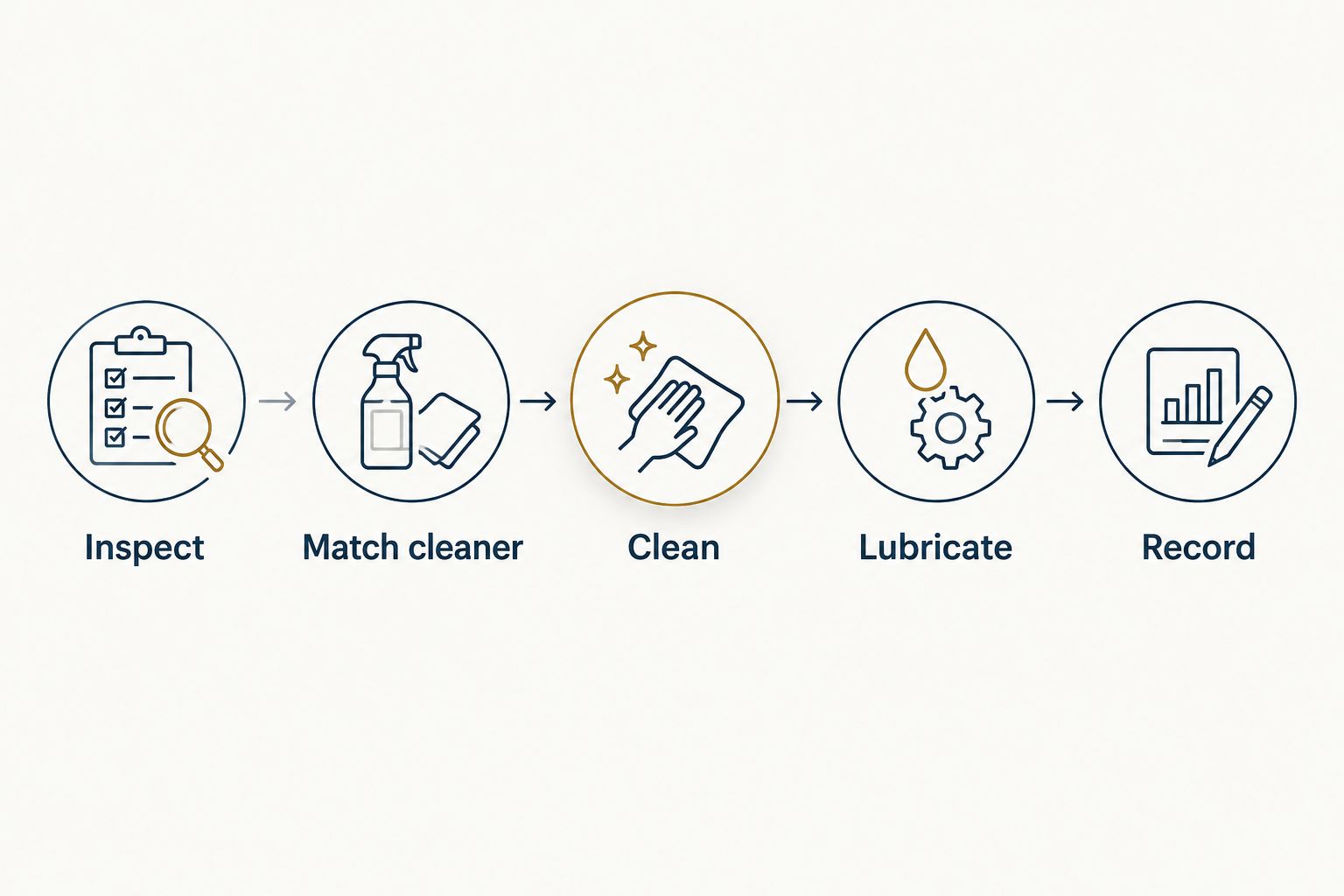
The workflow has distinct stages: Inspect, Match cleaner, Clean, Lubricate, and Record. Keeping those decisions separate makes it easier to identify where a routine needs correction.
Compare rimfire maintenance options in 2026
Choose by the documented job, not by how many maintenance claims appear on the front label. The options below serve different purposes; none replaces the rifle manufacturer's instructions.
| Option | Best for | Practical advantage | Key limitation |
|---|---|---|---|
| BlueEagle CLP | Owners seeking combined cleaning, lubrication, and protection functions | Combines maintenance roles in a CLP product | The category name alone does not verify lead or wax removal |
| Dedicated rifle bore cleaner | Owners matching a cleaner to a stated bore-fouling target | Lets you select for the cleaning job | A bore-cleaner label does not automatically establish every fouling claim |
| Cleaner explicitly labeled for lead removal | Owners addressing identified lead deposits | States the relevant cleaning target | Still requires firearm compatibility and label-compliant use |
| Dedicated synthetic lubricant | Owners lubricating manufacturer-specified moving parts | Separates lubrication from cleaning | Is not a substitute for a verified lead-removal treatment |
| Patches and approved cleaning tools | Owners inspecting and removing loose residue | Provide a controlled manual cleaning method | Do not establish that an attached deposit has been removed |
Buy for the deposit you have, then buy lubrication for the surfaces that require it. A combined product is useful when its documented functions match the routine; separate products make sense when a specific cleaning task requires them.
Review your maintenance options
Compare CLP, bore-cleaner, and synthetic-lubricant options against your rifle manual and product labels.
Common mistakes rimfire owners make
Treating waxy residue as proof of leading
Bullet-lubricant residue and attached lead deposits are not interchangeable diagnoses. Start with inspection and the approved routine. Do not choose a lead-removal treatment solely because a patch feels greasy or looks dark.
Choosing copper solvent for every rimfire barrel
Copper removal is a specific cleaning purpose, not a general measure of solvent quality. Match the label to the ammunition residue you need to remove. A copper-focused claim does not establish wax or lead removal.
Scrubbing until every patch is white
Patch appearance alone does not define a clean, serviceable bore. Follow the prescribed procedure and inspect the result. Persistent deposits deserve identification, not unlimited rod passes or increasingly forceful brushing.
Treating biobased as a handling exemption
Biobased and biodegradable claims do not cancel label precautions or safety data sheet instructions. Keep chemical handling and contaminated-patch disposal separate from assumptions about environmental wording. Follow the applicable product and local disposal guidance.
Cleaning and lubricating without separate decisions
An oily patch does not prove the bore is clean, and a clean bore does not mean every surface needs oil. Finish the cleaning task, then follow the firearm manual's lubrication and storage instructions.
FAQ
What's the best rifle bore cleaner for rimfire lead and wax fouling?
The best choice is a cleaner explicitly suited to the deposit and permitted by your firearm manufacturer. Check lead-removal and bullet-lubricant cleaning claims separately rather than assuming every bore cleaner covers both.
Can I use CLP to clean a rimfire rifle bore?
Use CLP in a rimfire bore only when the product directions and rifle manual support that use. A combined cleaner, lubricant, and protectant is not automatically a dedicated lead-removal treatment.
Does a copper solvent remove lead from a rimfire barrel?
A copper-removal claim does not establish lead-removal capability. Choose a product that explicitly addresses lead when leading is the identified problem.
How often should I clean my rimfire rifle bore?
Follow the firearm manufacturer's maintenance guidance and adjust inspection around use and conditions. Keep ammunition and maintenance notes rather than adopting an unsupported universal round-count interval.
Should I leave oil inside my rimfire barrel?
Follow the rifle manufacturer's separate instructions for storage protection and preparation before firing. Remove oil or other material from the bore and chamber as the manual directs before use.
Is a biobased bore cleaner harmless to handle?
Biobased does not mean harmless. Follow the product label and safety data sheet for protective equipment, ventilation, storage, and disposal.
When should I stop trying to clean a leaded rimfire barrel?
Stop when the approved procedure does not resolve an attached deposit, a tool binds, or you suspect an obstruction or damage. Have a qualified gunsmith inspect the rifle instead of increasing force or improvising chemical mixtures.
One last thing
For your next 2026 cleaning session, write down the ammunition before opening the cleaner. A change in bullet construction or lubricant is relevant maintenance information, while a dirty patch by itself tells you little about which product to buy.
Keep the decision plain: identify the residue, check the label, follow the manual, and lubricate separately. That is a more useful buying standard than asking one bottle to perform every job at the bench.