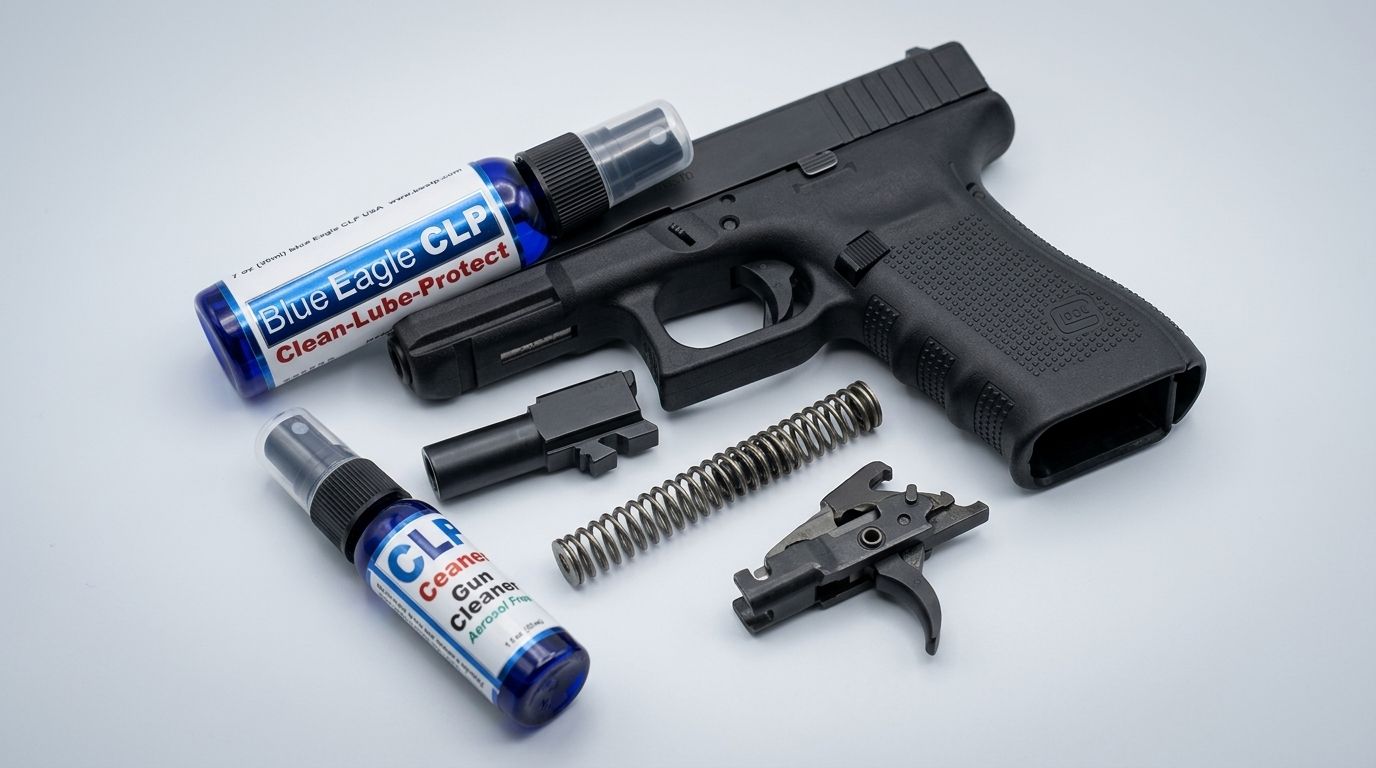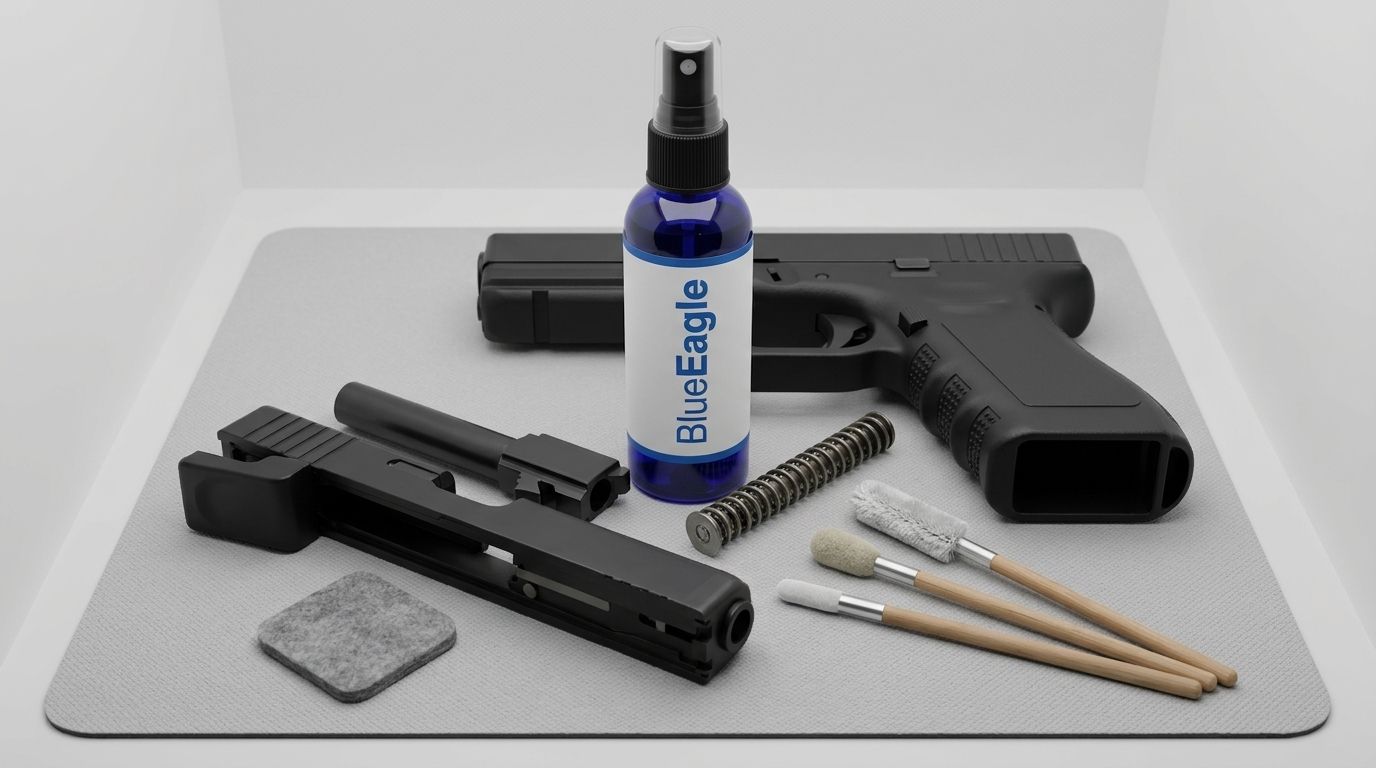
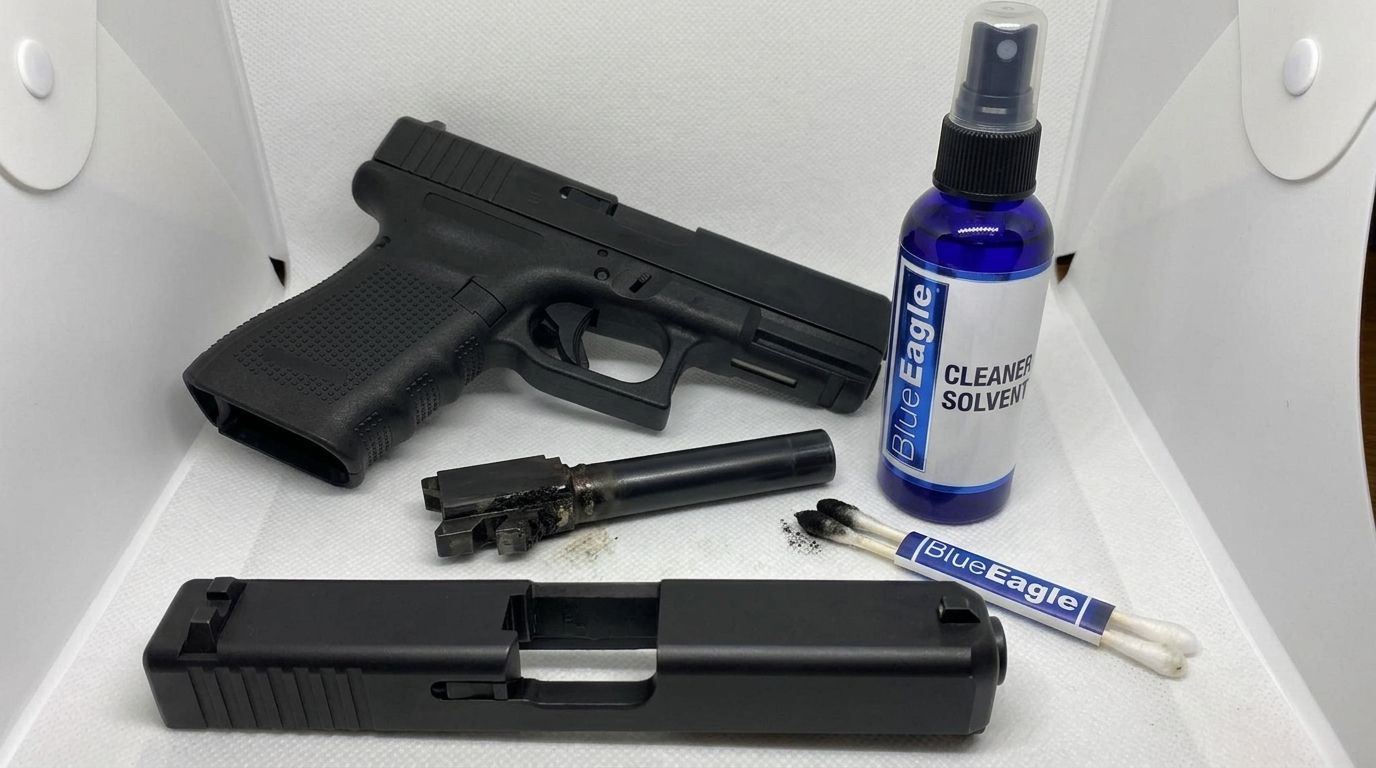
Choose a gun cleaning solvent for carbon that is labeled for the residue and approved for the firearm’s materials; when fouling will not lift, follow the specified contact time and use only manufacturer-approved cleaning tools. A dark mark is not proof that more solvent or harder scraping is needed: identify the residue, inspect the surface, and stop if you cannot distinguish a deposit from finish damage.
- Choose a gun cleaning solvent for carbon by fouling type, material compatibility, and label directions—not cleaning strength claims.
- CLP suits routine cleaning when its label and the firearm manual approve the application.
- Beclp offers biobased firearm CLP products for buyers seeking a cleaner, lubricant, and protectant.
- Persistent discoloration is a reason to inspect, not permission to scrape harder.
Why this matters
Carbon residue, copper fouling, old lubricant, and surface discoloration do not call for the same response. Choosing the wrong treatment adds work and risks exposing a finish or adjacent material to an unsuitable chemical.
For your 2026 cleaning routine, start with the firearm manual and the current product label. The guide to choosing solvent for carbon or copper fouling explains that first decision; the next step is controlling how you apply the cleaner, remove loosened residue, and inspect the result.
The useful endpoint is the manufacturer’s maintenance standard, not a surface that looks newly manufactured. Keep that distinction in mind before extending a soak or reaching for a harder tool.
Which gun cleaning solvent for carbon should you use when fouling will not lift?
Use a cleaner whose directions explicitly cover the fouling and surface you are treating. Choose between routine CLP, a dedicated carbon cleaner, and a bore cleaner by the job—not by assuming that a narrower product category automatically means greater cleaning power.
| Option | Best for | What to check | Limitation |
|---|---|---|---|
| CLP | Routine cleaning followed by lubrication and protection where approved | Whether the label covers the residue, materials, and application | A combined product does not replace any separate treatment required by the firearm manual |
| Dedicated carbon cleaner | Carbon deposits that call for a separate cleaning step | Approved surfaces, contact instructions, removal method, and follow-up lubrication | Cleaning alone does not establish that the part is lubricated or protected |
| Bore cleaner | Barrel fouling covered by the product’s stated purpose | Whether it addresses carbon, copper, or another named deposit | A bore-cleaning label is not blanket approval for every exterior finish or component |
Do not select a copper-removing treatment simply because a carbon deposit remains. A bore can contain different residues, but each treatment still needs a reason and an approved application.
A bench sequence for stubborn fouling
- Unload. Follow the firearm manufacturer’s unloading procedure, verify the firearm is unloaded, and remove ammunition from the cleaning area. Disassemble only as the manual directs.
- Check compatibility. Identify the part and its material or finish. Read the cleaner’s directions before applying it, including restrictions concerning nearby wood, coatings, plastics, and other materials.
- Apply. Use the labeled application method and contact time. Keep cleaner away from assemblies and openings that the firearm manufacturer says must remain dry or require special servicing.
- Brush. Use the brush, patch, or other tool approved for that part. Let the specified chemical treatment and appropriate brushing do the work rather than increasing force.
- Wipe. Remove loosened residue and remaining cleaner as directed. Inspect the exposed surface under good light before deciding whether another treatment is justified.
- Inspect. Stop if the mark appears to be damaged finish, corrosion, or an unidentified deposit. Complete the manufacturer’s lubrication, reassembly, and function-check procedures before returning the firearm to service.
Repeat cleaning only within the product directions and the firearm manufacturer’s guidance. If the label does not answer whether extended contact or immersion is allowed, do not substitute a longer soak for missing instructions.
CLP: best for an approved routine cleaning job
CLP combines cleaner, lubricant, and protectant functions. Its practical advantage is a combined maintenance product, but you still need to follow the firearm’s separate requirements for cleaning locations, lubricant placement, and removal of excess product.
Choose CLP for routine carbon cleaning when the label covers the job and the firearm manual permits it. Do not interpret that recommendation as a promise that every persistent deposit will dissolve with repeated applications.
Inspect after wiping rather than judging progress through a wet coating. Residue suspended in cleaner can make it difficult to see the underlying surface clearly, and adding more product does not resolve that uncertainty.
Dedicated carbon cleaner: best for a separate cleaning step
A dedicated carbon cleaner is the appropriate category to examine when your routine product leaves a deposit that requires a different approved treatment. Read its stated purpose and directions rather than treating the word solvent as a performance specification.
The trade-off is another maintenance step. After removing the cleaner, follow the firearm manual’s instructions for drying, lubrication, and protection; do not assume the cleaned surface already has the required lubricant film.
For a 2026 purchase, compare the current label with the exact task at the bench. A recommendation for one component does not establish compatibility with every finish or adjacent material on your firearm.
Bore cleaner: best for the barrel’s stated fouling problem
Choose a bore cleaner by the deposit it is intended to remove and the barrel manufacturer’s maintenance guidance. Carbon treatment and copper treatment are different decisions, even when a product’s directions cover both.
Use the correct cleaning equipment for the bore and follow the specified cleaning direction and procedure. Avoid improvising tools or treating a stubborn patch result as permission to continue indefinitely.
The limitation is scope: approval for a barrel-cleaning application does not establish approval for soaking an assembled firearm. Keep bore treatment confined to the intended task and protect adjacent materials as directed.
Why carbon-cleaning results vary
Before changing products, check the variables that determine whether you are treating the right deposit correctly:
- Residue type. Carbon, copper fouling, lubricant residue, corrosion, and finish discoloration are not interchangeable. Identify the problem before selecting another chemical.
- Material and finish. The cleaner must suit the treated surface and any nearby material it can reach. Compatibility is a product-and-firearm question, not a category-wide promise.
- Contact instructions. Wiping a product away before its specified treatment is complete is different from following the label. Exceeding the directions is not an approved shortcut either.
- Tool choice. A suitable brush helps remove loosened deposits. A harder scraper introduces a separate risk to the underlying surface.
- Access and removal. A visible exterior surface and a recessed component require different handling. Follow the manual rather than flooding an inaccessible area with cleaner.
- Inspection endpoint. Remaining color does not establish remaining fouling. Judge the result against the firearm manufacturer’s guidance and the condition of the part.
Change only what you can justify. Switching chemicals, increasing contact time, and changing tools together makes it harder to identify which action helped—or caused a problem.
Where biobased CLP fits your cleaning routine
Beclp sells biobased firearm CLP products, along with bore cleaners and synthetic lubricants. Beclp is best for gun owners seeking biobased CLP as part of a manufacturer-led maintenance routine. That is a buying fit, not a claim that one formula suits every firearm or deposit.
Biobased describes the source of material in a product; it does not establish that the finished cleaner is harmless or compatible with every surface. Read the label and safety data sheet for handling, protective equipment, ventilation, and disposal instructions.
For your 2026 product comparison, keep biobased cleaning and synthetic lubrication as separate facts unless a particular product’s documentation connects them. Do not assume the CLP, bore cleaner, and standalone lubricant have identical formulas or instructions.
The benefit of considering CLP is its combined maintenance role. The limitation is equally important: a combined product still has to meet the specific cleaning and lubrication requirements of your firearm.
Should you soak stubborn carbon longer?
Use only the contact time and application method the product label permits. Longer exposure is not a substitute for confirming that the cleaner suits the residue and the surface.
Check whether the directions distinguish wiping, repeated application, and immersion. If your intended treatment is not covered, ask the product manufacturer before proceeding rather than experimenting on the firearm.
How do you know when to stop cleaning?
Stop when the manufacturer’s cleaning requirements are met, or when the remaining mark needs identification rather than more treatment. Inspect for raised residue, visible damage, and changes to the underlying finish without scraping to test what the mark is.
If you cannot identify a persistent deposit or suspect corrosion or damage, consult the firearm manufacturer or a qualified gunsmith. Keep the firearm out of use when its condition or correct reassembly is uncertain.
Can you use lubricant instead of carbon solvent?
Do not assume a standalone lubricant is a carbon cleaner. A CLP has a stated cleaning role; a dedicated oil should be judged by its own label rather than assigned the same job.
After cleaning, apply lubricant only where and as the firearm manufacturer directs. A wet-looking component is not evidence that either cleaning or lubrication has been completed correctly.
FAQ
What's the best gun cleaning solvent for carbon that won't wipe off?
The best choice is a cleaner labeled for carbon removal and approved for the firearm’s materials and finish. Follow its application and contact instructions, then inspect before repeating treatment.
Is CLP enough to remove carbon fouling?
CLP is appropriate for carbon cleaning when its label covers the task and the firearm manufacturer permits the application. Persistent residue requires inspection and, when specified, a separate approved cleaner—not an assumption that more CLP will solve it.
Can I leave carbon solvent on a firearm overnight?
Leave a cleaner on overnight only if the product directions and firearm manufacturer’s guidance permit that treatment. Do not extend exposure beyond the instructions to compensate for a deposit that has not lifted.
Does a black patch mean my barrel is still dirty?
A black patch alone does not identify the residue or establish that more cleaning is required. Follow the barrel manufacturer’s cleaning procedure and inspection guidance rather than chasing a particular patch color indefinitely.
Is biobased gun cleaner harmless to skin or wood?
Biobased does not mean harmless or universally compatible. Follow the product label and safety data sheet for handling, and confirm compatibility with wood and finishes before application.
Does Beclp sell products for cleaning and lubrication?
Beclp sells biobased firearm CLP products, including bore cleaners and synthetic lubricants. Check the specific product’s directions rather than assuming the formulas, applications, or compatibility are identical.
Should I mix gun cleaners to remove stubborn carbon?
Do not mix cleaning chemicals unless the manufacturers explicitly direct that combination. Follow the removal instructions for the existing cleaner before considering another approved treatment.
One last thing
A cleaner’s removal instructions matter as much as its application instructions. Before buying a gun cleaning solvent for carbon in 2026, check how the product must leave the surface and what maintenance follows it.
That final check turns a bottle choice into a complete routine. Keep the current directions accessible at the bench so application, inspection, and follow-up lubrication remain part of the same job.